The Punjab & Haryana High Court has clarified a critical limitation in the Drugs and Cosmetics Act, 1940, holding that Section 22 does not empower authorities to seal premises during inspections. This judgment underscores the distinction between search-and-seizure powers and the unauthorized restriction of trade, reinforcing constitutional protections under Article 19(1)(g) and Article 300-A.
Background & Facts
The Dispute
The petitioner, a qualified pharmacist holding a valid retail sale drug license issued on 14.08.2025, challenged a memo dated 04.11.2025 (Annexure P-4) under which his shop was sealed by the Licensing Authority (Respondent No. 4). The sealing followed an FIR (No. 308 dated 28.09.2025) registered against one Suresh Kumar under:
- Sections 18A & 18(C) of the Drugs and Cosmetics Act, 1940
- Sections 3, 4 & 5 of the Medical Termination of Pregnancy Act, 1971
- Section 34 of the National Medical Commission Act, 2019
- Sections 3(5), 318(3) & 88 of the Bharatiya Nyaya Sanhita, 2023
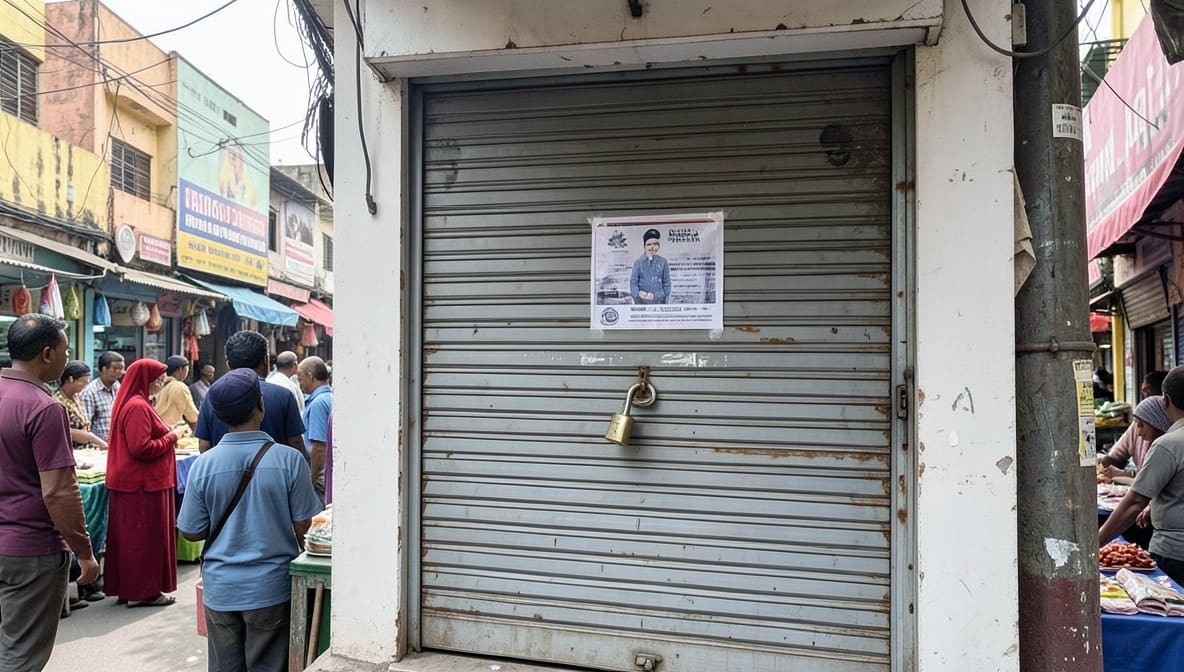
The FIR alleged illegal sale and supply of Medical Termination of Pregnancy (MTP) kits. Based on Suresh Kumar’s statement, the petitioner was arrested on 28.09.2025 but released on regular bail on 17.10.2025. No recovery was effected from either the petitioner or his shop. On 04.11.2025, Respondent No. 4 searched the petitioner’s shop and sealed it via a spot memo, despite no MTP kits being recovered. The petitioner was subsequently issued a show-cause notice dated 17.12.2025, proposing suspension/cancellation of his license, to which he filed a reply.
Key Facts
- 14.08.2025: Petitioner’s retail sale drug license issued
- 28.09.2025: FIR registered against Suresh Kumar; petitioner arrested
- 17.10.2025: Petitioner released on regular bail
- 04.11.2025: Shop searched and sealed by Respondent No. 4; no MTP kits recovered
- 17.12.2025: Show-cause notice issued for license suspension/cancellation
- Post-17.12.2025: Petitioner files reply to show-cause notice
Procedural History
- 10.04.2026: Present writ petition (CWP-10932-2026) filed under Articles 226/227 of the Constitution of India seeking setting aside of the sealing memo dated 04.11.2025
Relief Sought
The petitioner sought:
- Quashing of the memo dated 04.11.2025 sealing his shop
- Restoration of his right to carry on trade, protected under Article 19(1)(g) and Article 300-A of the Constitution
The Legal Issue
The central question was whether Section 22 of the Drugs and Cosmetics Act, 1940 empowers authorities to seal premises during inspections, or whether such power is limited to search, seizure, and examination of records as explicitly enumerated in the provision.
Arguments Presented
For the Petitioner
- Section 22 of the 1940 Act permits search, seizure, and examination of records but does not include the power to seal premises
- The sealing of the shop was ultra vires the statutory powers conferred upon the authorities
- The act of sealing violated the petitioner’s fundamental right to trade under Article 19(1)(g) and right to property under Article 300-A of the Constitution
- No MTP kits were recovered from the shop, rendering the sealing arbitrary and unjustified
For the Respondent
- The State counsel failed to point out any specific provision under Section 22 that empowers sealing of premises
- Reliance was placed on Section 22(1)(cc), which permits seizure of materials that may be used as evidence, but this does not extend to sealing
The Court's Analysis
The Court conducted a textual and purposive interpretation of Section 22 of the Drugs and Cosmetics Act, 1940, emphasizing the principle of statutory limitation on administrative powers. Key observations included:
-
Statutory Interpretation: The Court noted that Section 22 enumerates specific powers, including:
- Inspection of premises (Section 22(1)(a))
- Seizure of drugs/cosmetics (Section 22(1)(b) & (c)(iii))
- Examination and seizure of records (Section 22(1)(cc) & (cca))
- No mention of sealing premises is made in the provision
"Power of search and seizure is another aspect. Power to inspect or search the premises does not include power to seal the premises. As per Section 22, the authorities have power to seize documents/material which may be used as evidence. The respondent has no right to seal petitioner’s shop."
-
Constitutional Safeguards: The Court reiterated that administrative actions must conform to statutory limits and cannot infringe upon fundamental rights without explicit authorization. The sealing of the shop, in the absence of statutory power, was held to violate:
- Article 19(1)(g): Right to practice any profession or carry on any trade
- Article 300-A: Right to property
-
Procedural Fairness: The Court observed that the petitioner was not afforded an opportunity to be heard before the sealing, which compounded the arbitrariness of the action. The show-cause notice issued post-sealing did not cure the initial illegality.
-
Precedential Alignment: While no specific precedents were cited, the judgment aligns with the principle of legality established in cases like State of Punjab v. Khan Chand (1974) and Maneka Gandhi v. Union of India (1978), where courts have struck down administrative actions exceeding statutory authority.
The Verdict
The Court allowed the writ petition, setting aside the impugned memo dated 04.11.2025 to the extent of sealing the petitioner’s shop. The judgment reinforces that:
- Sealing of premises is not permissible under Section 22 of the Drugs and Cosmetics Act, 1940
- Administrative actions must strictly adhere to statutory powers and cannot infringe upon fundamental rights without explicit authorization
- The petitioner’s shop shall be unsealed immediately, and no further sealing shall occur unless expressly permitted by law
What This Means For Similar Cases
Administrative Powers Are Not Unfettered
- Statutory limits must be respected: Authorities cannot assume powers not explicitly conferred by law. Practitioners should challenge actions like sealing, attachment, or closure of premises if not backed by clear statutory provisions
- Judicial review is a safeguard: Courts will intervene where administrative actions exceed statutory authority or violate fundamental rights
Burden of Proof Lies on the State
- State must justify actions: Where an authority claims power to seal or restrict trade, it must point to specific statutory provisions authorizing such action. Vague references to "public interest" or "preventive measures" will not suffice
- Evidence of necessity required: Sealing or similar restrictive measures must be proportionate to the alleged violation. Absence of recovery (as in this case) weakens the State’s position
Practical Implications for Pharmacists and Traders
- Licensees can challenge arbitrary sealing: Pharmacists, chemists, and traders whose premises are sealed without statutory basis can file writ petitions under Articles 226/227 for immediate relief
- Show-cause notices do not cure illegality: Even if a show-cause notice is issued post-sealing, the initial action remains ultra vires and liable to be set aside
- Document compliance: Licensees should maintain records of inspections, seizures, and notices to contest arbitrary actions effectively