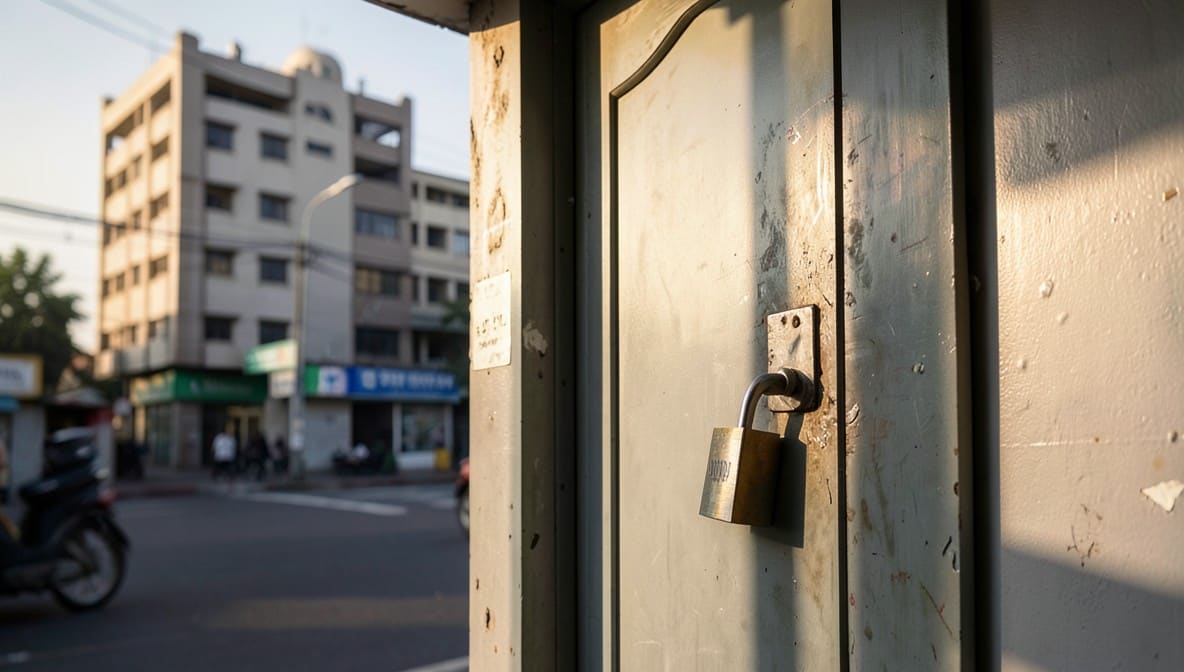
A significant ruling by the Madhya Pradesh High Court at Gwalior clarifies the procedural rights of lessees who inadvertently alter leased municipal property. The Court balanced strict compliance with municipal regulations against the principle of proportionality, holding that while penalties for unauthorized construction are valid, they must not permanently deprive a citizen of livelihood without affording a lawful avenue for regularization.
Background & Facts
The Dispute
The petitioner, Ashok Nandwani, is a lessee of a shop allotted by the Municipal Corporation, Gwalior. In an effort to improve business flow due to poor customer access from the original entrance, he demolished a portion of the side wall and constructed a shutter to create a new outlet. This alteration was carried out without obtaining prior permission from the Corporation. Subsequently, the Corporation imposed a penalty of Rs.30,000 and sealed the shop on the grounds of unauthorized construction under Resolution No. 06.02.2025.
Key Facts
- The petitioner’s shop is located within a municipal market area leased under a formal agreement
- The alteration was made in early 2026, following persistent decline in footfall from the original entrance
- The petitioner claims he was unaware of Resolution No. 06.02.2025, which mandated prior permission for any structural change and prescribed penalties for violations
- The Corporation issued a show-cause notice followed by an order dated 31.03.2026 imposing the penalty
- On 23.04.2026, the Corporation declined the petitioner’s request to unseal the shop, citing non-payment of penalty and absence of compounding application
- The shop remained sealed for over six months, causing severe financial hardship to the petitioner’s business
Procedural History
- Early 2026: Petitioner undertakes structural alteration without permission
- 31.03.2026: Additional Commissioner, Municipal Corporation, Gwalior, issues order imposing penalty of Rs.30,000
- 23.04.2026: Second order issued declining request to unseal the shop
- 22.05.2026: Writ Petition No. 20808 of 2026 filed before the High Court of Madhya Pradesh at Gwalior
- 23.06.2026: Final hearing conducted with consent of parties
The Parties' Positions
For the Petitioner:
- The alteration was inadvertent, bona fide, and made solely to sustain livelihood
- No malice or intent to circumvent municipal law
- Petitioner was unaware of Resolution No. 06.02.2025
- The penalty and sealing have caused undue hardship and violate Article 19(1)(g)
- Sealing should be lifted immediately upon deposit of penalty, pending compounding application
For the Respondent (Municipal Corporation):
- The alteration violated clear provisions of Resolution No. 06.02.2025
- Penalty of Rs.30,000 was imposed in accordance with the resolution
- The order dated 23.04.2026 correctly refused to unseal the shop as no compounding application was filed
- The amount of Rs.30,000 is stated to be penalty only, and compounding fee, if any, remains unascertained
Relief Sought
The petitioner sought:
- Quashing of the penalty and sealing orders dated 31.03.2026 and 23.04.2026
- Direction to remove the seal and permit immediate operation of the shop
- In the alternative, direction to accept payment of penalty and allow compounding application
The Legal Issue
Can a municipal corporation impose a penalty and seal a shop for an inadvertent alteration without providing the lessee a statutory opportunity to apply for compounding, and does such sealing violate the principle of proportionality under Article 14 and 19(1)(g) of the Constitution?
Arguments Presented
For the Petitioner
The petitioner’s counsel relied on the doctrine of proportionality and the principle of audi alteram partem. He argued that the petitioner’s conduct was not malicious and that the Corporation’s resolution explicitly contemplated compounding as a remedial mechanism. Citing State of Madhya Pradesh v. Rameshwar Prasad, he contended that where a statute provides for compounding, the authority must afford a reasonable opportunity to avail it. The sealing of the shop for over six months without any interim relief was disproportionate and violated the right to carry on trade.
For the Respondent
The Government Advocate submitted that the resolution dated 06.02.2025 was duly published and binding. The petitioner’s failure to seek permission constituted a clear violation. The penalty was imposed in accordance with the prescribed schedule. The Corporation was not obligated to unseal the premises until the compounding process was initiated, as the legality of the structure remained under adjudication. The amount of Rs.30,000 was explicitly labeled as penalty, and compounding fee, if applicable, was a separate liability.
The Court's Analysis
The Court acknowledged that the petitioner’s act of altering the structure without permission was a violation of the Municipal Corporation’s resolution. However, it emphasized that the resolution itself contained a provision for compounding - indicating that the Corporation intended to provide a mechanism for regularization, not merely punishment.
"The Corporation itself proposes to regularize the illegal alteration/construction made by a lessee, the petitioner deserves a right to get his case adjudicated and get the compounding fees decided if the said alteration is within permissible limits of the Corporation Act."
The Court held that while the imposition of penalty was legally valid, the immediate sealing of the shop without affording the petitioner an opportunity to apply for compounding was procedurally flawed. The resolution did not bar compounding applications post-penalty; rather, it envisioned compounding as a complementary remedy. The Court further noted that the petitioner had admitted the illegality and expressed willingness to pay the penalty and apply for compounding.
The Court rejected the argument that the penalty amount of Rs.30,000 included compounding fees, as the order clearly distinguished between the two. It observed that the Corporation had not yet determined whether the alteration was within permissible limits for compounding - a determination that required independent adjudication.
The Verdict
The petition was disposed of with the following directions: The petitioner shall deposit Rs.30,000 as penalty within seven days. Upon such deposit, the Municipal Corporation shall immediately remove the seal and permit the petitioner to operate the shop. The petitioner is granted liberty to file an application for compounding of the alteration within 15 days. The Corporation shall decide such application in accordance with the resolution dated 06.02.2025 and applicable municipal law. The final determination of whether the shutter constitutes an illegal construction and whether it is eligible for compounding shall be decided independently by the competent authority. The reopening of the shop is not contingent upon the outcome of the compounding application.
What This Means For Similar Cases
Compounding Is a Right, Not a Discretionary Favor
- Municipal authorities cannot withhold compounding opportunities merely because a penalty has been imposed
- Where a resolution or bylaw provides for compounding, the affected party has a legitimate expectation to apply for it
- Procedural fairness requires that compounding applications be considered even after penalty imposition
Sealing Must Be Proportionate and Temporary
- Permanent sealing without a compounding avenue violates Article 19(1)(g)
- Sealing should be lifted upon payment of penalty if compounding is statutorily available
- The legality of the structure and eligibility for compounding must be adjudicated separately from the penalty enforcement
Municipal Resolutions Must Be Interpreted Harmoniously
-
Penalties and compounding provisions must be read together, not in isolation
-
Authorities cannot use penalty as a tool to permanently extinguish livelihood rights
-
Courts will intervene where procedural mechanisms for regularization exist but are ignored
-
Practitioners must advise clients to immediately file compounding applications upon receipt of penalty notices
-
Municipal officers must issue separate notices for compounding eligibility, not conflate penalty with compounding
-
Courts will not permit indefinite deprivation of business rights where statutory remedies exist