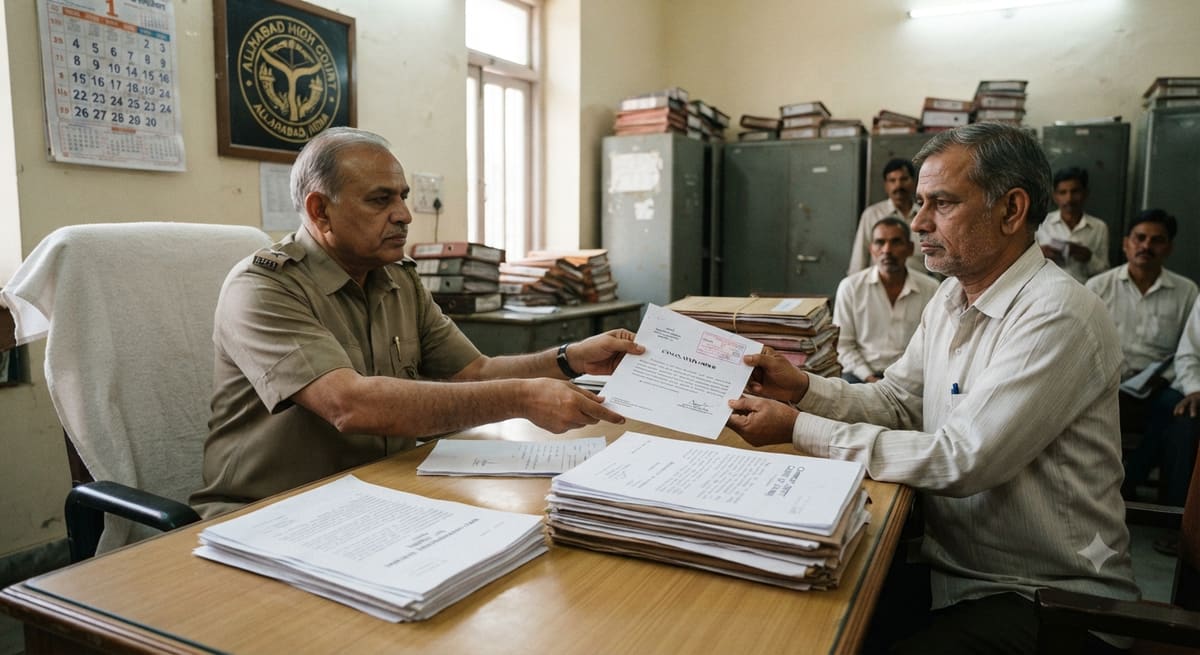
The Bombay High Court has reaffirmed a foundational principle of administrative law: statutory authorities cannot exceed the powers expressly conferred upon them, even when faced with allegations of misconduct. In this case, the Court quashed a revisional order that imposed a monetary liability on a fair price shop licensee, emphasizing that jurisdictional limits are not procedural technicalities but constitutional safeguards.
Background & Facts
The Dispute
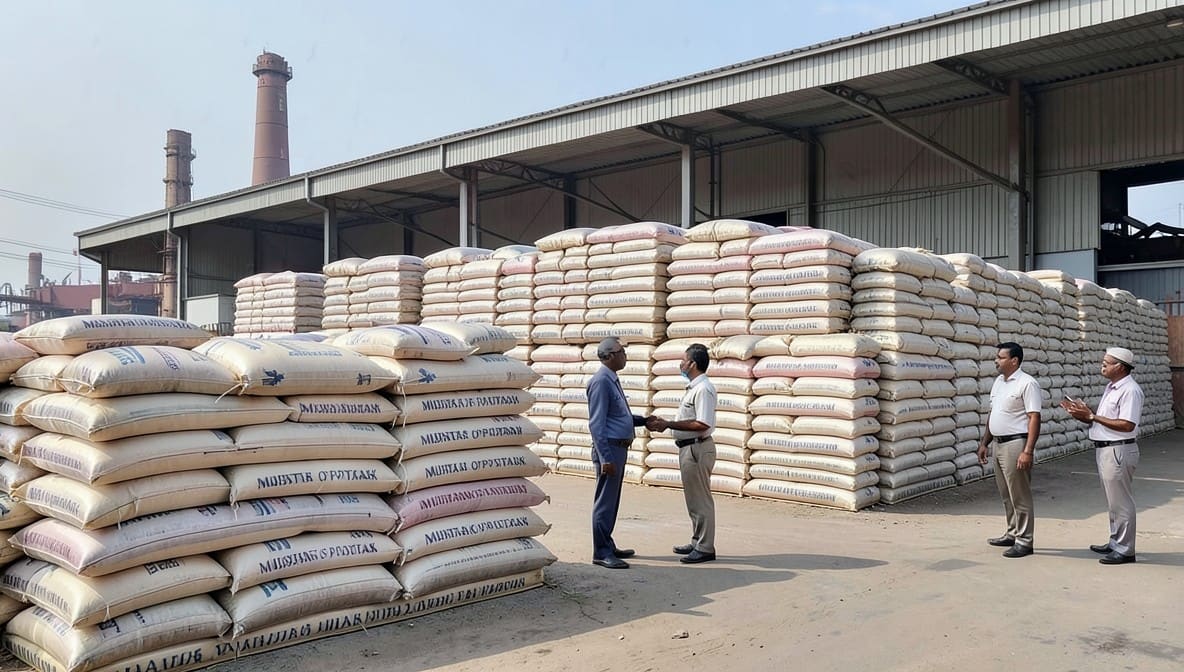
The petitioner, Savarmal Sitaram Parekh, operated a fair price shop under a licence granted by the State of Maharashtra pursuant to the Public Distribution System (PDS) governed by the Essential Commodities Act, 1955 and the relevant Fair Price Shop Control Order. On 11th February, 2014, an inspection of the petitioner’s shop revealed alleged irregularities, including diversion and misappropriation of essential commodities. Based on the inspection report, the competent authority issued an order on 12th February, 2014 suspending the petitioner’s licence. A First Information Report was also registered against him in connection with the same allegations.
Key Facts
- The petitioner’s fair price shop licence was issued under the statutory framework governing the Public Distribution System
- Inspection conducted on 11.02.2014 alleged misappropriation of commodities valued at Rs. 1,27,332/
- Licence suspended by order dated 12.02.2014
- Petitioner filed a revision before the Revisional Authority challenging the suspension
- Revisional Authority, by order dated 11.09.2014, upheld the suspension but additionally directed the petitioner to deposit Rs. 1,27,332/- as compensation for alleged misappropriated goods and imposed a fine of Rs. 10,000/-
- The petitioner had not been given a separate hearing on the quantum of loss or the imposition of monetary liability
- The petitioner deposited Rs. 1,27,332/- with the High Court on 13.01.2016 pursuant to an interim order
Procedural History
- 11.02.2014: Inspection of fair price shop conducted
- 12.02.2014: Licence suspended by competent authority
- 11.09.2014: Revisional Authority passes impugned order upholding suspension and imposing monetary liability
- 08.06.2015: Writ Petition No. 831 of 2015 filed before Bombay High Court
- 13.01.2016: High Court directs petitioner to deposit Rs. 1,27,332/- with court
- 08.06.2026: Judgment delivered by Justice Amit Borkar
The Parties' Positions
For the Petitioner: Argued that the Revisional Authority had no statutory power to impose monetary liability or direct recovery of alleged losses. Contended that revisional jurisdiction is confined to reviewing the legality and propriety of the suspension order only, and cannot be used to create new liabilities. Relied on the principle that quasi-judicial bodies must act within the four corners of the statute.
For the Respondent State: Argued that the Revisional Authority was merely ensuring accountability for misappropriation of public resources and that the monetary direction was incidental to the revision proceedings. Suggested that the petitioner’s conduct warranted financial consequences regardless of statutory gaps.
Relief Sought
The petitioner sought quashing of the revisional order dated 11.09.2014, particularly the directions to deposit Rs. 1,27,332/- and pay Rs. 10,000/- as fine. He also sought continuation of his licence during pendency and return of the deposited amount.
The Legal Issue
Can a revisional authority, under the Fair Price Shop Control Order or the Essential Commodities Act, 1955, impose a monetary liability or direct recovery of alleged misappropriated commodity value when no statutory provision expressly confers such power?
Arguments Presented
For the Petitioner
The petitioner relied on the settled doctrine that quasi-judicial authorities derive their powers solely from statute. He argued that while the Control Order and the Act empower authorities to suspend or cancel licences for violations, they contain no provision authorizing the imposition of monetary penalties or recovery of alleged losses during revision proceedings. He cited State of U.P. v. Mohammad Noor and K. S. Puttaswamy v. Union of India to underscore that jurisdiction cannot be inferred by implication. The monetary directions, he contended, were punitive in nature and required express legislative sanction.
For the Respondent
The State contended that the Revisional Authority was merely acting in the larger public interest to prevent loss to the exchequer. It argued that the power to suspend a licence inherently includes the power to ensure restitution for damages caused by the licensee’s misconduct. The State further suggested that the petitioner had not been prejudiced since the amount was deposited with the Court and could be refunded if the allegations were ultimately disproved.
The Court's Analysis
The Court undertook a rigorous statutory interpretation of the Fair Price Shop Control Order and the Essential Commodities Act, 1955. It held that revisional jurisdiction is inherently limited to reviewing the legality, propriety, and correctness of the order under challenge. The Court emphasized that revision is not an appellate or original proceeding.
"The revisional power could have been exercised for the purpose of affirming the order, setting aside the order, modifying the order, or remanding the matter for fresh consideration in accordance with law. However, the revisional jurisdiction cannot travel beyond the boundaries prescribed by the statute itself."
The Court rejected the State’s argument that monetary recovery was incidental to suspension. It drew a clear distinction between regulatory authority and financial adjudication: "One cannot be substituted for the other." The Court noted that while the legislature had provided for suspension, cancellation, and fines under specific provisions, it had not granted revisional authorities the power to assess loss or order repayment. The absence of such a provision was not an oversight but a deliberate legislative choice.
The Court further observed that the Revisional Authority had effectively transformed a review proceeding into a quasi-criminal or civil recovery proceeding without affording the petitioner a fair opportunity to contest the valuation or the nature of the alleged loss. This violated the principles of natural justice.
"In absence of such statutory sanction, no authority exercising quasi judicial powers can assume unto itself a jurisdiction which the legislature has not chosen to confer."
The Court declined to rule on the merits of the allegations of misappropriation, noting that the revisional authority had not properly adjudicated the suspension order on its own merits. The focus had shifted from legality of suspension to imposition of financial liability, which was beyond its mandate.
The Verdict
The writ petition was allowed. The impugned order dated 11.09.2014 was quashed and set aside. The revision application was restored to the file of the Revisional Authority for fresh adjudication. The petitioner was permitted to continue operating the fair price shop during pendency, subject to licence conditions. The amount of Rs. 1,27,332/- deposited with the Court on 13.01.2016 was ordered to be withdrawn by the petitioner. The Revisional Authority was directed to decide the matter within eight weeks from receipt of the order, after affording a full opportunity of hearing to all parties, and without being influenced by the now-quashed monetary directions.
What This Means For Similar Cases
Revisional Powers Are Strictly Limited by Statute
- Practitioners must challenge any revisional order that imposes fines, recovery orders, or penalties absent explicit statutory authorization
- The burden lies on the authority to point to the enabling provision; silence in the statute equals absence of power
- Courts will not uphold financial liabilities imposed under the guise of "correcting" administrative orders
Monetary Liability Requires Separate Proceedings
- Alleged financial losses must be pursued through separate recovery proceedings under applicable civil or penal provisions
- Revisional authorities cannot act as debt-collecting bodies under the guise of reviewing licence suspensions
- Any attempt to merge disciplinary action with financial adjudication without statutory backing is ultra vires
Natural Justice Must Be Preserved in Revisional Proceedings
- Parties must be given a fair opportunity to contest the basis and quantum of any financial claim before it is imposed
- Findings on misconduct must be clearly separated from the jurisdictional scope of the revision
- Courts will remand matters where the authority has deviated from its core mandate, even if the outcome appears "fair"