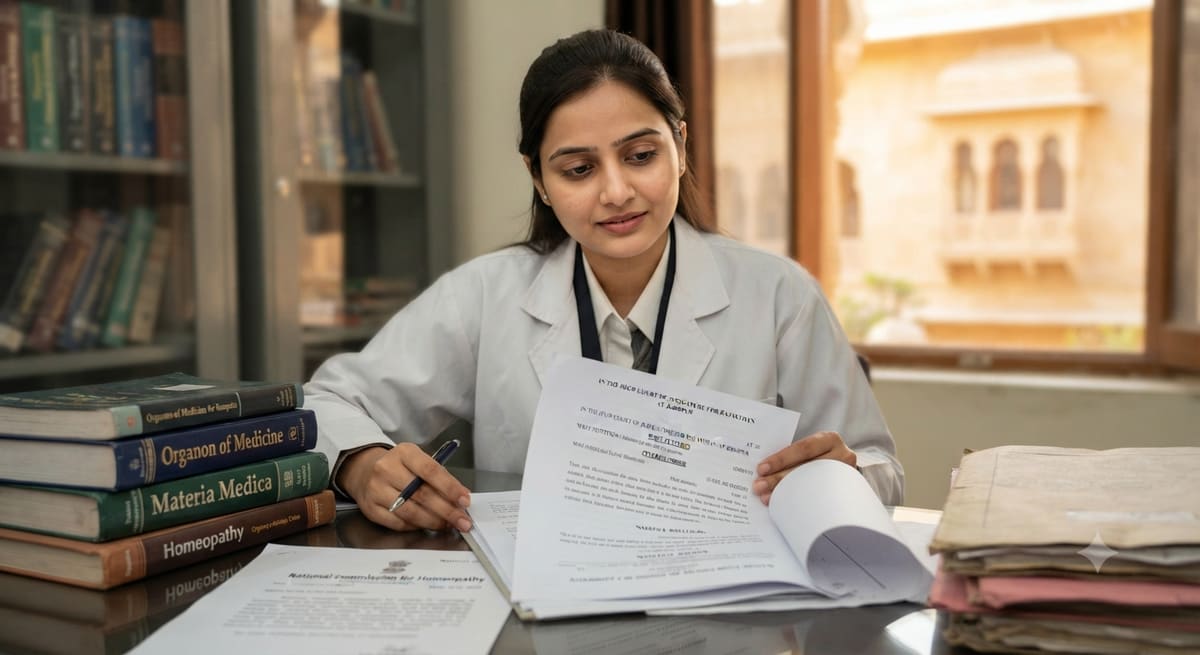
The Bombay High Court has intervened in a critical dispute over regulatory overreach in pharmacy education, holding that the State of Maharashtra cannot impose a blanket prohibition on the establishment of new B.Pharmacy and D.Pharmacy institutions without statutory authority. The decision reaffirms the primacy of the Pharmacy Council of India as the expert regulatory body and protects the fundamental right to establish educational institutions under Article 19(1)(g) of the Constitution.
Background & Facts
The Dispute
The petitioners, Dhumane Patil Foundation and another, challenged the State of Maharashtra’s decision to prohibit the establishment of new B.Pharmacy and D.Pharmacy institutions and the increase in intake capacity of existing institutions from Academic Year 2026-2027 to Academic Year 2030-2031. This prohibition was communicated via an order dated 14th May 2026, followed by a formal communication dated 8th July 2026 issued by Respondent No. 5.
Key Facts
- The petitioners had secured approval from the Pharmacy Council of India (PCI) on 13th May 2026 for establishing new pharmacy institutions.
- Despite PCI approval, the State issued minutes on 14th May 2026 imposing a blanket ban on new institutions and intake increases.
- The impugned communication dated 8th July 2026 formalized this ban, prompting the petitioners to file the present writ petition on urgent grounds.
- A similar challenge was already pending before the Aurangabad Bench of the Bombay High Court in Mauli Vidyapith Kaij Through its Authorized Signatory vs. Pharmacy Council of India and Ors. (Writ Petition No. 5855 of 2026).
Procedural History
- 1st July 2026: Aurangabad Bench of the Bombay High Court, in Mauli Vidyapith Kaij (supra), held the State’s action to be without jurisdiction, relying on the Supreme Court’s judgment in Pharmacy Council of India vs. Rajeev College of Pharmacy and Ors. (2023) 3 SCC 502 and the Rajasthan High Court’s decision in Global Pharmacy College vs. State of Rajasthan (2025 SCC OnLine Rajasthan 5228).
- 1st July 2026: Aurangabad Bench granted ad-interim relief allowing institutions to participate in the admission, affiliation, and approval process for Academic Year 2026-27.
- 24th July 2026: Present writ petition filed before the Bombay High Court (Principal Seat) seeking similar relief.
Relief Sought
The petitioners sought ad-interim relief to:
- Permit participation in the admission, affiliation, and approval process for Academic Year 2026-27 pursuant to PCI approval.
- Stay the operation of the impugned minutes dated 14th May 2026 and communication dated 8th July 2026.
The Legal Issue
The core legal question was whether the State of Maharashtra could impose a blanket ban on the establishment of new pharmacy institutions and intake increases without statutory authority, particularly when such action conflicts with the Pharmacy Council of India’s regulatory powers and violates Article 19(1)(g) of the Constitution.
Arguments Presented
For the Petitioners
- Relied on Section 77 of the Maharashtra Public Universities Act, 2016, arguing that Respondent No. 5 (the Commission) lacked the power to impose such a blanket ban.
- Cited the Supreme Court’s judgment in Pharmacy Council of India vs. Rajeev College of Pharmacy and Ors. (2023) 3 SCC 502, which held that a blanket prohibition on pharmacy colleges cannot be imposed by an executive resolution.
- Argued that the State’s action was ultra vires its jurisdiction and violated the fundamental right to establish educational institutions under Article 19(1)(g).
For the Respondents
- The State, through the Additional Government Pleader (AGP), also addressed Section 77 of the Maharashtra Public Universities Act, 2016, though the specifics of their arguments were deferred for final hearing.
- The State contended that the ban was a policy decision aimed at preventing the mushrooming of substandard pharmacy colleges.
The Court's Analysis
The Court aligned with the Aurangabad Bench’s reasoning, emphasizing that the State’s action lacked jurisdiction and was inconsistent with the regulatory framework governing pharmacy education. The Court relied on two key precedents:
"The Supreme Court in Pharmacy Council of India vs. Rajeev College of Pharmacy and Ors. has held that a blanket prohibition on the establishment of Pharmacy Colleges cannot be imposed by an executive resolution."
"The Rajasthan High Court in Global Pharmacy College vs. State of Rajasthan observed that the State Government’s authority to issue NOCs cannot override the PCI’s powers as the expert regulatory authority."
The Court noted that while the State could impose restrictions in the public interest, such restrictions must be strictly in accordance with law and subject to judicial scrutiny. The PCI, as the apex regulatory body, retains the authority to approve new institutions, and the State cannot unilaterally impose a blanket ban without statutory backing.
The Verdict
The Bombay High Court granted ad-interim relief in terms of prayer clause (e), permitting the petitioner institution to participate in the admission, affiliation, and approval process for Academic Year 2026-27 pursuant to the PCI approval dated 13th May 2026. The State was directed to file its Affidavit-in-Reply within two weeks (by 7th August 2026), with the petitioners allowed to file a rejoinder within one week thereafter (by 14th August 2026). The matter was listed for further consideration on 17th August 2026.
What This Means For Similar Cases
State Cannot Override PCI’s Regulatory Authority
- The Pharmacy Council of India (PCI) remains the sole expert body empowered to approve new pharmacy institutions.
- State governments cannot impose blanket bans on new institutions or intake increases without statutory authority or overriding the PCI’s decisions.
Executive Resolutions Cannot Restrict Fundamental Rights
- Any restriction on the fundamental right to establish educational institutions under Article 19(1)(g) must be imposed through proper legislation and not via executive resolutions.
- Courts will scrutinize such restrictions on the touchstone of constitutional validity and proportionality.
Interim Relief for Approved Institutions
- Institutions with PCI approval can seek interim relief to participate in admission processes, even if the State imposes a blanket ban.
- Courts are likely to grant such relief if the State’s action is found to be without jurisdiction or arbitrary.