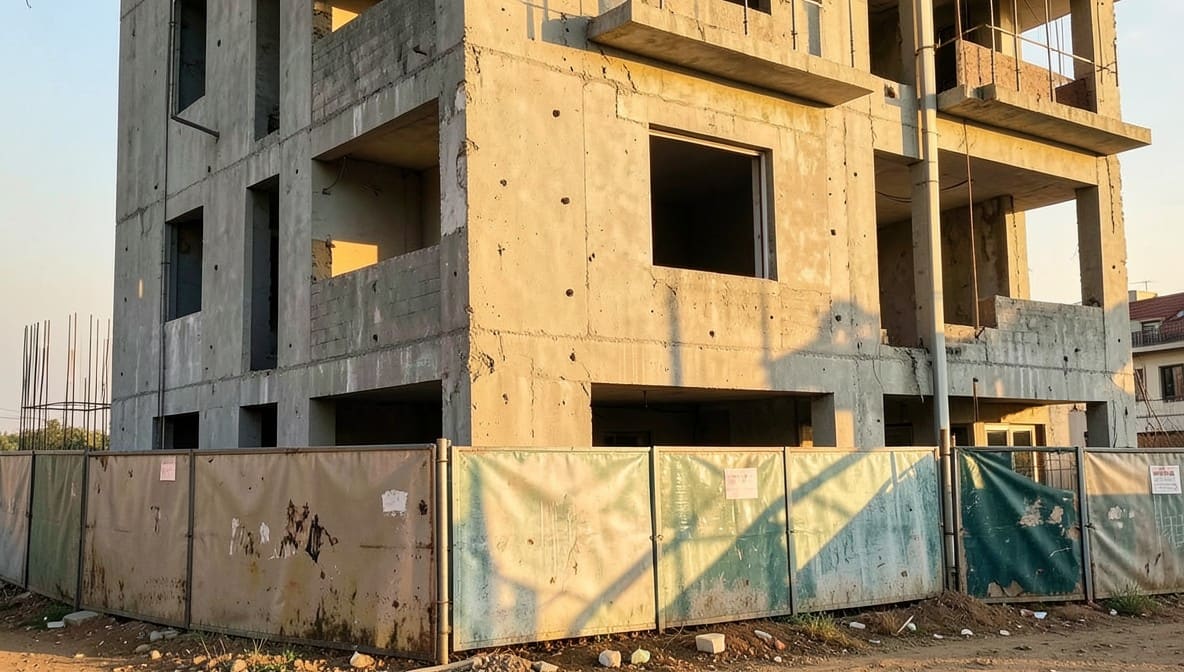
The Delhi State Consumer Disputes Redressal Commission has clarified that builders cannot impose arbitrary charges or delay possession indefinitely while demanding additional fees not stipulated in the agreement. This judgment reinforces the rights of homebuyers under the Consumer Protection Act, 1986, and sets a clear precedent on the calculation of compensation for delayed handover.
Background & Facts
The Dispute
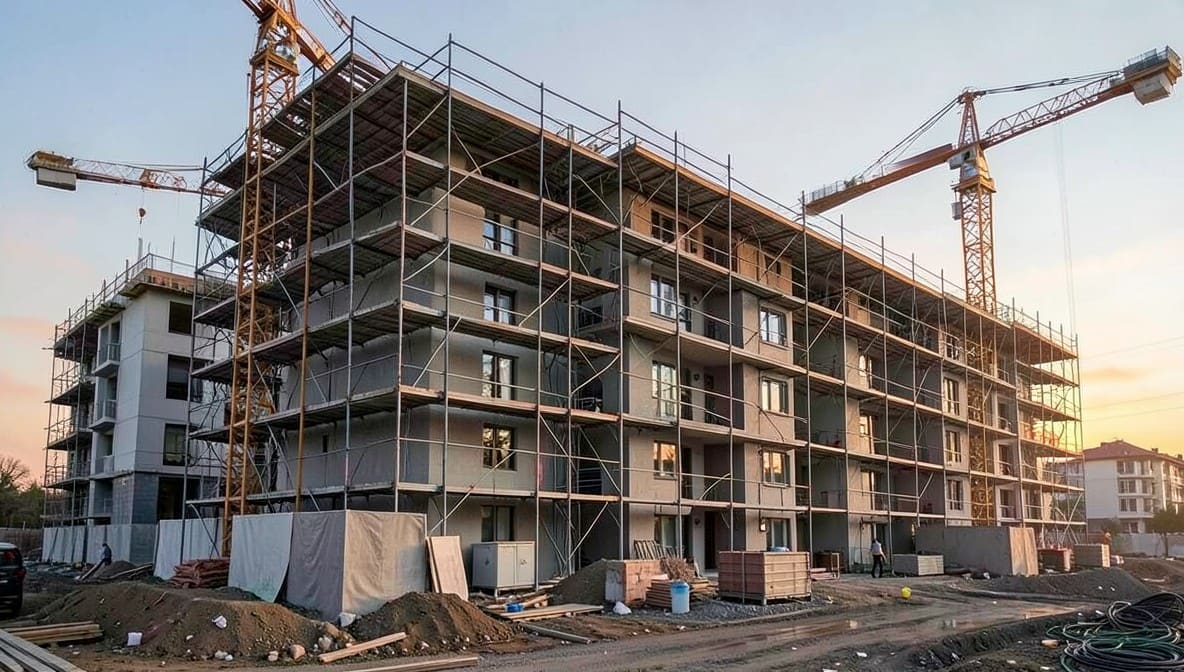
The complainants, Mr. Rajendra Kumar Mittal and Ms. Rachna Mittal, purchased a flat (T6-602) in the Parsvnath Panorama project at Greater Noida from Parsvnath Developers Ltd. under a Flat Buyer Agreement dated 17.06.2005. The basic sale price was Rs. 57,52,500. Clause 12(a) of the agreement stipulated that construction would be completed within 36 months from the date of commencement of construction of the block. The complainants made payments as per the payment schedule and expected possession within the contractual timeframe.
Key Facts
- Flat booked on 04.04.2005; agreement executed on 17.06.2005
- Contractual possession deadline: 36 months from commencement of construction of the block
- No documentary evidence provided by the builder to establish the actual commencement date of construction
- Complainants paid Rs. 51,07,625 by 10.10.2005, clearing all dues as per the builder’s demand schedule
- Builder failed to deliver possession by 18.06.2008 (assumed completion date based on agreement date)
- Builder issued multiple demand letters between 2010 and 2016, raising arbitrary charges totaling Rs. 22,20,879
- Charges included: Rs. 4,12,875 (basic increase), Rs. 5,75,341 (interest on delayed payment), Rs. 11,24,613 (holding charges), Rs. 1,08,050 (VAT), Rs. 6,58,173 (registration, stamp duty, maintenance)
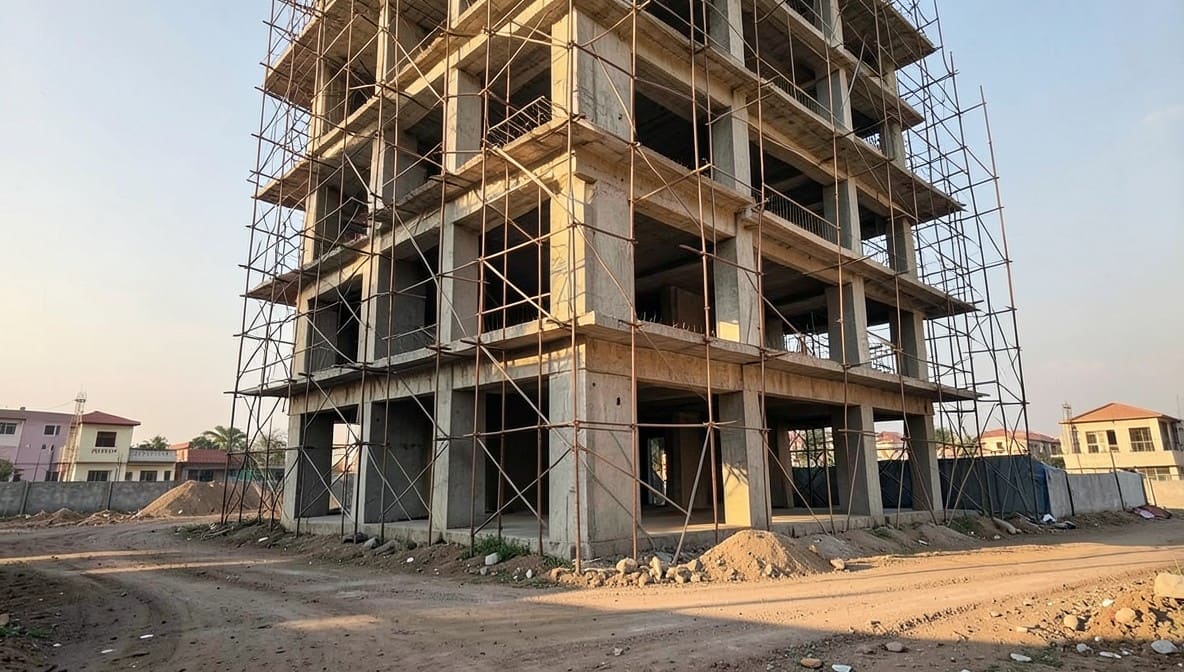
- Complainants never received possession; project lacked promised amenities (swimming pool, club, parking, children’s park)
- Builder did not disclose carpet area at the time of booking
- Legal notice dated 22.08.2016 was sent but ignored
Procedural History
- 17.06.2005: Flat Buyer Agreement executed
- 10.10.2005: Final payment made by complainants; ledger shows zero balance
- 29.12.2010: Builder offered possession with additional dues of Rs. 3,66,000; complainants objected
- 23.05.2011, 15.02.2012, 11.09.2012, 18.12.2015: Repeated demands for additional charges
- 30.06.2016: Final demand letter issued for Rs. 22,20,879
- 07.10.2016: Complaint filed before Delhi State Commission
- 17.10.2023: Delhi State Commission dismissed complaint
- 12.04.2024: National Consumer Disputes Redressal Commission set aside the dismissal and remanded the matter for fresh adjudication
- 27.05.2026: Present judgment passed by Delhi State Commission
Relief Sought
The complainants sought:
- Delivery of vacant and peaceful possession of the flat
- Removal of all illegal and arbitrary charges
- Compensation of Rs. 20 lakhs for harassment and financial loss
- Legal expenses of Rs. 2 lakhs
- Waiver of statutory notice
- Any further relief deemed fit
The Parties' Positions
Complainants: Argued that they fulfilled all payment obligations on time, the builder failed to deliver possession, and the additional charges were unjustified, arbitrary, and not supported by documentation. They relied on Anoop K. Joshi, Atanu Mukherjee, and Arifur Rahman Khan to establish their status as consumers and the builder’s liability for deficiency.
Respondent (Builder): Contended that the complainants were not consumers as the purchase was for investment purposes; that complainants defaulted on payments; that possession was offered on 29.12.2010; and that the matter involved complex civil issues beyond the jurisdiction of the consumer forum.
Relief Sought
The complainants sought delivery of possession, removal of illegal charges, compensation of Rs. 20 lakhs, legal costs of Rs. 2 lakhs, and interest on payments made.
The Legal Issue
The central questions were: (1) Whether homebuyers who purchase residential property for personal use, even if they own multiple properties, qualify as ‘consumers’ under the Consumer Protection Act, 1986? (2) Whether failure to deliver possession within the contractual period constitutes a ‘deficiency in service’? (3) Whether builders can impose arbitrary charges for holding, interest, or increased area without documentary justification?
Arguments Presented
For the Appellant/Petitioner
The complainants relied on Aashish Oberai v. Emaar MGF Land Limited and Narinder Kumar Bairwal v. Ramprastha Promoters to establish that ownership of multiple properties does not automatically render a purchase commercial. They cited Mehnga Singh Khera v. Unitech Ltd. to argue that non-delivery of possession is a continuous wrong with a recurring cause of action. They further relied on Arifur Rahman Khan v. DLF Southern Homes to show that delay in possession is a clear deficiency in service. They emphasized that the builder failed to prove any default in payment and that the additional charges were not supported by approved layouts or contractual terms.
For the Respondent/State
The builder argued that the complainants were not consumers because the purchase was for investment, citing no documentary evidence of commercial intent. They claimed the complainants defaulted on payments and that possession was offered on 29.12.2010. They contended that the matter involved complex questions of contract and property law, requiring civil court adjudication, and that the consumer forum lacked jurisdiction to determine title or enforce conveyance.
The Court's Analysis
The Commission first addressed the issue of consumer status. It held that mere ownership of multiple properties does not equate to commercial purpose. The burden lies on the builder to prove that the purchase was made with the intent to resell for profit, which was not discharged. The Commission relied on Aashish Oberai and Narinder Kumar Bairwal to affirm that the complainants were consumers under Section 2(1)(d) of the Consumer Protection Act, 1986.
"A person cannot be said to have purchased a house for a commercial purpose only by proving that he owns or had purchased more than one houses or plots."
On the issue of cause of action, the Commission applied Mehnga Singh Khera v. Unitech Ltd., holding that non-delivery of possession is a continuous wrong. The complaint filed on 07.10.2016 was therefore within limitation, as the cause of action persisted until possession was delivered.
The Commission rejected the builder’s contention that the matter involved complex legal questions beyond the forum’s jurisdiction. It cited Narne Construction v. Union of India and Arifur Rahman Khan v. DLF Southern Homes to affirm that housing construction by private developers constitutes a ‘service’ under Section 2(1)(o), and delay in delivery constitutes ‘deficiency’ under Section 2(1)(g).
"A failure of the developer to comply with the contractual obligation to provide the flat to a flat purchaser within a contractually stipulated period amounts to a deficiency."
Regarding payments, the Commission reviewed the customer ledger and found the complainants had paid Rs. 51,07,625 against a basic sale price of Rs. 57,52,500, leaving only Rs. 6,44,875 outstanding. The builder’s claims of delayed payment interest were rejected because no demand for delay was raised at the time of payment, and no interest was levied until years later.
The Commission held that holding charges, VAT, and maintenance charges were not payable until possession was handed over. The demand for increased super area was rejected under Pawan Gupta v. Experion Developers, as no approved layout comparison was provided.
On compensation, the Commission followed Santosh S. Mayekar v. Rupji Construction and the Supreme Court’s modification in Arifur Rahman Khan, reducing the interest rate from 8% to 6% per annum on the amount paid (Rs. 51,07,625), from the contractual possession date (18.06.2008) until the date of conveyance.
The Verdict
The complainants succeeded. The Commission directed:
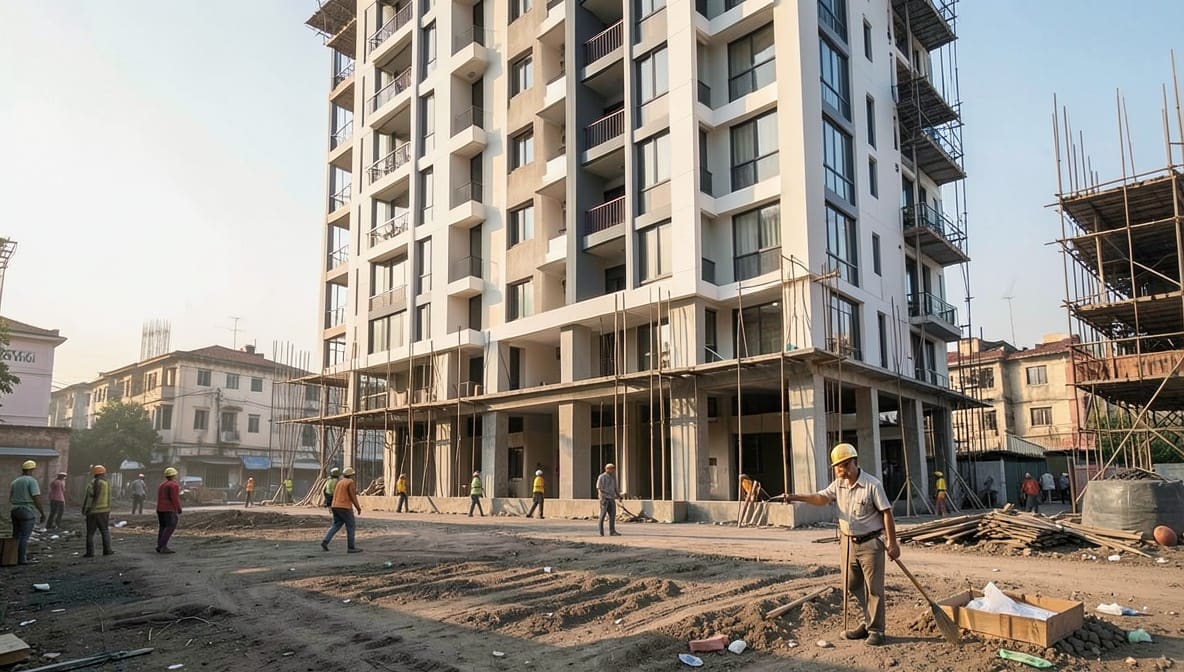
- Parsvnath Developers Ltd. to hand over vacant, peaceful possession of Flat T6-602 within two months from the date of this judgment
- The complainants to pay the outstanding balance of Rs. 6,44,875 within the same period
- The builder to pay compensation in the form of simple interest at 6% per annum on Rs. 51,07,625 from 18.06.2008 until the date of execution of the conveyance deed
- The builder to pay Rs. 1,00,000 as compensation for mental agony and harassment
- The builder to pay Rs. 50,000 as litigation costs
- If the builder fails to comply, the complainants may approach the Commission under Sections 25 and 27 of the Consumer Protection Act, 1986
What This Means For Similar Cases
Builder Cannot Impose Charges Without Justification
- Practitioners must challenge any post-agreement demand for ‘holding charges’, ‘interest on delayed payment’, or ‘increased super area’ unless supported by approved layouts, contractual clauses, or prior notice
- Builders must produce documentary proof of commencement of construction to determine contractual timelines
- Any charge levied after the possession date without delivery is prima facie illegal
Continuous Wrong Doctrine Applies to Possession Delays
- Consumer complaints filed years after the contractual date remain maintainable if possession has not been delivered
- Each day of delay constitutes a fresh cause of action, making limitation defenses ineffective unless possession was tendered and refused
- Legal notices sent during the delay period strengthen the complainant’s position
Burden of Proof on Builder to Disprove Consumer Status
-
Mere allegations of ‘investment purpose’ are insufficient to deny consumer status
-
Builders must produce evidence of resale intent, such as advertisements, transaction records, or prior sales history
-
Ownership of multiple properties is not a proxy for commercial purpose under the Act
-
Always verify the date of commencement of construction in the agreement
-
Demand itemized payment schedules and receipts
-
Refuse to pay any additional charges until possession is tendered
-
File complaints immediately upon prolonged delay - the law favors timely action even if delay spans years