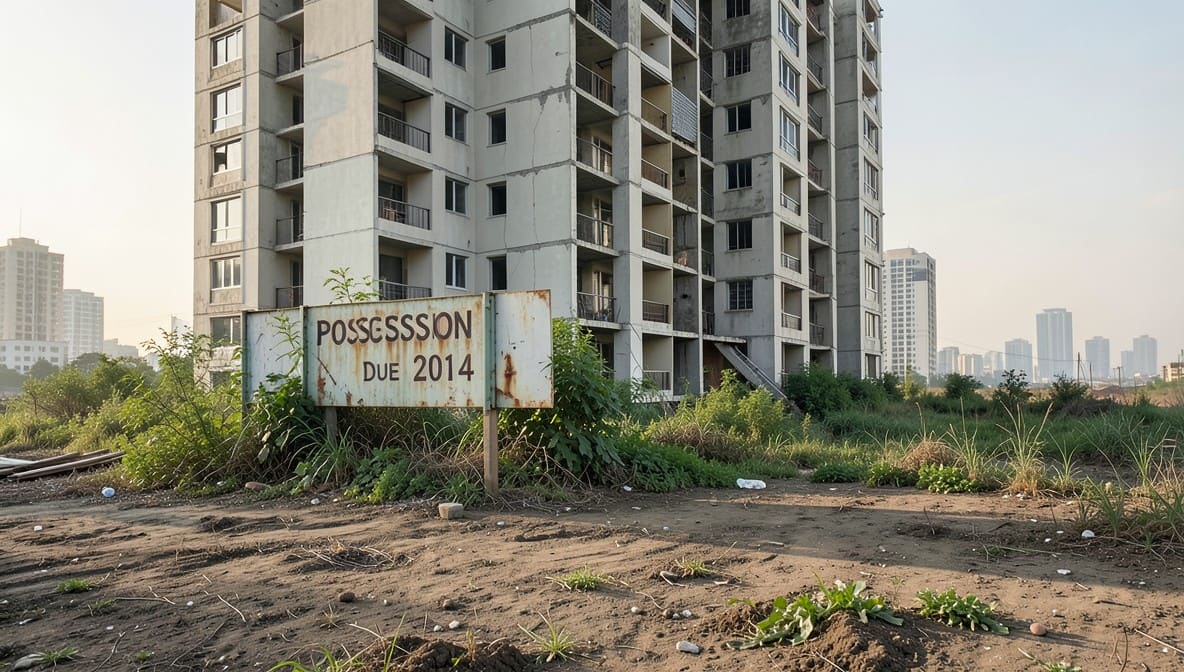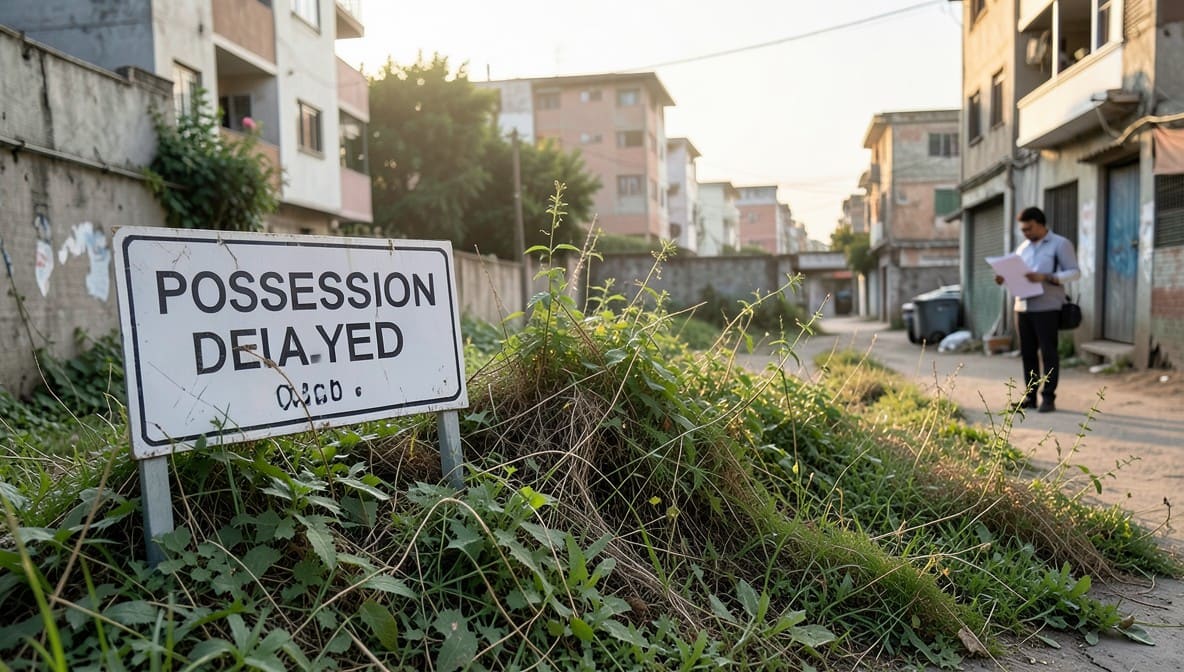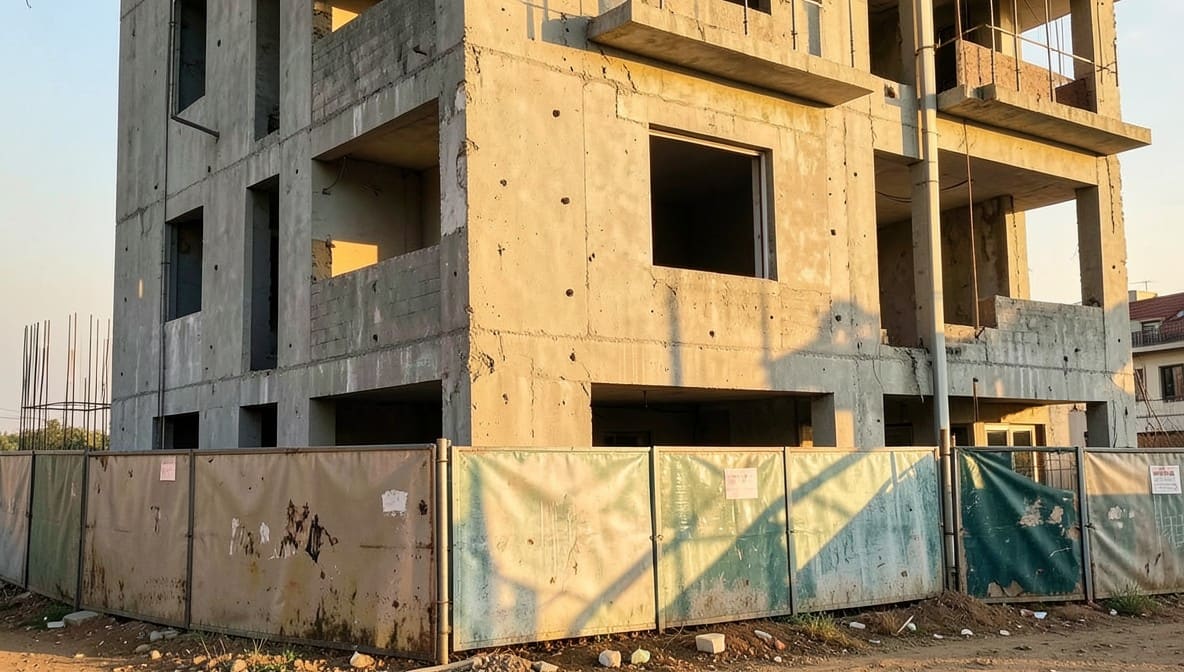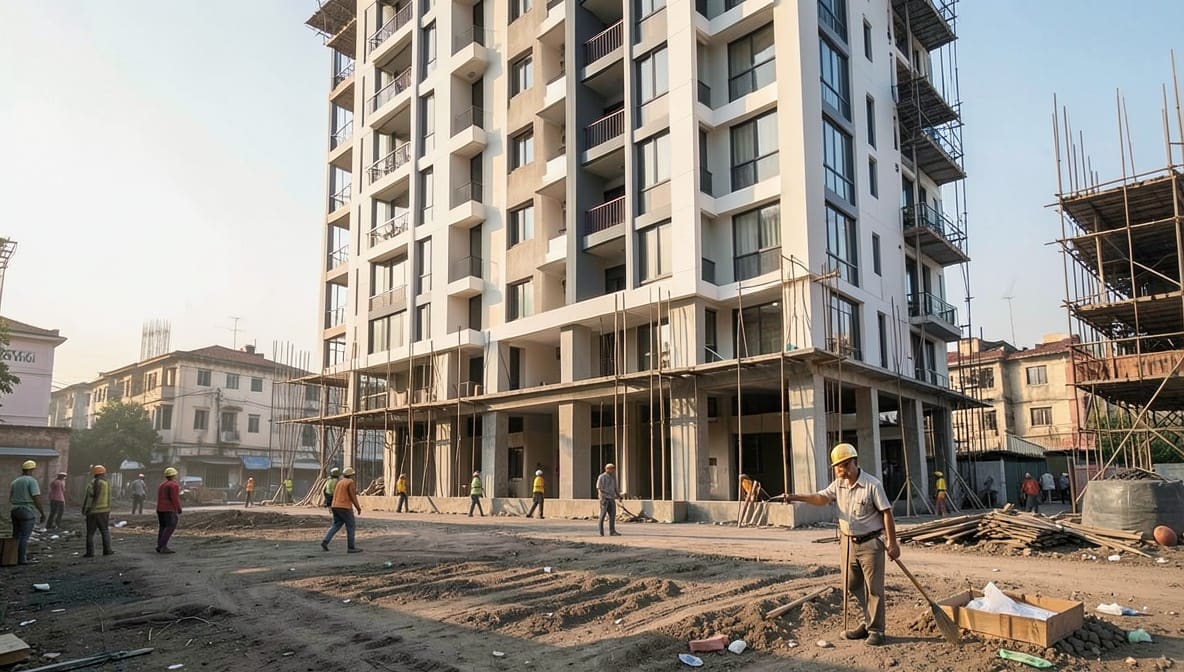
The West Bengal State Consumer Disputes Redressal Commission has reaffirmed that unjustified delays in delivering possession of residential flats constitute gross deficiency in service under the Consumer Protection Act, 1986. The ruling clarifies that partial payments made during settlement negotiations do not extinguish the original contractual liability unless there is clear evidence of accord and satisfaction.
Background & Facts
The Dispute
The complainants, Dr. Anup Kr. Bandyopadhyay and Dr. Jayasri Banerjee, entered into an Agreement for Sale dated 29.09.2014 with Bengal Omnitech Nirman Ltd. (O.P. No. 1) and its director, Sri Basant Kr. Sethia (O.P. No. 2), for the purchase of a residential flat in Kolkata. The total consideration was Rs. 33,67,780. The agreement stipulated that possession of the flat would be delivered by June 2017.
Key Facts
- The complainants paid an aggregate amount of Rs. 21,16,265/- in multiple tranches between 2014 and 2016.
- Despite the stipulated deadline, possession was not delivered by June 2017 or at any point thereafter.
- On 07.05.2018, the parties entered into a settlement under which O.P. Nos. 1 & 2 agreed to refund Rs. 26,49,740/- (inclusive of interest and compensation) on or before 07.06.2018.
- Only Rs. 10,00,000/- was paid on 26.07.2018, leaving a balance of Rs. 16,49,740/- unpaid.
- The complainants issued an Advocate’s notice dated 31.12.2018 demanding payment of the balance, which remained unaddressed.
- The complainants, both retired, were forced to reside in rented accommodation, incurring additional financial burden.
- The complainants alleged that the developer also demanded premature payment of service tax, violating Clause 4.9 of the Agreement.
Procedural History
- 29.09.2014: Agreement for Sale executed.
- June 2017: Stipulated date for delivery of possession.
- 07.05.2018: Settlement agreement reached.
- 07.06.2018: Deadline for refund under settlement.
- 26.07.2018: Partial payment of Rs. 10,00,000/- made.
- 31.12.2018: Legal notice issued by complainants.
- 19.03.2019: Complaint filed before State Consumer Disputes Redressal Commission (Complaint No. SC/19/CC/308/2019).
- 07.05.2026: Order passed by the Commission.
The Parties' Positions
Complainants: Argued that the developer’s failure to deliver possession constituted deficiency in service and unfair trade practice. They maintained that the settlement did not extinguish the original agreement and that the partial payment was not accepted as full and final settlement.
Opposite Parties (O.P. Nos. 1 & 2): Contended that the settlement dated 07.05.2018 resulted in novation under Section 62 of the Indian Contract Act, 1872, thereby extinguishing the original agreement. They argued that acceptance of Rs. 10,00,000/- amounted to acquiescence and estoppel, barring further claims.
Relief Sought
The complainants sought:
- Refund of Rs. 21,16,265/- with interest
- Compensation of Rs. 7,00,000/- for mental agony and harassment
- Litigation costs
- Possession of the flat or, alternatively, full refund
- Restraint on alienation of the flat
The Legal Issue
The central questions were: (1) Whether the complaint is maintainable under the Consumer Protection Act, 1986; (2) Whether the delay in delivery of possession constitutes deficiency in service; (3) Whether the settlement dated 07.05.2018 operated as a novation extinguishing the original agreement; and (4) Whether the complainants are entitled to refund, interest, and compensation.
Arguments Presented
For the Appellant/Petitioner
The complainants’ counsel argued that the developer’s failure to deliver possession by June 2017, despite receipt of over Rs. 21 lakh, amounted to gross deficiency in service under Section 2(1)(g) of the Consumer Protection Act, 1986. Reliance was placed on Lucknow Development Authority v. M.K. Gupta and Kolkata West International City Pvt. Ltd. v. Devasis Rudra to establish that unjustified delay in housing projects qualifies as deficiency. The counsel emphasized that the settlement was not a concluded contract but a negotiation, and the partial payment of Rs. 10,00,000/- did not constitute accord and satisfaction. The complainants’ financial hardship due to prolonged rental accommodation and mental agony were highlighted as grounds for compensation.
For the Respondent/State
The opposite parties’ counsel contended that the settlement dated 07.05.2018 constituted a novation under Section 62 of the Indian Contract Act, 1872, thereby replacing the original agreement. They argued that the complainants’ acceptance of Rs. 10,00,000/- amounted to acquiescence and estoppel, barring further claims. The counsel further submitted that the claim for Rs. 7,00,000/- compensation was excessive and unsupported, and that only nominal interest at bank rates should be awarded.
The Court's Analysis
The Commission first affirmed that homebuyers are consumers under the Act and housing construction is a service, making the complaint maintainable. It then held that the delay of over ten months beyond the stipulated date of possession constituted a fundamental breach and deficiency in service, as per Lucknow Development Authority v. M.K. Gupta and Pioneer Urban Land & Infrastructure Ltd. v. Govindan Raghavan.
The core legal dispute centered on whether the settlement of 07.05.2018 extinguished the original contract. The Commission rejected the plea of novation, observing that for novation to occur under Section 62 of the Indian Contract Act, there must be a clear, complete, and binding substitution of the original contract. The Commission found no evidence of consensus ad idem or enforceable terms in the settlement. The document lacked signatures, formal execution, or mutual acknowledgment of discharge.
"The evidence discloses, at best, a stage of negotiation or an inchoate understanding, which lacked the essential attributes of consensus ad idem and enforceability."
The Commission further held that mere part payment does not discharge the entire liability unless accepted in full and final settlement. Citing Union of India v. Kishorilal Gupta & Bros., it emphasized that the essential element of accord and satisfaction - a clear intention to treat the payment as complete discharge - was absent. The complainants never expressed acceptance of the Rs. 10,00,000/- as full settlement.
Regarding compensation, the Commission applied the test laid down in Ghaziabad Development Authority v. Balbir Singh, considering the extent of delay, conduct of the developer, and financial hardship. The Commission found the complainants’ situation - retired individuals forced into rental accommodation, with substantial funds retained without justification - warranted compensation.
The Verdict
The complaint succeeded against O.P. Nos. 1 & 2. The Commission ordered: (1) Payment of the balance amount of Rs. 16,49,740/-; (2) Simple interest at 7% per annum from 07.06.2018 until realization; (3) Compensation of Rs. 4,50,000/- for mental agony and harassment; (4) Litigation costs of Rs. 50,000/-. The total amounts under points (1), (3), and (4) must be paid within 45 days of the order. The prayer for possession was declined, as the complainants had opted for refund under the settlement. The developer was restrained from creating third-party interests in the flat until compliance. No relief was granted against O.P. Nos. 3 to 26, who were held ex parte.
What This Means For Similar Cases
Settlements Do Not Automatically Extinguish Original Obligations
- Practitioners must demonstrate clear, written, and executed terms to prove novation under Section 62 of the Indian Contract Act.
- Mere verbal agreements or partial payments without explicit ‘full and final’ language will not discharge liability.
- In consumer cases, courts will scrutinize whether the settlement was truly concluded or merely a negotiation stage.
Delay Beyond Stipulated Date Triggers Automatic Entitlement to Refund and Compensation
- Developers cannot rely on construction delays as a defense if they are unreasonable and uncommunicated.
- Interest must be calculated from the date of default under any subsequent settlement, not the original deadline.
- Compensation for mental agony is justified where the buyer is elderly, retired, or forced into rental accommodation due to delay.
Partial Payments Are Not Discharge Unless Accepted as Full Settlement
- Consumers are not estopped from claiming the balance merely because they accepted part payment.
- The burden lies on the developer to prove that the payment was accepted in full and final settlement.
- Legal notices and correspondence must be preserved to rebut claims of acquiescence.