The Telangana High Court has affirmed that the statutory right to compound overloading violations under the Motor Vehicles Act, 1988, entitles an owner to the immediate release of a seized vehicle upon payment of the prescribed compounding fee. This ruling reinforces procedural fairness and the principle that penal measures must not disproportionately disrupt livelihoods when statutory remedies are available.
Background & Facts
The Dispute
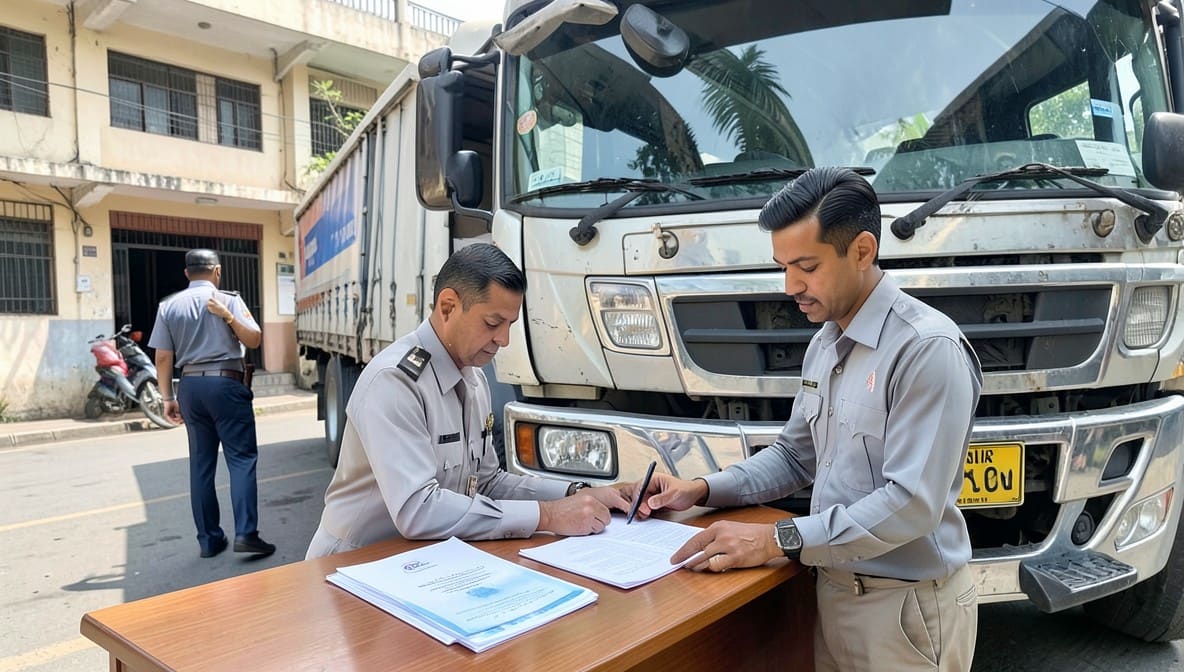
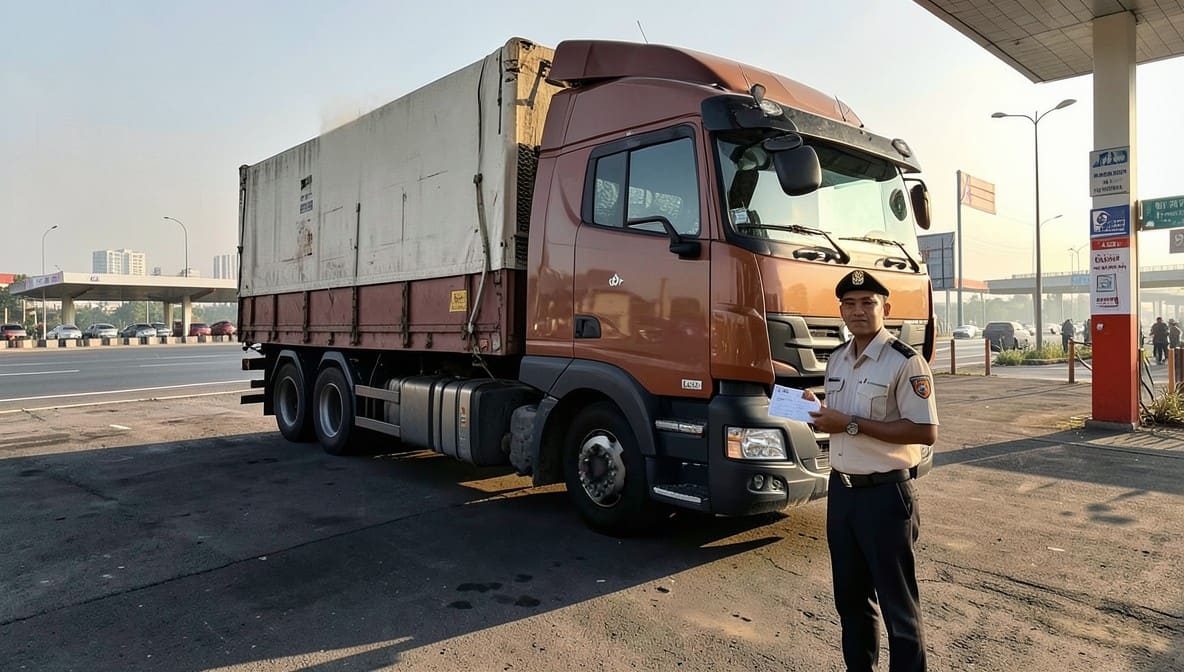
The petitioner, Shahnawaz Ali Khan, owner of a Heavy Motor Vehicle (HMV) bearing registration number TG12T5220, challenged the seizure of his goods carriage vehicle by the Assistant Motor Vehicle Inspector (Respondent No.3) under Vehicle Check Report No.383741 dated 23.11.2025. The seizure was purportedly for overloading in violation of the Motor Vehicles Taxation Act, 1963. The petitioner contends that the seizure was arbitrary and contrary to statutory provisions permitting compounding of such offences.
Key Facts
- The petitioner is the registered owner of a Heavy Motor Vehicle (HMV) used for transporting construction materials, specifically stones.
- On 23.11.2025 at 10:45 AM, while the vehicle was travelling from Shadnagar to Hyderabad, the driver, acting without the petitioner’s knowledge, consent, or instructions, overloaded the vehicle with excess stones to earn personal additional income.
- The vehicle was intercepted and inspected by Respondent No.3, who issued Vehicle Check Report No.383741 dated 23.11.2025 and seized the vehicle.
- The petitioner has no prior record of overloading violations.
- The vehicle is the sole source of livelihood for the petitioner and his family.
- The petitioner is willing and ready to pay the compounding fee prescribed under Section 200(1) of the Motor Vehicles Act, 1988, and relevant rules.
Procedural History
- 23.11.2025: Vehicle seized by Assistant Motor Vehicle Inspector under Vehicle Check Report No.383741.
- 02.03.2026: Writ Petition No.5547 of 2026 filed before the High Court for the State of Telangana under Article 226 of the Constitution.
- 02.03.2026: Application under Section 151 CPC filed seeking interim release of the vehicle.
- 02.03.2026: Hearing conducted before the Hon’ble Mrs. Justice Surepalli Nanda.
Relief Sought
The petitioner sought:
- A declaration that the seizure of the vehicle was illegal, arbitrary, and contrary to the Motor Vehicles Taxation Act, 1963.
- A writ of mandamus directing Respondent No.3 to release the vehicle upon payment of the compounding amount prescribed under Section 200(1) of the Motor Vehicles Act, 1988.
The Legal Issue
The central question was whether the statutory provision for compounding overloading offences under Section 200(1) of the Motor Vehicles Act, 1988, obligates the authorities to release a seized vehicle upon the owner’s willingness to pay the prescribed compounding fee, even where the offence was committed by the driver without the owner’s knowledge.
Arguments Presented
For the Petitioner
Learned counsel for the petitioner submitted that:
- Section 8 of the Telangana Motor Vehicles Taxation Act, 1963, read with Rule 52 of the Telangana Motor Vehicles Rules, 1989, explicitly provides for the release of seized vehicles upon payment of the compounding amount.
- Section 200(1) of the Motor Vehicles Act, 1988, permits compounding of offences including overloading, and such compounding extinguishes the offence and entitles the owner to release of the vehicle.
- The vehicle is the sole means of livelihood for the petitioner and his family; prolonged detention causes irreparable hardship.
- The petitioner was not involved in the act of overloading; the driver acted independently. Denial of compounding in such cases defeats the legislative intent of proportionate punishment.
- The respondent is legally bound to consider the request for release upon payment of the compounding fee.
For the Respondent
The Assistant Government Pleader for Transport did not dispute the petitioner’s submissions. The respondents conceded that compounding is statutorily permissible and that the petitioner’s willingness to pay the compounding fee satisfies the conditions for release of the vehicle.
The Court's Analysis
The Court examined the statutory framework governing compounding of overloading offences under the Motor Vehicles Act, 1988, and the Telangana State Rules. It noted that Section 200(1) explicitly empowers authorities to compound certain offences, including overloading, upon payment of a prescribed fee. The Court emphasized that the purpose of compounding is to provide a swift, proportionate, and non-punitive resolution to minor regulatory violations, particularly where the owner is not at fault.
"The legislature intended compounding to be an accessible remedy, not a discretionary privilege. Where the owner is ready to pay the prescribed fee and the offence is compoundable, denial of release amounts to punitive detention without trial."
The Court further observed that the Telangana Motor Vehicles Rules, 1989, specifically contemplate release upon compounding under Rule 52. The fact that the driver acted independently does not negate the owner’s right to avail compounding, as liability under the Act is often vicarious and the remedy is designed to mitigate hardship.
The Court rejected any notion that compounding requires admission of guilt by the owner. It held that the statutory right to compound is independent of culpability and exists to ensure administrative efficiency and fairness.
The Verdict
The writ petition was allowed. The Court directed Respondent No.3 to release the goods carriage vehicle (Heavy Motor Vehicle) bearing registration number TG12T5220, seized under Vehicle Check Report No.383741 dated 23.11.2025, upon payment of the applicable compounding amount prescribed under Section 200(1) of the Motor Vehicles Act, 1988. The release must be effected within two weeks from the date of receipt of a copy of this order. No costs were awarded. All pending miscellaneous petitions in the writ petition were closed.
What This Means For Similar Cases
Compounding Is a Right, Not a Discretion
- Practitioners must assert that Section 200(1) creates a statutory right to release upon payment, not a discretionary power for authorities.
- Where the offence is compoundable and the owner tenders the prescribed fee, refusal to release the vehicle is illegal and subject to writ jurisdiction.
Owner’s Knowledge Is Irrelevant to Compounding Eligibility
- Even if the driver acted without the owner’s knowledge, the owner retains the right to compound the offence under the Act.
- Authorities cannot impose additional conditions (e.g., proof of innocence, personal appearance) beyond the statutory compounding fee.
Livelihood Considerations Strengthen the Case for Urgent Release
- Courts will prioritize release of vehicles that constitute the sole source of livelihood.
- Delay in release beyond statutory timelines may attract contempt proceedings or compensation claims.
Procedural Compliance Is Mandatory
- Authorities must issue a compounding notice or payment challan promptly upon request.
- Failure to act within the stipulated two-week window may be challenged as non-compliance with court direction.