The Chhattisgarh High Court has reaffirmed that the prolonged seizure of a vehicle without a legitimate evidentiary purpose violates the owner’s right to livelihood and property, especially when ownership is undisputed and the vehicle is not required for trial purposes. This judgment reinforces the principle that procedural fairness must not be sacrificed for bureaucratic inertia.
Background & Facts
The Dispute
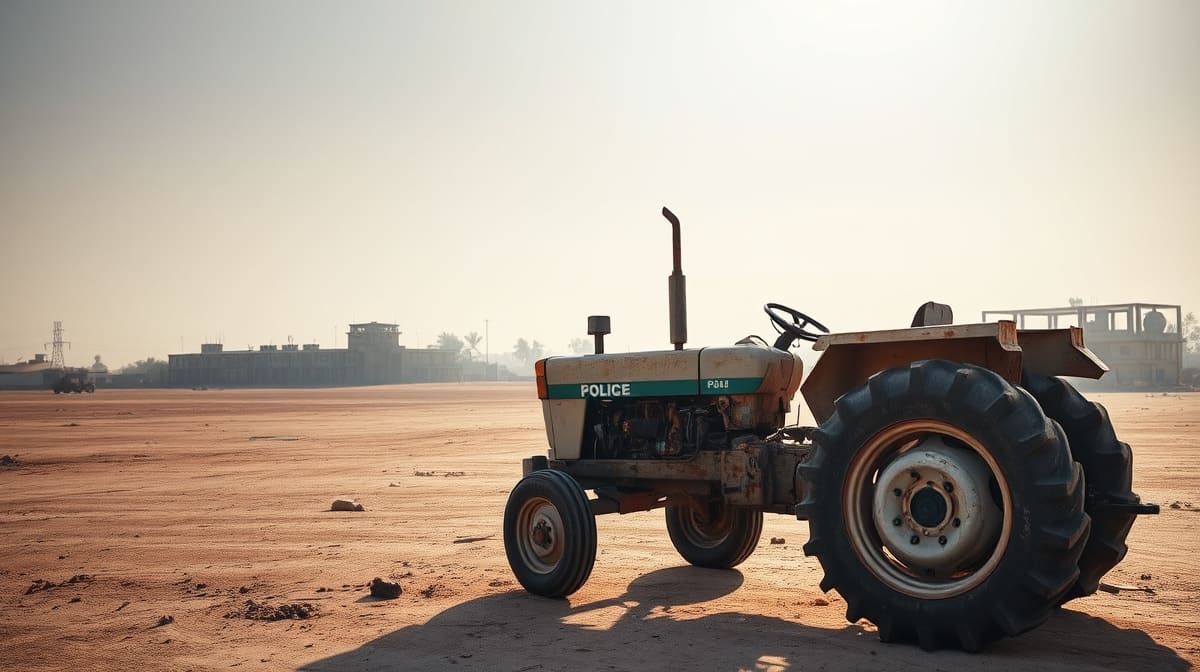
The petitioner, Sawat Ram Yadav, is the registered owner of a tractor (Registration No. CG-10-BJ-4015) seized by police on 22.06.2025 after it was allegedly found transporting sand near Arpa River without valid documentation. The prosecution registered FIR No. 615/2025 under Section 303(2) of the Bharatiya Nyaya Sanhita, 2023, and Sections 4(1), 4(1-A), and 21 of the Mines and Minerals (Development and Regulation) Act, 1957. The petitioner claims the sand was for personal agricultural use and that he possessed all requisite documents, including registration and insurance.
Procedural History
- 22.06.2025: Tractor seized by Police Chowki Belgahna
- July 2025: Petitioner filed application under Section 503 of the Bharatiya Nagarik Suraksha Sanhita, 2023 (BNSS) seeking release on supurdnama
- 14.08.2025: Special Judge rejected the application without detailed reasoning
- 19.02.2026: Appeal filed before Chhattisgarh High Court under Section 30-B(4) of the MMDR Act, 1957
Relief Sought
The petitioner sought immediate release of the tractor on supurdnama, arguing that prolonged detention in open conditions was causing irreversible damage to the vehicle, which is essential for his agricultural livelihood.
The Legal Issue
The central question was whether Section 503 of the BNSS permits the release of a seized vehicle on supurdnama when ownership is established, the vehicle is not required for identification, and its continued detention causes undue hardship.
Arguments Presented
For the Petitioner
Learned counsel argued that the trial court failed to apply the Supreme Court’s guiding principles in Sunderbhai Ambalal Desai v. State of Gujarat and Multani Hanifbhai Kalubhai v. State of Gujarat. It was contended that the tractor, being agricultural machinery, is not an instrument of crime and its seizure serves no evidentiary purpose. The petitioner offered to furnish a bank guarantee and execute a supurdnama, and cited three prior High Court orders granting similar relief under comparable facts.
For the Respondent
The State opposed the release, asserting that the vehicle was involved in an alleged violation of mining regulations and that its retention was necessary for the ongoing investigation. No specific evidence was adduced to show the vehicle was essential for identification or proof of offence.
The Court's Analysis
The Court undertook a detailed review of the Supreme Court’s jurisprudence on the release of seized vehicles. It emphasized that Section 451 CrPC (now incorporated into BNSS) mandates expeditious and judicious exercise of power to prevent loss to the owner and avoid unnecessary custodial burden on the state.
"In our view, whatever be the situation, it is of no use to keep such seized vehicles at the police station for a long period. It is for the Magistrate to pass appropriate orders immediately by taking appropriate bond and guarantee as well as security for return of the said vehicles, if required at any point of time."
The Court noted that the vehicle had been in police custody for over six months without any forensic or identification requirement. The petitioner’s ownership was not disputed, and the tractor’s primary use was agricultural, not commercial transport. The Court held that the trial court’s refusal to consider the principles of proportionality and necessity rendered the order arbitrary and contrary to Article 21.
The Court further distinguished this case from those involving illicit goods or instruments of crime, noting that a tractor used for farming does not fall into that category. The continued detention was deemed disproportionate and economically destructive.
The Verdict
The petitioner succeeded. The Chhattisgarh High Court set aside the trial court’s order and directed the immediate release of the tractor on supurdnama, subject to a bank guarantee of ₹1,00,000 and a personal bond of ₹5,00,000. The Court affirmed that prolonged seizure without evidentiary necessity is unlawful.
What This Means For Similar Cases
Supurdnama Is a Viable Alternative to Retention
- Practitioners must routinely invoke Section 503 BNSS for release of seized vehicles where ownership is clear and no identification purpose exists
- A bank guarantee and supurdnama are sufficient safeguards under Section 451 BNSS
- Courts cannot refuse release merely because an offence is alleged; the burden lies on the State to justify continued detention
Agricultural Machinery Warrants Special Consideration
- Vehicles primarily used for farming must be treated as livelihood assets under Article 21
- Delay in release constitutes economic harm, which courts must weigh against speculative investigative needs
- Evidence of damage due to exposure (e.g., rust, mechanical decay) strengthens the case for release
Precedents from Other Benches Are Binding
- The Court relied on its own prior orders in Criminal Revision Nos. 958/2025, 1086/2025, and 961/2025 to establish consistency
- Practitioners should cite parallel High Court rulings to counter trial court reluctance
- Judicial inconsistency in granting supurdnama is now legally untenable