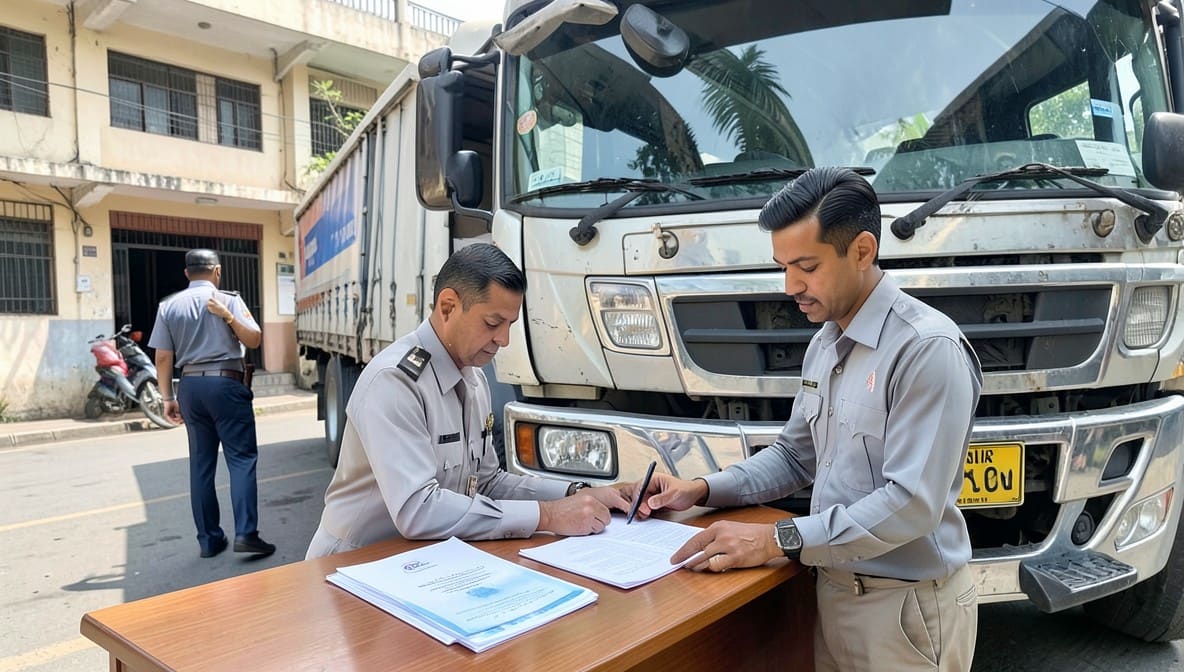
The Andhra Pradesh High Court recently disposed of a writ petition directing the release of a seized goods vehicle on execution of a personal security bond, reinforcing the mandatory procedural compliance under Section 129 of the Central Goods and Services Tax (CGST) Act, 2017. The judgment underscores the necessity of adhering to statutory timelines and principles of natural justice in detention cases, providing clarity on the rights of vehicle owners during GST seizures.
Background & Facts
The Dispute
The petitioner, Pampothi Naga Raju @ Naga Kumar, owner of a goods carriage vehicle (Registration No. AP 05 TD 7556, Model: Daimler India Commercial Vehicles Pvt. Ltd.), approached the High Court under Article 226 of the Constitution of India seeking a writ of mandamus. The vehicle, transporting cigarettes from Orissa to Kakinada, was seized by the 3rd respondent (Deputy Commissioner ST, Kakinada Port Circle) on 28.02.2026 on grounds of requiring further verification of the transaction. Despite repeated requests, the vehicle and goods remained detained without any order under Section 129 of the CGST Act, 2017, prompting the petitioner to seek judicial intervention.
Key Facts
- The petitioner’s vehicle (AP 05 TD 7556) was seized on 28.02.2026 while transporting cigarettes.
- The 3rd respondent detained the vehicle and goods without passing any order under Section 129 CGST Act.
- The petitioner alleged violation of Articles 14, 19, 21, and 265 of the Constitution due to prolonged detention without legal basis.
- The petitioner sought release of the vehicle and goods, arguing that the 3rd respondent lacked authority as a 'proper officer' under the CGST Act.
Procedural History
- 28.02.2026: Vehicle and goods seized by the 3rd respondent.
- Post-seizure: Petitioner approached the 3rd respondent for release, which was denied.
- Writ Petition No. 11838/2026: Filed before the Andhra Pradesh High Court seeking mandamus.
- IA No. 1/2026: Interim application under Section 151 CPC for release of the vehicle pending disposal of the main writ.
Relief Sought
The petitioner prayed for:
- A writ of mandamus declaring the detention illegal and violative of constitutional rights.
- Release of the seized vehicle (AP 05 TD 7556) and goods under proper acknowledgment.
- Directions to the respondents to refrain from confiscating the vehicle under Section 130 CGST Act without following due process.
The Legal Issue
The primary question before the Court was whether the 3rd respondent’s continued detention of the petitioner’s vehicle and goods, without passing an order under Section 129 CGST Act, constituted a violation of statutory provisions and principles of natural justice, warranting judicial intervention under Article 226.
Arguments Presented
For the Petitioner
- Cited the judgment in W.P.No.15481 of 2023 & batch (dated 03.08.2023), where a Division Bench of the Andhra Pradesh High Court directed release of seized vehicles on execution of a personal security bond and deposit of 25% of the goods’ value.
- Argued that the 3rd respondent was not a 'proper officer' under the CGST Act, rendering the seizure unlawful.
- Contended that the prolonged detention without an order under Section 129 CGST Act violated Articles 14, 19, 21, and 265 of the Constitution.
For the Respondents
- The respondents did not file a counter-affidavit or present arguments, leaving the petitioner’s contentions uncontested.
The Court's Analysis
The Court relied on its earlier judgment in W.P.No.15481 of 2023 & batch, which established a precedent for the release of seized vehicles under Section 129 CGST Act. The Division Bench in that case had observed:
"17. These writ petitions are accordingly disposed of giving liberty to the 1st respondent to initiate proceedings against the petitioners U/s. 129 of CGST/APGST Act, 2017 within two weeks from the date of receipt of a copy of this order and conduct enquiry by giving an opportunity of hearing to the petitioners and pass appropriate orders in accordance with governing law and rules. In the meanwhile, the 1st respondent shall release the detained goods in favour of 1st petitioner on his deposit of 25% of their value and executing personal bond for the balance and he shall also release the vehicles in favour of the 2nd petitioner in the respective writ petitions on their executing personal security bonds for the value of the vehicles as determined by concerned Road Transport Authority. No costs."
Applying this precedent, the Court held that the 3rd respondent’s failure to pass an order under Section 129 CGST Act within a reasonable timeframe rendered the detention illegal. The Court emphasized the importance of adhering to statutory timelines and procedural safeguards, noting that prolonged detention without adjudication violates principles of natural justice.
The Verdict
The Court disposed of the writ petition with the following directions:
- The 3rd respondent shall release the vehicle (AP 05 TD 7556) in favor of the petitioner within one week from the date of the judgment.
- The release is conditional upon the petitioner executing a personal security bond for the value of the vehicle, as determined by the concerned Road Transport Authority.
- No order as to costs was passed.
- Pending miscellaneous petitions, if any, were closed.
What This Means For Similar Cases
Mandatory Compliance with Section 129 CGST Act
- Statutory Timelines Are Non-Negotiable: Authorities must initiate proceedings under Section 129 CGST Act within a reasonable timeframe (e.g., two weeks, as directed in W.P.No.15481 of 2023). Failure to do so may render the detention illegal.
- Opportunity of Hearing: The Court reiterated that principles of natural justice require authorities to provide an opportunity of hearing before passing any order under Section 129.
Release on Personal Bond: A Viable Remedy
- Personal Security Bond Suffices: The judgment clarifies that execution of a personal security bond (without monetary deposit) is sufficient for the release of seized vehicles, reducing the financial burden on owners.
- 25% Deposit for Goods: While the vehicle can be released on a personal bond, the Court mandated a 25% deposit of the goods’ value for their release, striking a balance between enforcement and equity.
Authority of Seizing Officers
- 'Proper Officer' Requirement: The petitioner’s argument that the 3rd respondent was not a 'proper officer' under the CGST Act raises critical questions about the jurisdiction of seizing authorities. Practitioners should verify the designation and authority of officers initiating seizures to challenge unlawful detentions.
Constitutional Safeguards in Detention Cases
- Articles 14, 19, and 21: The judgment reinforces that arbitrary detention violates fundamental rights, including the right to livelihood (Article 19) and right to life and personal liberty (Article 21). Practitioners can invoke these provisions to challenge prolonged detentions.
- Article 265: The Court implicitly recognized that taxation without authority (e.g., seizure without statutory basis) violates Article 265, which mandates that no tax shall be levied except by authority of law.