The Madhya Pradesh High Court has clarified that a suit involving immovable property in two different districts may be maintained before a single court if the cause of action is identical across both properties. This ruling reinforces the principle under Section 17 of the Code of Civil Procedure that territorial jurisdiction is not fractured by geographical boundaries when the legal foundation of the claim is unified.
Background & Facts
The Dispute
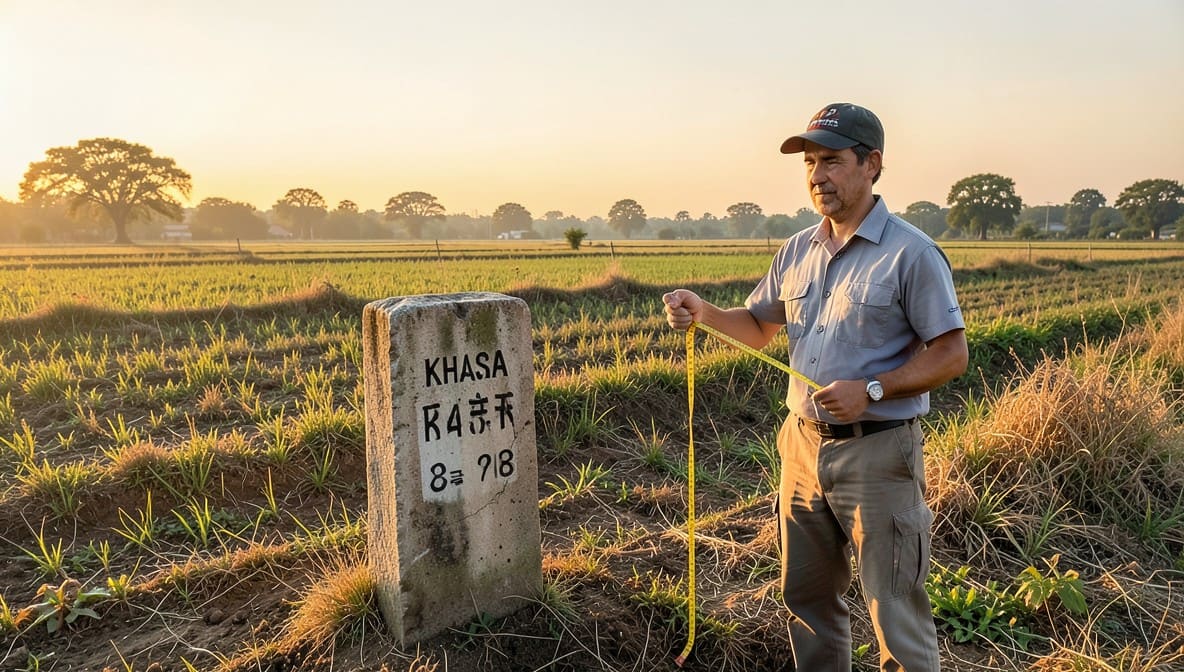
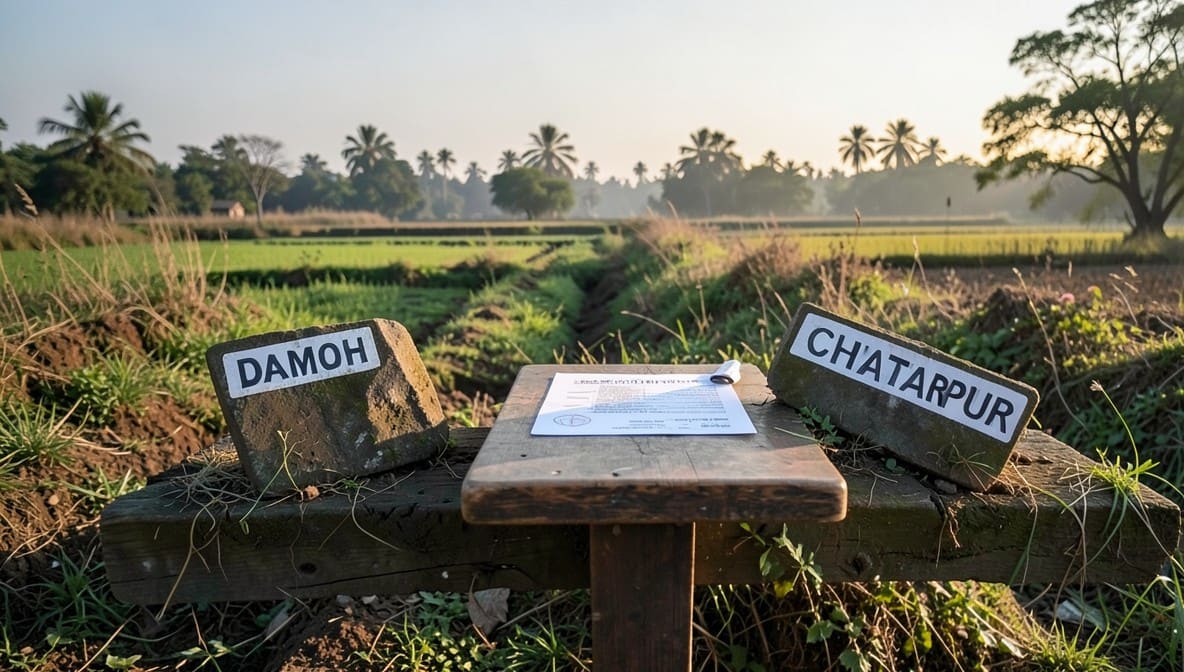
The plaintiffs, Govind Singh and others, filed a civil suit before the Court at Patharia, District Damoh, seeking declaration of title and injunction against the defendants, Rajendra Singh and others. The suit pertained to two distinct properties: one in village Pandroh, District Damoh, and another in village Devpur, District Chhatarpur. Though the villages are geographically proximate, they fall under separate judicial districts. The plaintiffs alleged that the defendants, who are the concubine and children of Gokal Singh, were interfering with their possession of both properties based on an order passed by the Additional Commissioner, Revenue Division, Sagar, concerning land in District Damoh.
Key Facts
- The plaintiffs are grandchildren of Gokal Singh through his daughter Rambai
- The defendants are the concubine Draupadi Bai and her children, born to Gokal Singh
- An order dated prior to the suit was passed by the Additional Commissioner, Sagar Division, in respect of land in District Damoh
- The plaintiffs claim that the defendants are using this order as a pretext to assert rights over both properties
- The plaint specifically alleges in Paragraph 8 that the defendants are "in garb of the order" interfering with possession in both villages
- The suit was filed in Damoh, where the order was passed, but sought relief for property in both Damoh and Chhatarpur
Procedural History
- Date of filing of suit: Not specified in judgment, but assumed prior to 20/02/2026
- 20/02/2026: Trial court rejected the application under Order 7 Rule 11 CPC, which challenged territorial jurisdiction
- 23/03/2026: Civil Revision No. 311 of 2026 filed before the High Court at Jabalpur challenging the trial court’s rejection
Relief Sought
The petitioners sought quashing of the trial court’s order rejecting the objection under Order 7 Rule 11 CPC, and a direction that the suit be transferred to or dismissed for want of territorial jurisdiction in Damoh for the property in Chhatarpur.
The Legal Issue
The central question was whether Section 17 of the Code of Civil Procedure permits a plaintiff to file a single suit for immovable properties situated in two different districts when the cause of action arises from the same transaction or event, even if the properties lie in separate jurisdictions.
Arguments Presented
For the Petitioner
The petitioners contended that Section 16 CPC mandates that suits relating to immovable property must be instituted in the court within whose jurisdiction the property is situated. They argued that since the property in Devpur, Chhatarpur, was not within the territorial limits of Damoh, the suit could not be maintained there. Reliance was placed on Shivnarayan v. Maniklal (Civil Appeal No. 1052 of 2019) to assert that Section 17 CPC requires an identical cause of action for both properties. They further argued that the order of the Additional Commissioner pertained only to land in Damoh and could not serve as the basis for a cause of action in Chhatarpur.
For the Respondent
The respondents argued that the cause of action was unitary: the defendants’ interference in both properties stemmed from the same order and the same claim of title derived from Gokal Singh’s lineage. They maintained that the plaint clearly linked the defendants’ conduct in Chhatarpur to the order passed in Damoh, thereby satisfying the requirement of a single, indivisible cause of action under Section 17 CPC.
The Court's Analysis
The Court examined the pleadings in the plaint with particular attention to Paragraph 8, which stated that the defendants were using the order passed in respect of Damoh land to interfere with possession in both villages. The Court observed that the source of title claimed by both parties was identical for both properties - descent from Gokal Singh through his daughter and concubine. The Court held that the order of the Additional Commissioner, though formally concerning only Damoh land, was being invoked as a legal instrument to assert rights over both properties. This rendered the cause of action unitary.
"The findings of the Additional Commissioner as to lands in one village could have affected the lands in both the villages."
The Court distinguished Shivnarayan v. Maniklal by noting that the Supreme Court’s requirement of a "same cause of action" under Section 17 CPC does not demand that the properties be legally identical, but that the legal wrong alleged must arise from the same transaction or series of events. Here, the interference in both properties was a direct consequence of the same order and the same dispute over lineage and inheritance. The Court emphasized that Section 17 CPC was designed to prevent multiplicity of litigation and that rigid territorial separation would defeat this purpose when the factual and legal nexus is singular.
The Verdict
The petition was dismissed. The Court upheld the trial court’s order rejecting the objection under Order 7 Rule 11 CPC. The suit was held to be maintainable before the Court at Damoh for both properties, as the cause of action was identical under Section 17 CPC. No monetary relief or direction was granted, as the issue was purely jurisdictional.
What This Means For Similar Cases
A Single Cause of Action Can Span Multiple Jurisdictions
- Practitioners may now confidently file suits for multiple properties across districts if the legal wrong arises from a single transaction, order, or title dispute
- The focus must be on the origin of the claim, not the physical location of each property
- Pleadings must clearly articulate how the cause of action is unified - mere proximity is insufficient
Pleadings Must Explicitly Link Distant Properties to a Common Source
- Drafters must ensure that the plaint explicitly states how the interference or claim in one jurisdiction flows from the same event or order affecting another
- Vague references to "similar circumstances" will not suffice; the nexus must be pleaded with specificity
- Paragraphs alleging interference based on a prior order must be drafted to show direct application across jurisdictions
Section 17 CPC Is a Tool Against Fragmented Litigation
- Courts will favor consolidation where the underlying dispute is unitary, even if properties are in different districts
- Applications under Order 7 Rule 11 CPC challenging jurisdiction on this ground are unlikely to succeed if the cause of action is demonstrably common
- This ruling reinforces the procedural efficiency principle embedded in Section 17 CPC and discourages forum shopping through artificial fragmentation