The Delhi High Court has reaffirmed a foundational principle of civil jurisdiction: that the mere situs of a respondent or the location of a regulatory body in Delhi cannot substitute for the actual genesis of the cause of action. In dismissing a writ petition challenging an order of the Institute of Chartered Accountants of India, the Court emphasized that jurisdiction must be rooted in where the material facts occurred, not where the decision was issued.
Background & Facts
The Dispute
The petitioner, Vishnu Kumar Gupta, residing in Noida, Uttar Pradesh, filed a complaint against respondent no.3, a chartered accountant based in Lucknow, Uttar Pradesh, alleging professional misconduct. The petitioner claimed that respondent no.3 furnished a false or misleading opinion before the Uttar Pradesh Real Estate Regulatory Authority (UPRERA), which adversely affected the petitioner’s legal and financial interests in a real estate transaction.
Key Facts
- The alleged misconduct occurred during proceedings before UPRERA in Lucknow, Uttar Pradesh
- The complaint against respondent no.3 was filed with respondent no.1, the Institute of Chartered Accountants of India (ICAI), headquartered in New Delhi
- ICAI conducted an inquiry and exonerated respondent no.3 by order dated [not specified]
- The petitioner, aggrieved by the exoneration, filed the present writ petition in the Delhi High Court
- No allegation was made that any part of the misconduct, communication, or decision-making process occurred within Delhi
- The petitioner’s residence, the respondent’s residence, and the subject matter of the complaint were all located in Uttar Pradesh
Procedural History
- Date of alleged misconduct: Not specified, but occurred during UPRERA proceedings in Lucknow
- Date of complaint to ICAI: Not specified, but filed after UPRERA proceedings concluded
- Date of ICAI’s exoneration order: Not specified
- 07.04.2026: Writ Petition (W.P.(C) 4516/2026) filed in Delhi High Court
- 07.04.2026: Judgment delivered by Justice Purushottar Kumar Kaurav
The Parties' Positions
Petitioner’s Position: The petitioner contended that since ICAI, the body whose order was challenged, is headquartered in Delhi, this Court has jurisdiction to entertain the writ petition. He argued that the decision impugned was issued by an authority located in Delhi, thereby creating a part of the cause of action within the territorial jurisdiction of this Court.
Respondents’ Position: The respondents did not appear or file any written submission. The Court, therefore, proceeded on the basis of the petition and the legal principles governing jurisdiction.
Relief Sought
The petitioner sought quashing of the ICAI’s order exonerating respondent no.3, and directions to ICAI to re-adjudicate the complaint with proper application of professional ethics and due process.
The Legal Issue
Can the mere situs of a regulatory body like the Institute of Chartered Accountants of India in Delhi constitute a sufficient cause of action to confer jurisdiction on the Delhi High Court, when all material events - including the alleged misconduct, the complaint, and the decision - occurred outside Delhi?
Arguments Presented
For the Petitioner
The petitioner relied on the location of ICAI in Delhi as the sole basis for jurisdiction. He argued that since the impugned order was issued by an authority headquartered in Delhi, the legal consequences of that order - namely, the denial of redress - were felt within Delhi, thereby creating a part of the cause of action within the territorial limits of this Court.
For the Respondent
No arguments were presented by the respondents. The Court proceeded on the basis of established jurisprudence.
The Court's Analysis
The Court rejected the petitioner’s argument as legally unsustainable. It held that jurisdiction cannot be founded on the fortuitous location of a national body, especially when the underlying facts, the alleged wrong, and the injury all occurred elsewhere.
"A petitioner who approaches this Court to assail a decision of an authority situated in Delhi, when the underlying cause for the said decision lies elsewhere, effectively attempts to make this High Court a mini-pan-India Superior Court exercising jurisdiction over all events which take place throughout this Country."
The Court cited its own earlier decision in Indure Pvt. Ltd. v. Government of NCT of Delhi, emphasizing that the "dominant facts," "material, essential and integral" elements of the dispute must lie within the territorial jurisdiction. Here, the entire chain of events - the alleged false opinion, the filing of complaint with UPRERA, the investigation, and the exoneration - occurred in Lucknow. The fact that ICAI, a national body, issued its order from Delhi was merely a procedural consequence of its administrative structure, not a substantive link to the dispute.
The Court further relied on Kusum Ingots & Alloys Ltd. v. Union of India, where the Supreme Court held that courts may relegate parties to the appropriate jurisdictional forum where the real cause of action arises. The Court concluded that Delhi was not the proper forum, and that the petitioner’s remedy lay before the High Court of Allahabad, which has territorial jurisdiction over Lucknow.
The Verdict
The writ petition was dismissed. The Court held that no cause of action arose within the territorial jurisdiction of the Delhi High Court. All rights and contentions of the parties are left open to be agitated before the competent High Court having jurisdiction over Lucknow, Uttar Pradesh.
What This Means For Similar Cases
Jurisdiction Cannot Be Manufactured by Venue of Authority
- Practitioners must identify where the material facts occurred - not where the decision-maker is headquartered - to determine the correct forum
- Writ petitions against national bodies cannot be filed in Delhi merely because the body is located there
- Courts will look to the locus of the alleged injury, the origin of the act, and the situs of the complainant and respondent
Forum Shopping Will Be Rejected
- Petitioners attempting to forum shop by targeting Delhi-based regulators will face dismissal unless substantial events occurred within Delhi
- Courts will apply the "dominant facts" test rigorously, rejecting jurisdictional claims based on administrative convenience
- This judgment reinforces the principle that jurisdiction is territorial, not institutional
Practical Takeaway for Practitioners
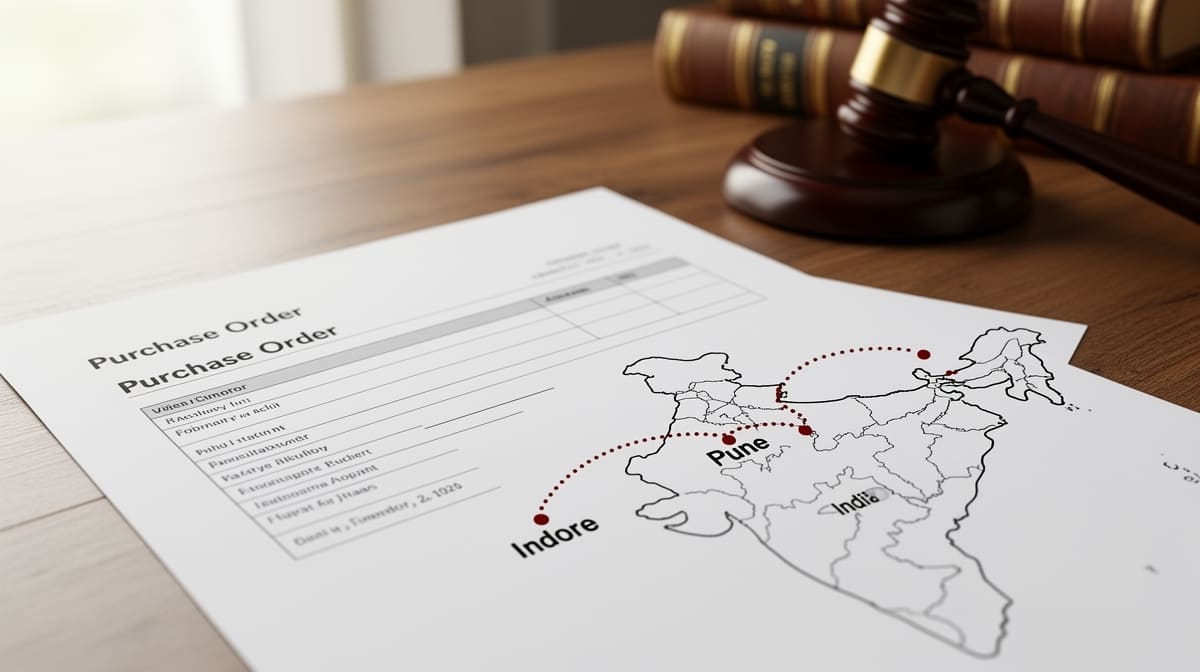
- Always map the chronological and geographical sequence of events before filing a writ
- If the cause of action arises in Uttar Pradesh, Bihar, or any other state, file in the respective High Court
- Do not rely on the presence of a central authority in Delhi as a jurisdictional hook - this is now legally untenable