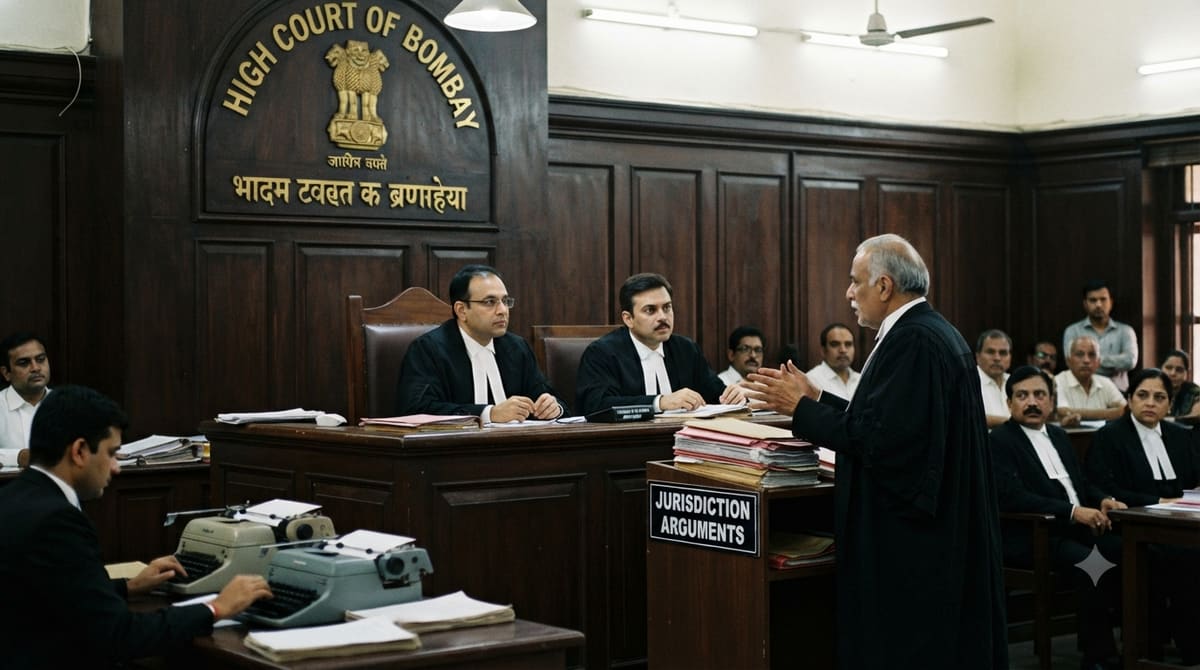
The Allahabad High Court has clarified a critical procedural dilemma in Ramesh Chand Sachdeva v. Alok Prakash, holding that Section 24(5) of the Code of Civil Procedure, 1908 empowers District Courts to transfer suits from courts lacking pecuniary jurisdiction, even when the defect existed from inception. This ruling resolves the apparent conflict between Order VII Rule 10 CPC (return of plaint) and Section 24(5) CPC (transfer powers), affirming that transfer is a valid remedial mechanism to cure jurisdictional defects without necessitating fresh proceedings.
Background & Facts
The Dispute
The dispute centered around a shop measuring 255 square feet at premises no. 34, Banshipura, Meerut. The petitioner, Ramesh Chand Sachdeva, was a tenant under the respondent-landlord, Alok Prakash, paying a monthly rent of Rs. 8,000. The respondent filed S.C.C. Suit No. 69 of 2020 before the Judge, Small Causes Court, Meerut, seeking eviction on the ground of default in rent payment. The suit was valued at Rs. 1,06,806.45, exceeding the pecuniary jurisdiction of the Small Causes Court, which was limited to Rs. 1,00,000.
Key Facts
- The petitioner was a tenant in the disputed premises under the respondent at Rs. 8,000 per month
- The respondent filed an eviction suit (S.C.C. Suit No. 69 of 2020) on 15.01.2020 before the Judge, Small Causes Court, Meerut
- The suit was valued at Rs. 1,06,806.45, exceeding the court’s pecuniary jurisdiction of Rs. 1,00,000
- The petitioner filed a written statement denying default and asserting regular rent payments
- Evidence was recorded, with the respondent examining himself as P.W.-1 and the petitioner as D.W.-1, along with two other defence witnesses
Procedural History
- 15.01.2020: Suit instituted before the Judge, Small Causes Court, Meerut
- 06.10.2025: Petitioner filed an application under Order VI Rule 17 CPC seeking amendment to raise jurisdictional plea
- 02.12.2025: Respondent filed a transfer application under Section 24(5) CPC before the District Judge, Meerut
- 02.04.2026: District Judge allowed the transfer application, withdrawing the suit from the Small Causes Court and transferring it to the Additional District Judge, Court No. 2, Meerut
- 28.05.2026: Present petition (A227 No. 7908 of 2026) filed under Article 227 of the Constitution challenging the transfer order
Relief Sought
The petitioner sought quashing of the transfer order dated 02.04.2026, contending that the suit was non-maintainable from inception and that the only lawful remedy was return of the plaint under Order VII Rule 10 CPC for presentation before a competent court.
The Legal Issue
The central question was whether Section 24(5) CPC empowers a District Court to transfer a suit instituted before a court lacking pecuniary jurisdiction, or whether Order VII Rule 10 CPC mandates return of the plaint as the sole permissible remedy.
Arguments Presented
For the Petitioner
- Contended that the suit, having been instituted before a court lacking pecuniary jurisdiction, was void ab initio
- Argued that Section 24(5) CPC could not validate proceedings conducted by an incompetent court
- Submitted that the only lawful course was return of the plaint under Order VII Rule 10 CPC for presentation before a competent court
- Asserted that the evidence recorded before the Small Causes Court was non est and could not be acted upon by the transferee court
For the Respondent
- Relied on the express language of Section 24(5) CPC, which authorizes transfer from a court lacking jurisdiction
- Contended that the provision is remedial and intended to avoid multiplicity of proceedings
- Argued that the District Judge acted within jurisdiction in transferring the suit to a competent court
- Submitted that the petitioner failed to demonstrate any prejudice caused by the transfer
The Court's Analysis
The Court undertook a detailed examination of the interplay between Order VII Rule 10 CPC and Section 24(5) CPC, emphasizing the legislative intent underlying both provisions.
"The principal contention advanced on behalf of the petitioner is that once it was found that S.C.C. Suit No. 69 of 2020 had been instituted before a court lacking pecuniary jurisdiction, the entire proceedings conducted by the said court, including the evidence recorded therein, stood vitiated in the eyes of law and, consequently, the learned District Judge could not have exercised powers under Section 24(5) CPC to transfer the suit to a court of competent jurisdiction."
The Court rejected this contention, holding that Section 24(5) CPC expressly authorizes transfer from a court lacking jurisdiction, and that the provision’s language is plain and unambiguous. It observed:
"The language employed by the Legislature is plain, unambiguous, and admits of no qualification. The provision itself contemplates a situation where proceedings are pending before a court lacking jurisdiction and nevertheless authorises the District Court to transfer such proceedings to the court competent to try the same."
The Court further held that interpreting Order VII Rule 10 CPC as the sole remedy would render Section 24(5) CPC redundant, violating the principle that no statutory provision should be construed as nugatory. It noted:
"The settled principle of statutory interpretation requires that every provision enacted by the Legislature must be given its due meaning and effect and that no provision should be construed in a manner which renders another redundant or nugatory."
The Court also addressed the petitioner’s submission that evidence recorded before the incompetent court was non est, relying on Section 24(2) CPC, which empowers the transferee court to either retry the suit or proceed from the stage of transfer. It held:
"The statute, therefore, itself contemplates continuity of proceedings after transfer and leaves it to the discretion of the transferee court to determine the appropriate course. Whether the evidence already recorded is to be acted upon, or whether any witness is required to be recalled or the trial is to commence afresh, are matters falling within the jurisdiction of the transferee court in accordance with law."
The Court fortified its reasoning with the precedent Shiv Shankar v. Mahavir @ Ghura Turha and Others, where an identical issue was adjudicated. In that case, the Court held that Section 24(5) CPC expressly contemplates transfer from a court lacking jurisdiction and that such transfer is a valid remedial mechanism.
The Verdict
The Court dismissed the petition, holding that the District Judge acted within jurisdiction under Section 24(5) CPC in transferring the suit to a court of competent pecuniary jurisdiction. The impugned order dated 02.04.2026 was upheld, and no interference was warranted under Article 227 of the Constitution.
What This Means For Similar Cases
Transfer Powers Prevail Over Mandatory Return
- Section 24(5) CPC is a valid remedial mechanism to cure jurisdictional defects, even when the defect existed from inception
- Practitioners can no longer argue that Order VII Rule 10 CPC is the sole remedy for jurisdictional defects; transfer under Section 24(5) CPC is equally permissible
- The ruling reduces procedural hurdles by avoiding fresh trials and permitting continuity of proceedings post-transfer
Discretion of Transferee Court Preserved
- The transferee court retains discretion under Section 24(2) CPC to either retry the suit or proceed from the stage of transfer
- Evidence recorded before the incompetent court is not automatically rendered non est; the transferee court may act upon it if no prejudice is demonstrated
- Parties must specifically plead and prove prejudice arising from the transfer to challenge the validity of prior proceedings
Legislative Intent Trumps Procedural Formalism
- Courts must prioritize substantive justice over procedural technicalities where statutory provisions expressly permit alternative remedies
- The ruling aligns with the legislative object of avoiding multiplicity of proceedings and ensuring expeditious adjudication
- Practitioners should invoke Section 24(5) CPC proactively where jurisdictional defects are discovered mid-proceedings to avoid unnecessary procedural complications