The Madhya Pradesh High Court has clarified that a counter claim under Order 8 Rule 6A of the CPC must independently satisfy territorial jurisdiction requirements, irrespective of the plaintiff’s suit properties. This ruling reinforces the principle that a counter claim is a standalone suit in form and substance, and cannot circumvent jurisdictional limits by piggybacking on the original plaint.
Background & Facts
The Dispute
The dispute arises from a civil suit for declaration of title and permanent injunction over a property known as Premi House, located at Jaistambh Chauraha, A.B. Road, Guna. The plaintiffs, Gopal Krishan Premi and Ballabhdas, are legal heirs of Shri Surajbhan, one of three sons of the late Brijlal. The original defendants (Nos. 1 to 6) are also heirs of Surajbhan. Defendants Nos. 7 to 15, heirs of Babulal (another son of Brijlal), were subsequently impleaded under Order 1 Rule 10 CPC. The petitioner, Shyamswaroop Agrawal, is defendant no. 8 and son of Babulal.
Key Facts
- The suit property is located in Guna, within the territorial jurisdiction of the Court of First Civil Judge, Senior Division, Guna.
- The petitioner and defendant no. 9 filed a counter claim on 18.04.2024 seeking partition and declaration of title over five properties situated in village Ruthiyai, District Guna.
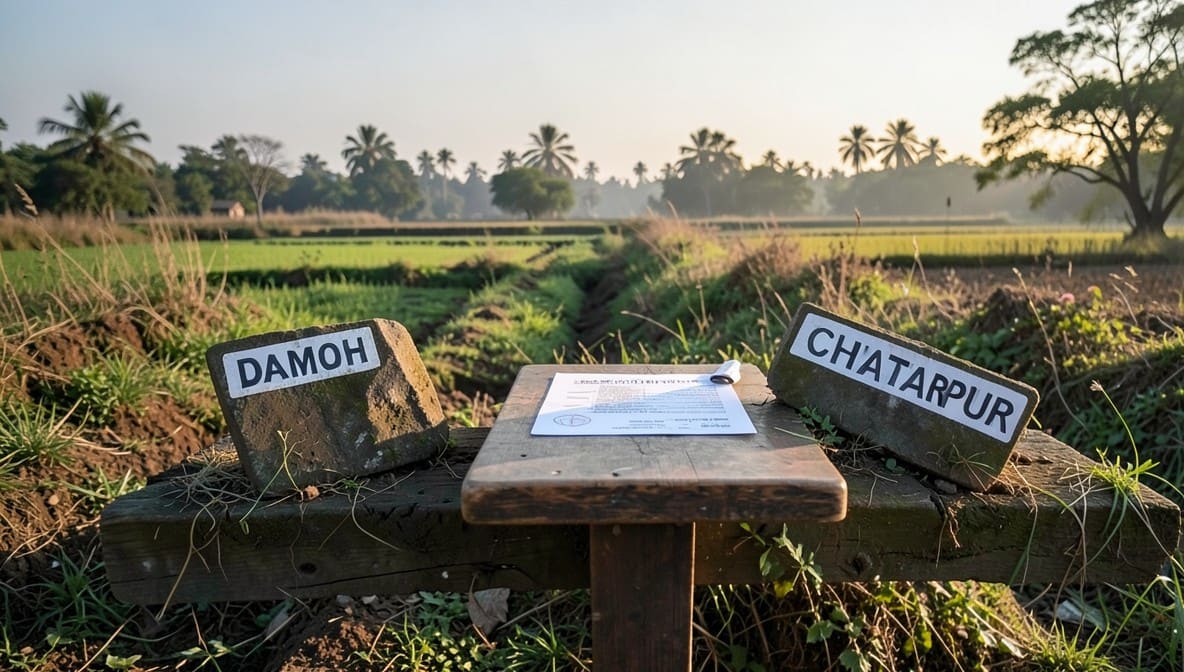
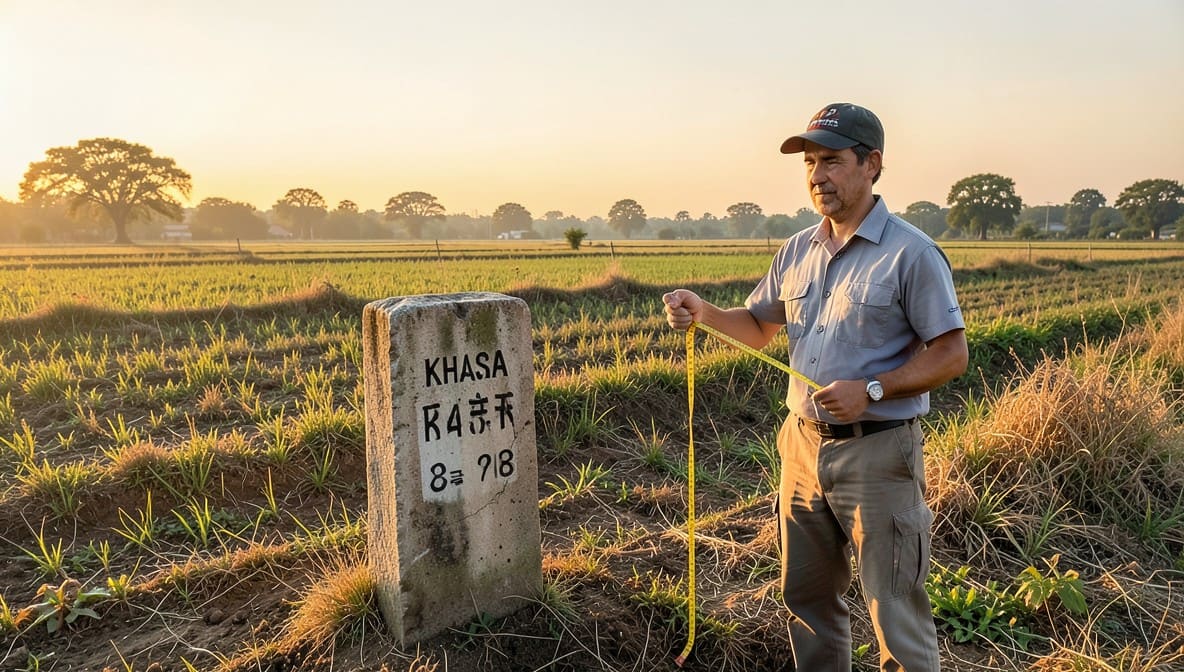
- The properties in the counter claim are located in Ruthiyai, which falls under the territorial jurisdiction of the Court at Raghogarh, District Guna, not Guna.
- The counter claim did not specify addresses for properties listed at serial numbers 2 to 5.
- The relief clause 18(अ) claimed half the property belonged to defendants 7 to 15, but was silent on the remaining half.
- No specific cause of action was pleaded in the counter claim.
- The plaintiffs filed an application under Order 7 Rule 11 CPC seeking rejection of the counter claim on grounds of lack of territorial jurisdiction and non-specific pleading.
Procedural History
- 18.04.2024: Counter claim filed by defendants no. 8 and 9.
- 15.05.2024: Trial Court allowed plaintiffs’ application under Order 7 Rule 11 CPC and rejected the counter claim.
- 05.07.2024: Petitioner filed appeal under Order 43 Rule 1(a) CPC (MCA No. 42/2024).
- 16.09.2025: Sixth District Judge, Guna, dismissed the appeal.
- 2025: Petitioner filed Miscellaneous Petition No. 6573 of 2025 before the High Court at Gwalior.
- 05.03.2026: Case reserved for judgment.
- 17.03.2026: Judgment delivered dismissing the petition.
Relief Sought
The petitioner sought setting aside of the orders dated 15.05.2024 and 16.09.2025, and restoration of the counter claim for adjudication on merits.
The Legal Issue
The central question was whether a counter claim under Order 8 Rule 6A CPC can invoke Section 17 CPC to establish territorial jurisdiction based on properties mentioned in the original plaint, or whether the counter claim must independently satisfy jurisdictional requirements.
Arguments Presented
For the Petitioner
Counsel argued that the counter claim was valid under Order 8 Rule 6A CPC, which treats a counter claim as a plaint. He relied on Jag Mohan Chawla & Anr. v. Dera Radha Swami Satsang & Ors. (1996) 4 SCC 699 and Rajul Manoj Shah v. Kiranbhai Shakrabhai Patel (2025 SCC Online SC 1958) to assert that counter claims are independent suits meant to avoid multiplicity of proceedings. He contended that Section 17 CPC permits suits involving properties in multiple jurisdictions and that the counter claim, when read with the plaint, should be considered as a composite claim over joint family property. He also cited Shivnarayan v. Maniklal (2020) 11 SCC 629 and Ramkishan Patel v. Om Prakash Mishra (F.A. No. 1866/2023) to support the notion that partition suits encompass all joint properties regardless of jurisdiction.
For the Respondent
Counsel for the plaintiffs argued that the counter claim was defective on multiple grounds: (1) it involved properties outside the territorial jurisdiction of the Guna Court; (2) it failed to plead a specific cause of action; (3) it sought relief primarily against co-defendants, not the plaintiffs; and (4) it was filed belatedly to delay proceedings. He emphasized that Order 8 Rule 6A CPC requires the counter claim to comply with all rules applicable to plaints, including territorial jurisdiction under Section 20 CPC, and that Section 17 CPC cannot be invoked by aggregating the plaint and counter claim.
The Court's Analysis
The Court undertook a detailed examination of Order 8 Rule 6A CPC, emphasizing that sub-rule (4) explicitly states that a counter claim shall be treated as a plaint and governed by the rules applicable to plaints. This includes compliance with Section 20 CPC on territorial jurisdiction.
"The counter claim is required to satisfy the requirement of Section 17 CPC independent of the plaint."
The Court rejected the petitioner’s attempt to invoke Section 17 CPC by combining the plaint and counter claim. It held that Section 17 CPC applies only when a single suit involves properties situated in multiple jurisdictions, and the cause of action is identical across all properties. Here, the plaint concerned title to a house in Guna, while the counter claim sought partition of properties in Ruthiyai - a distinct subject matter with no pleaded common cause of action.
The Court further relied on Shivnarayan v. Maniklal (2020) 11 SCC 629, which clarified that Section 17 CPC requires a unified cause of action across properties. The absence of any pleaded connection between the suit property and the counter claim property rendered Section 17 CPC inapplicable.
Additionally, the Court noted that the counter claim failed to specify addresses for four of the five properties and did not clearly state ownership interests in the remaining half of the property. It also observed that the relief of partition was primarily directed against co-defendants (defendants 7 to 15), not the plaintiffs - violating the settled principle that a counter claim must be against the plaintiff, not co-defendants (Rohit Singh v. State of Bihar, 2006) - even if incidental relief against co-defendants is permissible.
The Court dismissed the petitioner’s reliance on Jag Mohan Chawla and other cited judgments, noting they dealt with different issues - such as the maintainability of counter claims under Order 7 Rule 11 or joinder of parties - and did not address territorial jurisdiction under Order 8 Rule 6A CPC.
The Verdict
The petition was dismissed. The orders dated 15.05.2024 and 16.09.2025 rejecting the counter claim were upheld. The Court held that the counter claim was defective for want of territorial jurisdiction, non-specific pleading, and failure to assert a cause of action against the plaintiffs. No monetary relief or procedural direction was granted.
What This Means For Similar Cases
Counter Claims Must Be Jurisdictionally Independent
- Practitioners must ensure that every counter claim under Order 8 Rule 6A CPC is pleaded with reference to properties or causes of action within the court’s territorial jurisdiction.
- Relying on the plaintiff’s suit properties to establish jurisdiction for a counter claim is impermissible.
- A counter claim involving immovable property outside the court’s jurisdiction must be filed as a separate suit.
Pleading Deficiencies Are Fatal
- Counter claims must clearly specify: (a) the exact location of properties, (b) the nature of ownership interest, and (c) the cause of action against the plaintiff.
- Vague or incomplete descriptions (e.g., "property at serial no. 2 to 5") will lead to rejection under Order 7 Rule 11 CPC.
- Relief sought against co-defendants without a clear claim against the plaintiff renders the counter claim non-maintainable.
Section 17 CPC Does Not Extend to Counter Claims
- Section 17 CPC applies only to a single plaint involving multiple properties with a unified cause of action.
- A counter claim cannot aggregate its jurisdictional basis with the plaint to overcome territorial limits.
- Courts will strictly apply jurisdictional rules to counter claims - treating them as independent suits.