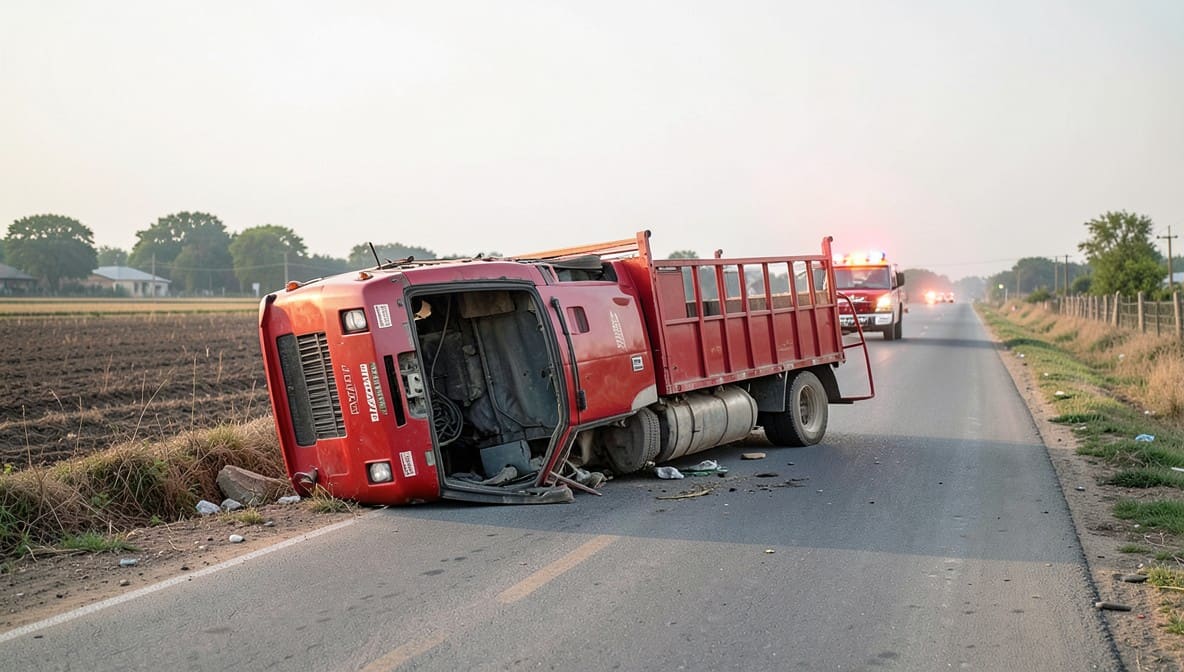
The Bombay High Court has delivered a significant judgment clarifying the liability of insurers under the Motor Vehicles Act when passengers are transported in a goods carriage vehicle. The Court held that insurers cannot avoid liability to pay compensation to injured passengers merely because the vehicle was registered as a goods carriage, provided the victims were traveling as passengers. The insurer is directed to first satisfy the award and then recover the amount from the vehicle owner.
Background & Facts
The Dispute
The appeals arise from two Motor Accident Claim Petitions filed before the Motor Accident Claims Tribunal, Jalgaon. The claimants were injured in a vehicular accident on 11.04.1996 when the vehicle bearing Registration No. MS-15-G-54, registered as a goods carriage, turned turtle while transporting passengers from Pachora to Bhadgaon.
Key Facts
- The vehicle was registered as a goods carriage but was carrying passengers at the time of the accident.
- The claimants included both gratuitous passengers and those who had paid fares.
- The insurance policy was an "Act only" policy, but the exact class of vehicle and terms of the policy were not conclusively established due to the absence of the R.C. Book and the insurance policy document on record.
- The FIR and Form Comp. 'AA' suggested that the driver had permitted 4-5 persons to board the vehicle, indicating passenger carriage.
- The claimants suffered injuries, and compensation claims were filed in 1997.
Procedural History
- 11.04.1996: Accident occurred involving vehicle MS-15-G-54.
- 1997: Motor Accident Claim Petitions No.365 of 1997 and No.367 of 1997 filed before the Motor Accident Claims Tribunal, Jalgaon.
- Judgment by Tribunal: Awards were passed in favor of the claimants.
- Appeals filed: First Appeal No.967 of 2003 and First Appeal No.966 of 2003 filed by the insurer before the Bombay High Court.
- Civil Applications: CA/4467/2006 and CA/4469/2006 filed in connection with the appeals.
- Reserved on: 13.07.2026
- Pronounced on: 16.07.2026
The Parties' Positions
The appellant/insurer argued that the vehicle was used for passenger carriage in breach of the insurance policy terms, which prohibited such use. The insurer contended that the Tribunal ignored the evidence regarding the vehicle's use and the breach of policy conditions.
The respondents/claimants supported the awards, arguing that the insurer was liable to compensate them as passengers, regardless of the vehicle's registration as a goods carriage.
The Legal Issue
The central question was whether an insurer can avoid liability to pay compensation under Section 166 of the Motor Vehicles Act when passengers are transported in a vehicle registered as a goods carriage, particularly when the insurance policy does not explicitly exclude passenger coverage.
Arguments Presented
For the Appellant/Insurer
The insurer argued that the vehicle was used for passenger carriage in violation of the insurance policy terms, which prohibited such use. The insurer contended that the Tribunal erred in ignoring this breach and passing the award. The insurer relied on the absence of the R.C. Book and the insurance policy to argue that the exact terms of the policy were unclear.
For the Respondents/Claimants
The claimants argued that the insurer was liable to compensate them as passengers, regardless of the vehicle's registration as a goods carriage. They contended that the insurer failed to produce the insurance policy or R.C. Book to prove the breach of policy conditions. The claimants relied on precedents where the Supreme Court held that insurers cannot avoid liability to pay compensation to passengers in such circumstances.
The Court's Analysis
The Court examined the legal framework governing insurer liability under the Motor Vehicles Act and the insurance contract. The Court noted that the insurer failed to produce the insurance policy or R.C. Book to establish the breach of policy conditions. The Court observed:
"It was for insurer to bring on record copy of insurance policy and prove terms and conditions of insurance contract."
The Court also considered the Supreme Court's decisions in Anu Bhanvara and Others v. Iffco Tokio General Insurance Company Limited and Others (2020) 20 SCC 632, Manuara Khatun and Others v. Rajesh Kumar Singh and Others (2017) 4 SCC 796, and National Insurance Co. Ltd v. Baljit Kaur and Others (2004) 2 SCC 1. The Court held that where victims were traveling as passengers in a vehicle, the insurer cannot avoid liability to pay compensation. The insurer must first pay the awarded sum to the claimants and then recover the amount from the owner of the offending vehicle.
The Court acknowledged the ambiguity in the law at the time of the accident in 1996, noting that the Supreme Court had taken differing views in earlier decisions. However, the Court held that the insurer's liability to compensate passengers is clear under the Motor Vehicles Act, and the insurer cannot avoid this liability merely because the vehicle was registered as a goods carriage.
The Verdict
The Court partly allowed the appeals and modified the awards passed by the Tribunal. The insurer was directed to first satisfy the awarded amount to the claimants and then recover the amount from the owner of the vehicle in execution of the modified award. The Civil Applications were disposed of accordingly.
What This Means For Similar Cases
Insurer Liability Is Non-Negotiable for Passenger Claims
- Insurers cannot avoid liability to pay compensation to passengers merely because the vehicle was registered as a goods carriage.
- The insurer must first satisfy the award and then recover the amount from the vehicle owner.
Documentary Evidence Is Critical for Defenses
- Insurers must produce the insurance policy and R.C. Book to establish breaches of policy conditions.
- Failure to produce these documents may result in the insurer being held liable to compensate passengers.
Legal Ambiguity Does Not Excuse Non-Compliance
- Even if the law was ambiguous at the time of the accident, insurers are still liable to compensate passengers under the Motor Vehicles Act.
- The Court clarified the legal position prospectively, ensuring consistency in future claims.