The Allahabad High Court has clarified a critical distinction under the Motor Vehicles Act: a person travelling in a goods vehicle as the owner of the goods being transported is not a gratuitous passenger, and therefore, the insurer is liable to compensate for injuries sustained in an accident. This ruling resolves longstanding ambiguity in claims involving commercial freight transport and redefines the scope of compulsory insurance coverage.
Background & Facts
The Dispute
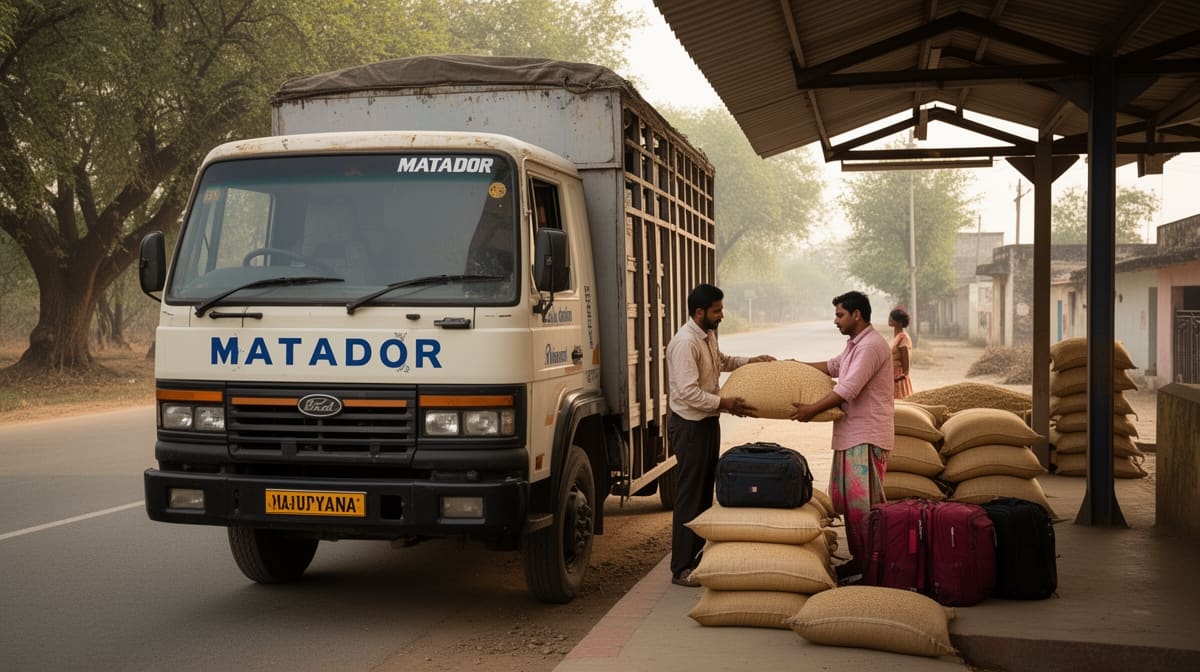
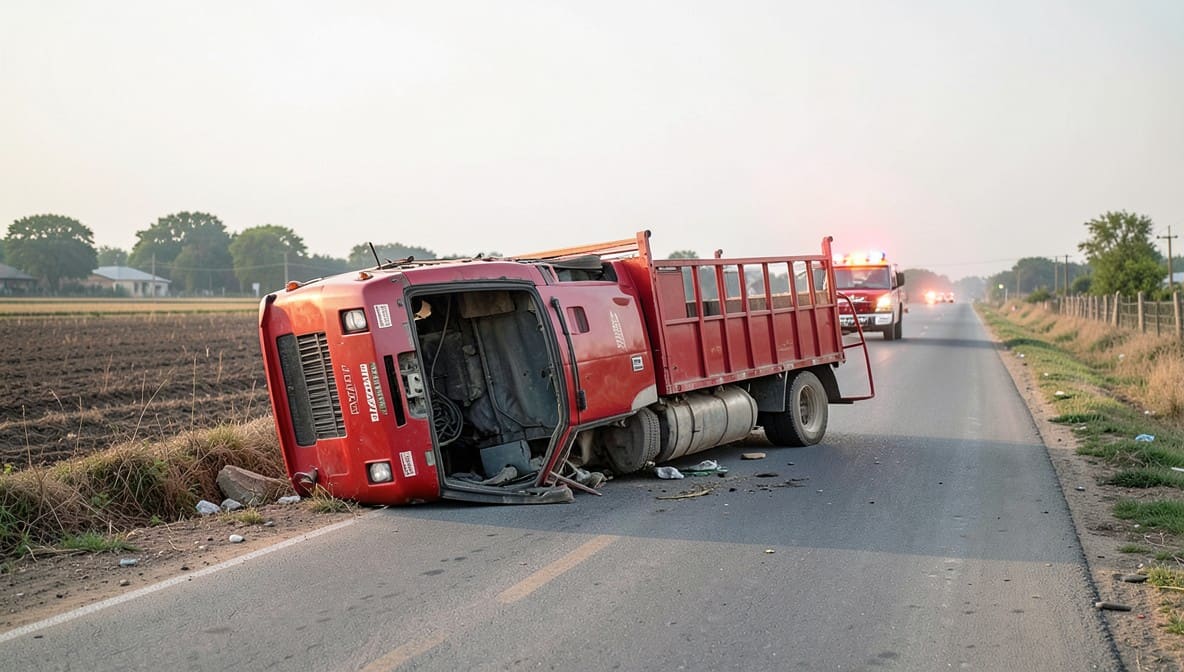
The appellant, Idrish, sustained severe injuries in a road accident on 08.12.2007 while travelling in a D.C.M. Truck No. UP 90 B 9167, which was carrying dry fruits and garlic owned by him. The truck, driven negligently, collided with a tree, resulting in the amputation of his left hand. He filed a claim petition before the Motor Accident Claims Tribunal seeking compensation for medical expenses, loss of income, and pain and suffering. The owner of the vehicle and the insurance company contested liability, arguing that Idrish was a gratuitous passenger and thus outside the scope of the insurer’s statutory obligation.
Key Facts
- The accident occurred on 08.12.2007 while the truck was transporting goods owned by the claimant
- The claimant paid Rs. 200/- as freight charges for the transportation of his goods
- He was travelling alongside the goods in the same vehicle
- An FIR was lodged regarding the accident
- A charge sheet was filed against the driver
- Medical treatment was received at a hospital and later a nursing home
- Left hand amputation confirmed by medical records
- No documentary evidence of income was produced, though Rs. 9,000/- per month was claimed
Procedural History
- 08.12.2007: Accident occurred
- 15.02.2010: Motor Accident Claims Tribunal delivered award
- 15.02.2010: Tribunal awarded Rs. 13,056/- for medical expenses, Rs. 5,000/- for pain and suffering, and Rs. 1,20,000/- for disability (total Rs. 1,38,056/-)
- 15.02.2010: Tribunal held claimant was a gratuitous passenger; insurer not liable; owner liable
- 10.03.2010: Appellant filed First Appeal From Order No. 1030 of 2010
- 06.02.2025: Owner filed Cross Objection No. 66 of 2025
- 05.06.2025: High Court allowed application for condonation of delay in filing cross objection
- 15.05.2026: Judgment delivered by Hon’ble Pankaj Bhatia, J.
Relief Sought
The appellant sought enhancement of compensation on grounds of erroneous calculation of income, disability percentage, and multiplier. The owner sought to shift liability from himself to the insurer, arguing that the claimant was not a gratuitous passenger but the owner of the goods being transported.
The Legal Issue
The central question was whether a person travelling in a goods vehicle as the owner of the goods being transported, and having paid freight charges, qualifies as a "gratuitous passenger" under Section 147 of the Motor Vehicles Act, 1988, and whether the insurer is liable to compensate for injuries sustained in such circumstances.
Arguments Presented
For the Appellant
The appellant argued that he was not a gratuitous passenger but the owner of the goods being transported, having paid Rs. 200/- as freight. He relied on the Supreme Court’s decisions in National Insurance Co. Ltd. v. Bommithi Subbhayamma (2005) 12 SCC 243 and National Insurance Co. Ltd. v. Baljit Kaur (2004) 2 SCC 1, which held that the 1994 amendment to Section 147 extended compulsory insurance coverage to include the owner of goods or his authorised representative. He contended that the Tribunal erred in treating him as a gratuitous passenger and in applying an incorrect multiplier and disability percentage.
For the Respondent
The Insurance Company argued that the claimant failed to produce documentary proof of ownership of goods or payment of freight. It relied on New India Assurance Co. Ltd. v. Asha Rani (2003) 2 SCC 223 and National Insurance Co. Ltd. v. Challa Bharathamma (2004) 8 SCC 517, asserting that unless the claimant is an authorised representative of the goods owner, insurance coverage does not extend to persons travelling in goods vehicles. The insurer claimed no cross-examination was conducted to establish the claimant’s status as goods owner.
The Court's Analysis
The Court examined the legislative intent behind the 1994 amendment to Section 147 of the Motor Vehicles Act, which added the phrase "including owner of the goods or his authorised representative carried in the vehicle" to the definition of third-party liability. The Court noted that the amendment was not intended to cover all persons travelling in goods vehicles, but specifically to protect those with a proprietary interest in the cargo.
"The intention of Parliament... could not have been that the words ?any person? occurring in Section 147 would cover all persons who were travelling in a goods carriage in any capacity whatsoever."
The Court held that the claimant’s payment of freight charges, coupled with his presence alongside the goods he owned, established his status as the owner of the goods, not a gratuitous passenger. The insurer’s failure to cross-examine the claimant on this point, despite having raised the issue in its written submission, rendered its denial legally unsustainable.
The Court further found the Tribunal’s calculation of compensation to be legally flawed. The deduction of one-third of income was applicable only in cases of death, not disability. The assessment of 20% functional disability was arbitrary, given the medical certificate recorded 70% disability. The notional income of Rs. 15,000/- per annum was rejected as unsupported. Instead, the Court adopted the minimum wage for unskilled workers at Rs. 3,300/- per month as the baseline income.
The Court applied a 40% enhancement for future prospects as per Pranay Sethi v. SBI and a multiplier of 15, given the claimant’s age of approximately 40 years. Pain and suffering was enhanced from Rs. 5,000/- to Rs. 1,00,000/- as commensurate with the severity of permanent disability.
The Verdict
The appellant succeeded. The High Court set aside the Tribunal’s award dated 15.02.2010 and modified the compensation as follows: Rs. 4,15,800/- for loss of future earnings (Rs. 3,300/- monthly income + 40% future prospects × multiplier of 15), Rs. 1,00,000/- for pain and suffering, and Rs. 13,056/- for medical expenses, totaling Rs. 5,28,856/-. Interest at 7% per annum shall accrue from the date of the claim petition until actual payment. The amount shall be paid through RTGS within three months. Any amount previously paid by the owner shall be reimbursed to him upon application. The insurer is liable for the entire compensation.
What This Means For Similar Cases
Owner of Goods Is Not a Gratuitous Passenger
- Practitioners must now argue that payment of freight charges and presence with owned goods establishes proprietary status under Section 147
- Insurers cannot rely on blanket denials of liability for persons in goods vehicles without cross-examining on ownership and payment
- Claimants need not produce formal bills or receipts; circumstantial evidence (presence with goods, payment of freight) suffices
Compensation Calculations Must Align with Supreme Court Precedents
- Future prospects: 40% enhancement applies even without proof of income, using minimum wage as baseline
- Multiplier: Must be based on claimant’s age at time of accident, not arbitrary assumptions
- Disability: Percentage must be based on medical certificate; arbitrary reduction is impermissible
- Pain and suffering: Must reflect severity of permanent injury; Rs. 5,000/- is inadequate for amputation
Insurance Liability Extends to Goods Owners
- The 1994 amendment to Section 147 creates a distinct category of insured persons: owner of goods or authorised representative
- Insurers must revise policy interpretations to reflect this statutory expansion
- Claims involving transporters, traders, and small business owners moving goods in commercial vehicles are now clearly covered