The Karnataka High Court has clarified that an insurer under an Act Liability Only Policy cannot escape liability for death of a passenger in a private vehicle, establishing that the principle of 'pay and recover' applies even when the policy does not explicitly cover passenger risk. This ruling reinforces the protective intent of the Motor Vehicles Act and aligns with the Supreme Court’s precedent in Sunita v. United India Insurance.
Background & Facts
The Dispute
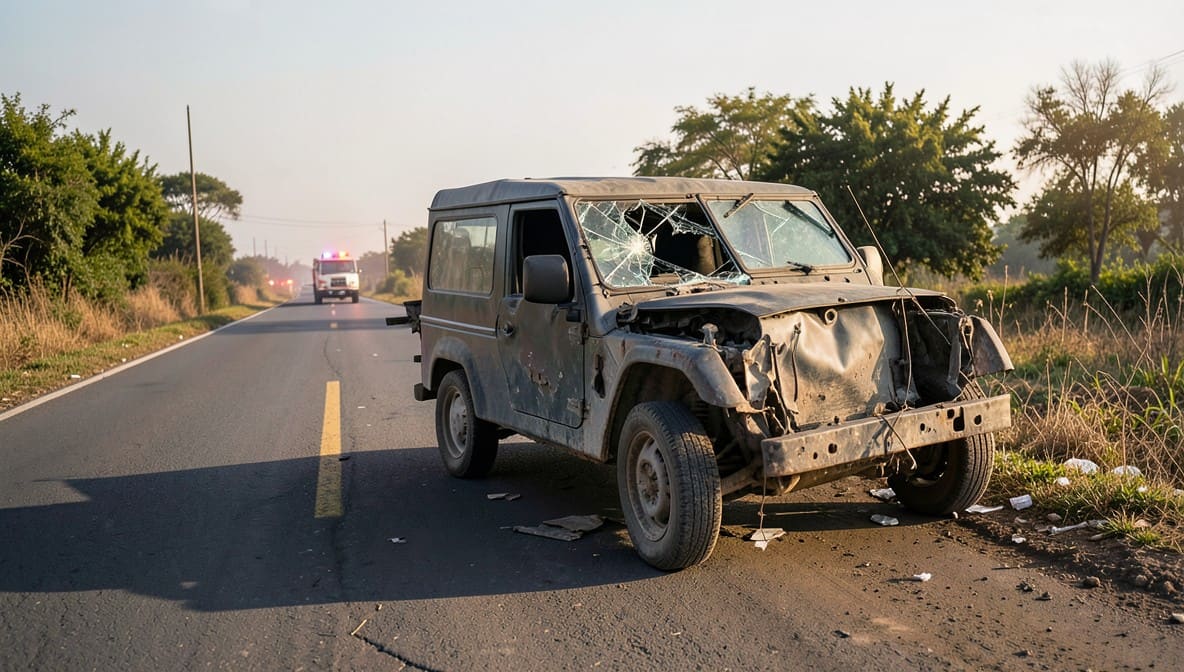
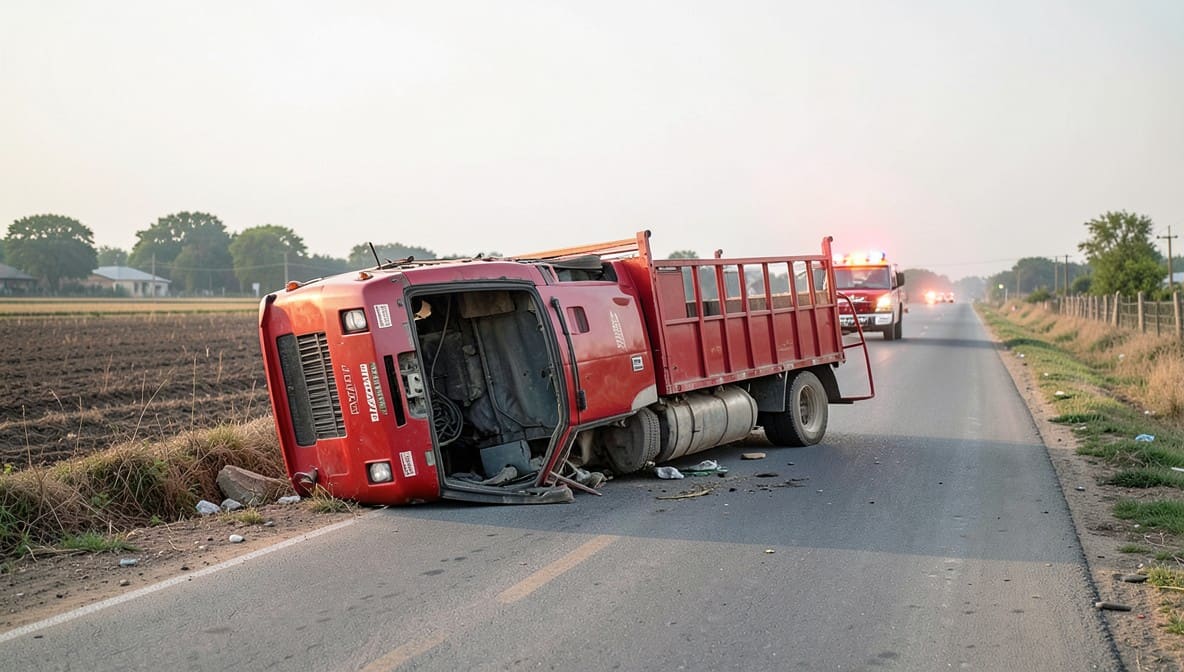
On 29.04.2007, at approximately 12:30 pm, Suresh S. Adihudi, a passenger in a Mahindra Jeep (registration KA-23/M-2423), was traveling from Athani to Balligeri in Belgaum district when the driver allegedly drove the vehicle in a rash and negligent manner, causing him to fall out and sustain fatal injuries. Despite emergency medical treatment at Civil Hospital, Athani, and later at Civil Hospital, Sangli, he succumbed to his injuries on the same day.
His wife, Sharawwa @ Kamalawwa (Respondent No. 1), and their two minor sons, Kumar Sadev @ Sanju (Respondent No. 2) and Kumar Shravan (Respondent No. 3), filed a claim petition under Section 166 of the Motor Vehicles Act, 1988, seeking compensation for loss of dependency. The petition also named the vehicle owner, Sri Chidanand Shankar Chamakeri (Appellant), and the insurer, National Insurance Co. Ltd. (Respondent No. 6), along with the deceased’s parents, Sadashiv and Neelawwa (Respondents No. 4 and 5).
Key Facts
- The deceased, Suresh S. Adihudi, was a 42-year-old coolie and sole breadwinner of his family.
- The Jeep was owned by the appellant and insured under Policy No. 270807/31/06/6700000621 with National Insurance Co. Ltd.
- The policy was an ‘Act Liability Only Policy’, covering only third-party liability, not passengers or occupants.
- The driver held a valid and effective driving license.
- The vehicle was duly registered and insured at the time of the accident.
- The claimants submitted documentary evidence including death certificate, post-mortem report, and proof of dependency.
- The insurer did not dispute the occurrence of the accident, the validity of the license, or the entitlement of claimants to compensation.
Procedural History
- 29.04.2007: Accident occurred.
- 2007: Claim Petition (MVC No. 2606/2007) filed before Fast Track Court, Athani.
- 31.12.2012: Fast Track Court awarded compensation of Rs. 5,15,000/- with 6% interest per annum from the date of claim petition, but dismissed the claim against the insurer on grounds of policy exclusion.
- 21.12.2013: Miscellaneous First Appeal No. 21451 of 2013 filed before the High Court of Karnataka, Dharwad, challenging the dismissal of the claim against the insurer.
- 29.04.2026: Judgment delivered by Justice Ravi V. Hosmani.
The Parties' Positions
Appellant (Owner): Argued that the insurer must bear the liability for compensation since the vehicle was insured under the mandatory Act Liability Only Policy, and the principle of 'pay and recover' should apply.
Respondent (Insurer): Contended that the Act Liability Only Policy explicitly excludes coverage for passengers, and therefore, no liability arises against the insurer for death of an occupant.
Relief Sought
The appellant sought modification of the award to hold the insurer liable for the entire compensation of Rs. 5,15,000/- with 6% interest from the date of the claim petition, and to set aside the dismissal of the claim against the insurer.
The Legal Issue
The central question was whether the principle of 'pay and recover' applies to an insurer under an Act Liability Only Policy when a passenger in a private vehicle dies due to the driver’s negligence, despite the policy not explicitly covering passenger risk.
Arguments Presented
For the Appellant
The appellant’s counsel relied on the Supreme Court’s decision in Sunita and Ors. v. United India Insurance Co. Ltd. and Ors. (2025 SCC OnLine SC 1464), which held that even under an Act Liability Only Policy, the insurer must pay compensation to third-party victims - including passengers - and may subsequently recover the amount from the insured. The counsel argued that the Motor Vehicles Act is a social welfare legislation designed to ensure prompt compensation to victims, and the insurer’s liability is statutory, not contractual. The decisions in National Insurance Co. Ltd. v. Baljit Kaur (2004) 2 SCC 1 and Anu Bhanvara v. IFFCO Tokio General Insurance Co. Ltd. (2020 SCC 63) were cited to reinforce that passenger claims are compensable under the Act.
For the Respondent
The insurer’s counsel relied on United India Insurance Co. Ltd. v. Shravankumar and Ors. (2023 ACJ 2569) and Oriental Insurance Co. Ltd. v. Kashibai and Ors. (2017 ACJ 1732), arguing that these judgments held insurers not liable for passenger claims under Act Liability Only Policies. He contended that since no additional premium was paid for passenger coverage, the insurer cannot be held liable, and the principle of contractual limitation applies.
The Court's Analysis
The Court acknowledged that the occurrence of the accident, the validity of the license, the insurance coverage, and the entitlement of the claimants to compensation were not in dispute. The sole issue was the insurer’s liability under an Act Liability Only Policy.
The Court examined the Supreme Court’s ruling in Sunita v. United India Insurance, which explicitly held that the statutory obligation under Section 147 of the Motor Vehicles Act overrides any policy exclusion. The Court noted that the purpose of the Act is to ensure that victims receive immediate compensation without being subjected to protracted litigation against the insured.
"The insurer is under a statutory duty to compensate the victim, and the policy exclusion cannot override the mandate of the Motor Vehicles Act. The principle of 'pay and recover' is not a contractual obligation but a statutory mechanism to ensure justice to victims."
The Court distinguished the judgments relied upon by the insurer, noting that in Balakrishnan’s case, the Supreme Court was addressing whether the policy was comprehensive or act-only, and whether premium was paid for passenger coverage. In contrast, Sunita directly addressed the liability of insurers under Act Liability Only Policies for passenger claims and mandated payment with recovery rights.
The Court further held that the earlier decisions of Single Judges of this Court, which denied liability to insurers in similar circumstances, were rendered obsolete by the binding precedent of the Supreme Court in Sunita. The Court emphasized that statutory obligations under the Motor Vehicles Act cannot be negated by contractual limitations.
The Verdict
The appeal was allowed in part. The judgment and award dated 31.12.2012 of the Fast Track Court, Athani, was modified. The dismissal of the claim petition against the insurer was set aside. The insurer, National Insurance Co. Ltd., is held liable to pay the compensation of Rs. 5,15,000/- with interest at 6% per annum from the date of the claim petition until realization. The insurer has liberty to recover the amount paid from the vehicle owner without initiating separate proceedings. The amount deposited by the owner in the appeal was directed to be transmitted to the Fast Track Court. No order was made as to costs.
What This Means For Similar Cases
Insurer Liability Is Statutory, Not Contractual
- Practitioners must now argue that any policy exclusion for passenger claims under an Act Liability Only Policy is void to the extent it conflicts with Section 147 of the Motor Vehicles Act.
- Claimants in passenger death cases need not prove the insurer’s contractual obligation - only the statutory duty under the Act.
Pay and Recover Is Mandatory, Not Discretionary
- The 'pay and recover' mechanism is now firmly established as a statutory requirement, not an equitable remedy.
- Insurers must pay claimants immediately; recovery from the insured can be pursued administratively or through a separate recovery suit, but not as a precondition to payment.
Policy Type Does Not Determine Liability
- Whether the policy is 'Act Liability Only' or 'Comprehensive' is irrelevant to the insurer’s liability to third-party victims under the Act.
- The focus must shift from policy wording to statutory mandate under Sections 147 and 166 of the Motor Vehicles Act.
Practical Takeaways for Practitioners
- File claims against insurers even if the policy is Act Liability Only.
- Cite Sunita v. United India Insurance (2025 SCC OnLine SC 1464) as binding precedent.
- Oppose insurer defenses based on policy exclusions as legally unsustainable.
- Seek immediate payment from insurers, with recovery rights reserved.