The Madhya Pradesh High Court has clarified that insurance companies cannot be compelled to pay compensation under the principle of 'pay and recover' when a goods vehicle carries passengers without coverage under the policy. This ruling reinforces the contractual limits of motor insurance and sets a clear boundary on judicial interference in insurance liability.
Background & Facts
The Dispute
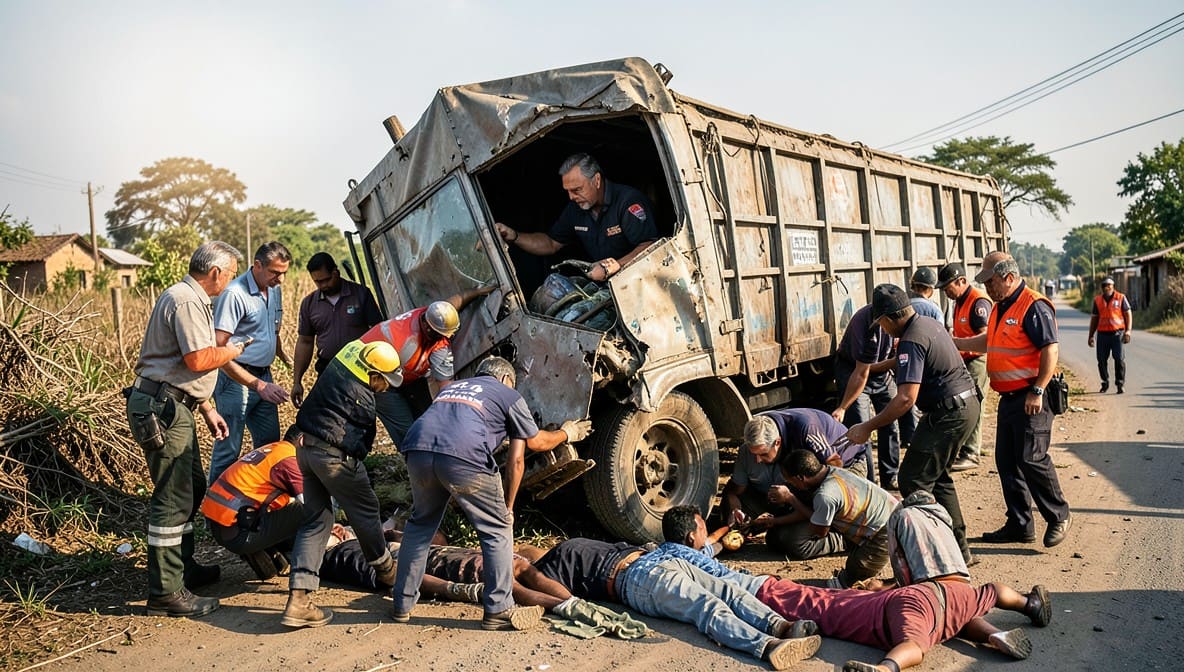
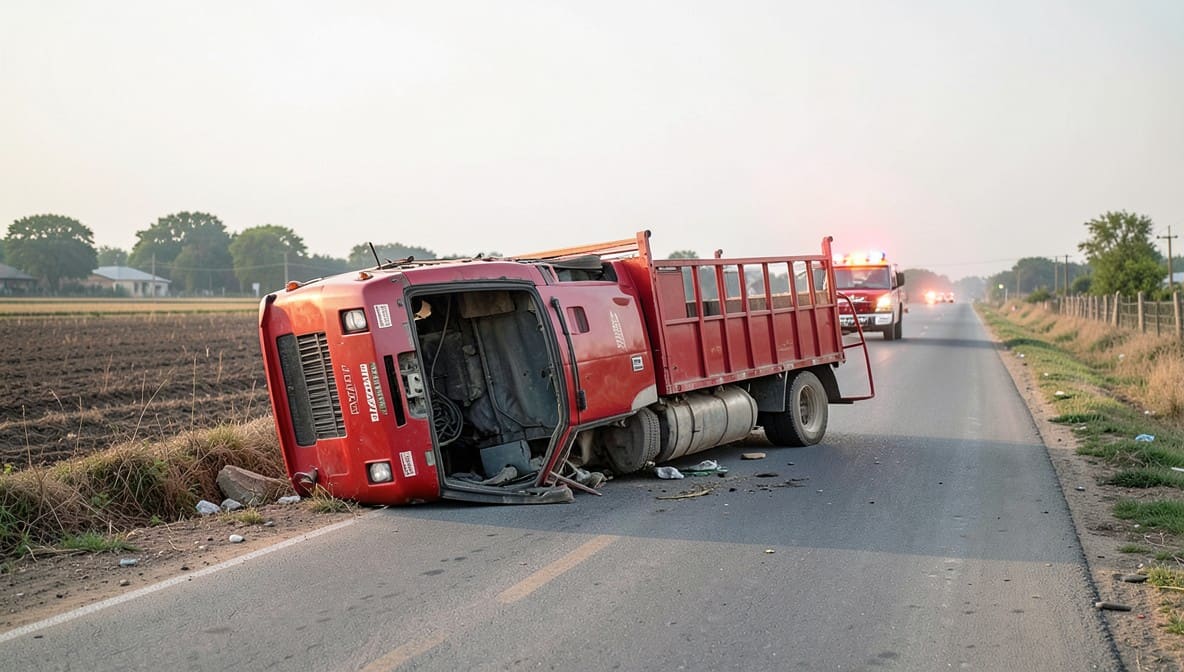
The dispute arose from a fatal accident involving a goods vehicle, Matador No. M.P.43-G-1007, which overturned on the road, resulting in the death of Raju Bai, aged approximately 33 years. At the time of the accident, 27 persons, including the deceased, were travelling in the goods vehicle to transport a deity’s murti. The vehicle was registered as a goods carrier and insured under a policy that explicitly excluded coverage for passengers.
Key Facts
- The accident occurred on an unspecified date prior to the filing of the claim case, but the claim was filed as Claim Case No. 149/2010.
- The vehicle’s registration certificate (Annexure NA-1) confirmed its classification as a goods vehicle with unladen weight below 7,500 kg.
- The insurance policy (Annexure NA-4) contained no coverage for passengers travelling in the goods vehicle.
- The deceased and other passengers were not covered under any third-party passenger liability clause in the policy.
- The driver held a Light Motor Vehicle (LMV) licence, not a transport vehicle licence.
- The claimants, survivors of the deceased, filed a claim before the Motor Accident Claims Tribunal seeking compensation.
Procedural History
- 27.04.2012: Motor Accident Claims Tribunal passed an award directing the insurance company to pay Rs. 2,85,000 to the survivors, with the direction that the amount be recovered later from the owner and driver (the 'pay and recover' principle).
- 13.05.2012: The insurance company filed the present Miscellaneous Appeal (No. 1333 of 2012) before the High Court challenging the award.
- 24.03.2026: The High Court heard arguments and delivered judgment.
The Parties' Positions
Appellant (Oriental Insurance Co. Ltd.): Argued that since the policy did not cover passenger liability in a goods vehicle, the insurer was not liable to pay any compensation. Relied on Shivram Choudhary v. Veerendra Kumar Mishra (2025 ACJ 2697) and Balu Krishna Chavan v. Reliance General Insurance Co. Ltd. (2023 ACJ 1546 SC) to assert that the 'pay and recover' principle cannot override the express terms of the policy.
Respondents (Heeralal & 3 Ors.): Contended that the Tribunal’s application of 'pay and recover' was justified to ensure immediate relief to the victims, and that the insurer’s liability was statutory under the Motor Vehicles Act.
Relief Sought
The appellant sought setting aside of the Tribunal’s award directing it to pay Rs. 2,85,000, and a declaration that the insurer is not liable for passenger compensation in the absence of policy coverage. The respondents sought dismissal of the appeal and enforcement of the award.
The Legal Issue
Can an insurance company be compelled to pay compensation under the 'pay and recover' principle when the policy explicitly excludes coverage for passengers in a goods vehicle, and the statutory liability under the Motor Vehicles Act does not extend to such uninsured risks?
Arguments Presented
For the Appellant
The appellant relied on Shivram Choudhary v. Veerendra Kumar Mishra (2025 ACJ 2697), wherein the coordinate Bench of this Court held that the 'pay and recover' principle cannot be invoked to impose liability on insurers where the policy does not cover the risk. The appellant further cited Balu Krishna Chavan v. Reliance General Insurance Co. Ltd. (2023 ACJ 1546 SC), where the Supreme Court held that insurers are not liable for risks not covered under the policy, even if the vehicle is involved in an accident. The appellant emphasized that the policy terms are binding and that the Tribunal’s order effectively rewrote the contract.
For the Respondent
The respondents argued that the purpose of the Motor Vehicles Act is to ensure compensation to victims, and that the 'pay and recover' mechanism is a procedural tool to secure immediate relief. They contended that the insurer’s liability is statutory and cannot be avoided by contractual exclusions, especially where the vehicle was being used in a manner that created foreseeable risk.
The Court's Analysis
The Court first addressed the objection regarding the driver’s licence. It held that the driver’s LMV licence was sufficient to operate the Matador, as its unladen weight was below 7,500 kg, and therefore fell within the category of vehicles covered by an LMV licence. This objection was dismissed, relying on Mukund Dewangan v. Oriental Insurance Company Limited (2017) 14 SCC 663.
However, the Court turned to the central issue: whether the insurer could be made liable for passenger death despite explicit exclusion in the policy. The Court observed that the Tribunal’s reliance on 'pay and recover' was misplaced. The principle is not a tool to override policy exclusions but a mechanism to ensure recovery from the actual wrongdoer after payment by the insurer - only where the insurer is prima facie liable.
"The principle of pay and recover cannot be applied to impose liability on an insurer where the risk is expressly excluded under the policy. To do so would amount to judicial creation of a new contract."
The Court emphasized that the insurance policy is a contract of indemnity, and the insurer’s liability is strictly confined to the terms agreed upon. The Supreme Court in Balu Krishna Chavan had already held that insurers are not liable for risks not covered, even if the vehicle was carrying passengers illegally. The Tribunal’s order, therefore, violated the sanctity of contract and the statutory framework under the Motor Vehicles Act.
The Court further noted that the presence of 27 passengers in a goods vehicle was a clear violation of the law, and the insurer cannot be held liable for consequences arising from such illegal use, especially when the policy explicitly excluded such coverage.
The Verdict
The appeal is allowed. The direction in the award dated 27.04.2012 requiring the insurance company to pay Rs. 2,85,000 to the survivors is set aside. The owner and driver of the offending vehicle, M.P.43-G-1007, are held solely liable for payment of the compensation amount of Rs. 2,85,000. The respondents are directed to enforce the award against the owner and driver through execution proceedings. No costs are awarded.
What This Means For Similar Cases
Insurance Liability Is Contractually Bound
- Practitioners must now argue that insurers cannot be held liable for risks explicitly excluded in the policy, even if the accident involves third-party deaths.
- Claims Tribunals must examine policy terms before applying 'pay and recover' - it cannot be used to circumvent contractual exclusions.
Illegal Use of Vehicle Excludes Coverage
- When a goods vehicle is used to carry passengers in violation of law and policy terms, insurers are not liable for resulting injuries or deaths.
- This judgment reinforces that statutory obligations under the Motor Vehicles Act do not override express policy exclusions.
Pay and Recover Has Limited Scope
- The 'pay and recover' principle applies only when the insurer is prima facie liable under the policy.
- It cannot be invoked to create liability where none exists under the contract.
- Practitioners should challenge any Tribunal order that applies 'pay and recover' without first establishing policy coverage.