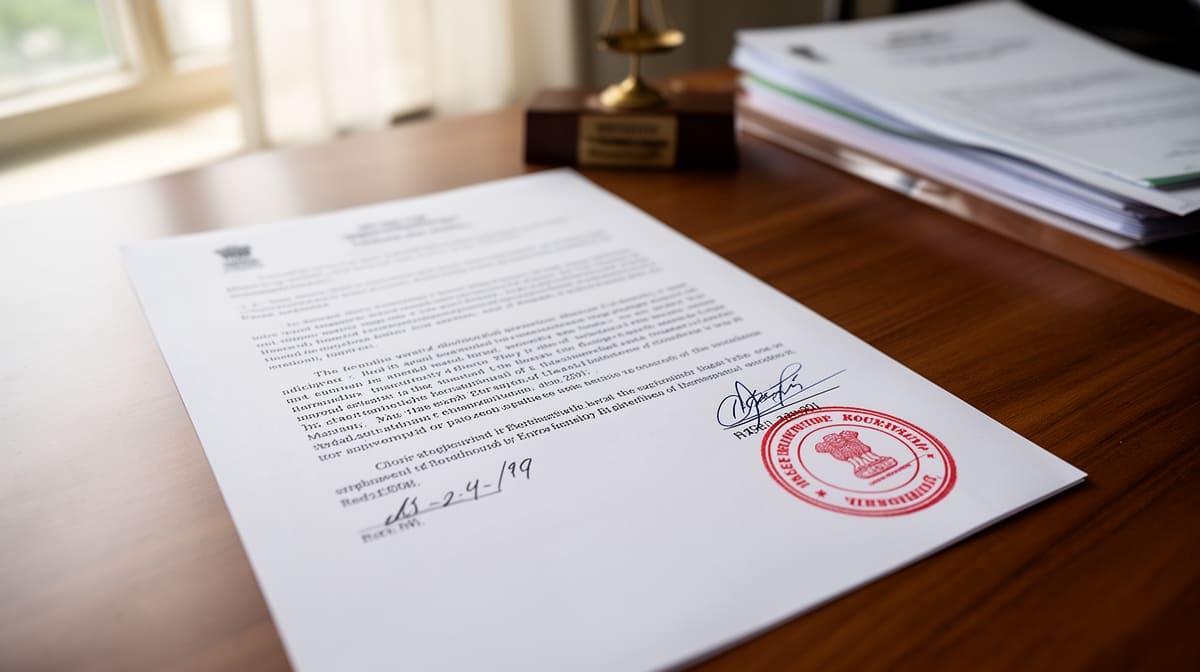
The Jharkhand High Court has clarified a critical procedural flaw in complaints under Section 138 of the Negotiable Instruments Act, affirming that filing a complaint before the expiry of the 15-day notice period renders it legally unsustainable. The judgment provides a clear remedial pathway for complainants whose initial complaints are dismissed on technical grounds, reinforcing the importance of strict compliance with statutory timelines.
Background & Facts
The Dispute
The appellant, Ajay Lal, filed a criminal complaint against respondent no. 2, Gopal Prasad @ Gopal Prasad Soni, under Section 138 of the Negotiable Instruments Act, 1881, alleging dishonour of a cheque issued as payment for a debt or liability. The cheque was presented to the bank and returned unpaid on grounds of insufficient funds. A legal notice demanding payment was issued and received by the drawer on an unspecified date, triggering the statutory 15-day window under the proviso to Section 138(c).
Key Facts
- The cheque was dishonoured on an undisclosed date, but the notice was issued and received prior to the filing of the complaint.
- The complaint was filed in Complaint Case No. 1413 of 2021 before the Judicial Magistrate, 1st Class, Garhwa.
- The complaint was filed before the expiry of 15 days from the date of receipt of the notice, violating the mandatory condition under Section 138(c).
- The Magistrate, on 22.06.2024, acquitted the accused on the ground that the complaint was not maintainable due to premature filing.
Procedural History
- Date of cheque dishonour: Not specified in judgment
- Date of legal notice: Not specified, but acknowledged as received
- Date of complaint filing: Before expiry of 15 days from notice receipt
- 22.06.2024: Judicial Magistrate, Garhwa, acquitted respondent no. 2, holding complaint invalid for premature filing
- 29.04.2026: Acquittal Appeal (SJ) No. 91 of 2024 heard before the Jharkhand High Court
Relief Sought
The appellant sought reversal of the acquittal order and a direction to proceed with the complaint. Alternatively, he sought liberty to file a fresh complaint under the proviso to Section 142(b) of the NI Act.
The Legal Issue
The central question was whether a complaint under Section 138 of the Negotiable Instruments Act is maintainable if filed before the expiry of the 15-day period prescribed in the proviso to Section 138(c), and if not, whether the complainant may file a fresh complaint after the one-month limitation under Section 142(b) has expired.
Arguments Presented
For the Appellant
Learned counsel for the appellant relied on the Supreme Court’s judgment in Yogendra Pratap Singh v. Savitri Pandey & Anr. (2014) 10 SCC 713, arguing that while a complaint filed before the 15-day notice period expires is invalid, the law permits a fresh complaint to be filed within one month of the court’s decision on the initial complaint. He contended that the appellant should be granted liberty to file a fresh complaint under the proviso to Section 142(b), as the defect was procedural and not substantive.
For the Respondent/State
The State and respondent no. 2 opposed the prayer, arguing that the complaint was fundamentally defective from inception and that allowing a fresh complaint after the expiry of the one-month limitation period would undermine the statutory limitation regime. They contended that the appellant had no right to a second opportunity and that the acquittal should stand.
The Court's Analysis
The Jharkhand High Court examined the ratio laid down by the Supreme Court in Yogendra Pratap Singh v. Savitri Pandey. The Apex Court had held that a complaint filed under Section 138 before the expiry of the 15-day notice period is not maintainable, as the cause of action does not arise until the 15-day period lapses without payment. The Court further held that while the same complaint cannot be resurrected after its dismissal, the complainant may file a fresh complaint within one month of the court’s decision on the invalid complaint.
"...the payee or the holder in due course of the cheque may file a fresh complaint within one month from the date of decision in the criminal case and, in that event, delay in filing the complaint will be treated as having been condoned under the proviso to clause (b) of Section 142 of the NI Act."
The High Court emphasized that the statutory limitation under Section 142(b) is not absolute. The proviso permits the court to entertain a complaint filed after the one-month period if the complainant satisfies it of sufficient cause. The court noted that the initial dismissal was on a purely procedural ground - premature filing - and not on merits. Therefore, denying the appellant any remedy would be unjust.
The Court further clarified that the remedy lies not in reviving the defective complaint, but in initiating a new one, which is legally distinct and not barred by res judicata. The judgment in Yogendra Pratap Singh was binding and directly applicable.
The Verdict
The acquittal appeal was disposed of as withdrawn with liberty to the appellant to file a fresh complaint under Section 138 of the NI Act within one month from the date of this judgment, subject to the proviso to Section 142(b). The appellant may seek condonation of delay if the fresh complaint is filed beyond the one-month period, provided he demonstrates sufficient cause. No costs were awarded.
What This Means For Similar Cases
Fresh Complaint Is a Statutory Remedy, Not a Second Chance
- Practitioners must now treat a complaint filed before the 15-day notice period as void ab initio, not merely defective
- The remedy is not to amend or re-file the same complaint, but to file a new one with a fresh cause of action arising from the court’s decision
- This applies even if the original one-month limitation under Section 142(b) has expired - the clock restarts from the date of the acquittal order
Procedural Non-Compliance Does Not Bar All Relief
- Courts must distinguish between substantive defects (e.g., no debt) and procedural defects (e.g., premature filing)
- A dismissal on procedural grounds does not extinguish the complainant’s right to pursue the claim through a fresh complaint
- The proviso to Section 142(b) is a safety valve - it must be applied liberally where the delay stems from a bona fide legal misunderstanding
Timing Is Critical - But Not Absolute
- The 15-day notice period is mandatory; no exceptions
- The one-month limitation for filing a complaint is also mandatory - but the proviso allows for condonation
- Practitioners should advise clients to file fresh complaints within 30 days of an acquittal on procedural grounds to avoid contesting delay