The Calcutta High Court reversed a Railway Claim Tribunal order, holding that the deceased was a bona fide passenger and that his death qualified as an untoward incident under the Railways Act, thereby awarding compensation to the victims' family.
Background & Facts
The Dispute
The appellants, Anamika Halder (Pal) and others, filed an appeal against a judgment and award dated 11-04-2025 passed by the Railway Claim Tribunal, Kolkata Bench (OA(IIu)/Kol/92/2019). They sought compensation under Section 124A of the Railways Act, 1989 for the death of Bappa (Baptu) Pal, who allegedly fell from a running train on 9 April 2019.
Key Facts
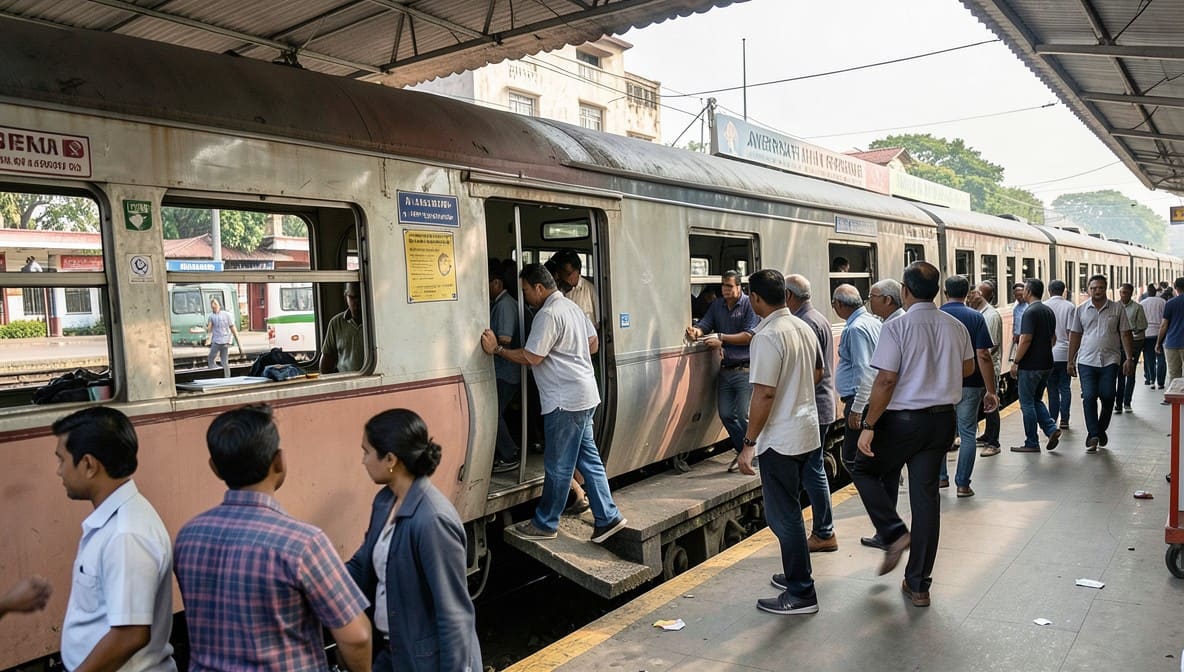
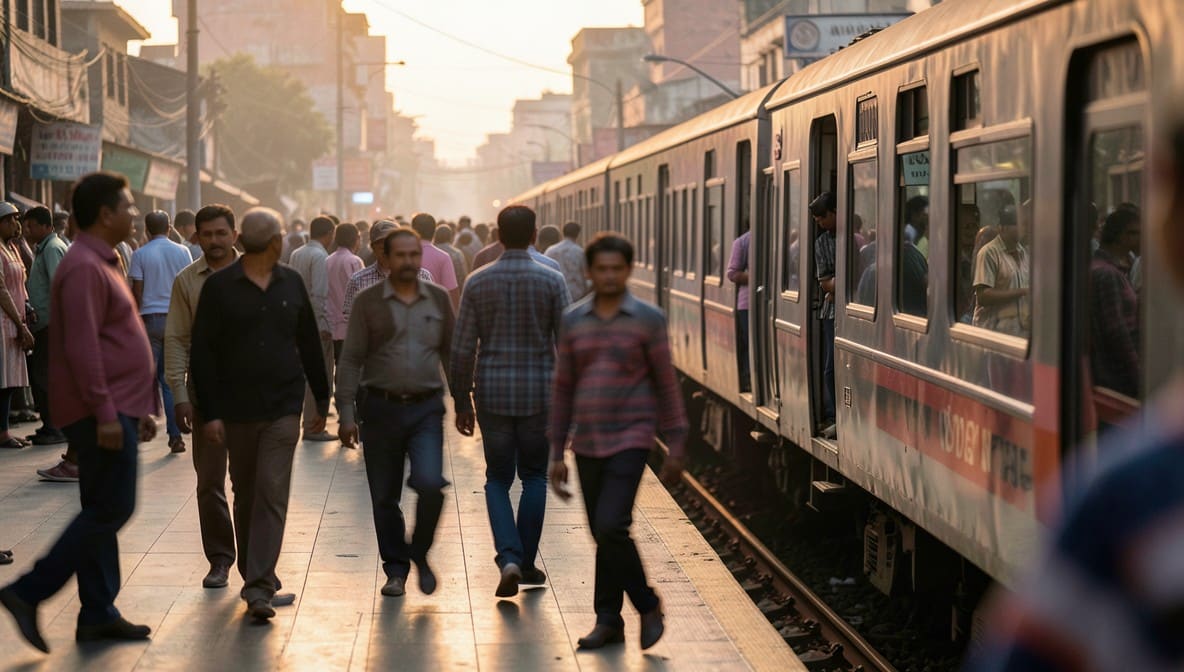
- 9 April 2019: Bappa Pal, his brother Pintu Pal and friend Samaresh Pal travelled from Dasnagar to Andul by local train.
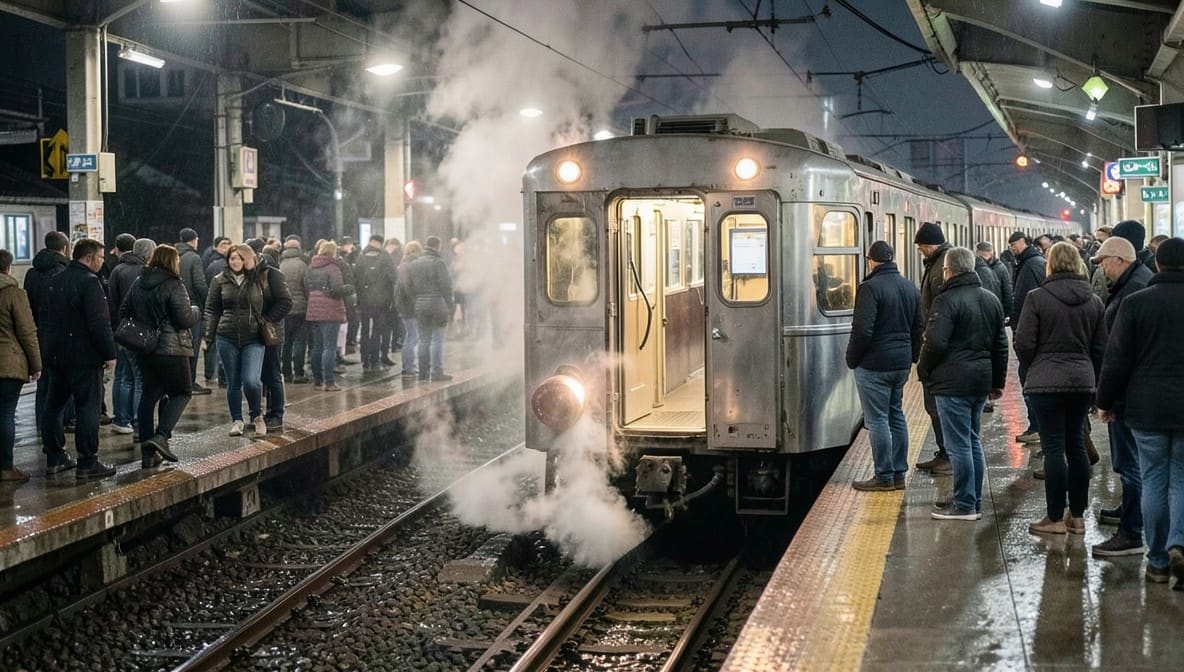
- Around 20:10 hrs, the train experienced an overcrowded pressure and sudden jerk between km 9/13 and 9/15 (up line); Bappa Pal fell from the running train and died on the spot.
- The incident occurred on a stormy day; the train was running late.
- An FIR (U D case no. 24/2019) dated 9 April 2019 was registered with Sonarpur GRPS.
- The ticket for Bappa Pal was purchased at 17:47 hrs on 9 April 2019, as asserted by the appellant’s counsel.
- A.W. 2 (Pintu Pal) testified that he saw Bappa Pal in the same compartment and that the ticket purchase was confirmed.
- No cross-examination was conducted regarding the ticket purchase, and the Railway Authority did not produce the ticket.
- The Railway Claim Tribunal had dismissed the claim, holding that the appellants failed to prove that Bappa Pal was a bona fide passenger and that the death resulted from a fall from the train.
Procedural History
- 11-04-2025: Railway Claim Tribunal, Kolkata Bench, dismissed the claim (OA(IIu)/Kol/0093/2019).
- 03-08-2026: Appeal (F.M.A. 1152 of 2025) filed before the Calcutta High Court.
- 19-08-2026: Judgment delivered by Justice Biswaroop Chowdhury.
Relief Sought
The appellants sought compensation under Section 124A of the Railways Act, 1989, claiming that the death constituted an untoward incident and that they were entitled to monetary relief.
The Legal Issue
The central question was whether the deceased could be deemed a bona fide passenger and whether his death qualified as an untoward incident under Section 123(c) of the Railways Act, 1989, thereby triggering liability under Section 124A.
Arguments Presented
For the Appellant
- Asserted that the ticket purchase at 17:47 hrs proved passenger status.
- Relied on the testimony of A.W. 2 (Pintu Pal) confirming Bappa Pal’s presence in the compartment.
- Cited the principle that the burden of proof lies on the railway authority to disprove passenger status, invoking Sections 101, 102 and 114 of the Evidence Act.
- Referred to precedents such as Dasari Laxmi v. Union of India and Raj Kumari v. Union of India establishing a presumption in favour of the claimant when ticket evidence is unavailable.
For the Respondent
- Contended that the appellants failed to produce the ticket and that the eyewitness statements were inconsistent.
- Argued that without documentary proof, the claim of bona fide passenger status could not be established.
- Maintained that the Tribunal was correct in dismissing the claim.
The Court's Analysis
The Court began by noting that in untoward-incident claims, the claimant’s family often cannot produce the ticket, and therefore the burden of proof must shift to the railway authority. It examined the statutory framework:
- Section 123(c) defines an untoward incident and includes accidental falling of any passenger.
- Section 124A provides compensation when such an incident occurs to a passenger.
- Under Sections 101 and 102 of the Evidence Act, the party asserting a fact bears the burden of proof, but the Court emphasized that the presumption under Section 114 - that a person travelling on a passenger train holds a valid ticket unless proven otherwise - applies.
The Court quoted Dasari Laxmi to illustrate that the definition of “passenger” under Section 124-A includes anyone who has purchased a valid ticket. It then discussed Raj Kumari where the Madhya Pradesh High Court held that the railway must prove the absence of a ticket.
"The main question that arises in this case is on whom the onus of proof lies in such claim cases and whether any presumption under the Evidence Act can be raised. Normally under Sections 101 and 102 of the Evidence Act, the burden to prove such facts, on which the legal right or liability depends, is on such person who asserts existence of these facts. But the question before us is whether the burden of proof that the deceased held a valid ticket, pass or permission during his journey, in which he died in accident, can be placed on his dependants."
Applying this reasoning, the Court found that the ticket purchase time (17:47 hrs) and the eyewitness account were sufficient to establish that Bappa Pal was a passenger. The alleged inconsistency raised by the respondent was dismissed as it did not undermine the core finding. The Court further held that the death resulted from a fall from the train, satisfying the definition of an untoward incident under Section 123(c).
Consequently, the Court concluded that the railway authority had failed to discharge its burden of disproving passenger status and therefore was liable to pay compensation under Section 124A.
The Verdict
The appeal is allowed. The Railway Claim Tribunal’s award dated 11-04-2025 is set aside. The Union of India must pay Rs 8,00,000 to the appellants, with interest at 6 % per annum from the date of filing the claim until payment. The amount must be deposited within eight weeks of the communication of this order. No costs were awarded.
What This Means For Similar Cases
Burden of Proof Shifts to the Railway Authority
- Practitioners must argue that, in the absence of a ticket, the presumption under Section 114 of the Evidence Act favours the claimant.
- Railway authorities must be prepared to produce ticket records or credible explanations for their absence.
Oral Evidence Can Satisfy Passenger Status
- Courts will accept credible eyewitness testimony when documentary evidence is unavailable.
- Lawyers should ensure thorough cross-examination of railway witnesses to prevent inconsistencies.
Interest and Timely Compliance Are Mandatory
-
Compensation awards under Section 124A attract statutory interest (commonly 6 % p.a.) from the filing date.
-
The court may impose strict compliance timelines (e.g., eight weeks) to enforce payment.
-
Actionable Takeaways:
- File a detailed affidavit of eyewitnesses and preserve ticket purchase timestamps.
- Cite Dasari Laxmi and Raj Kumari to establish the presumption of ticket possession.
- Request interest under Section 124A and specify a compliance deadline.