The Bombay High Court has clarified that the interim custody of animals seized under animal protection laws does not automatically vest in animal welfare institutions like Gaushalas. Ownership, absence of criminal history, and demonstrated need for the animals must be weighed against allegations of neglect, with the welfare of the animal as the paramount consideration.
Background & Facts
The Dispute
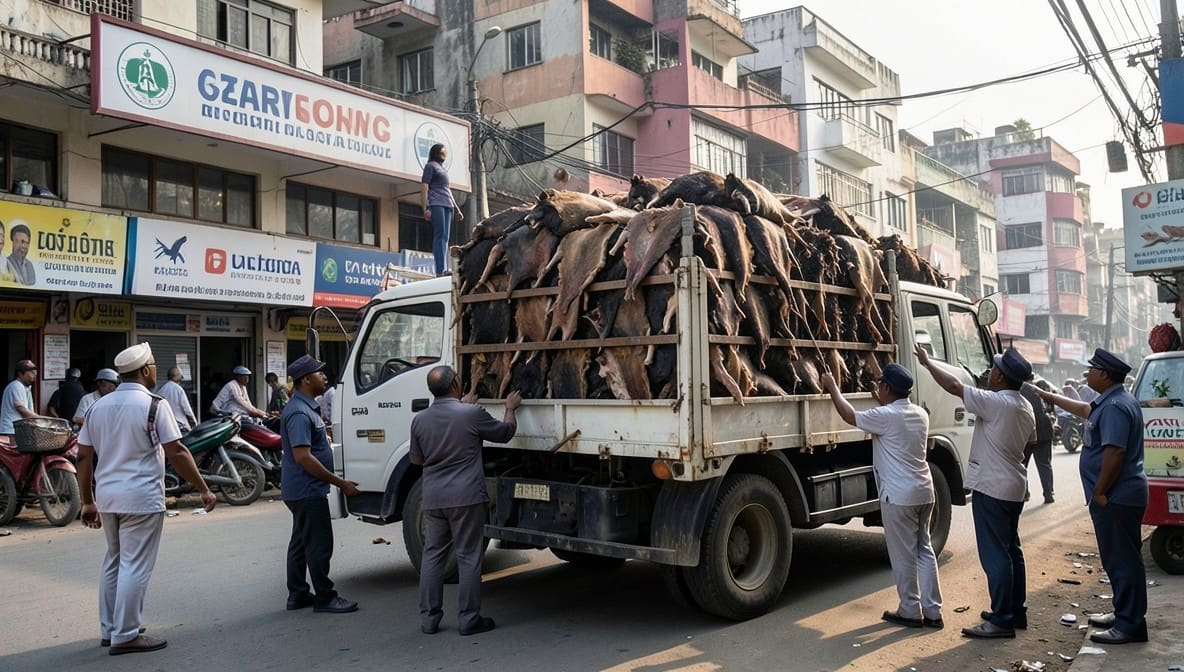
The dispute arose after police seized nine cattle from a tempo vehicle on 4 April 2024, suspecting they were being transported for illegal slaughter under the Maharashtra Animal Preservation Act, 1976. The driver and owner, Respondent No. 2, failed to produce valid transport permits. The cattle were seized under Sections 11(1)(d) and 11(1)(e) of the Prevention of Cruelty to Animals Act, 1960, and other related statutes.
Procedural History
The case progressed through multiple judicial stages:
- 02.05.2024: Judicial Magistrate First Class (JMFC) granted interim custody of the cattle to the petitioner, Mata Indrayani Gaushala, rejecting Respondent No. 2’s application for release.
- 31.05.2024: Additional Sessions Judge partly allowed Respondent No. 2’s first revision, releasing the vehicle but confirming Gaushala’s custody of the cattle.
- 03.03.2025: JMFC rejected a second application by Respondent No. 2 for custody of the cattle, filed under Section 451 CrPC after the charge-sheet was filed.
- 31.05.2025: Additional Sessions Judge allowed Respondent No. 2’s second revision, directing custody be handed over to him, citing ownership documents and lack of criminal antecedents.
- 26.02.2026: Bombay High Court dismissed the petitioner’s writ petition challenging the 31.05.2025 order.
Relief Sought
The petitioner sought quashing of the 31.05.2025 order and restoration of the 02.05.2024 order granting custody to the Gaushala. It also sought to prevent Respondent No. 2 from regaining custody, alleging neglect and unauthorized rental of the cattle.
The Legal Issue
The central question was whether the discretion under Rule 3(b) of the Prevention of Cruelty to Animals (Care and Maintenance of Case Property Animals) Rules, 2017 to entrust interim custody to a Gaushala or Panjarapole is mandatory, or whether the owner’s prima facie right to custody prevails absent proof of cruelty or neglect.
Arguments Presented
For the Petitioner
The petitioner argued that the Gaushala’s custody was lawfully granted under Rule 3(b) and that the second revision application was barred under Section 362 CrPC as the first order had attained finality. It relied on Shri Chhatrapati Shivaji Gaushala v. State of Maharashtra to assert that animals seized for suspected slaughter must be placed in protective custody. It further contended that the Sessions Judge ignored evidence of negligence by the Gaushala, including the death of one bovine and unverified claims of cattle being rented out.
For the Respondent
Respondent No. 2 submitted that he was the lawful owner, evidenced by purchase receipts and 7/12 extracts showing agricultural land ownership. He argued that no conviction had been secured for cruelty or slaughter, and that the Supreme Court in Manager, Pinjrapole Deudar v. Chakram Moraji Nat held that owners have no inferior claim to custody. He presented police reports and affidavits suggesting the Gaushala had failed to maintain the animals, with one cattle dead and others missing during inspections.
The Court's Analysis
The Court examined the legal framework under the Prevention of Cruelty to Animals Act, 1960, and the 2017 Rules, particularly Rules 3 to 5, which grant Magistrates discretion in assigning interim custody. It emphasized that such discretion is not mandatory and must be guided by the paramount welfare of the animal.
"Neither the Pinjrapole nor the Gaushala has any preferential right over the owner when the owner seeks custody."
The Court distinguished between applications filed under Section 457 CrPC (during investigation) and Section 451 CrPC (during trial), holding that the second application was legally distinct and not barred by Section 362 CrPC. It found no perversity in the Sessions Judge’s reliance on ownership documents, agricultural necessity, and absence of prior convictions.
The Court acknowledged the allegations of neglect by the Gaushala - including the death of one animal and unverified claims of cattle being rented - but noted that these were not adjudicated facts. Nevertheless, they constituted relevant considerations in the exercise of discretion. The Court held that the Sessions Judge’s decision was neither arbitrary nor contrary to Manager, Pinjrapole Deudar or Shri Chhatrapati Shivaji Gaushala, both of which affirm that ownership and context matter more than institutional affiliation.
The Court further clarified that writ jurisdiction under Articles 226 and 227 does not permit re-appreciation of evidence unless the order is perverse or illegal - a threshold not met here.
The Verdict
The petitioner’s writ petition was dismissed. The Court upheld the Sessions Judge’s order granting interim custody of the nine cattle to Respondent No. 2, holding that ownership, agricultural need, and absence of criminal history outweighed institutional custody claims in the absence of proven neglect. The Gaushala was directed to hand over the cattle within 15 days under police supervision.
What This Means For Similar Cases
Ownership Trumps Institutional Preference
- Practitioners must now demonstrate concrete evidence of neglect or risk of cruelty to justify custody transfer from owner to Gaushala/Panjarapole.
- Mere suspicion of slaughter or lack of permit does not override documented ownership under Section 451 CrPC.
- Gaushalas cannot claim automatic right to custody; the burden shifts to them to prove inadequate care by the owner.
Second Applications Under Section 451 CrPC Are Maintainable
- Applications filed under Section 451 CrPC after charge-sheet filing are distinct from those under Section 457 CrPC during investigation.
- Section 362 CrPC does not bar such applications; courts must assess procedural stage, not just subject matter.
- Practitioners should file separate applications at each procedural stage with updated evidence.
Welfare Is Paramount, But Not Abstract
- Courts must evaluate actual conditions - not theoretical welfare - when deciding custody.
- Death of an animal in custody, absence of caretaker during inspections, and rental use are material facts that may justify returning custody to the owner.
- Police panchnamas and affidavits from third parties are now admissible and weighty in custody disputes.