The Andhra Pradesh High Court has intervened in a case involving administrative inaction, directing the competent authority to decide on a show-cause notice within one week. The judgment underscores the importance of timely decision-making, particularly when perishable goods are involved, and reaffirms that undue delay violates principles of natural justice and constitutional rights under Article 19(1)(g).
Background & Facts
The Dispute
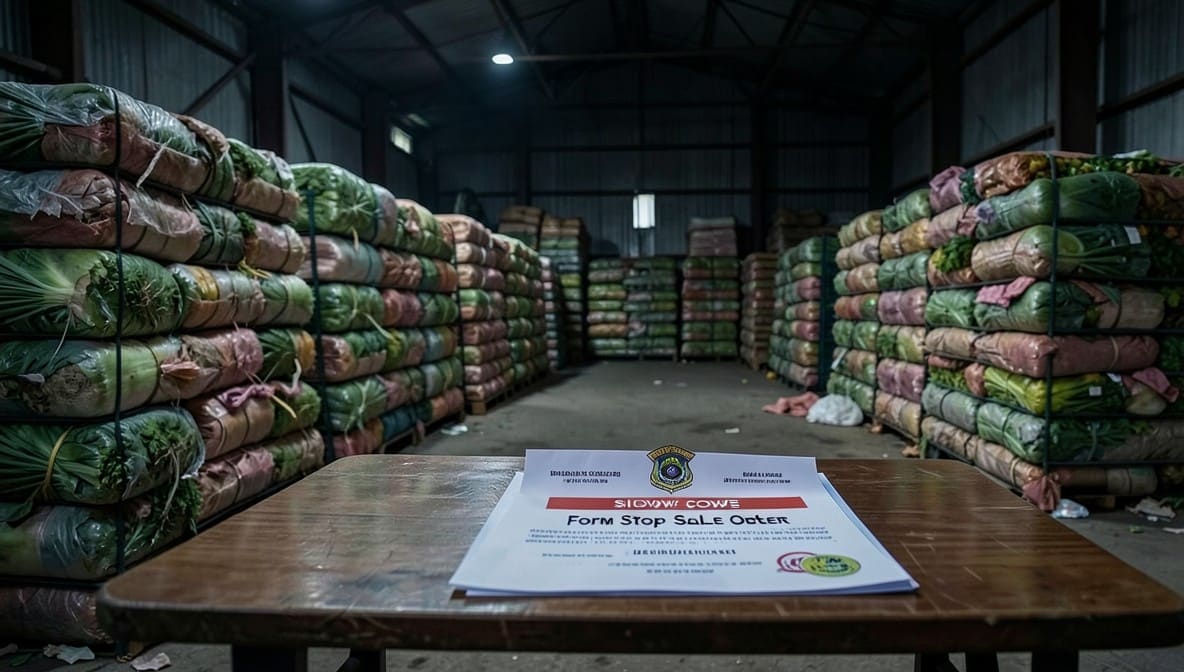
The petitioner, Karshak Crop Sciences Private Limited, is engaged in the business of agricultural inputs. On 26.05.2026, the 5th respondent (Mandal Agriculture Officer, Vatticherukuru Mandal) issued a Form III Stop Sale Order under The Seeds (Control) Order, 1983, alleging violations of The Seeds Act, 1966. The order prohibited the petitioner from selling its stock, which was described as perishable in nature.
Key Facts
- 26.05.2026: Form III Stop Sale Order issued by the 5th respondent, alleging violations of the Seeds Act, 1966 and Seeds (Control) Order, 1983.
- 30.05.2026: Show-cause notice (Rc.Tech.I/690/2026) issued by the 4th respondent (District Agriculture Officer cum Licensing Authority, Guntur), requiring the petitioner to submit an explanation.
- 01.06.2026: Petitioner submitted a detailed explanation (Ex.P-3) in response to the show-cause notice.
- The stock under seizure was perishable, causing financial prejudice to the petitioner due to its inability to sell or deal with the goods.
Procedural History
- 03.07.2026: The petitioner filed Writ Petition No. 17420/2026 under Article 226 of the Constitution, seeking a writ of mandamus to direct the respondents to decide on the show-cause notice and release the seized stock.
- IA No. 1 of 2026: An interim application was filed under Section 151 CPC, praying for the release of the seized stock pending disposal of the main petition.
Relief Sought
The petitioner sought:
- A writ of mandamus declaring the inaction of the 4th respondent in not deciding on the show-cause notice as illegal, arbitrary, and violative of natural justice and Articles 14, 19(1)(g), and 21 of the Constitution.
- A direction to the 4th and 5th respondents to release the seized stock forthwith and take a just decision on the show-cause notice.
- Interim relief under IA No. 1 of 2026 for the release of the stock.
The Legal Issue
The central question before the Court was whether administrative inaction in deciding a show-cause notice, particularly when perishable goods are involved, constitutes a violation of natural justice and constitutional rights, warranting the issuance of a writ of mandamus under Article 226.
Arguments Presented
For the Petitioner
- The 4th respondent failed to decide on the show-cause notice despite the petitioner’s detailed explanation dated 01.06.2026, rendering the Stop Sale Order arbitrary and violative of natural justice.
- The seized stock was perishable, and the petitioner was suffering irreparable prejudice due to its inability to sell or deal with the goods.
- The inaction of the respondents violated Article 19(1)(g) (right to carry on trade) and Article 21 (right to livelihood) of the Constitution.
For the Respondents
- The Government Pleader for Agriculture submitted that the matter was pending before the 2nd respondent (Commissioner and Director of Agricultural and Marketing, Guntur) for appropriate orders.
- Requested the Court to dispose of the writ petition by granting reasonable time to the competent authority to decide the matter.
The Court's Analysis
The Court observed that the petitioner’s perishable stock was under seizure, and the prolonged inaction of the respondents was causing serious prejudice to the petitioner. While the respondents sought time to decide the matter, the Court emphasized the urgency of the situation, given the perishable nature of the goods.
The Court relied on the principles of natural justice, particularly the right to a timely decision, and held that administrative delay in such circumstances violates constitutional rights. The Court noted that the Seeds Act, 1966 and Seeds (Control) Order, 1983 do not envisage indefinite delays in deciding show-cause notices, especially when perishable goods are involved.
"Considering the fact that the petitioner’s stock is stated to be perishable in nature and that the petitioner is unable to deal with the same on account of the pendency of the proceedings, this Court deems it appropriate to direct the 2nd respondent to consider the petitioner's explanation dated 01.06.2026 and pass appropriate orders, in accordance with law, within a period of one (1) week from the date of receipt of a copy of this order."
The Court thus balanced the rights of the petitioner against the administrative discretion of the respondents, ensuring that the decision-making process was expedited without compromising legal compliance.
The Verdict
The Court disposed of the writ petition with the following directions:
- The 2nd respondent (Commissioner and Director of Agricultural and Marketing, Guntur) was directed to consider the petitioner’s explanation dated 01.06.2026 and pass appropriate orders within one week from the date of receipt of the Court’s order.
- The decision so taken shall be communicated to the petitioner forthwith.
- No order as to costs was passed.
- Pending miscellaneous applications, if any, stood closed.
What This Means For Similar Cases
Timely Decision-Making Is Non-Negotiable
- The judgment reaffirms that administrative authorities cannot indefinitely delay decisions on show-cause notices, particularly when perishable goods or time-sensitive matters are involved.
- Practitioners can argue that undue delay violates natural justice and constitutional rights, warranting judicial intervention under Article 226.
Perishable Goods Demand Urgent Action
- Courts are likely to intervene swiftly when seized goods are perishable, as prolonged delays can cause irreparable financial prejudice.
- Key takeaway: Always highlight the nature of the goods (perishable/non-perishable) and the prejudice caused due to delay in petitions seeking mandamus.
Mandamus as a Remedy for Administrative Inaction
- The judgment demonstrates that mandamus is an effective remedy for compelling administrative authorities to act within a reasonable timeframe.
- Practitioners should emphasize:
- The failure of the authority to decide within a reasonable period.
- The prejudice suffered by the petitioner due to inaction.
- The constitutional violations (e.g., Article 19(1)(g)) arising from delay.