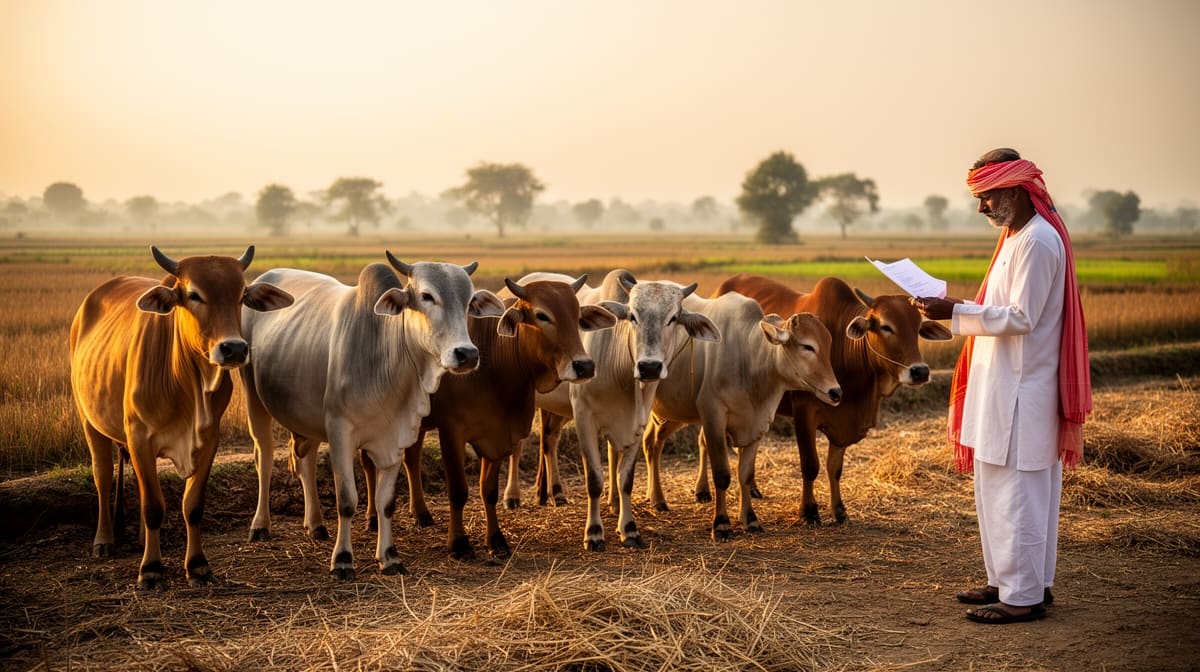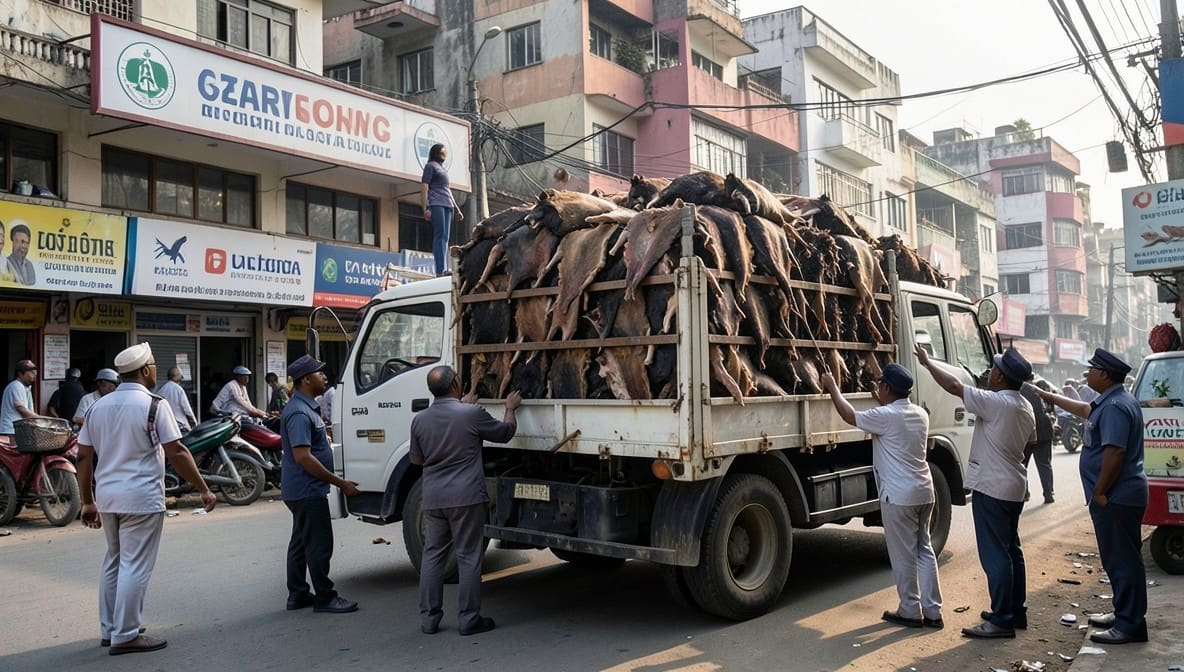
The Madras High Court has unequivocally barred the slaughter of cows and calves outside designated slaughter houses, even on religious occasions like Bakrid, affirming the primacy of constitutional mandates, statutory prohibitions, and public health regulations over claims of religious practice. This judgment reinforces the state’s duty to protect milch and draught cattle while ensuring compliance with sanitary and zoning norms.
Background & Facts
The Dispute
The petitioner, a resident and activist from Coimbatore, filed a writ petition under Article 226 of the Constitution seeking a mandamus to prevent the slaughter of cows and calves in public places during the festival of Bakrid. He alleged that despite submitting a representation dated 18.05.2026 to the concerned authorities, no action was taken to stop the planned slaughter of cows in non-designated areas, including open grounds near residential zones.
Key Facts
- The petitioner’s representation dated 18.05.2026 sought enforcement of existing laws prohibiting cow slaughter in public spaces.
- On 21.05.2026, police inspected the proposed site and confirmed that a temporary shed had been erected for cow slaughter, located in a non-public area without obstructing traffic or offending religious sentiments.
- The respondents conceded the factual accuracy of the petitioner’s claims but defended the activity as a religious practice.
- No certificate under Section 4 of the Tamil Nadu Animal Preservation Act, 1958, was produced to justify the slaughter of any cow or calf.
- The slaughter was not conducted in a licensed or municipal slaughter house.
Procedural History
- 18.05.2026: Petitioner submitted formal representation to authorities seeking prevention of public cow slaughter.
- 21.05.2026: Police inspection confirmed setup of temporary shed for slaughter.
- 27.05.2026: Writ Petition No. 20225 of 2026 heard and decided by the Madras High Court.
The Parties' Positions
Petitioner: Argued that cow slaughter in public or non-designated areas violates Article 48 of the Constitution, the Tamil Nadu Animal Preservation Act, 1958, and urban sanitation rules. He emphasized that religious practice cannot override statutory and constitutional obligations.
Respondents: Contended that the slaughter was conducted in a non-public area, without causing public nuisance or religious offense, and that it was a legitimate religious observance under Islamic tradition.
Relief Sought
The petitioner sought a writ of mandamus directing the respondents to:
- Prevent the slaughter of cows and calves in public or non-designated areas;
- Enforce compliance with the Tamil Nadu Animal Preservation Act, 1958;
- Ensure all slaughter occurs only in licensed slaughter houses;
- Issue binding instructions to all authorities to prevent future violations.
The Legal Issue
The central question was whether the slaughter of cows and calves on the occasion of Bakrid can lawfully occur outside designated and licensed slaughter houses, despite constitutional mandates, statutory prohibitions, and municipal regulations.
Arguments Presented
For the Petitioner
The petitioner relied on Article 48 of the Constitution, which mandates the State to prohibit the slaughter of cows and calves. He cited Mohammed Hanif Quareshi v. State of Bihar (AIR 1958 SC 731) and State of West Bengal v. Ashutosh Lahiri (1995) 1 SCC 189, where the Supreme Court held that cow slaughter is not an essential religious practice in Islam. He further invoked State of Gujarat v. Mirzapur Moti Kureshi Kassab Jamat (2005) 8 SCC 534, which upheld state bans on progeny of cows. He emphasized that Section 4 of the Tamil Nadu Animal Preservation Act, 1958, permits cow slaughter only if the animal is over ten years old and permanently unfit for work and breeding, and only upon a certificate issued by a competent authority - none of which were satisfied here. He also invoked Rule 298 of the Tamil Nadu Urban Local Bodies Rules, 2023, which mandates that all slaughter must occur only in licensed slaughter houses.
For the Respondent
The respondents conceded the factual scenario but argued that the slaughter was conducted away from public view and without causing disturbance. They contended that the religious freedom of the Muslim community under Article 25 of the Constitution permits such practices, even if conducted outside formal slaughter houses, provided no public nuisance is caused.
The Court's Analysis
The Court rejected the respondents’ argument that religious freedom justifies non-compliance with statutory and constitutional mandates. It held that Article 48 imposes a non-negotiable directive principle on the State to protect cows and calves, and that this duty cannot be diluted by claims of religious necessity. The Court emphasized that the Supreme Court has consistently held that the sacrifice of cows is not an essential religious practice under Islam.
"Sacrifice of a cow on that day is not an obligatory overt act for a Musalman to exhibit his religious belief and idea."
The Court then turned to the Tamil Nadu Animal Preservation Act, 1958. It interpreted Section 4(3)(a) strictly, noting that the word "and" requires the animal to be both over ten years of age AND unfit for work and breeding. No certificate was produced, rendering any slaughter unlawful. Furthermore, Section 4(3)(b) requires permanent incapacitation due to injury, deformity, or incurable disease - none of which were established.
The Court also examined Rule 298 of the Tamil Nadu Urban Local Bodies Rules, 2023, which explicitly prohibits slaughter except in licensed slaughter houses. It noted that the rule contains no exception for religious festivals. The Court cited its own earlier order dated 30.07.2020 in M/s. Madurai North Indian Welfare Association v. Chief Secretary, Government of Tamil Nadu, which had already directed strict compliance with slaughter house rules even during Bakrid.
The Court further held that the Government Order dated 1998 banning cow slaughter in all slaughter houses in Tamil Nadu, issued under executive power co-terminus with legislative power, remains valid and enforceable. It concluded that permitting slaughter outside licensed premises violates public health, sanitation, and zoning laws, and undermines the state’s duty to prevent cruelty to animals and maintain urban hygiene.
The Verdict
The writ petition was allowed. The Madras High Court directed the State of Tamil Nadu to ensure that no cow or calf is slaughtered on the eve of Bakrid or on any other day outside a duly licensed slaughter house. The Chief Secretary to the Government and the Additional Director General of Police (Law and Order) were specifically directed to issue binding instructions to all concerned officials to enforce this order. No costs were awarded. Compliance was to be reported on 29.05.2026.
What This Means For Similar Cases
Religious Practice Cannot Override Statutory Bans
- Practitioners must now argue that claims of religious necessity under Article 25 cannot override statutory prohibitions on cow slaughter, especially where the Supreme Court has held the practice is not essential.
- Any defense of public slaughter during religious festivals must be rejected if it violates the Tamil Nadu Animal Preservation Act or municipal slaughter house rules.
Licensing and Sanitation Are Non-Negotiable
- All slaughter activities, regardless of religious context, must occur only in licensed premises complying with Rule 298 of the Tamil Nadu Urban Local Bodies Rules, 2023.
- Municipal authorities must inspect and enforce compliance with infrastructure requirements: drainage, waste disposal, fencing, and hygiene standards.
- Meat from unlicensed slaughter must be destroyed, and offenders prosecuted under Rule 298(6).
Enforcement Must Be Proactive, Not Reactive
- Authorities cannot wait for complaints; they must proactively monitor and prevent unauthorized slaughter, especially during festivals.
- Police and municipal officers must be trained to identify and halt illegal slaughter operations immediately.
- The judgment sets a precedent for other states with similar laws to enforce uniform compliance, even during religious events.