The Uttarakhand High Court has affirmed that prolonged retention of perishable seized goods in police custody, even during pending forensic analysis, violates the principle of justice. In a significant ruling, the Court ordered the interim release of seized medicinal herbs pending the outcome of a scientific report, emphasizing that economic and biological value must be preserved while safeguarding evidentiary integrity.
Background & Facts
The Dispute
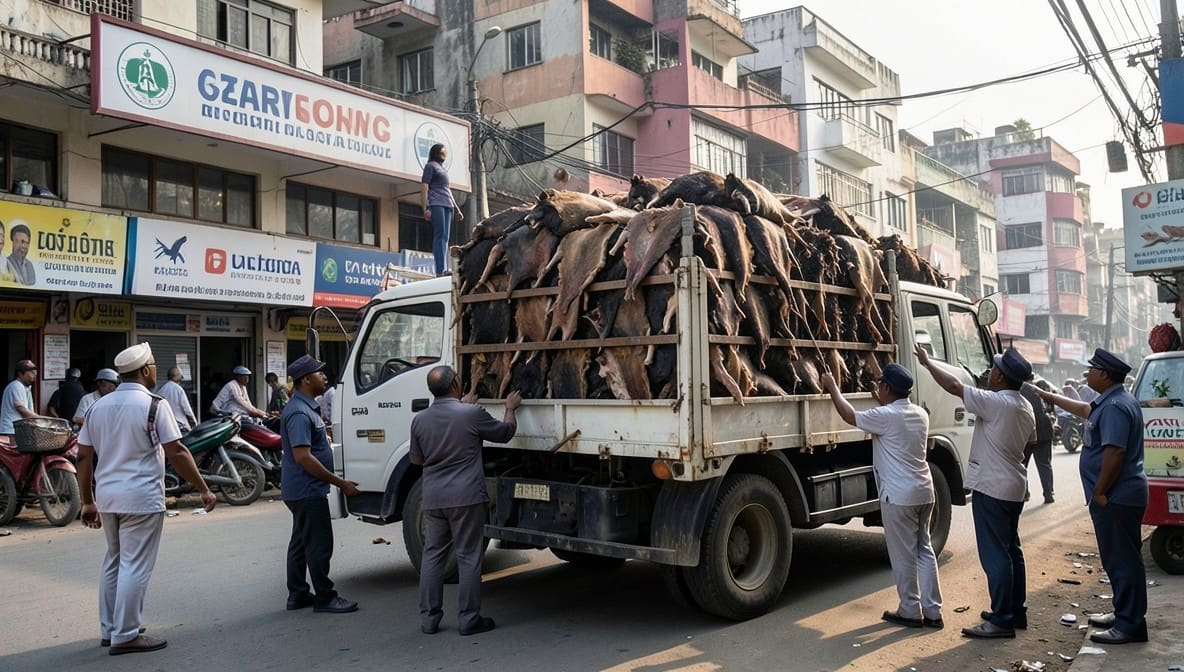
The applicant, a registered associate representative of the Herbal Research and Development Institute, Uttarkashi, was transporting a consignment of medicinal herbs and potatoes when intercepted by police on 10.10.2025. The police alleged the herbs were "Meda/Panja", a forest produce under the Indian Forest Act, 1927, for which no valid transit pass was produced. The entire consignment, including the vehicle, was seized under Sections 26, 41, and 42 of the Indian Forest Act, 1927.
Key Facts
- The applicant claimed the seized herbs were "Saalam Mishri", a legally cultivated medicinal herb, not classified as forest produce under the Act
- A valid rawanna/transit pass was issued by the Herbal Research and Development Institute, Gopeshwar-Chamoli for the transportation and sale of Saalam Mishri
- The seized material was stored at Police Station Mori, District Uttarkashi
- The applicant filed an application before the Judicial Magistrate, Purola, seeking release of the seized herbs
- The Magistrate rejected the application by order dated 02.12.2025
- A sample of the seized material was sent to the Forest Research Institute (FRI), Dehradun for scientific identification; the report was still awaited as of the High Court hearing
- The applicant contended the herbs are perishable and will lose commercial value if retained indefinitely
Procedural History
- 10.10.2025: Seizure of consignment by police at Mori, Uttarkashi
- 02.12.2025: Judicial Magistrate, Purola, dismissed application for release of seized herbs in Criminal Misc. Case No. 59 of 2025
- 06.04.2026: Writ application (C-528) filed before Uttarakhand High Court seeking quashing of the Magistrate’s order and release of seized herbs
Relief Sought
The applicant sought:
- Quashing of the order dated 02.12.2025
- Direction to release the seized medicinal herbs
- Protection of the commercial value of the perishable goods
The Legal Issue
The central question was whether the court may order the interim release of perishable seized property pending forensic examination, even when the nature of the seized material remains disputed, in order to prevent its decay and economic loss.
Arguments Presented
For the Applicant
Learned counsel argued that the seized herbs are not forest produce under the Indian Forest Act, 1927, but legally cultivated Saalam Mishri. The transit pass issued by the Herbal Research and Development Institute validates the legality of transport. The material is perishable and will deteriorate if retained in police custody indefinitely. Reliance was placed on Sunderbhai Ambalal Desai v. State of Gujarat to assert that courts must prevent loss of value of seized goods. The applicant offered to provide security and comply with conditions for production during trial.
For the Respondent
The State contended that the identity of the seized herb remains unverified, as the forensic report from FRI Dehradun is pending. The applicant failed to produce valid documentation at the time of seizure. The Magistrate’s refusal to release the material was justified to preserve evidence integrity. Premature release could compromise the investigation.
The Court's Analysis
The Court acknowledged the competing interests: the need to preserve evidence and the imperative to prevent economic loss from the decay of perishable goods. It noted that while the nature of the herb remains under scientific scrutiny, the fact that it is a medicinal herb with commercial value and perishable nature is not disputed.
"Seized property should not be allowed to lie in police custody for long periods and that appropriate orders for its interim release should ordinarily be passed so as to prevent its decay, damage or loss of value."
The Court held that the Magistrate’s blanket refusal to consider interim release, without imposing safeguards, was legally unsustainable. It emphasized that the Supreme Court’s directive in Sunderbhai Ambalal Desai is not confined to non-perishable items but applies equally to goods susceptible to deterioration. The Court clarified that release does not imply acceptance of the applicant’s claim, nor does it prejudice the investigation.
The Court further observed that the State’s interest in preserving evidence can be adequately protected through procedural safeguards: photographic documentation, sample retention, inventory preparation, and binding undertakings for production during trial.
The Verdict
The application was allowed. The order dated 02.12.2025 of the Judicial Magistrate, Purola, was set aside to the extent it denied interim release. The seized herbal material shall be released to the applicant subject to: (i) furnishing adequate security/bond equivalent to the assessed value of the goods; (ii) preparation of a detailed inventory, photographs, and representative samples by the Investigating Officer; (iii) production of the material before the Court or Investigating Agency as required; and (iv) the release being subject to the final outcome of proceedings. The Court clarified that this order does not prejudge the merits of the case.
What This Means For Similar Cases
Interim Release of Perishable Goods Is a Right, Not a Discretion
- Practitioners must now routinely move for interim release of perishable seized property under Section 451 CrPC or inherent powers, citing Sunderbhai Ambalal Desai
- Courts cannot defer release indefinitely pending forensic reports if the goods are demonstrably perishable
- The burden shifts to the State to justify why safeguards are insufficient to protect evidence
Documentation and Sampling Are Non-Negotiable Safeguards
- Before release, Investigating Officers must: (a) photograph the entire consignment, (b) prepare a signed inventory with signatures of witnesses, and (c) retain representative samples
- These steps must be documented in writing and filed with the court
- Failure to do so may render subsequent evidence inadmissible
Claim of Legality Does Not Preclude Interim Release
- Even if the legality of possession is disputed, interim release may be granted on conditions
- The applicant’s claim of lawful cultivation or transit pass is relevant to valuation and risk assessment, not to the right to interim release
- Courts must separate evidentiary concerns from economic preservation obligations