The Allahabad High Court has reaffirmed that under the Urban Land (Ceiling and Regulation) Repeal Act, 1999, mere legal vesting of land in the State is insufficient to defeat a landowner’s claim. Actual, physical possession must be established through strict compliance with Sections 10(5) and 10(6) of the ULC Act, 1976, or the proceedings abate automatically.
Background & Facts
The Dispute
The petitioners, descendants of Gokul, the original tenure holder of Gata Nos. 773 and 789 in Village Sonakpur, Moradabad, challenge proceedings initiated under the Urban Land (Ceiling and Regulation) Act, 1976. The State declared 7114.40 sq. meters of their land as vacant surplus under Section 8(4) on 24.06.1980, and later took possession on 27.08.1984. The land was transferred to Moradabad Development Authority on 18.01.1990 for a residential scheme. The petitioners claim continuous possession and argue that no valid possession was ever taken under the Act, entitling them to the benefit of the Repeal Act, 1999.
Key Facts
- Original landholder: Gokul, deceased after filing ceiling return under Section 6(1) of the ULC Act, 1976
- Successors: Four sons - Chhokhelal, Sohan Lal, Dalpat, Ramgopal; petitioners are their descendants
- Land area: 7114.40 sq. meters (Gata Nos. 773 and 789)
- Notice under Section 8(3): Issued 14.04.1980, returned unserved; served personally on 23.04.1980
- Order under Section 8(4): Passed 24.06.1980
- Final statement under Section 9: Issued 26.07.1980
- Notice under Section 10(5): Dated 11.04.1984, allegedly served on Smt. Leelawati (wife of Gokul) on 16.04.1984 - but unsigned and unacknowledged
- Possession memo: Dated 27.08.1984 - signed by two witnesses only, no signature of landholder or representative
- No proceedings under Section 10(6) ever initiated
- Notice under Section 11(8): Served on Chokhe (son of Gokul) on 29.03.1997; petitioners sought time to file objections on 05.04.1997
- No payment of Sandeya Dhanrashi (compensation) ever made to petitioners
- Revenue records: Petitioners’ names remained in khatauni until 2018
- Mutation in R-6: State’s name recorded on 09.02.1996 - but respondents admitted in 2023 that mutation occurred in 2018
- Repeal Act came into force: 18.03.1999
- Writ petition filed: 2010
Procedural History
- 24.06.1980: Order under Section 8(4) passed declaring land vacant surplus
- 26.07.1980: Final statement issued under Section 9
- 11.04.1984: Notice under Section 10(5) issued
- 16.04.1984: Alleged service of Section 10(5) notice
- 27.08.1984: Possession memo executed
- 18.01.1990: Land transferred to Moradabad Development Authority
- 22.03.1997: Notice under Section 11(8) served
- 05.04.1997: Petitioners sought time to file objections
- 09.02.1996: Mutation recorded in R-6 in name of State (later admitted to be inaccurate)
- 2018: Revenue records mutated in name of State - during pendency of writ petition
- 2010: Writ Petition No. 23827 of 2010 filed before Allahabad High Court
The Parties' Positions
Petitioners: Contend that no valid notice under Section 10(5) was served, no possession was taken under Section 10(6), and no compensation was paid. They assert continuous possession, supported by khatauni entries until 2018 and physical occupation evidenced by crops and private abadi. They invoke Section 4 of the Repeal Act, 1999, which abates proceedings where possession was not lawfully taken.
Respondents: Argue that possession was lawfully taken on 27.08.1984, that petitioners were aware of proceedings, and that delay of 30 years bars relief. They rely on revenue mutation (R-6), photographs, and Advocate Commissioner’s report to assert possession. They claim the land is part of a developed residential scheme with Rs. 84 crores invested.
Relief Sought
The petitioners seek:
- Declaration that proceedings under the ULC Act, 1976 stand abated under Section 4 of the Repeal Act, 1999
- Restoration of possession over Gata Nos. 773 and 789
- Restraint on respondents from interfering with peaceful possession
- Costs
The Legal Issue
The central question was whether de facto possession of land declared vacant surplus under the Urban Land (Ceiling and Regulation) Act, 1976 was lawfully taken before the Repeal Act, 1999 came into force, and whether failure to comply with mandatory notice requirements under Section 10(5) renders the vesting ineffective under Section 4 of the Repeal Act.
Arguments Presented
For the Petitioner
The petitioners relied on State of U.P. v. Hariram (2013), A.P. Electrical Equipment Corporation v. Tehsildar (2025), and Dalsukhbhai Bachubhai Satasia v. State of Gujarat (2026) to argue that:
- Section 10(5) requires mandatory service of notice on the person in possession - mere issuance is insufficient
- Section 10(6) cannot be invoked without prior compliance with Section 10(5)
- No notice under Section 10(5) was received by petitioners or their predecessors
- The possession memo dated 27.08.1984 lacks signatures of landholders, rendering it invalid
- No compensation was paid under Section 11
- Revenue records continued in petitioners’ names until 2018, supporting continuous possession
- The Repeal Act’s legislative intent is to restore land to original owners where possession was not lawfully taken
For the Respondent
The State contended that:
- The petitioners were aware of the proceedings since 1980 and failed to challenge them for decades
- Possession was taken on 27.08.1984 and confirmed by revenue mutation in 1996
- The Advocate Commissioner’s report and photographs prove State possession
- The land is part of a developed residential scheme with massive public investment
- Delay and laches bar the petition
- The reports of Naib Tehsildar relied upon by petitioners were never accepted by competent authorities
- The judgment in State of Assam v. Bhaskar Jyoti Sarma supports dismissal on delay grounds
The Court's Analysis
The Court undertook a meticulous review of the statutory framework under the ULC Act, 1976 and the Repeal Act, 1999, guided by binding precedents from the Supreme Court.
"The mere vesting of the land under sub-section (3) of Section 10 would not confer any right on the State Government to have de facto possession of the vacant land unless there has been a voluntary surrender of vacant land before 18-3-1999. The State has to establish that there has been a voluntary surrender of vacant land or surrender and delivery of peaceful possession under sub-section (5) of Section 10 or forceful dispossession under sub-section (6) of Section 10."
The Court emphasized that Section 10(5) is mandatory and the word "may" must be read as "shall". The notice must be served on the person in possession - not merely issued. Here, the notice dated 11.04.1984 was not signed or received by any representative of the petitioners. The possession memo dated 27.08.1984, though witnessed, lacked the signature of the landholder or any authorized person, rendering it legally ineffective.
The Court further held that Section 10(6), which permits forcible dispossession, cannot be invoked without first complying with Section 10(5). Since no valid notice was served, the 30-day window for compliance never commenced, making any claim of forcible possession legally untenable.
The Court rejected the State’s reliance on Bhaskar Jyoti Sarma, distinguishing it on facts: that case involved actual physical dispossession, whereas here, no possession was ever taken. The Court held:
"The question is not whether an actual transfer of possession by force is vitiated by a delay in raising objections to the transfer. Rather, the question is whether actual possession has been transferred at all, if no process of transfer has been conducted under the various provisions of Section 10 of the ULC Act."
The Court also examined the revenue records. While acknowledging that mutation does not confer title, it held that such entries raise a rebuttable presumption of possession. The State’s own admission that mutation occurred in 2018 - during pendency of the writ petition - confirmed that for nearly two decades after the Repeal Act, the records remained in the petitioners’ names.
The Court further analyzed the physical condition of the land:
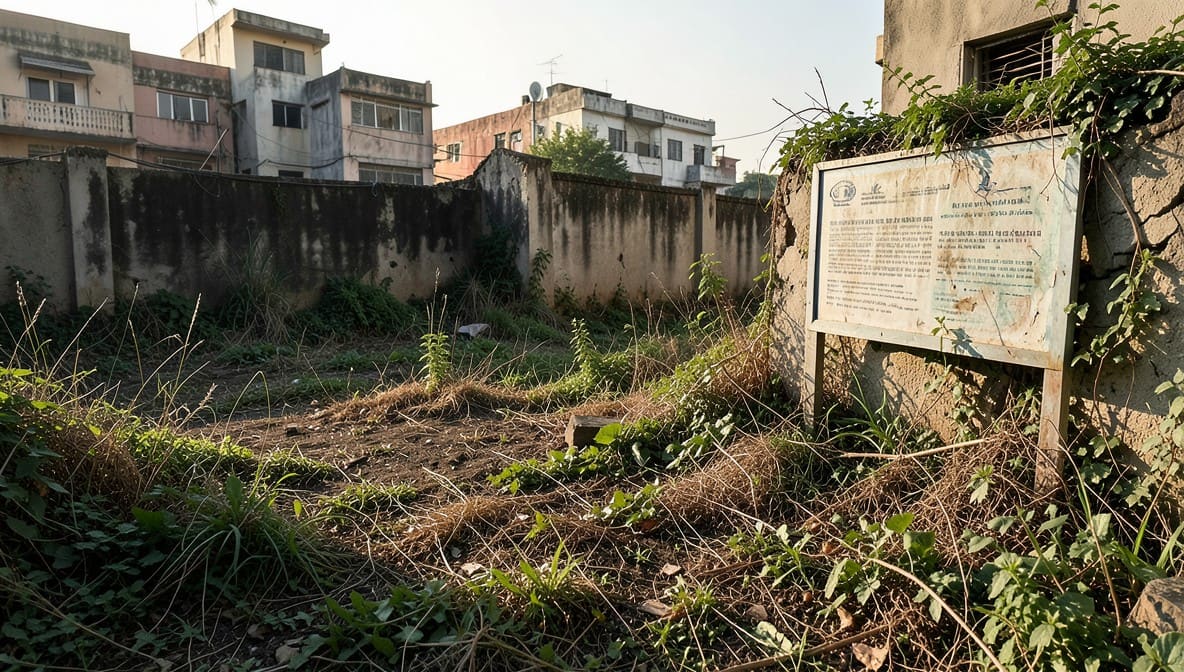
- Gata No. 773: Showed private abadi, houses, and shops - consistent with petitioners’ possession, not State control
- Gata No. 789: Showed standing crops and no development - contradicting the State’s claim of a developed residential scheme
- Photographs filed by both parties corroborated the same location, yet showed conflicting conditions - the State’s later photographs (2022) lacked evidence of roads, drains, or plots
The Court concluded that the State failed to discharge its burden of proving de facto possession. The investment of Rs. 84 crores, while significant, could not substitute legal compliance. The petitioners’ delay was excused because they remained in possession and only became aware of interference when the State sought to evict them.
The Verdict
The writ petition is allowed. The Court holds that the proceedings under the Urban Land (Ceiling and Regulation) Act, 1976 stand abated under Section 4 of the Repeal Act, 1999 because the State failed to establish lawful de facto possession of Gata Nos. 773 and 789. The petitioners are restored to peaceful possession of the land. No order as to costs is made.
What This Means For Similar Cases
Possession Must Be Proven, Not Assumed
- Practitioners must now demand concrete evidence of service of Section 10(5) notice - not just issuance
- Possession memos without signatures of landholders or their representatives are legally invalid
- Revenue records showing long-standing ownership in the original holder’s name are critical evidence of possession
Delay Is Not a Bar Where Possession Was Never Taken
- The doctrine of laches does not apply when the State never lawfully acquired possession
- Petitioners are not required to challenge procedural defects in 1980 if they remained in possession and were never evicted
- The Repeal Act’s abatement provision is a substantive right, not a technicality
State Investment Does Not Override Statutory Compliance
- Public expenditure on development schemes cannot validate illegal dispossession
- Courts will not permit the State to benefit from its own non-compliance with mandatory statutory procedures
- Developers and authorities must ensure lawful acquisition before investing in land