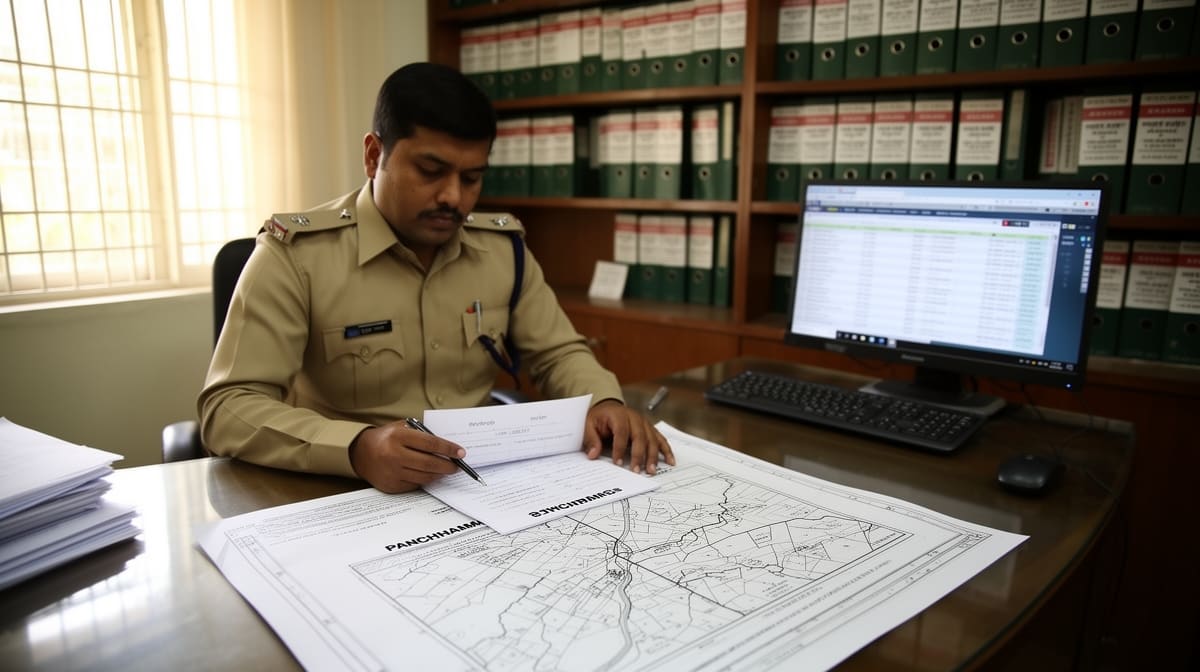
The Madhya Pradesh High Court has clarified that possession of land acquired under the repealed Urban Land (Ceiling and Regulation) Act, 1976 remains valid if not challenged within a reasonable time, even if procedural lapses occurred. The judgment underscores that delay in questioning acquisition proceedings can render subsequent claims infructuous, reinforcing the principle that legal rights must be exercised promptly to avoid waiver through laches.
Background & Facts
The Dispute
The petitioners, legal heirs of late Shri Lal Singh Kushwaha, challenged proceedings under the Urban Land (Ceiling and Regulation) Act, 1976 (hereinafter ‘Act of 1976’) concerning 5,928.85 square meters of land in Gwalior. The Competent Authority declared the land surplus on 17.03.1983, and possession was allegedly taken on 21.12.1989. The petitioners claimed they remained in possession and that the proceedings abated upon enforcement of the Urban Land (Ceiling and Regulation) Repeal Act, 1999 (hereinafter ‘Repeal Act of 1999’).
Procedural History
The case involved multiple stages under the Act of 1976:
- 17.03.1983: Land declared surplus under Section 6(2).
- 03.09.1983: Notification issued under Section 10(1).
- 17.11.1983: Gazette notification under Section 10(3) vesting land in the State.
- 03.11.1989: Notice under Section 10(5) issued to the original landholder.
- 21.12.1989: Ex-parte possession taken under Section 10(6).
The petitioners filed the writ petition in 2014, nearly 30 years after the surplus declaration and 25 years after possession was taken.
Relief Sought
The petitioners sought:
- Quashing of proceedings under the Act of 1976 due to non-compliance with procedural requirements.
- Alternate relief of compensation under Section 11 of the Act of 1976 with 12% interest.
- Correction of revenue records to reflect their ownership.
The Legal Issue
The Court framed two key questions:
- Whether the respondents followed the procedure prescribed under the Act of 1976 for taking possession of the surplus land.
- Whether the petitioners’ claim was barred by laches due to the inordinate delay in challenging the proceedings.
Arguments Presented
For the Petitioners
The petitioners contended:
- The notice under Section 10(5) of the Act of 1976 was never served on the original landholder.
- Possession was taken merely on paper, without following the procedure under Section 10(6).
- The Repeal Act of 1999 abated the proceedings as possession was not lawfully taken.
- Reliance was placed on State of U.P. v. Hari Ram (2013) 4 SCC 280 to argue that procedural non-compliance vitiated the possession.
For the Respondent/State
The State argued:
- The original landholder never challenged the surplus declaration or possession during his lifetime.
- The petitioners’ claim was barred by laches, as it was filed after an unreasonable delay.
- Documentary evidence, including the notice under Section 10(5) and the Kabja Receipt (memorandum of possession), proved compliance with the Act of 1976.
- The land was subsequently allotted to government departments, indicating effective possession.
The Court's Analysis
The Court conducted a detailed examination of the procedural compliance and the doctrine of laches:
Procedural Compliance Under the Act of 1976
The Court relied on Tamil Nadu Housing Board v. A. Viswam (AIR 1996 SC 3377) and Larsen & Toubro Ltd. v. State of Gujarat (1998) 4 SCC 387 to hold that possession can be validly taken through a memorandum or Panchnama, even without physical force. The Court observed:
"Recording of Panchnama in the presence of witnesses signed by them as also by the Circle Officer evidencing taking over of possession is sufficient compliance."
The Court further noted that the revenue records reflected the State as the owner, and the Kabja Receipt confirmed possession. The judgment in Ramnarayan v. State of Madhya Pradesh (W.A. No. 81/2006) was cited to emphasize that illegal re-entry after possession does not divest the State of its ownership.
Doctrine of Laches
The Court critically analyzed the delay in filing the petition. The original landholder, Shri Lal Singh Kushwaha, never challenged the proceedings during his lifetime (he passed away in 2011). The Court relied on the Constitution Bench decision in Indore Development Authority v. Manoharlal (2020) 8 SCC 129, which approved the principles laid down in State of Assam v. Bhaskar Jyoti Sarma (2015) 5 SCC 321. The Court observed:
"Any grievance based on breach of Section 10(5) ought to have been made within a reasonable time of such dispossession. By sheer lapse of time, the possession would acquire legitimacy. Thus, the owner or the person in possession must be deemed to have waived his right under Section 10(5) of the Act."
The Court distinguished A.P. Electrical Equipments Corporation v. The Tehsildar (2025 SCC OnLine SC 447) on factual grounds, noting that the petitioners in the present case failed to produce any evidence of continued possession or construction on the land. The Court also noted that the land had been allotted to government departments for public projects, further undermining the petitioners’ claims.
The Verdict
The Court dismissed the writ petition, holding:
- The State had complied with the procedural requirements under the Act of 1976 for taking possession of the surplus land.
- The petitioners’ claim was barred by laches, as the original landholder failed to challenge the proceedings during his lifetime, and the petitioners delayed filing the petition for nearly 30 years.
- The Repeal Act of 1999 did not abate the proceedings, as possession had been lawfully taken and not challenged within a reasonable time.
What This Means For Similar Cases
Delay Defeats Remedy
Practitioners must advise clients that challenges to land acquisition proceedings under repealed statutes must be filed promptly. The Court emphasized:
- Claims of procedural non-compliance lose legitimacy if not raised within a reasonable time.
- Delay in challenging possession can result in waiver of rights, even if the original proceedings were flawed.
- Courts are unlikely to entertain belated claims, particularly where the land has been put to public use.
Documentary Evidence Prevails Over Oral Claims
- Panchnama and revenue records are sufficient to prove possession, even without physical force.
- Mere assertions of continued possession, without documentary evidence, are unlikely to succeed.
- Subsequent allotment of land to government departments strengthens the State’s claim of effective possession.
Repeal Act Does Not Automatically Revive Rights
- The Repeal Act of 1999 does not abate proceedings where possession was lawfully taken and not challenged.
- Landowners cannot rely on the Repeal Act to revive claims if they failed to act during the currency of the original statute.
Practitioners should ensure that clients:
- Challenge acquisition proceedings immediately upon learning of irregularities.
- Maintain contemporaneous evidence of possession or construction on disputed land.
- Avoid relying solely on the Repeal Act where possession was taken long before its enforcement.