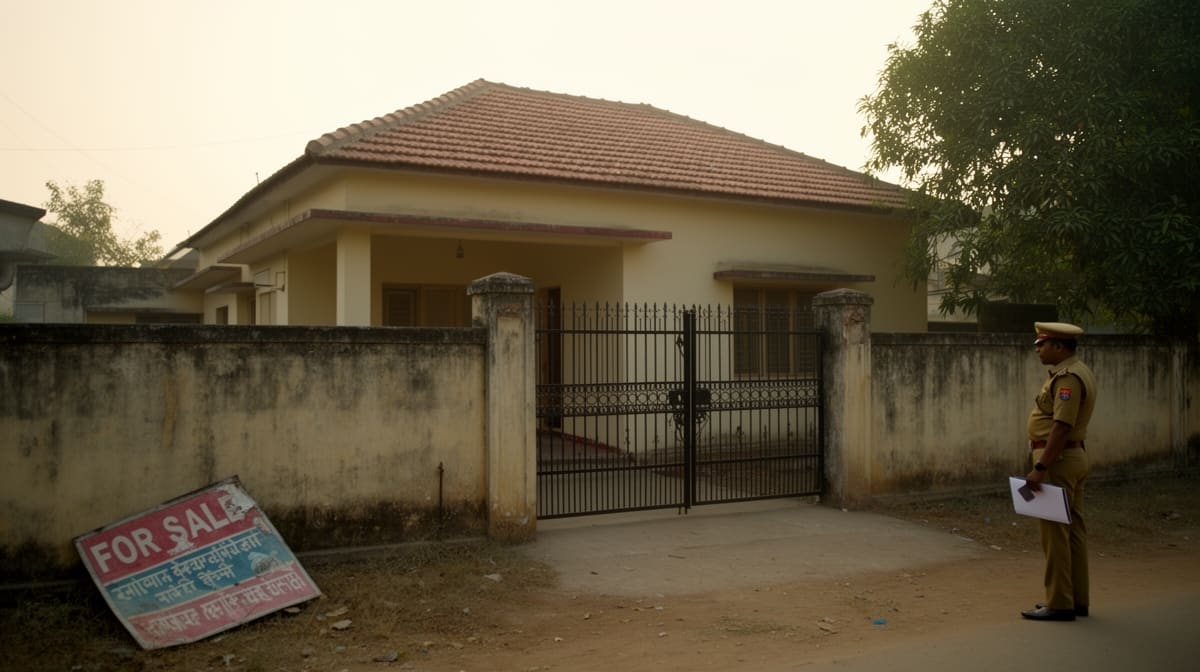
In a significant interim order, the Telangana High Court has underscored the importance of due process before state authorities can interfere with a citizen's prima facie ownership and possession of property. The Court directed respondents not to disturb the petitioner's possession over land admeasuring 919 square yards without following legal procedures, pending final disposal of the writ petition.
Background & Facts
The Dispute
The petitioner, Mrs. Siddiqa Tabassum, claims ownership and possession of land admeasuring 919 square yards comprising Plot No. 12 (247 sq. yards), Plot No. 13 (260 sq. yards), and Plot No. 14 (412 sq. yards) in Survey No. 134, Kismatpur Village, Gandipet Mandal, Ranga Reddy District. The dispute arose when revenue authorities directed the petitioner to stop construction activity on the ground that the land was Urban Ceiling Surplus Land.
Key Facts
- The petitioner derives title through a chain of registered gift deeds (Document Nos. 11258, 11259, and 11260 of 2022 dated 22.09.2022) executed by Ms. Naaz Rizwan, who in turn purchased the property under a registered sale deed (Document No. 3214 of 1995 dated 19.03.1995)
- The original vendor had availed exemption from Urban Land Ceiling (ULC) authorities vide C.O. Ms. No. 733 dated 31.10.1988
- The petitioner holds a building permit (No. O1 181BP1313012025 dated 15.07.2025) for construction on the land
- On inspection, the ULC Department alleged unauthorized construction on Urban Ceiling Surplus Land and directed the petitioner to stop construction
Procedural History
- 22.09.2022: Petitioner acquires title through registered gift deeds
- 19.03.1995: Original vendor purchases property under registered sale deed
- 31.10.1988: Original vendor obtains ULC exemption (C.O. Ms. No. 733)
- 15.07.2025: Petitioner obtains building permit for construction
- 2026: ULC Department inspects and alleges unauthorized construction on surplus land
- 2026: Revenue authorities direct petitioner to stop construction
- 2026: Petitioner files WP No. 7915 of 2026 under Article 226 seeking mandamus and interim protection
- 13.03.2026: Present interim order passed by Telangana High Court
Relief Sought
The petitioner seeks:
- A writ of mandamus declaring the actions of respondents as arbitrary, illegal, and unconstitutional
- An interim direction restraining respondents from interfering with the petitioner's possession and construction activity over the land
- Final relief directing respondents not to disturb possession without following due process of law
The Legal Issue
The central question was whether state authorities can interfere with a citizen's prima facie ownership and possession of property without following due process of law, particularly when the citizen holds registered title documents and building permits.
Arguments Presented
For the Petitioner
- The petitioner holds valid registered gift deeds and a building permit, establishing prima facie ownership and right to construct
- The original vendor had obtained ULC exemption (C.O. Ms. No. 733 dated 31.10.1988), suggesting the land was not surplus
- Due process requires authorities to follow legal procedures before interfering with possession
- The petitioner's peaceful possession should not be disturbed without proper adjudication
For the Respondents
- The land was identified as Urban Ceiling Surplus Land during inspection
- The petitioner's construction was unauthorized as it violated ULC provisions
- The Mandal Girdawar had directed the petitioner to stop construction, which was a valid administrative action
The Court's Analysis
The Court observed that the petitioner holds registered gift deeds and a building permit, which establish a prima facie case of ownership and right to construct. While the respondents alleged the land was Urban Ceiling Surplus Land, the Court emphasized that due process must be followed before interfering with possession.
"Prima facie, the petitioner is the owner and possessor of the subject property. Hence, there shall be interim direction to respondents No.3 to 6 not to interfere with the possession of the petitioner in respect of the subject property without following due process of law."
The Court did not adjudicate the merits of the ULC surplus land claim but focused on the procedural safeguards required before state authorities can disturb possession. The interim order ensures that the petitioner's peaceful possession is protected pending final disposal.
The Verdict
The Court granted interim protection to the petitioner, directing respondents No. 3 to 6 not to interfere with the petitioner's possession over the land admeasuring 919 square yards without following due process of law. The matter was posted for further hearing on 06.04.2026.
What This Means For Similar Cases
Due Process Is Non-Negotiable
- State authorities cannot interfere with prima facie ownership or possession without following legal procedures
- Even if land is alleged to be Urban Ceiling Surplus Land, authorities must provide notice, hearing, and adjudication before disturbing possession
- Registered title documents and building permits create a rebuttable presumption of ownership, which must be respected until proven otherwise
Interim Protection as a Safeguard
- Courts are likely to grant interim protection where a citizen demonstrates prima facie ownership and peaceful possession
- Practitioners should emphasize procedural compliance by authorities to avoid arbitrary interference
- Building permits and registered deeds strengthen the case for interim relief, even if the land's status is disputed
Limits of Administrative Action
- Mandal Girdawars or other revenue authorities cannot issue unilateral directions to stop construction without following due process
- Inspections alone do not confer authority to disturb possession - adjudication is required
- The judgment reinforces that property rights are protected under Article 226, and arbitrary actions can be challenged through writ petitions