The Bombay High Court has dismissed an election petition for failing to meet the stringent pleading requirements under the Representation of the People Act, 1951 and the Code of Civil Procedure. The judgment underscores that allegations of corrupt practice or improper acceptance of nomination must be supported by precise, specific, and complete factual averments - mere assertions or omissions will not suffice to sustain a challenge to a democratically elected candidate’s victory.
Background & Facts
The Dispute
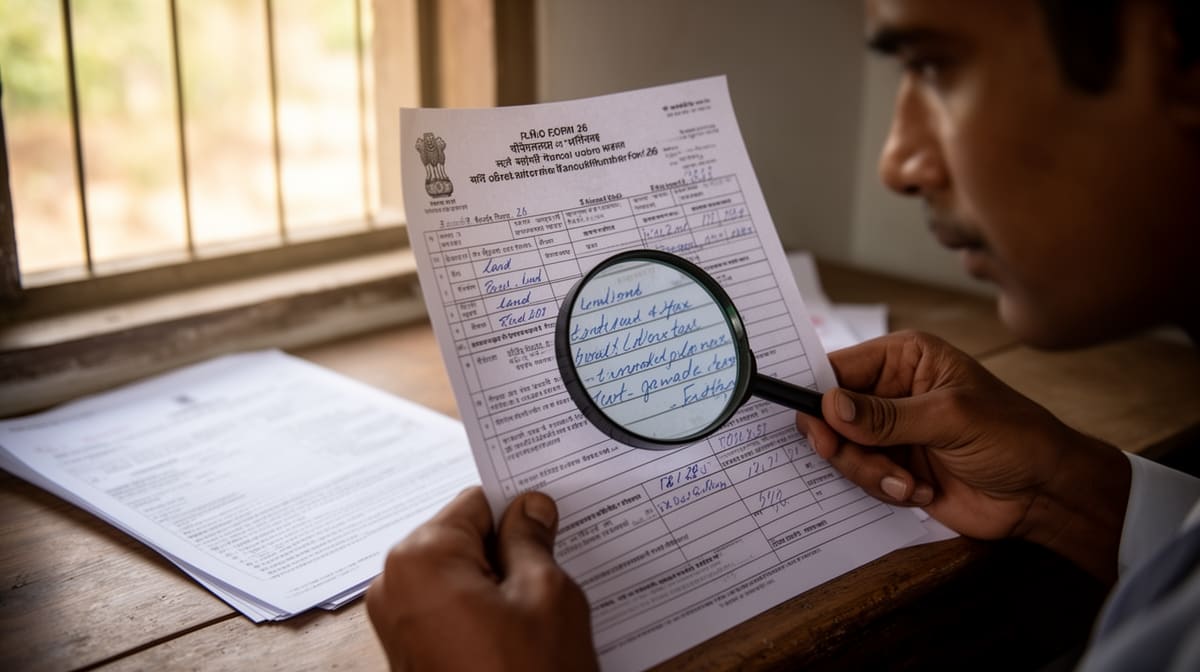
The election petition challenges the victory of Narendra Lalachan Mehta, the returned candidate from Maharashtra Legislative Assembly Constituency No. 145, Mira Bhayander, declared on 23rd November 2024. The petitioner, Nayana Manoj Vasani, alleges that Mehta’s nomination was improperly accepted due to suppression of criminal cases and incomplete disclosure of assets in Form 26, constituting corrupt practice under Section 123(2) and improper acceptance under Section 100(1)(d)(i) and (d)(iv) of the Representation of the People Act, 1951.
Key Facts
- The petitioner filed the election petition on 15.12.2024, challenging the result of the election held on 23.11.2024.
- The respondent filed his nomination papers on 10.10.2024, accompanied by an affidavit in Form 26 as mandated under Rule 4A of the Conduct of Elections Rules, 1961.
- The affidavit disclosed the following pending criminal cases:
- FIR No. 117 of 2013 (Navghar PS)
- FIR No. 265 of 2014 (Navghar PS)
- FIR No. 387 of 2022 (Navghar PS) - marked as "A Final report sent"
- FIR No. 112 of 2002 (Mira Road PS)
- FIR No. 255 of 2013 (Mira Road PS)
- FIR No. 345 of 2021 (Mira Road PS)
- FIR No. 107 of 2019 (Mira Road PS)
- RCC No. 1022/2017 and RCC No. 1023/2017 (Kashimira PS)
- FIR No. 19 of 2011 (Kashimira PS)
- RCC No. 1671 of 2017 (Kashimira PS)
- FIR No. 723 of 2021 (Kashimira PS)
- FIR No. 529 of 2021 (Kashimira PS)
- FIR No. 83 of 2017 (Bhayandar PS)
- FIR No. 145 of 2019 (Bhayandar PS)
- FIR No. 552 of 2020 (Bhayandar PS)
- FIR No. 433 of 2023 (Bhayandar PS)
- FIR No. 23 of 2017 (Naya Nagar PS)
- The affidavit also disclosed shares in Seven-Eleven Construction Private Limited and Seven-Eleven Hotels Private Limited, stating total value but not per-share price.
- The affidavit omitted details of one immovable property in Rajasthan but disclosed its valuation and 50% share.
- The petitioner submitted an RTI application on 05.12.2024 seeking details of government dues, and received a response on 10.12.2024 stating no such dues were pending.
Procedural History
- 10.10.2024: Respondent filed nomination papers with Form 26 affidavit.
- 23.11.2024: Election results declared; respondent declared elected.
- 15.12.2024: Election Petition No. 5 of 2025 filed by petitioner.
- 20.12.2024: Respondent filed Application No. 14 of 2025 under Order VII Rule 11 CPC seeking dismissal.
- 18.02.2026: Arguments concluded; judgment reserved.
- 24.03.2026: Judgment pronounced dismissing the election petition.
The Parties' Positions
- Petitioner (Vasani): Alleged suppression of two FIRs (No. 44 of 2020 and No. 181 of 2022), concealment of police dues, incomplete disclosure of share prices, and failure to describe offences in the affidavit. Argued this amounted to corrupt practice under Section 123(2) and improper acceptance under Section 100(1)(d).
- Respondent (Mehta): Contended that all pending cases were disclosed as per Form 26; the affidavit correctly stated "A Final report sent" for CR No. 387 of 2022; RTI response negated claim of government dues; share values were disclosed as per Note 3 of Form 26; and the petition failed to plead material facts.
Relief Sought
The petitioner sought declaration that the respondent’s election is void under Section 100(1)(b), (d)(i), and (d)(iv) of the RP Act, and a direction to declare the petitioner as the duly elected candidate.
The Legal Issue
The central question was whether an election petition alleging corrupt practice under Section 123(2) or improper acceptance of nomination under Section 100(1)(d) discloses a cause of action when it fails to plead specific, material facts regarding the pendency of criminal cases, the knowledge of recall of A-summary reports, or the material effect of non-disclosure on the election outcome.
Arguments Presented
For the Appellant/Petitioner
The petitioner’s counsel argued that non-disclosure of criminal antecedents, even if not resulting in conviction or framing of charges, constitutes undue influence under Section 123(2) as per Krishnamoorthy v. Sivakumar. He contended that the omission of FIR No. 44 of 2020 and FIR No. 181 of 2022, along with failure to describe offences, misled voters. He further argued that the incomplete disclosure of share prices and omission of immovable property details violated Form 26, rendering the nomination invalid. He relied on Lok Prahari v. Union of India and Arjunadada v. Dadaji to assert that suppression of assets and criminal history is per se corrupt.
For the Respondent/State
The respondent’s counsel submitted that Section 33A and Form 26 require disclosure of pending cases, not descriptions of offences. He argued that the affidavit correctly disclosed all FIRs, including CR No. 387 of 2022 with the status "A Final report sent" - a truthful statement. He emphasized that the RTI response negated the claim of government dues. He contended that share values were disclosed as per Note 3 of Form 26, which requires market value, not per-share price. He stressed that the petition failed to plead how the alleged omissions materially affected the election result, as mandated by Mangani Lal Mandal v. Bishnu Deo Bhandari and Karim Uddin Barbhuiya v. Aminul Haque Laskar.
The Court's Analysis
The Court began by affirming that the right to dispute an election is purely statutory, governed exclusively by the Representation of the People Act, 1951. As held in Jyoti Basu v. Debi Ghosal, election law operates as a self-contained code, and common law or equitable principles do not apply unless statutorily incorporated.
The Court examined Section 33A and Rule 4A of the Conduct of Elections Rules, 1961, and held that Form 26 requires disclosure of pending criminal cases with FIR number, court, sections, and status - not a detailed description of the offence. The inclusion of a column asking whether charges were framed confirms that disclosure is required even for cases where no charge has been framed.
"The purpose behind furnishing information of all pending criminal cases irrespective of whether the charges have been framed or not, in the prescribed Form 26 is to ensure that the voters take a well informed decision."
The Court then turned to Section 83 of the RP Act, which mandates that an election petition must contain a concise statement of material facts and, in case of corrupt practice, full particulars including names, dates, and places of commission. The petition failed on both counts.
Regarding the two alleged suppressed FIRs (No. 44 of 2020 and No. 181 of 2022), the petition contained no averment that these cases were pending on the date of filing the affidavit. No evidence or document was annexed to substantiate pendency. The Court held this omission rendered the allegation of corrupt practice legally insufficient.
On the issue of CR No. 387 of 2022, the petition alleged that the A-summary report was recalled, but failed to plead that the respondent had knowledge of the recall at the time of filing the affidavit. The Court noted that the affidavit correctly stated "A Final report sent" - a factually accurate disclosure.
The Court further held that the petitioner’s RTI response, which stated no government dues were pending, directly contradicted the allegation of suppression. The disclosure of share values as per Note 3 of Form 26 was deemed compliant, and the omission of one immovable property’s description was cured by the valuation and share percentage provided.
Crucially, the Court emphasized that even if a breach of disclosure norms occurred, Section 100(1)(d)(i) and (d)(iv) require pleading and proof that the result of the election was materially affected. The petition contained only a bald assertion in paragraph 16: "...the result of the election has been materially affected..." - without any factual basis, voter testimony, or statistical analysis.
"An omission of a single material fact leading to an incomplete cause of action would entail rejection of Election Petition under Order VII Rule 11 read with Section 83 and 87 of the RP Act."
The Court distinguished Arjunadada v. Dadaji, noting it was a trial judgment on disqualification under Section 100(1)(a), which was not pleaded here. The judgment in Krishnamoorthy was not applicable because the petitioner failed to establish that the non-disclosed cases involved heinous offences or that the candidate had knowledge of their pendency.
The Verdict
The election petition was dismissed under Order VII Rule 11(a) and (d) of the CPC. The Court held that the petition failed to disclose a cause of action under Section 100(1)(b), (d)(i), or (d)(iv) of the RP Act. No relief was granted to the petitioner. The respondent’s election stands confirmed. The petitioner was directed to bear the costs of the application.
What This Means For Similar Cases
Pleadings Must Be Precise, Not Presumptive
- Practitioners must plead specific dates, case numbers, and statuses of pending criminal cases - vague allegations like "suppression of criminal antecedents" are insufficient.
- Affidavits disclosing status as "A Final report sent" or "Court pending" satisfy Form 26; alleging recall without proving candidate’s knowledge is legally untenable.
Material Effect Must Be Alleged and Proven
- Under Section 100(1)(d), a mere breach of disclosure norms does not void an election. The petition must plead how the omission materially affected the outcome.
- No election petition can survive without a concrete, fact-based assertion linking non-disclosure to voter behavior or electoral result.
RTI Responses Can Defeat Allegations of Suppression
- If a petitioner obtains an RTI response stating no dues or records exist, and still alleges suppression, the court may treat the allegation as frivolous.
- This creates a high threshold for allegations involving government dues, asset disclosures, or pending cases where official records contradict the petition.