The Central Excise and Service Tax Appellate Tribunal (CESTAT) has clarified that transfers of goods between units of the same legal entity post-amalgamation do not constitute a sale under the Central Excise Act, rendering valuation rules for related-party sales inapplicable. This ruling reinforces the principle that duty liability must align with the economic reality of intra-entity transfers, not artificial market comparisons.
Background & Facts
The Dispute
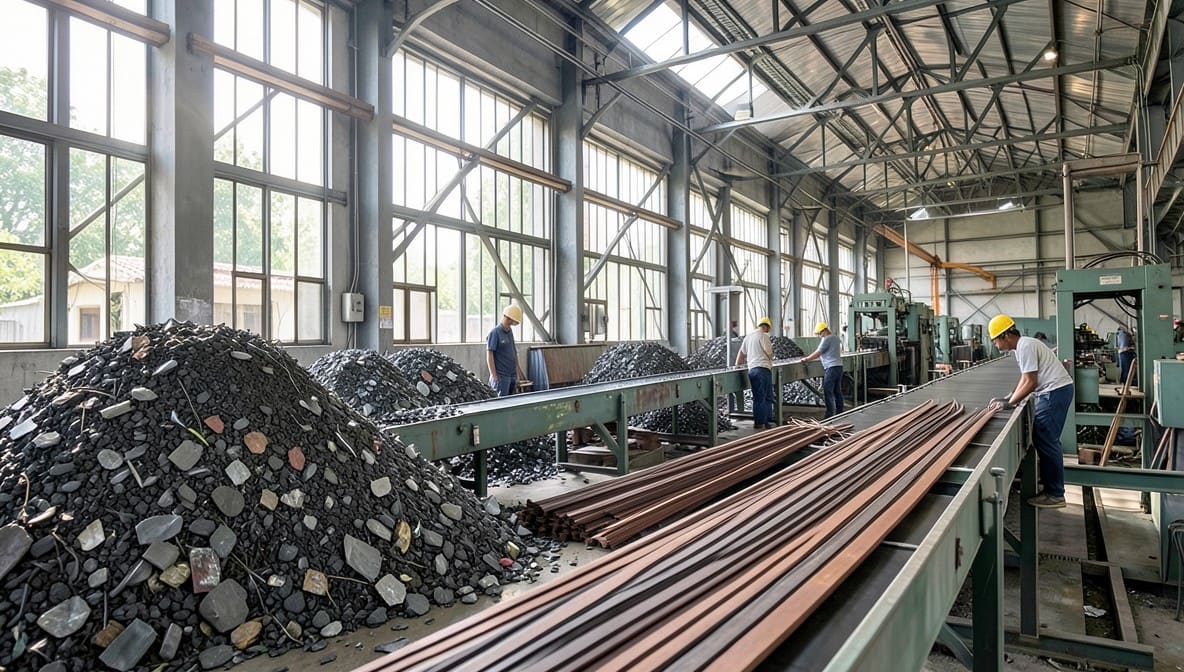
The appellant, M/s R R Ispat, a unit of Godawari Power and Ispat Limited (GPIL), cleared scrap (end cuttings) falling under Tariff Entry 72045000 to its related unit, GPIL, at a price lower than that charged to independent buyers. The Department alleged undervaluation under Rule 9 of the Central Excise Valuation Rules, 2000, and disallowed Cenvat credit of Rs. 52,842/- on grounds of delayed availing. A show cause notice dated 18.12.2018 demanded Central Excise duty of Rs. 14,85,067/-, interest, and penalty under Section 11AC of the Central Excise Act and Rule 15(2) of the Cenvat Credit Rules.
Key Facts
- The appellant and GPIL shared the same Permanent Account Number (PAN) and Corporate Identification Number (CIN)
- On 03.02.2011, the High Court of Chhattisgarh approved the amalgamation of R R Ispat and GPIL
- The appellant sold scrap to GPIL for captive consumption in manufacturing excisable goods (aluminium)
- The Department compared the price to GPIL with prices charged to independent buyers for "misrolls," which the appellant contended were materially different from "end cuttings"
- The appellant had consistently paid duty under Rule 8 of the Valuation Rules, based on cost of production as per CAS-4, in accordance with CBEC Circular No. 692/8/2003 dated 13.02.2003
- Returns were filed regularly and audits were conducted periodically by the Department
Procedural History
- 03.02.2011: Amalgamation of R R Ispat and GPIL approved by Chhattisgarh High Court
- April 2014 - March 2017: Period under scrutiny for clearance of scrap to GPIL
- 18.12.2018: Show cause notice issued invoking extended period of limitation
- 29.05.2020: Order-in-Appeal No. RPR-EXCUS-000-APP-008-20-21 passed by Commissioner (Appeals), confirming duty demand, disallowance of Cenvat credit, interest, and penalty
- 2022: Excise Appeal No. 52199 of 2022 filed before CESTAT
- 05.05.2026: Hearing held before CESTAT, Principal Bench, New Delhi
- 13.05.2026: Final Order No. 50874/2026 pronounced
Relief Sought
The appellant sought:
- Setting aside of the demand of Central Excise duty of Rs. 14,85,067/-
- Setting aside of disallowance of Cenvat credit of Rs. 52,842/-
- Setting aside of interest and penalty imposed under Section 11AC and Rule 15(2)
- Declaration that Rule 8 of the Valuation Rules, not Rule 9 or Rule 10, is applicable
- Recognition of revenue neutrality and absence of suppression
The Legal Issue
The central question was whether Rule 9 of the Central Excise Valuation Rules, 2000 applies to the transfer of scrap between two units of the same legal entity post-amalgamation, or whether Rule 8, which governs captive consumption, is the correct basis for valuation.
Arguments Presented
For the Appellant
The appellant argued that post-amalgamation, R R Ispat and GPIL became a single legal entity under Section 3(42) of the General Clauses Act, 1897, eliminating the existence of two distinct persons required for a "sale" under Section 2(h) of the Central Excise Act. Therefore, transactions between them were not sales but internal transfers for captive consumption. The appellant relied on Rule 8 of the Valuation Rules, which mandates cost-based valuation for such transfers, and cited CBEC Circular No. 692/8/2003, which mandates adherence to CAS-4 for cost determination. The appellant further relied on Jindal Steel and Power Ltd. v. Commissioner of Central Tax, GST & Central Excise, Rourkela (2026 (1) TMI 648) and OCL India Ltd. v. Commissioner of Central Tax, G.S.T. & C.E., Rourkela (2024 (6) TMI 1463), both of which held Rule 8 applicable in similar circumstances. The appellant also contended that the Department was aware of the transfers through regular returns and audits, negating any claim of suppression or intent to evade duty.
For the Respondent
The Department contended that R R Ispat and GPIL had separate Central Excise registrations and therefore should be treated as distinct entities. It argued that Rule 9 applied because the price charged to GPIL was lower than the price to unrelated buyers, suggesting undervaluation. The Department relied on Aquamall Water Solutions Ltd. v. Commissioner of C.Ex., Bangalore and Ispat Industries Ltd. v. Commissioner of C.Ex., Raigad to support its position that valuation must be based on third-party sale prices. It further argued that Cenvat credit was rightly disallowed for being availed beyond the six-month/one-year limit prescribed under the Cenvat Credit Rules.
The Court's Analysis
The Tribunal examined the legal status of the appellant and GPIL post-amalgamation. It noted that both entities shared the same PAN and CIN, and that the Chhattisgarh High Court had formally approved their amalgamation on 03.02.2011. The Tribunal held that under Section 3(42) of the General Clauses Act, 1897, a "person" includes any company or body corporate, and where two such entities amalgamate, they cease to be separate legal persons. Therefore, no sale occurred within the meaning of Section 2(h) of the Central Excise Act.
"As both the units share the same PAN and Corporate Identification Number and there is no transfer of ownership or consideration between two distinct persons, which is an essential condition for a transaction to qualify as a 'sale', we hold that the provisions of Valuation Rules such as Rule 9 and Rule 10, which are applicable to related party sales are not attracted in the present case."
The Tribunal distinguished the Department’s cited precedents. In Aquamall Water Solutions, the entity sold to a related party while also selling to third parties from depots - a scenario involving inter-entity sales, not captive consumption. In Ispat Industries, the goods were transferred to sister units for sale, not for further manufacturing. In contrast, the appellant’s transfers were exclusively for captive consumption in the production of excisable goods.
The Tribunal affirmed that Rule 8 governs such transfers and that the appellant had correctly applied cost-based valuation under CAS-4, as mandated by CBEC Circular No. 692/8/2003. The Tribunal emphasized that the Revenue is bound by its own circulars, and assessees are entitled to rely on beneficial clarifications, even in pending matters.
"The Circular clarified the position that the cost of production of captively consumed goods will be done strictly in accordance with CAS-4... Revenue had no independently sustainable claim; its claim is based entirely on circulars issued from time to time."
Regarding Cenvat credit, the Tribunal held that denial on procedural grounds - availing beyond six months - was impermissible where the inputs were received and utilized in manufacture. The requirement was deemed procedural, not substantive.
Regarding limitation, the Tribunal found that the Department had conducted regular audits and received regular returns disclosing the transfers. No suppression of facts with intent to evade duty was established. Hence, the extended period of limitation could not be invoked.
The Verdict
The appellant succeeded in full. The Tribunal set aside the Order-in-Appeal dated 29.05.2020, including the demand of Central Excise duty of Rs. 14,85,067/-, the disallowance of Cenvat credit of Rs. 52,842/-, and all associated interest and penalties. The Tribunal held that Rule 8 of the Central Excise Valuation Rules, 2000, with cost-based valuation under CAS-4, was the correct basis for valuation. The appeal was allowed with consequential relief as per law.
What This Means For Similar Cases
Captive Transfers Are Not Sales
- Practitioners must argue that amalgamated or group entities sharing PAN and CIN are a single legal person for excise purposes
- Valuation under Rule 9 or Rule 10 cannot be applied where goods are transferred for captive consumption, not for resale
- The burden shifts to the Department to prove the existence of two distinct legal persons before invoking related-party valuation rules
Rule 8 and CAS-4 Are Binding
- Rule 8, coupled with CBEC Circular No. 692/8/2003, provides the exclusive framework for valuing captive transfers
- Cost of production must be computed strictly in accordance with CAS-4, not arbitrary market benchmarks
- Past assessments based on Rule 4 or Rule 9 are vulnerable to challenge if Rule 8 was applicable
Procedural Defaults Cannot Override Substantive Rights
- Denial of Cenvat credit solely due to delay in availing (beyond six months) is legally unsustainable if inputs were received and utilized
- Revenue cannot deny substantive benefits on technical grounds where there is no fraud or evasion
- Interest and penalty under Section 11AC and Rule 15(2) are automatically extinguished if the underlying duty demand is set aside
Limitation Cannot Be Extended Without Suppression
- Regular filing of returns and periodic audits by the Department constitute constructive knowledge
- Invocation of extended period under Section 11A requires proof of intentional suppression - mere non-disclosure is insufficient
- Practitioners should demand production of audit reports and return filings to establish departmental awareness