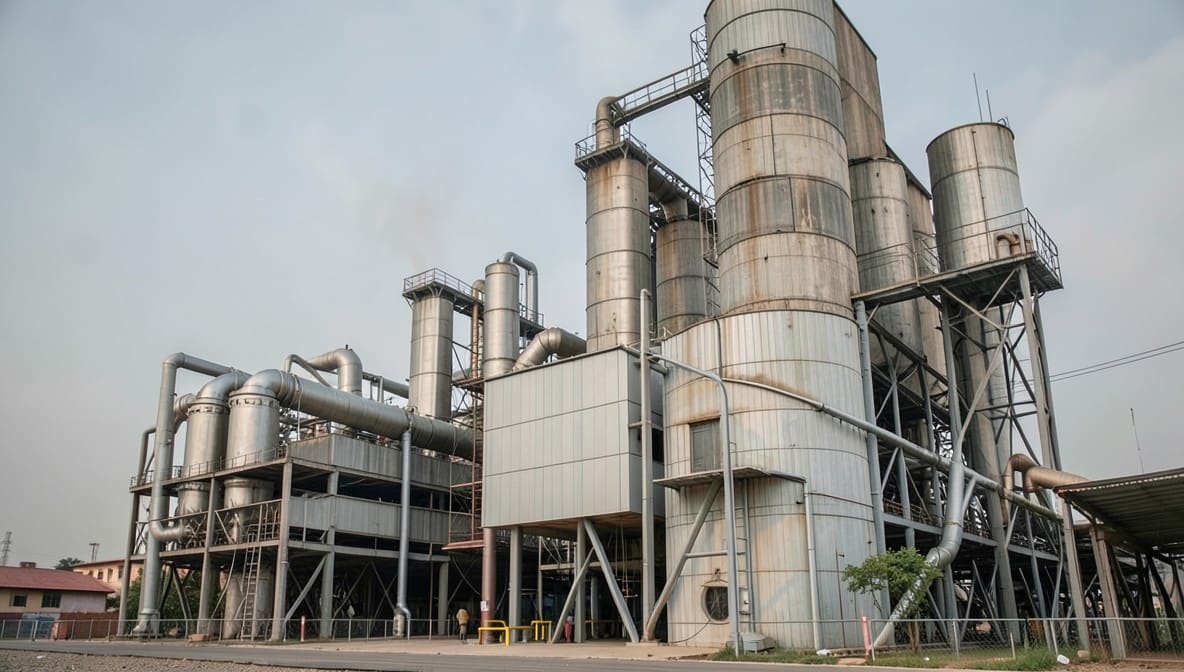
The Customs, Excise and Service Tax Appellate Tribunal (CESTAT) Chandigarh has clarified that the availability of Cenvat credit on capital goods is not negated merely because those goods are used to construct a captive power plant, even if the plant generates electricity partly for exempted purposes. The ruling reinforces that the statutory criteria under the Cenvat Credit Rules, 2004, focus on use within the factory of a dutiable product manufacturer, not on the nature or immovability of the end installation.
Background & Facts
The Dispute
The appellant, M/s Shahabad Co-op Sugar Mills Ltd., is engaged in the manufacture of sugar and molasses, classified under Chapter Sub-heading 17019990 and 17031000 of the Central Excise Tariff Act, 1985. The company installed a captive power plant to increase its electricity generation capacity from 8 MW to 24 MW. Of this, 8 MW was used captively for sugar production (a dutiable final product), while the remaining 16 MW was supplied to the Haryana Electricity Department. The appellant claimed Cenvat credit on inputs and capital goods used in the erection and commissioning of this power plant, amounting to Rs. 4,97,13,725/- during the period January 2009 to March 2010, on the basis that one-third of the electricity generated was used for dutiable production.
Key Facts
- The power plant was installed in SKD (Semi-Knocked Down) condition and assembled on-site within the appellant’s factory premises.
- The capital goods and inputs included turbines, boilers, piping, control systems, and other equipment listed under Chapters 84, 85, and 90 of the Tariff.
- The appellant availed Cenvat credit on the basis of valid invoices and declared the credit in its ER-1 returns filed regularly.
- The Department, during an audit conducted by the Accountant General (Haryana) from 15.04.2010 to 20.04.2010, identified the credit as ineligible.
- The Department contended that the power plant constituted an exempted good under the Board Circular No. 58/1/2002-CX dated 15.02.2002 and the Supreme Court judgment in M/s Treveni Engineering & Industries Ltd. v. CCE [2000 (120) ELT 273 (SC)], and therefore, Rule 6(4) of the Cenvat Credit Rules, 2004, barred credit.
- The Department issued a show cause notice dated 28.01.2011 invoking the extended period of limitation under Section 11A of the Central Excise Act, 1944, and demanded recovery of Rs. 4,97,13,725/- along with interest under Rule 14 and penalty under Rule 15(2).
- The Commissioner, Central Excise, Panchkula, confirmed the demand by Order-in-Original dated 24.06.2014.
Procedural History
- 15.04.2010 to 20.04.2010: Audit conducted by Accountant General (Haryana)
- 28.01.2011: Show cause notice issued by Department
- 24.06.2014: Order-in-Original passed by Commissioner, Central Excise, Panchkula, confirming demand
- 12.01.2026: Hearing before CESTAT Chandigarh
- 11.05.2026: Final Order passed by CESTAT Chandigarh
The Parties' Positions
Appellant: Argued that the capital goods were received in the factory, used for manufacturing dutiable goods (sugar and molasses), and satisfied all conditions under Rules 2(a), 2(k), 3, and 4 of the Cenvat Credit Rules, 2004. Emphasized that the goods were movable, invoiced, and used within the factory, and that immovability or the nature of the end product (power plant) is irrelevant. Relied on Sunrise Chemical Industries, Rajasthan Spinning & Weaving Mills, Indian Oil Corporation Ltd., HEG Ltd., and Nizam Deccan Sugars Ltd. to establish that credit is permissible when part of the output serves dutiable production.
Respondent: Contended that the power plant was an exempted good under the Board Circular and Treveni Engineering, and that Rule 6(4) of the Cenvat Credit Rules barred credit for inputs used exclusively in manufacturing exempted goods. Relied on Maruti Suzuki Ltd., Ballarpur Industries, Gujarat Ambuja Cement, and Saraswati Sugar Mills to argue that the plant as a whole was non-excisable.
Relief Sought
The appellant sought quashing of the Order-in-Original dated 24.06.2014, cancellation of the demand of Rs. 4,97,13,725/-, reversal of interest and penalty, and restoration of the Cenvat credit availed.
The Legal Issue
The central question was whether Cenvat credit on capital goods and inputs used to set up a captive power plant is admissible under Rule 2(a) and Rule 4(2) of the Cenvat Credit Rules, 2004, when the electricity generated is partly used in the manufacture of dutiable goods, despite the power plant being classified as an exempted good under Board Circular No. 58/2002-CX and Treveni Engineering.
Arguments Presented
For the Appellant
The appellant argued that the definition of capital goods under Rule 2(a) requires only that the goods be used in the factory of the manufacturer of final products, not that they be used in the actual manufacture of the final product. The goods were received in the factory, were not office equipment, and were used for generating electricity that powered sugar production. The appellant relied on Sunrise Chemical Industries (Gujarat HC), which held that ownership and installation status are irrelevant; only use in the factory matters. The Rajasthan Spinning case (SC) confirmed that immovable structures like chimneys qualify for credit. The Indian Oil Corporation decision by this very Tribunal held that a Naphtha Cracker Plant’s capital goods are eligible even if fixed to earth. The appellant further argued that the Board Circular No. 58/2002-CX addressed excisability of turnkey projects, not credit eligibility, and was therefore inapplicable. The Department failed to prove suppression, and the appellant acted in bonafide reliance on judicial precedents.
For the Respondent
The Department contended that the power plant, as a whole, was an exempted good under the Board Circular and Treveni Engineering, and therefore, Rule 6(4) of the Cenvat Credit Rules barred credit. It argued that since the plant was not an excisable good, any inputs used in its construction were for exempted goods, and credit was disallowed. It relied on Maruti Suzuki, Ballarpur Industries, and Saraswati Sugar Mills to assert that captive power plants are non-excisable and their inputs are ineligible for credit.
The Court's Analysis
The Tribunal conducted a meticulous review of the statutory framework under the Cenvat Credit Rules, 2004. It emphasized that Rule 2(a) defines capital goods as those specified in the Rule, used in the factory of the manufacturer of final products, excluding only office equipment. The key phrase is “used in the factory,” not “used in the manufacture.” The Tribunal noted that the Supreme Court in Rajasthan Spinning & Weaving Mills had already held that even immovable structures like chimneys qualify if they are capital goods used in the factory.
"Just because after being installed in the factory, the capital goods put together become a plant which is a fixed to earth structure, the Cenvat Credit cannot be denied on the basis that the plant which is fixed to earth structure, is not excisable. This proposition of the Department is, in fact absurd, as there is no such condition in Rule 2(a) for capital goods."
The Tribunal distinguished Treveni Engineering and the Board Circular, clarifying that those addressed the classification and excisability of turnkey projects as a whole, not the eligibility of credit on individual components received in the factory. The Circular explicitly stated that components of such plants are dutiable, and the dispute here concerned credit on those dutiable components.
The Tribunal further held that Rule 6(4) does not apply because the power plant was not used exclusively for exempted goods. Since 8 MW out of 24 MW (one-third) was used for manufacturing dutiable sugar, the credit was proportionately admissible. The Tribunal cited HEG Ltd. (Chhattisgarh HC) and Nizam Deccan Sugars (CESTAT Bangalore) to affirm that partial use for dutiable production entitles the manufacturer to credit.
Regarding the extended period of limitation, the Tribunal found no suppression. The appellant had disclosed all credit details in ER-1 returns, and the Department’s audit did not constitute a positive act of concealment. The decisions in Padmini Products, Gopal Zarda, and Anand Nishikawa were applied to hold that audit findings alone cannot trigger the extended period.
The penalty under Rule 15(2) was set aside because the appellant acted in bonafide belief, supported by multiple judicial precedents, and the issue involved complex legal interpretation.
The Verdict
The appeal was allowed. The Tribunal set aside the Order-in-Original dated 24.06.2014, cancelled the demand of Rs. 4,97,13,725/- for inadmissible Cenvat credit, reversed the interest levied under Rule 14, and cancelled the penalty imposed under Rule 15(2). The appellant’s Cenvat credit claim was restored in full. No further directions were issued as the relief was complete.
What This Means For Similar Cases
Credit Is Based on Use, Not Structure
- Practitioners may now confidently claim Cenvat credit for capital goods used to install captive power plants, boilers, or other fixed installations, provided the goods are received in the factory and used for manufacturing dutiable goods.
- The immovability or integration of equipment into a plant structure is irrelevant under Rule 2(a).
Partial Use for Dutiable Production Permits Proportional Credit
- Where a captive facility serves both dutiable and exempted purposes, credit is admissible for the proportion of use attributable to dutiable production.
- The burden is on the Department to prove exclusive use for exempted goods; mere existence of an exempted output does not disqualify credit.
Board Circulars Do Not Override Statutory Definitions
- Circulars clarifying excisability of turnkey projects cannot override the statutory definition of capital goods under the Cenvat Credit Rules.
- Practitioners should challenge reliance on such circulars when the dispute concerns credit eligibility, not classification.
Bonafide Belief Shields Against Penalty
- Where complex legal issues are involved and multiple judicial precedents support the taxpayer’s position, penalty under Section 11AC is not sustainable.
- Regular filing of returns and disclosure of credit claims negates allegations of suppression for extended period.