The Kerala High Court has clarified that local panchayats cannot arbitrarily limit the validity of trade licenses to less than five years when the underlying statutory permits - such as environmental clearances and pollution consents - remain valid for a longer duration. This judgment reinforces the principle that administrative licensing must harmonize with the operational realities of regulated activities.
Background & Facts
The Dispute
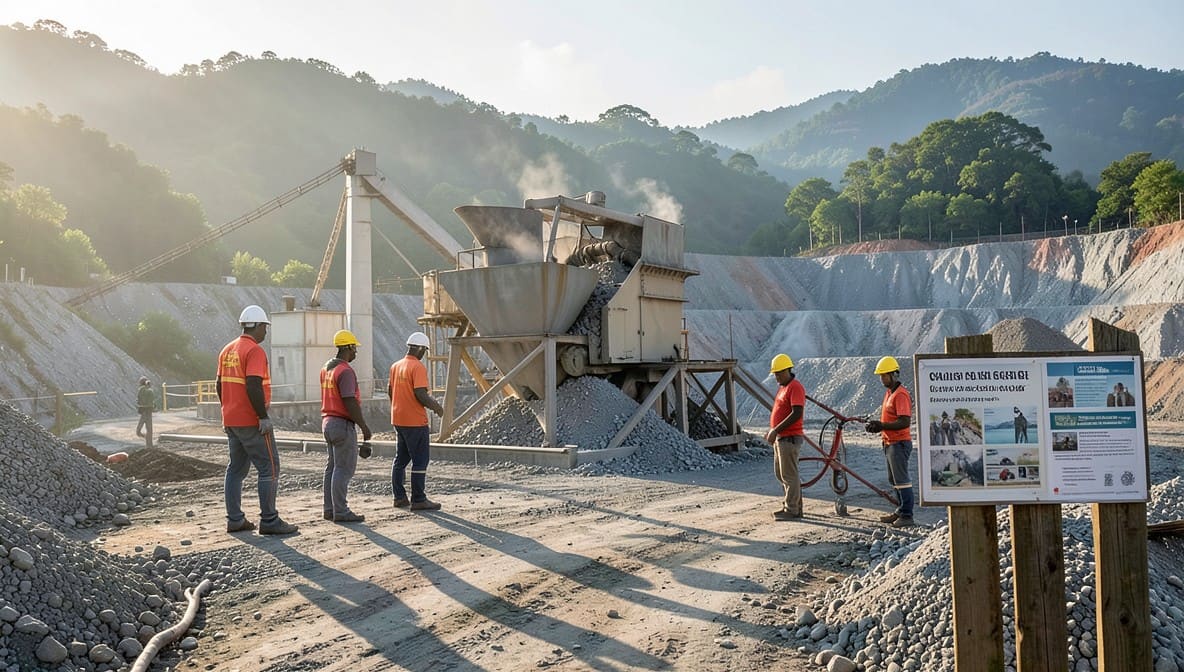
The petitioner, Muhammed Ismail Makkhi, operates a quarrying business in Kozhikode, Kerala. He holds a lease deed (Ext.P5) for quarrying operations valid until 11.06.2031, an Environmental Clearance (Ext.P1) issued on 06.09.2018, and a Consent to Operate from the Kerala State Pollution Control Board (KSPCB) valid until 06.09.2028. However, the Keezhariyoor Grama Panchayat issued him a trade license (Ext.P4) valid only until 31.03.2025, despite the fact that his operational permits extend well beyond that date. The petitioner contends that the panchayat’s refusal to renew the license for a full five-year term, as permitted under the Kerala Panchayat Raj Rules, is arbitrary and contrary to statutory intent.
Key Facts
- The petitioner was granted a quarrying lease (Ext.P5) by the District Geologist on 12.06.2019, valid until 11.06.2031.
- The mining plan, approved on 09.04.2018, envisages a 12-year operational life for the quarry.
- The Ministry of Environment, Forest and Climate Change (MoEF) issued Notification Ext.P7 on 12.04.2022, directing that Environmental Clearances be co-extensive with the life of the mine.
- The KSPCB granted Consent to Operate (Ext.P3) on 21.11.2023, valid until 06.09.2028.
- The Panchayat issued Trade License Ext.P4 on 15.12.2023, valid only until 31.03.2025.
- The Panchayat refused renewal beyond this date, citing a circular that ties license validity to the expiry of other permits.
- The petitioner submitted Ext.P10 (Directorate of Mining & Geology Office Order dated 02.03.2026) and Ext.P11 (KSPCB Circular dated 17.03.2026), both supporting longer-term licensing.
Procedural History
- 15.12.2023: Trade License (Ext.P4) issued by Keezhariyoor Grama Panchayat, valid until 31.03.2025.
- 17.03.2025: Panchayat issued letter (Ext.P13) refusing renewal beyond the current expiry, citing permit limitations.
- 01.06.2026: Writ Petition (WP(C) No.17706 of 2026) filed before the Kerala High Court.
Relief Sought
The petitioner sought:
- A writ of mandamus directing the Panchayat to renew Ext.P4 for five years, irrespective of the expiry date of Ext.P1;
- Quashing of Ext.P13 as unconstitutional;
- Dispensation from translating vernacular documents;
- Any other relief deemed fit by the Court.
The Legal Issue
The central question was whether Rule 8 of the Kerala Panchayat Raj (Issue of Licence to Factories, Trades, Entrepreneurship Activities and Other Services) Rules, 1996 mandates a five-year validity for trade licenses, even when other statutory permits have shorter durations, and whether the Panchayat may lawfully restrict license validity to match the expiry of environmental or pollution consents.
Arguments Presented
For the Petitioner
The petitioner’s counsel relied on two prior judgments of the Kerala High Court - K. Aneesh Kumar v. Maloor Grama Panchayat (Ext.P14) and WA No.564/2016 (Ext.P15) - which held that the proviso to Rule 8 of the 1996 Rules fixes the maximum validity of a trade license at five years, and that the Panchayat must grant licenses for the full term if the applicant holds valid underlying permits. It was argued that the Panchayat’s reliance on circulars to curtail license duration violates the statutory mandate. The petitioner further cited Ext.P7 (MoEF Notification) and Ext.P11 (KSPCB Circular), which support co-extensiveness of permits with mine life, thereby justifying a five-year license renewal.
For the Respondent
The Panchayat’s counsel contended that the validity of the trade license must be coterminous with the validity of other statutory clearances, as per a circular issued by the Directorate of Panchayats. They argued that granting a license beyond the validity of environmental or pollution consents would be illegal and expose the Panchayat to liability. They relied on Ext.P13 and the LSGD circular (Annexure R1(A)) to justify the restriction.
The Court's Analysis
The Court examined the proviso to Rule 8 of the Kerala Panchayat Raj Rules, 1996, which states that the period of license for industrial establishments shall be fixed as five years. The Court noted that while the Panchayat may revoke a license if underlying permits expire, it cannot unilaterally reduce the maximum permissible term from five years to a shorter period.
"The Panchayat is bound to give licence for a period of five years. However, the petitioner can operate up to five years, only if the petitioner is having valid Environment Clearance, consent from the Kerala State Pollution Control Board etc. for the entire period of five years."
The Court held that the Panchayat’s circular, which sought to limit license validity to the shortest permit, was ultra vires the Rules. The Court emphasized that the Rules provide a ceiling, not a floor, and that the Panchayat must grant the full five-year term if the applicant meets all conditions. The Court further relied on its own judgments in Ext.P14 and Ext.P15, which had squarely addressed this issue and held in favor of the licensee.
The Court also noted that Ext.P10 and Ext.P11, issued after the dispute arose, reinforced the principle that operational permits are valid for longer durations and that licensing authorities must align their decisions accordingly.
The Verdict
The petitioner succeeded. The Court directed that the petitioner may file a fresh application for renewal of the trade license (Ext.P4) within two weeks of receiving a certified copy of this judgment. If received, the Panchayat shall decide the application within 30 days, in accordance with the principles laid down in K. Aneesh Kumar v. Maloor Grama Panchayat (Ext.P14) and WA No.564/2016 (Ext.P15). The Panchayat must also consider Ext.P10 and Ext.P11 while deciding the renewal. The petition is disposed of with no order as to costs.
What This Means For Similar Cases
License Validity Cannot Be Arbitrarily Shortened
- Practitioners representing quarry operators, factories, or industrial units must now insist on five-year trade license renewals under Rule 8, provided underlying consents are valid.
- Panchayats cannot rely on internal circulars to override statutory rules.
Underlying Permits Define Operational Feasibility, Not License Duration
- A trade license’s validity is not determined by the shortest permit but by the statutory ceiling of five years.
- If a pollution consent or environmental clearance expires before five years, the Panchayat may revoke the license at that time - but cannot deny a five-year renewal upfront.
Procedural Compliance Is Non-Negotiable
-
Panchayats must act within the four corners of the Kerala Panchayat Raj Rules.
-
Any refusal to grant a full five-year license without a valid revocation reason is liable to be set aside by writ.
-
File renewal applications promptly upon expiry notice.
-
Cite K. Aneesh Kumar v. Maloor Grama Panchayat and Rule 8 as binding precedent.
-
Attach copies of valid environmental and pollution consents with renewal applications.
-
Challenge circulars that conflict with statutory rules through writ petitions under Article 226.