The Karnataka High Court has clarified that a quarry leaseholder cannot claim a 20-year deemed extension under Rule 8A of the Karnataka Minor Mineral Concessions (Amendment) Rules, 2016 if the original lease expired prior to the amendment’s effective date. The judgment reinforces the principle that statutory entitlements are governed by the law in force at the time of the triggering event.
Background & Facts
The Dispute
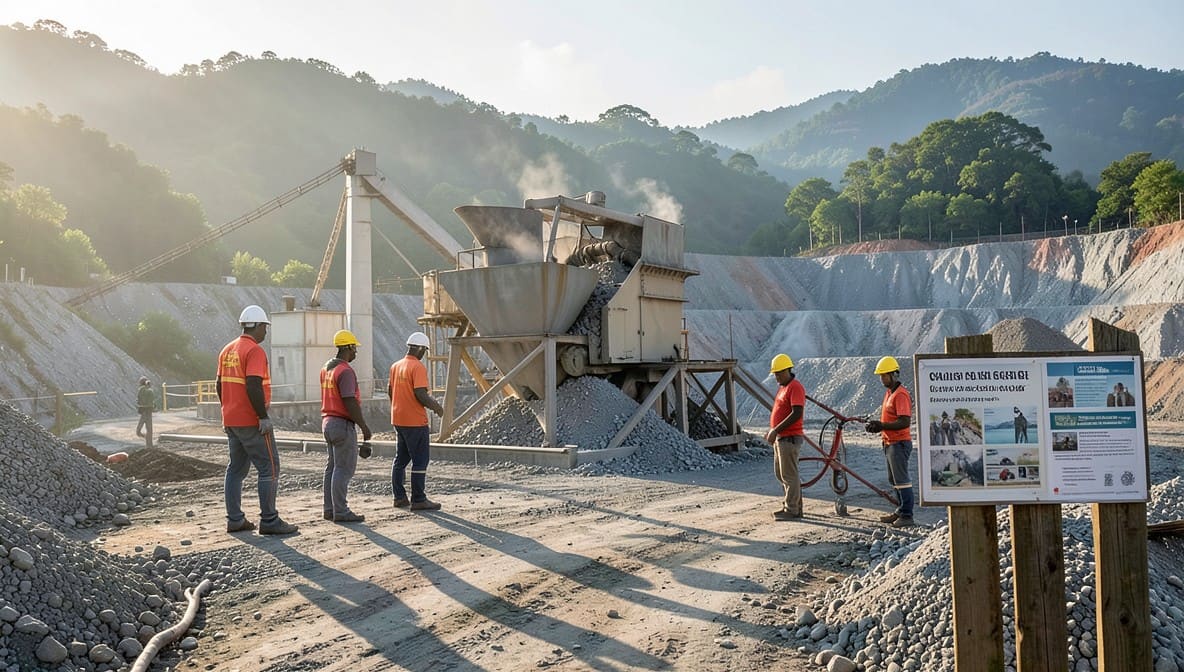
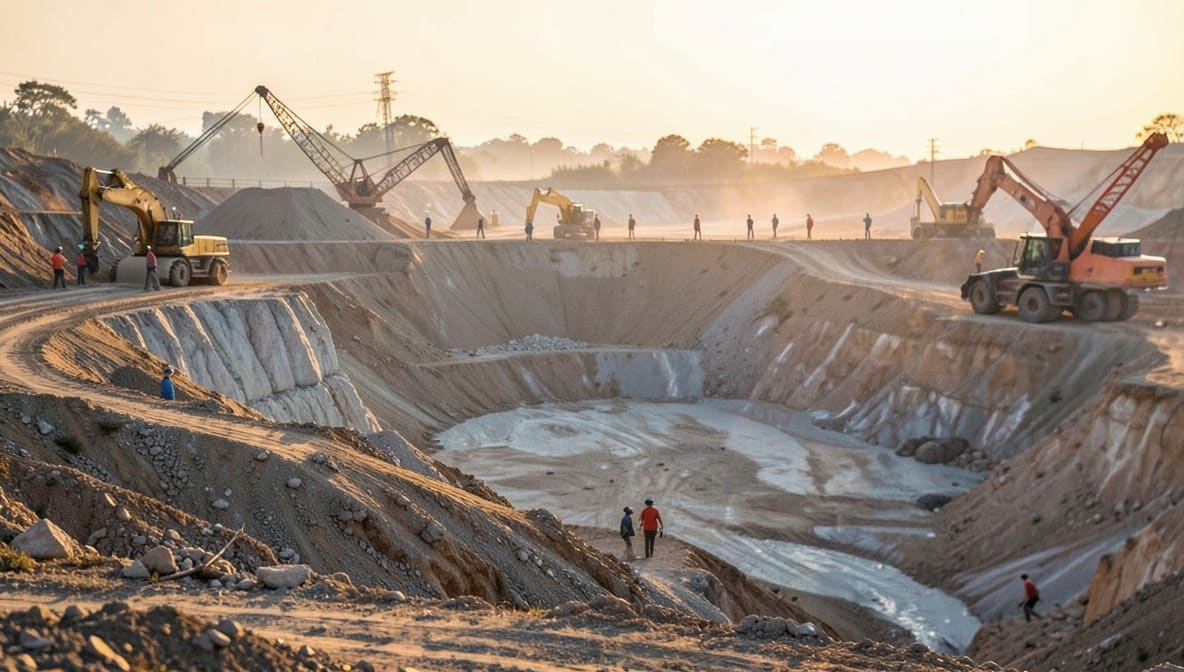
The petitioner, Shree Sheshadri Steels and Metalics Private Ltd., held two quarry leases for building stone in Hussainpur Village, Koppal District: QL No. 306/11-12 for 5 acres and QL No. 307/11-12 for 8 acres, both granted on 28.05.2011 for a term of five years, expiring on 27.05.2016. The petitioner applied for renewal on 27.02.2016, prior to expiry. The leases were not renewed within the original term, and the authorities extended them for one year under Rule 21(2A) of the Karnataka Minor Mineral Concession Rules, 1994, effective from 26.05.2017.
Key Facts
- The petitioner’s leases were granted under the KMMC Rules, 1994, which permitted a maximum five-year term for quarry leases.
- The petitioner filed an application for renewal on 27.02.2016, well before the expiry date of 27.05.2016.
- The KMMC (Amendment) Rules, 2016, came into force on 12.08.2016, introducing Rule 8A, which provided for deemed extensions of 20 years for non-specified minerals.
- The petitioner’s lease expired on 27.05.2016, before Rule 8A was in force.
- On 22.10.2016, the authorities extended the leases for one year under Rule 21(2A) of the 1994 Rules, which remained applicable until 12.08.2016.
- The petitioner challenged the one-year extension, arguing that Rule 8A should apply retrospectively.
- The respondents contended that the land in Survey No. 4, Hussainpur Village, is classified as "recorded/unclassified forest land" under the Forest Department’s records, and quarrying on such land is prohibited.
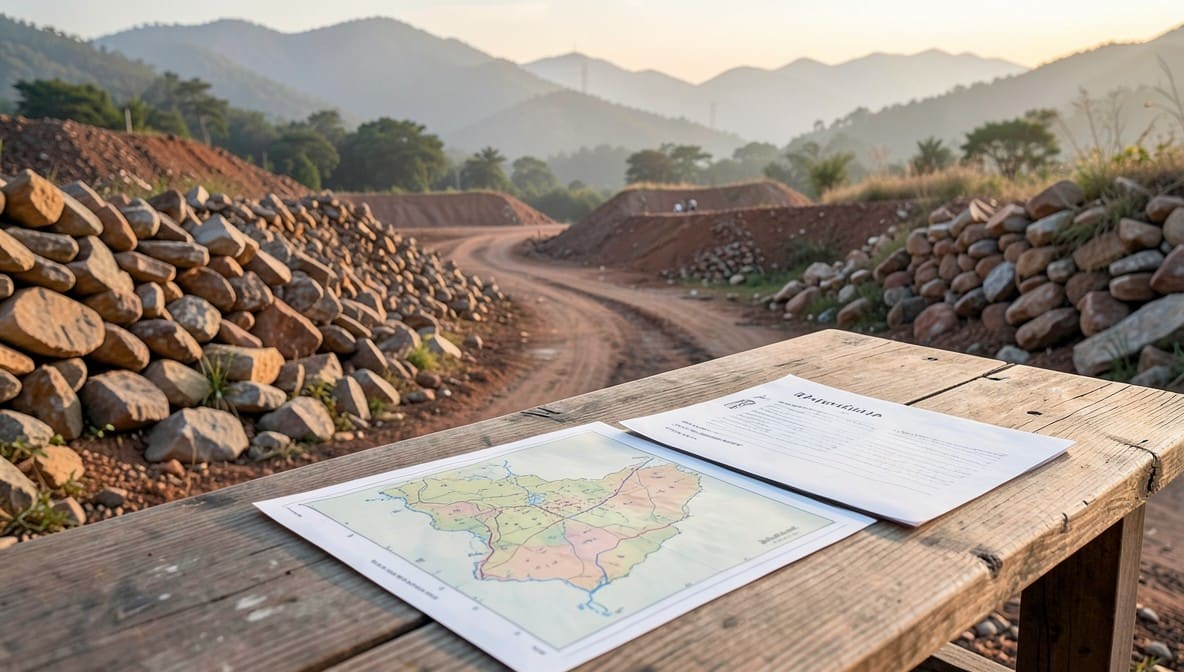
- Affidavits dated 09.01.2026 and 13.02.2026 from the Forest Department confirmed that the land is recorded as forest under the Working Plan of Koppal Forest Division dated 25.11.2003, approved by the State Government.
- The Expert Working Committee, constituted under G.O. No. FEE 185 FAF 2011 dated 15.05.2014, excluded the subject land from "deemed forest" but confirmed its status as "recorded forest".
Procedural History
- 28.05.2011: Quarry leases QL No. 306/11-12 and QL No. 307/11-12 granted for five years.
- 27.02.2016: Petitioner applied for renewal of both leases.
- 27.05.2016: Original leases expired.
- 22.10.2016: Authorities extended leases for one year under Rule 21(2A) of KMMC Rules, 1994.
- 12.08.2016: KMMC (Amendment) Rules, 2016 came into force, inserting Rule 8A.
- 2017: Petitioner filed W.P. No. 32288/2017 seeking consideration of renewal application under Rule 8A.
- 19.07.2017: Coordinate Bench directed authorities to decide the renewal application within six weeks.
- 2022: Petitioner filed W.P. No. 1356/2022 alleging non-decision; dismissed on 27.01.2022 as not maintainable.
- 2024: Present writ petition (W.P. No. 4271/2024) filed seeking declaration of 20-year extension under Rule 8A and quashing of the 2016 one-year extension.
- 01.06.2026: Judgment delivered.
The Parties' Positions
For the Petitioner
- Argued that Rule 8A should apply to pending applications, even if the lease expired before 12.08.2016.
- Contended that the one-year extension granted on 22.10.2016 is void because Rule 21(2A) of the 1994 Rules was repealed on 12.08.2016.
- Asserted that the land is not a "deemed forest" under G.O. 05.05.2022 and therefore quarrying should be permitted.
For the Respondents
- Maintained that Rule 8A is prospective and cannot be applied retroactively to leases that had already expired.
- Stated that Rule 21(2A) was applicable at the time of extension (22.10.2016) because the repeal of the 1994 Rules was not retrospective.
- Submitted that the land is recorded as forest under the Working Plan and is not eligible for quarrying under any provision.
Relief Sought
The petitioner sought:
- A declaration that the leases are valid for 20 years from 28.05.2011 under Rule 8A.
- A direction to issue mineral dispatch permits for quarrying.
- Quashing of the 22.10.2016 orders extending the leases for one year.
- Permission to continue quarrying operations.
The Legal Issue
The central question was whether Rule 8A of the Karnataka Minor Mineral Concessions (Amendment) Rules, 2016, which provides for a 20-year deemed extension, applies retrospectively to quarry leases that expired before its effective date of 12.08.2016, and whether a one-year extension granted under the repealed Rule 21(2A) is legally valid.
Arguments Presented
For the Petitioner
The petitioner relied on the principle of beneficial legislation, arguing that Rule 8A was intended to provide security to leaseholders and should be applied to pending applications. It contended that since the renewal application was filed before expiry, the law in force at the time of decision (Rule 8A) should govern. It further argued that the one-year extension was invalid because Rule 21(2A) was repealed on 12.08.2016, and the extension order was passed after that date.
For the Respondent
The State countered that statutory extensions are governed by the law in force at the time of the triggering event - here, the expiry of the lease on 27.05.2016. Rule 8A was not in force then, and its insertion did not revive expired rights. The State also emphasized that the land is recorded as forest under the Working Plan, and quarrying on such land is prohibited under the Forest (Conservation) Act, 1980, regardless of the lease status.
The Court's Analysis
The Court examined the nature of Rule 8A and its temporal application. It held that Rule 8A is a substantive provision creating a new right, not a procedural or remedial one. As such, it cannot be applied retrospectively unless expressly stated. The judgment noted:
"The right to a 20-year extension under Rule 8A arises only if the lease is in force on the date the rule comes into effect. A lease that has already expired cannot be resurrected by a subsequent rule."
The Court distinguished between pending applications and expired leases. While the petitioner’s application was filed before expiry, the entitlement to extension is determined by the law applicable at the time of expiry - not at the time of decision. The Court cited State of U.P. v. Rameshwar Prasad to affirm that statutory rights vest only when the conditions are satisfied under the law then in force.
Regarding the one-year extension granted on 22.10.2016, the Court held that Rule 21(2A) of the 1994 Rules remained applicable until 12.08.2016, and the extension order was issued within the legal framework then operative. The repeal of Rule 21(2A) did not invalidate actions taken under it before repeal.
On the forest land issue, the Court accepted the Forest Department’s affidavits confirming that Survey No. 4 is recorded as "unclassified forest" under the Working Plan approved in 2003. The Court relied on M/s. STG Infransys Pvt. Ltd. v. State of Karnataka to hold that even if a lease was originally granted on forest land, the classification of the land at the time of extension is decisive. The Court noted:
"The fact that quarrying was permitted in the past does not create a vested right to continue on forest land. The Forest (Conservation) Act overrides mineral concessions."
The Court also dismissed the petition on the ground of res judicata, noting that the same reliefs were sought and rejected in W.P. No. 1356/2022, and a coordinate bench had already held that a second petition on the same subject is not maintainable.
The Verdict
The writ petition was dismissed. The Court held that the petitioner is not entitled to a 20-year deemed extension under Rule 8A because the original leases expired on 27.05.2016, prior to the effective date of the amendment. The one-year extension granted on 22.10.2016 under Rule 21(2A) of the 1994 Rules is valid and lawful. The Court further upheld the classification of the land as recorded forest, prohibiting quarrying operations. All pending applications are disposed of.
What This Means For Similar Cases
Deemed Extensions Are Not Retroactive
- Practitioners must assess the law in force at the time of lease expiry, not the date of decision, to determine eligibility for deemed extensions.
- Applications filed before expiry but decided after a new rule takes effect do not automatically qualify for the new benefit.
- Rule 8A-type provisions are presumed prospective unless the statute explicitly states otherwise.
Forest Land Classification Overrides Mineral Rights
- Even if a lease was originally granted on land later classified as forest, the classification at the time of extension is binding.
- Working Plans approved under the Forest (Conservation) Act, 1980, take precedence over mineral concession rules.
- Practitioners must verify forest status through official records (Working Plans, Forest Department affidavits) before filing renewal applications.
Second Writ Petitions Are Barred
- A writ petition raising identical reliefs after a prior dismissal by a coordinate bench is not maintainable.
- Courts will apply the doctrine of res judicata strictly in administrative law matters involving repeated litigation.
- Petitioners must exhaust remedies in a single proceeding or risk dismissal on procedural grounds.