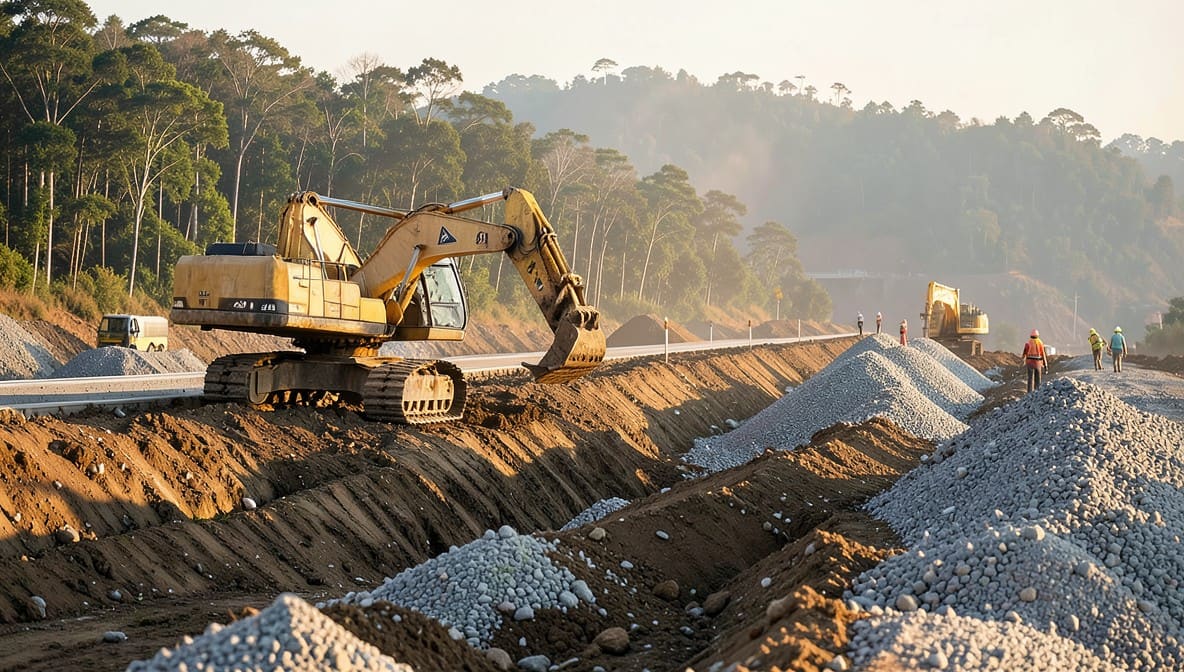
The Gauhati High Court has affirmed that unauthorised extraction of minor minerals during infrastructure projects attracts statutory liability under Rule 64 of the Assam Minor Mineral Concession Rules, 2013, even where the contractor claims lawful sourcing. The judgment underscores that procedural compliance, not mere assertion, determines royalty liability.
Background & Facts
The Dispute
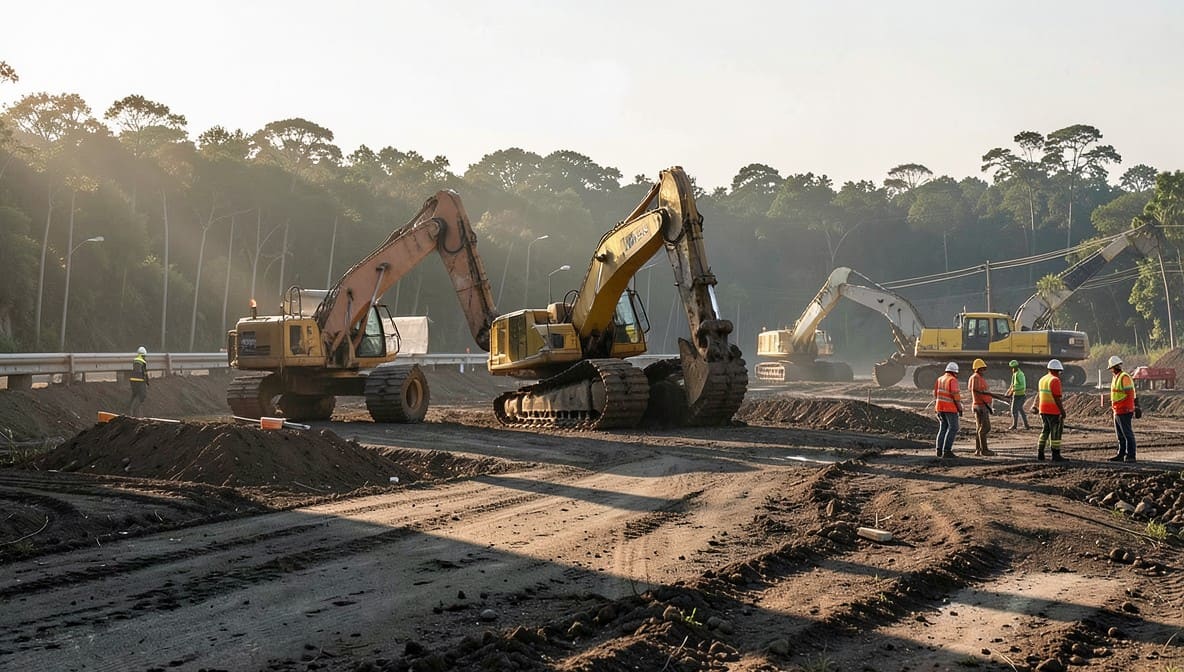
The dispute arose from the execution of the "Four Laning of Dholabari to Jamuguri Section of NH-52" under an EPC contract awarded on 12.04.2017 between SimPLEX Infrastructures Limited and the National Highways and Infrastructure Development Corporation Limited (NHIDCL). The project required substantial quantities of earth, sand, and coarse aggregates - classified as minor minerals under the Mines and Minerals (Development and Regulation) Act, 1957 and the Assam Minor Mineral Concession Rules, 2013.
Key Facts
- The petitioner procured approximately 11,41,316 CuM of earth, 1,20,701 CuM of stone aggregates, and 12,826 CuM of sand for construction.
- The petitioner claimed lawful procurement through:
- Valid permits under Rule 5 of the Rules of 2013 for 4,32,895 CuM of earth and 1,13,425.70 CuM of aggregates, with royalty paid.
- Transit passes from Arunachal Pradesh for boulders, with royalty paid to that State.
- A No Objection Certificate (NOC) from the Tezpur Water Resources Department for de-silting river Jia Bharali to extract 4,39,000 CuM of earth and sand.
- Reuse of excavated earth from within the project alignment (approx. 2,43,000 CuM).
- The Forest Department, through the Bureau of Investigation (Economic Offences), Assam, initiated an enquiry on 29.05.2019, requesting records from NHIDCL and the petitioner.
- The petitioner was repeatedly asked to submit documents via communications dated 23.07.2019, 27.01.2020, and 01.04.2022.
- Field inspections were conducted on 05.11.2020 and 06.11.2020, revealing discrepancies between project records and submitted royalty documents.
- The petitioner submitted partial documents on 21.11.2020 but failed to provide permits for the majority of the material.
Procedural History
- 29.05.2019: BOI(E.O.) initiated enquiry by requesting records from NHIDCL.
- 23.07.2019, 27.01.2020, 01.04.2022: Repeated notices issued to petitioner for documentation.
- 05.11.2020, 06.11.2020: Field inspections conducted; discrepancies noted.
- 15.07.2022: First demand notice issued by BOI(E.O.) for Rs. 12,97,46,245/-.
- 20.07.2022: Petitioner submitted detailed reply with supporting documents.
- 28.07.2022: Revised demand issued reducing liability to Rs. 3,00,24,540/-.
- 02.09.2022: Gauhati HC issued interim order in WP(C)/5631/2022 restraining coercive recovery.
- 31.12.2022: Divisional Forest Officer, Sonitpur East, issued new assessment of Rs. 15,58,76,034/-.
- 05.01.2023: NHIDCL forwarded this communication to petitioner.
- 16.03.2023: Final demand issued by Divisional Forest Officer for Rs. 40,04,04,926.60/-.
- 18.03.2023: NHIDCL confirmed withholding of payments pending clearance.
- 28.03.2023: WP(C)/1765/2023 filed challenging the 31.12.2022 and 16.03.2023 communications.
- 01.07.2026: Judgment pronounced by the Gauhati High Court.
The Parties' Positions
For the Petitioner
- Argued all materials were sourced lawfully under permits, transit passes, or statutory exemptions.
- Contended that reuse of excavated earth and de-silted river material do not attract royalty.
- Asserted that Rule 64 applies only to illegal mining, which was never established.
- Claimed violation of natural justice due to lack of prior notice before enhanced demands.
- Challenged arbitrary fluctuations in assessed quantities and rates.
For the Respondents (State of Assam & Forest Department)
- Maintained that valid permits existed only for a fraction of the material used.
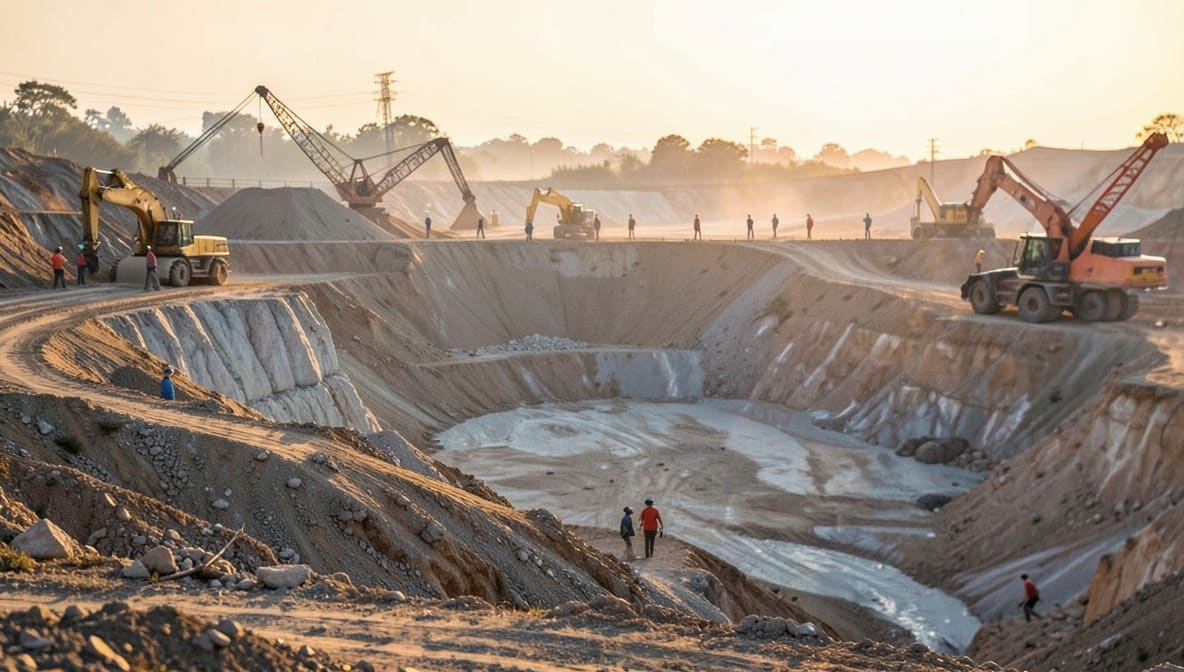
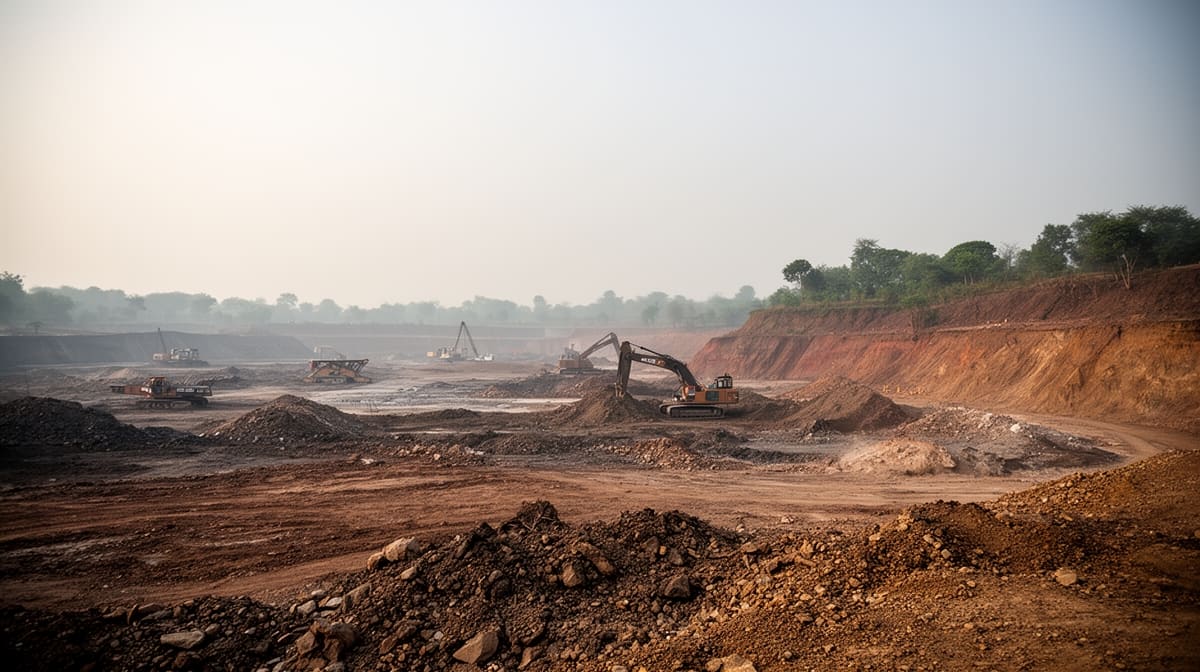
- Asserted that the remaining quantities constituted unauthorised extraction under Rule 63.
- Cited continuous verification process, field inspections, and multiple opportunities to submit documents.
- Argued that the NOC from Water Resources Department was ultra vires and could not override forest royalty rules.
- Stated that the Government of India’s 31.08.2017 circular was advisory and did not override State law.
Relief Sought
The petitioner sought:
- Quashing of all demand notices dated 15.07.2022, 28.07.2022, 31.12.2022, and 16.03.2023.
- Direction to NHIDCL to release all withheld contractual payments.
- Declaration that the levy of royalty, price, GST, income tax, and 200% penalty was illegal.
- Costs of litigation.
The Legal Issue
The central question was whether the imposition of royalty, price, and 200% penalty under Rule 64 of the Assam Minor Mineral Concession Rules, 2013 is legally sustainable where the authorities find, after a structured enquiry, that substantial quantities of minor minerals were extracted without valid permits, and whether such action violates principles of natural justice or statutory limits.
Arguments Presented
For the Petitioner
The petitioner relied on Section 9 of the Mines and Minerals (Development and Regulation) Act, 1957, arguing that royalty liability attaches only to leaseholders, not contractors. It contended that Rule 5 of the Rules of 2013 governs contractors and requires only advance payment where applicable, and that Rule 64 is punitive and requires a prior finding of illegal mining - which was never made. It cited State of Assam v. Muslim Ali and Dipayan Paul JV v. State of Assam to argue that unilateral deductions without adjudication are impermissible. It further relied on TATA Projects Ltd. v. State of Maharashtra to assert that royalty cannot be imposed on excavated earth reused on-site or sourced from de-siltation without commercial intent. The petitioner also challenged the arbitrary revisions in demand as evidence of non-application of mind.
For the Respondent
The State countered that Section 14 of the Act of 1957 excludes Sections 5 - 13 and places minor minerals under State Rules. Rule 5(3) imposes liability on contractors to pay royalty as notified, and failure to obtain permits for any quantity renders extraction unauthorised under Rule 63. The State emphasized a prolonged, multi-stage verification process involving NHIDCL records, field inspections, and multiple opportunities to the petitioner to submit documents. It relied on Rule 64 and Rule 65 to justify recovery of price, royalty, and penalty. It rejected the NOC from Water Resources Department as beyond jurisdiction and held that the 31.08.2017 MoRTH circular was merely administrative guidance, not a legal override. The State maintained that the fluctuating demands reflected evolving verification, not arbitrariness.
The Court's Analysis
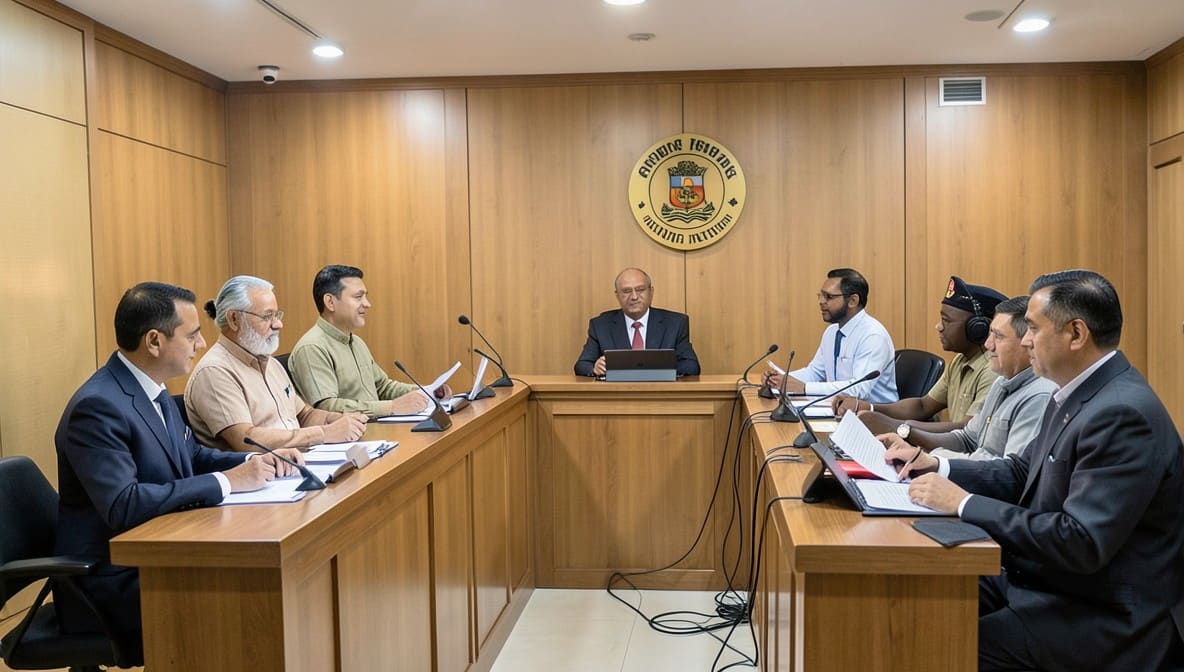
The Court undertook a detailed analysis of the statutory framework under the Act of 1957 and the Rules of 2013. It held that Section 14 of the Act excludes the applicability of Sections 5 - 13 to minor minerals, thereby placing their regulation exclusively under State Rules. Rule 5(3) clearly imposes liability on contractors to pay royalty in advance for minor minerals used in government projects, and failure to obtain permits for any quantity constitutes unauthorised extraction under Rule 63.
"The statutory scheme itself draws a distinction between extraction undertaken pursuant to valid permits and extraction carried out without any lawful authority. Consequently, the existence or otherwise of valid permits and statutory authorisations assumes significance for determining whether the extraction in question falls within the ambit of Rule 63 and consequently attracts the consequences contemplated under Rule 64."
The Court rejected the petitioner’s argument that Rule 64 requires a prior adjudication of illegal mining. It held that the very finding of absence of permits, after a prolonged and multi-layered verification process, constitutes the jurisdictional trigger for Rule 64. The Court noted that the petitioner was given multiple opportunities to submit documents over three years, including through formal notices dated 23.07.2019, 27.01.2020, and 01.04.2022, and that field inspections were conducted. The Court held that the process was not ex parte or unilateral.
The Court also dismissed the petitioner’s reliance on TATA Projects Ltd. and Promoters & Builders Association of Pune, distinguishing them on grounds that those cases involved blanket levies without verification, whereas here, the State conducted a granular, source-wise reconciliation of quantities against documentary evidence. The Court observed:
"The mere fact that the quantified liability underwent revision at different stages, by itself, does not render the entire exercise arbitrary, particularly when such revisions are stated to be based on additional verification and reconciliation of records."
Regarding the NOC from the Water Resources Department, the Court held that the department lacks authority under the Act of 1957 or the Rules of 2013 to grant permission for extraction of minor minerals. The MoRTH circular was held to be an administrative guideline, not a legal exemption.
On the contractual aspect, the Court upheld NHIDCL’s withholding of payments under Article 25 of the EPC Agreement, which obliges the contractor to indemnify the Authority for statutory non-compliance. The Court found no breach of contract in NHIDCL’s conduct.
The Verdict
The writ petitions were dismissed. The Court held that the impugned demand notices dated 31.12.2022 and 16.03.2023, assessing a total liability of Rs. 40,04,04,926.60/- for royalty, price of minerals, and 200% penalty under Rule 64, are legally sustainable. The petitioner’s claim of lawful sourcing was found to be factually disputed and not substantiated by valid permits for the entire quantity. The Court clarified that dismissal does not preclude the petitioner from pursuing remedies before the competent appellate forum under Rule 68 of the Rules of 2013. There shall be no order as to costs.
What This Means For Similar Cases
Statutory Compliance Is Non-Negotiable in Infrastructure Projects
- Contractors executing government projects must obtain permits for every cubic meter of minor minerals used, regardless of source.
- Reuse of excavated earth or de-silted river material does not automatically exempt royalty liability unless explicitly permitted by State rules.
- Administrative circulars from MoRTH or other departments cannot override State mineral laws.
Rule 64 Applies Without Prior Criminal Finding
- Authorities may invoke Rule 64 upon documented absence of permits, even without a prior criminal or quasi-judicial finding of "illegal mining."
- The burden shifts to the contractor to prove lawful sourcing through contemporaneous, verifiable documentation.
- Repeated revisions in demand do not invalidate the process if based on new verification.
NHIDCL and Other Authorities May Withhold Payments
- Contractual indemnity clauses (e.g., Article 25 of EPC agreements) empower project authorities to withhold payments pending statutory clearance.
- Withholding is not punitive but protective, and does not constitute breach of contract if done in good faith.
- Contractors must resolve royalty disputes independently; they cannot compel release of funds pending adjudication.