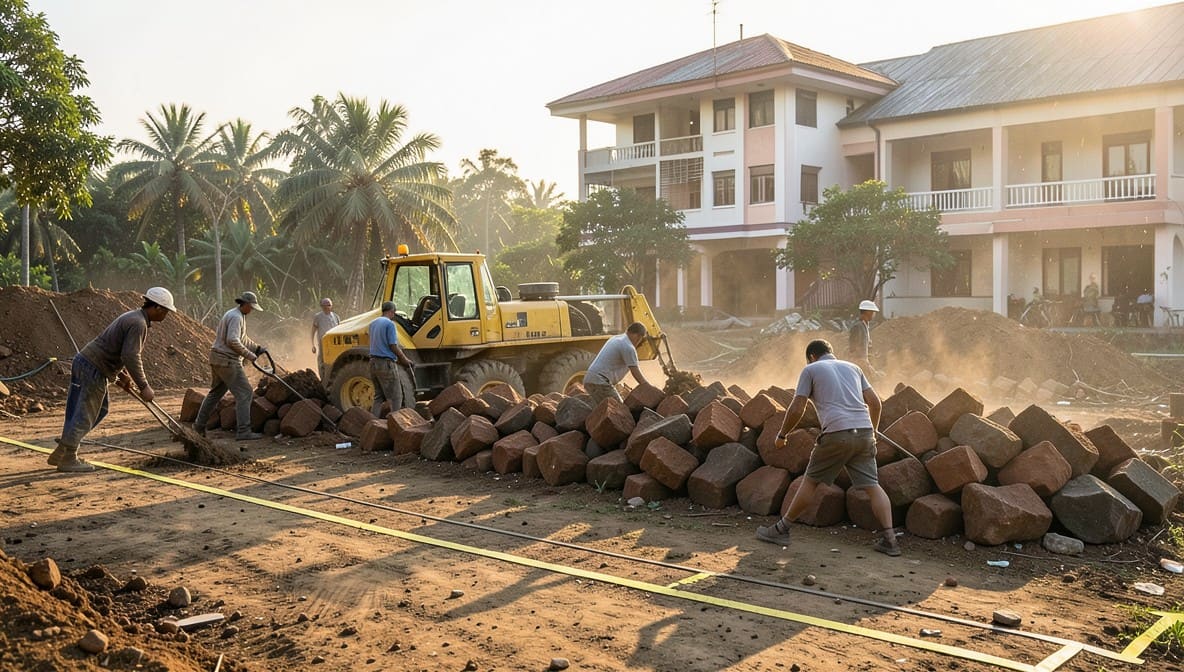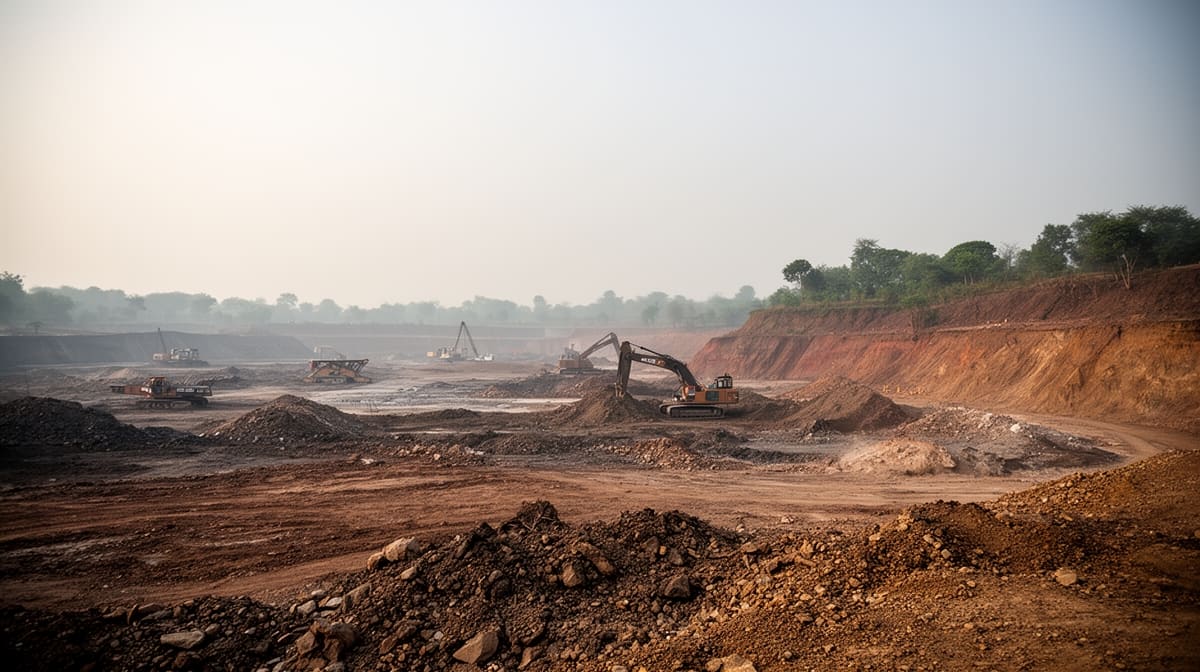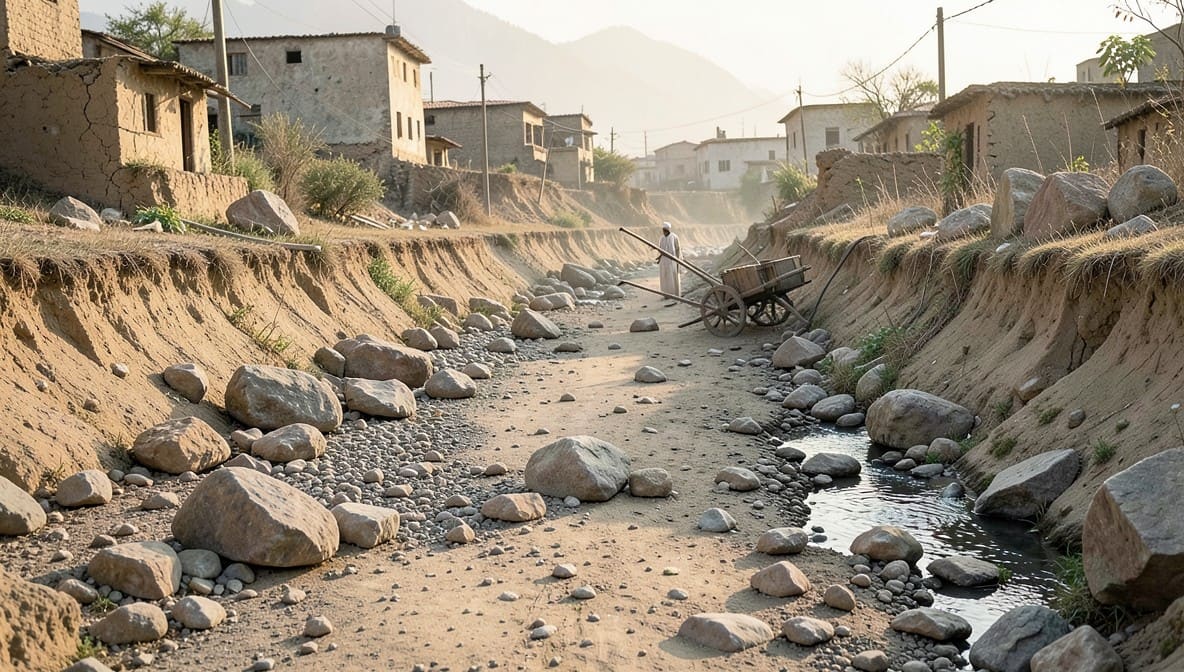
The Jammu & Kashmir High Court has firmly held that ownership of land or long-standing extraction of minor minerals does not confer a legal right to mine without statutory authorization. The judgment underscores that mineral resources are national assets regulated by the Mines and Minerals (Development and Regulation) Act, 1957, and cannot be exploited based on tradition, hardship, or past administrative tolerance.
Background & Facts
The Dispute
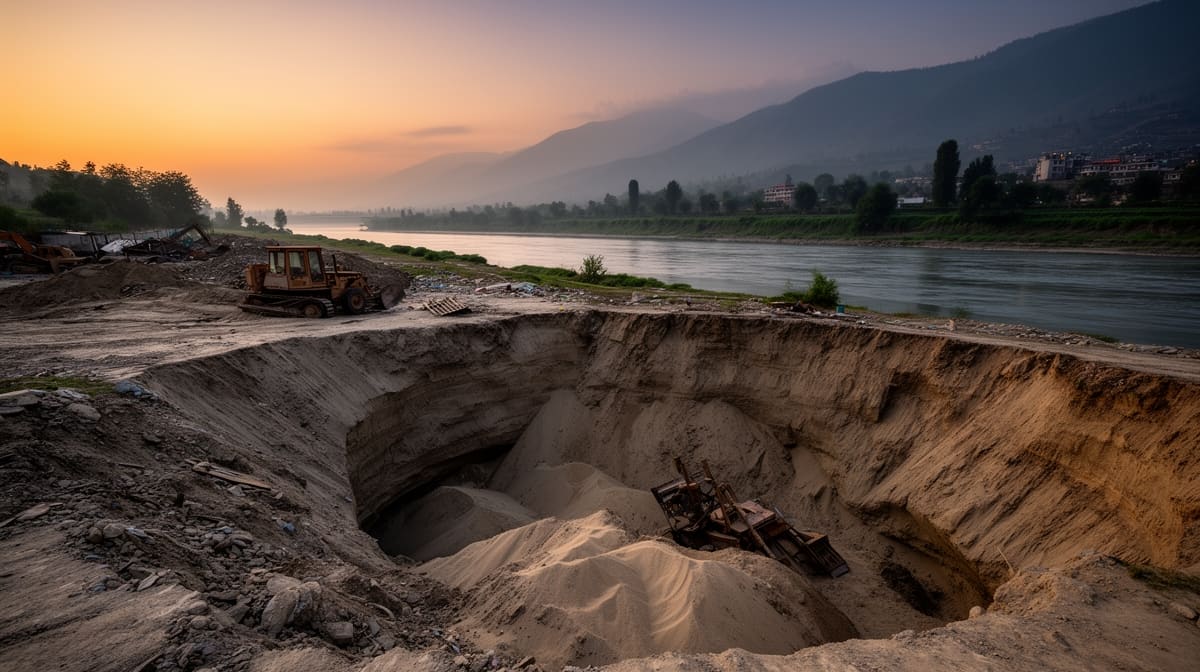
The petitioners, residents of Village Pariswani in Tehsil Kawarhama, District Baramulla, sought judicial intervention to permit the extraction of sand, boulders, and small stones from a natural watercourse (Nallah) passing through their proprietary land. They claimed this activity had been their primary source of livelihood for generations and that they had historically deposited royalty with the government for such extraction until 2016.
Key Facts
- The Nallah in question, designated as Block Nos. 10, 11, and 12, flows through land originally owned by the petitioners.
- A portion of the petitioners’ land, including Survey Nos. 95, 191, 101, 202, 199 min, 200, 201, 207, 208, and 212, was incorporated into the Nallah due to flooding and subsequent geomorphological changes.
- Prior to 2016, the petitioners extracted minor minerals under the Minor Mineral Concession Rules, 1962, and paid royalty to the Department of Geology and Mining.
- On 31.03.2016, the Government of Jammu & Kashmir replaced the 1962 Rules with the Jammu and Kashmir Minor Mineral Concession, Storage, Transportation of Minerals and Prevention of Illegal Mining Rules, 2016, aligning with the Supreme Court’s judgment in Deepak Kumar v. State of Haryana and the amended Environmental Impact Assessment Notification of 15.01.2016.
- The Department of Geology and Mining identified environmentally viable zones and put Minor Mineral Blocks 10 and 11 up for e-auction.
- On 03.10.2020 and 02.12.2020, the Tehsildar, Kawarhama, submitted reports confirming that parts of the petitioners’ land fell within these auctioned blocks.
- The blocks were subsequently resized to exclude private land, leaving only State land/Gair Mumkin Ara for auction.
- Despite being informed of the new procedure in February 2024, the petitioners did not apply for a mineral concession.
- Instead, they continued extraction activities, leading to seizure of vehicles and imposition of penalties by the respondents.
Procedural History
- 2021 - 2023: Petitioners engaged in continuous extraction without statutory permission.
- February 2024: Petitioners approached the District Mineral Office, Baramulla, seeking permission for extraction on land affected by floods.
- February 2024: They were advised to comply with the 2016 Rules but failed to submit any application.
- 15.04.2026: The writ petition was reserved for judgment.
- 28.04.2026: Judgment pronounced dismissing the petition.
The Parties' Positions
Petitioners: Argued that their proprietary rights and centuries-old practice of extraction conferred a vested right to mine. They claimed the State’s refusal to accept royalty and its enforcement actions violated their fundamental right under Article 19(1)(g). They contended that the Nallah had become an extension of their land.
Respondents: Maintained that the 2016 Rules mandated a formal mineral concession process. They asserted that extraction from State land without a license is illegal under Section 4 of the MMDR Act, 1957. They emphasized that the petitioners had been duly informed of the procedure but chose not to comply.
Relief Sought
The petitioners sought:
- A writ of mandamus directing respondents not to restrain extraction of sand and stones from the Nallah and proprietary land.
- A direction to the State to accept royalty payments to enable lawful livelihood.
- An order permitting extraction without requiring statutory permission.
The Legal Issue
The central questions were: (1) Whether mere ownership of land or past practice of extraction confers a vested right to mine minor minerals; (2) Whether extraction without a statutory concession violates the MMDR Act, 1957; (3) Whether the State’s enforcement actions infringe Article 19(1)(g); and (4) Whether a writ court can direct extraction contrary to statutory law.
Arguments Presented
For the Petitioner
Learned counsel argued that:
- Ownership of land, even if partially merged into a Nallah, entitles the owner to extract minerals.
- Continuous extraction and royalty payment since before 2016 created a legitimate expectation and vested right.
- The activity is a traditional livelihood, protected under Article 19(1)(g).
- The State’s refusal to accept royalty is arbitrary and violates constitutional rights.
- The Nallah is not a public resource but an extension of private land.
For the Respondent
The State contended that:
- The MMDR Act, 1957, and the 2016 Rules create an exclusive statutory regime for mineral extraction.
- Section 4(1) prohibits any mining, transportation, or storage without a valid concession.
- Royalty is a consequence of lawful permission, not a substitute for it.
- Past practice cannot override statutory law.
- Extraction from State land or Nallah without authorization constitutes illegal mining.
- The public trust doctrine obligates the State to protect natural resources for future generations.
The Court's Analysis
The Court undertook a rigorous analysis of statutory provisions, constitutional principles, and judicial precedents. It held that the right to extract minerals is not an incident of land ownership. The Court emphasized that minerals are national assets held by the State in public trust, as affirmed in M.C. Mehta v. Kamal Nath and Mineral Area Development Authority v. SAIL.
"Minerals are regarded as national assets and natural resources, the regulation and exploitation whereof is controlled by the State in trust for the people."
The Court rejected the petitioners’ reliance on past royalty payments, stating that royalty is a statutory consequence of a valid concession, not a source of authorization. It cited Joby P.D. v. District Collector to affirm that even private landowners require a permit for minor mineral extraction.
The Court further held that the Nallah, as a natural watercourse, is a public resource protected under the public trust doctrine. Indiscriminate extraction causes irreversible ecological harm, including groundwater depletion, riverbank erosion, and loss of biodiversity.
"Mining of minor minerals, though individually perceived to have lesser impact... is seen to have significant adverse impacts on environment."
The Court distinguished between livelihood and legality, holding that economic hardship cannot justify violation of environmental statutes. It relied on Sushila Saw Mill v. State of Orissa to affirm that regulated trade under the MMDR Act constitutes a reasonable restriction under Article 19(6).
Regarding the prayer for mandamus, the Court held that courts cannot compel authorities to act contrary to law. It cited State of West Bengal v. Subhas Kumar Chatterjee to emphasize that mandamus cannot be used to bypass statutory mandates.
"No court can issue Mandamus directing the authorities to act in contravention of the rules as it would amount to compelling the authorities to violate law."
The Court concluded that the respondents’ actions - seizing vehicles and imposing penalties - were lawful enforcement of statutory provisions, not arbitrary harassment.
The Verdict
The writ petition was dismissed. The Court held that the petitioners have no legal right to extract minor minerals without a statutory concession under the MMDR Act, 1957. The State’s refusal to accept royalty without a valid license and its enforcement actions were upheld as lawful. The petitioners are at liberty to apply for a mineral concession in accordance with the 2016 Rules, and any such application shall be decided on its merits without prejudice.
What This Means For Similar Cases
Extraction Rights Are Statutory, Not Customary
- Practitioners must advise clients that even long-standing extraction on private land requires formal mineral concessions under the MMDR Act.
- Past practice or administrative tolerance does not create legal entitlement.
- Claims based on tradition or livelihood cannot override statutory prohibitions.
Public Trust Doctrine Applies to Nallahs and Riverbeds
- Nallahs, streams, and riverbeds are public trust resources, not private property.
- Any extraction from such areas requires environmental clearance and statutory authorization.
- Courts will not permit private exploitation of natural watercourses, even if local communities depend on it.
Royalty Is Not a License
- Payment of royalty without a valid concession is legally meaningless.
- Authorities are not obligated to accept royalty from unlicensed extractors.
- Applicants must first obtain a license; royalty is payable only after grant.
Enforcement Actions Are Lawful
- Seizure of vehicles and imposition of penalties for illegal mining are valid under the MMDR Act.
- Courts will not interfere with such enforcement unless procedural illegality is shown.
- Petitioners must exhaust statutory remedies before approaching courts.
Judicial Restraint in Writ Jurisdiction
- Writ courts cannot direct extraction or compel royalty acceptance contrary to law.
- Mandamus cannot be used to circumvent statutory regimes.
- Courts will uphold the rule of law even when hardship is involved.