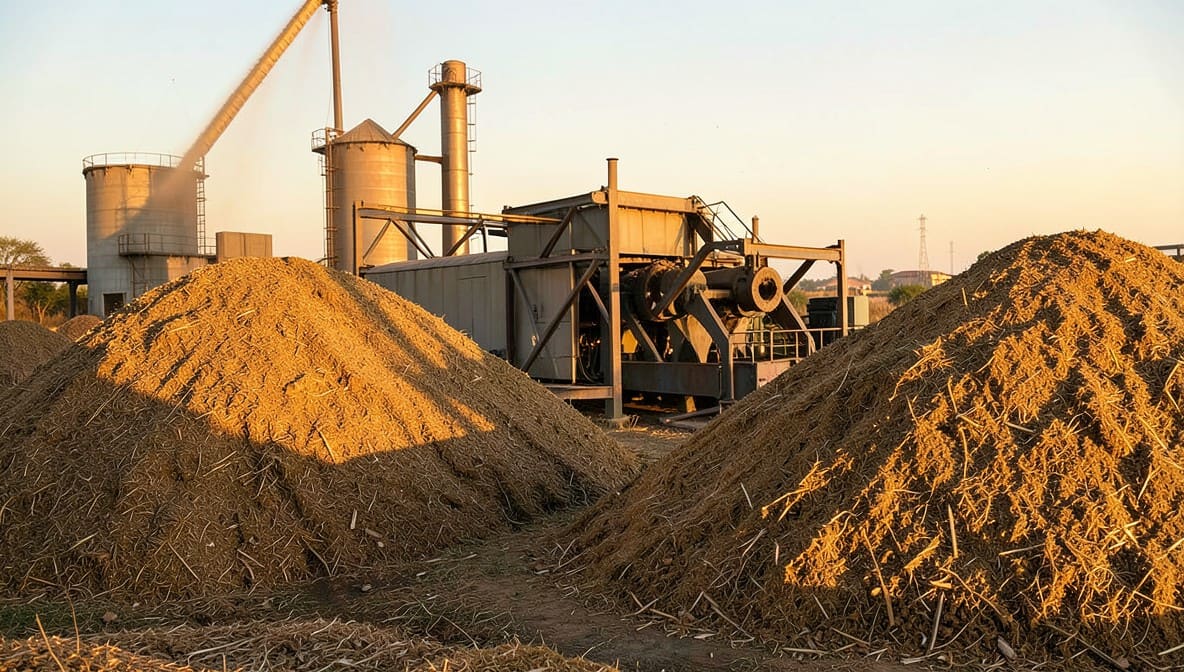
The Central Excise and Service Tax Appellate Tribunal has definitively held that bagasse, generated as agricultural waste during sugar manufacture, cannot be treated as an exempted good for the purpose of reversing Cenvat credit under Rule 6 of the Cenvat Credit Rules, 2004. This judgment resolves a long-standing dispute with finality, affirming that no manufacturing process is involved in the emergence of bagasse, rendering statutory credit reversal mechanisms inapplicable.
Background & Facts
The Dispute
The dispute arose over whether the respondent-assessee, M/s. Shree Khedut Sahakari Khand Udyog Mandli Limited, was liable to reverse Cenvat credit on input services used in the manufacture of both dutiable sugar and non-excisable bagasse, a by-product cleared for consideration. The Revenue contended that bagasse, though not excisable, qualified as an "exempted good" under amended Rule 6(1) of the Cenvat Credit Rules, 2004, thereby triggering a 6% reversal of input service credits. The assessee disputed this, asserting that bagasse is merely an agricultural residue with no manufacturing process attached, and thus falls entirely outside the scope of Rule 6.
Key Facts
- The assessee is engaged in the manufacture of sugar and molasses from sugarcane at Pandvai, Bharuch, Gujarat.
- During the period March 2016 to June 2017, the assessee cleared 62,455.40 MT of bagasse valued at Rs. 11,22,16,851/-.
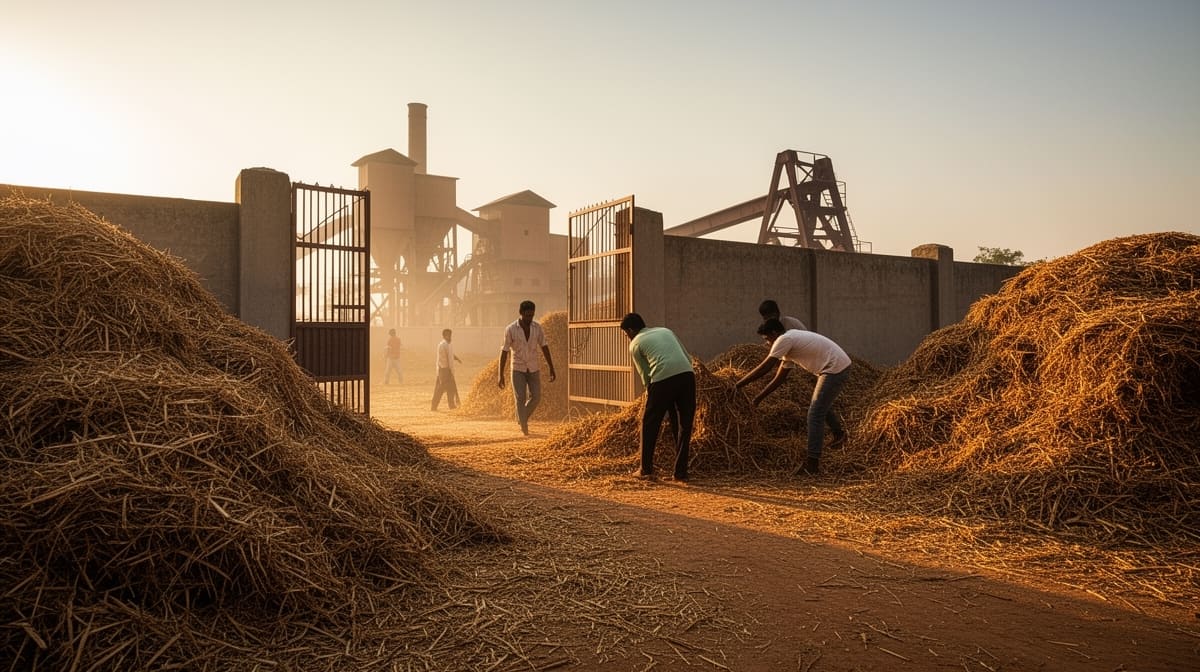
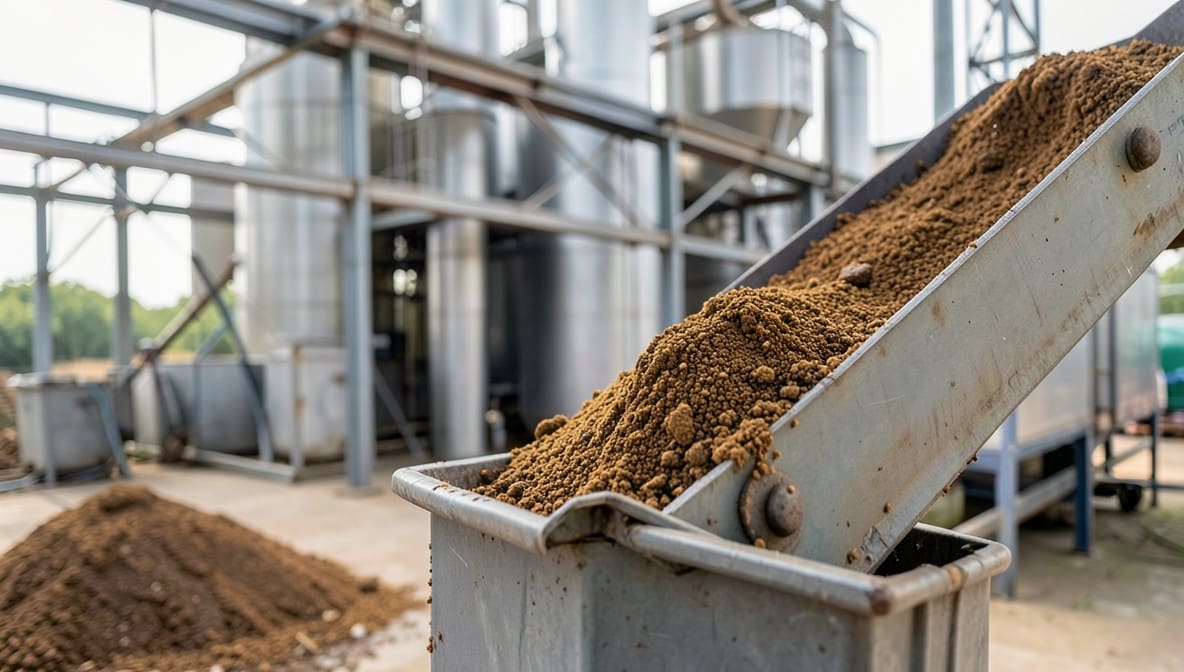
- Bagasse is generated as an inevitable residue during the crushing of sugarcane and pressing of press mud for molasses.
- The assessee availed Cenvat credit on input services including telephone, security, maintenance, repair, and sales commission services.
- The assessee did not maintain separate accounts for input services used for bagasse versus sugar production.
- The Revenue issued Show Cause Notices dated 05.02.2018 and 04.01.2019 demanding reversal of Rs. 97,61,349/- at 6% of the value of bagasse cleared, under Rule 14 of CCR 2004, along with interest and penalty.
- The Adjudicating Authority confirmed the demand on 11.02.2019, imposing penalty of Rs. 3,02,824/- and Rs. 6,73,301/- respectively.
- The Commissioner (Appeals) set aside the order on 30.08.2019, holding bagasse is not an exempted good.
Procedural History
- 05.02.2018: Show Cause Notice issued for period March 2016 to January 2017.
- 04.01.2019: Statement of demand issued for February 2017 to June 2017.
- 11.02.2019: Adjudicating Authority confirmed demand and imposed penalties.
- 30.08.2019: Commissioner (Appeals) allowed assessee’s appeal and set aside the order.
- 17.03.2026: Hearing before CESTAT, West Zonal Bench, Ahmedabad.
- 17.06.2026: Final Order passed by CESTAT.
The Parties' Positions
Revenue: Argued that bagasse, cleared for consideration, qualifies as an exempted good under Explanation 1 to Rule 6(1) of CCR 2004, as amended w.e.f. 01.03.2015. Relied on Circular No. 1027/15/2016-CX dated 25.04.2016 to support demand.
Assessee: Contended that bagasse is not a manufactured good, nor an exempted good, but an inevitable waste. Cited Supreme Court judgments and the withdrawal of Circular No. 1027/15/2016-CX as conclusive.
Relief Sought
The Revenue sought to set aside the Commissioner (Appeals) order and restore the demand of Rs. 97,61,349/-, with interest and penalty. The assessee sought dismissal of the appeal and confirmation of the order in its favor.
The Legal Issue
The central question was whether Rule 6(3) of the Cenvat Credit Rules, 2004 applies to bagasse, a non-excisable by-product generated during sugar manufacture, and whether its clearance for consideration triggers mandatory reversal of Cenvat credit on input services.
Arguments Presented
For the Appellant
The Revenue relied on the 2015 amendment to Rule 6(1) of CCR 2004, which inserted Explanation 1 and 2, defining "exempted goods" to include non-excisable goods cleared for consideration. It cited Circular No. 1027/15/2016-CX dated 25.04.2016, issued to implement this amendment, and argued that the Supreme Court’s decision in Union of India v. DSCL Sugar Limited (2015) did not negate the statutory amendment. The Revenue contended that administrative circulars merely clarify statutory provisions and cannot be rendered non-est by judicial decisions unless the statute itself is struck down.
For the Respondent
The assessee relied on the Supreme Court’s subsequent judgment in Union of India v. Indian Sucrose Limited (2022), which reaffirmed that bagasse is not a manufactured product and is merely an agricultural residue. It highlighted that the Central Board of Indirect Taxes and Customs (CBIC) withdrew Circular No. 1027/15/2016-CX vide Circular No. 1084/05/2022-CX dated 07.07.2022, thereby accepting the Supreme Court’s position. The assessee also cited the Allahabad High Court’s judgment in Balrampur Chini Mills Limited v. Union of India (2014), which held that Rule 6 requires both dutiable and exempted goods to be manufactured, and bagasse, being waste, cannot qualify.
The Court's Analysis
The Tribunal undertook a comprehensive review of judicial precedents and statutory amendments. It emphasized that the definition of "manufacture" under Section 2(f) of the Central Excise Act, 1944, requires a process resulting in a new article. Bagasse, being an inevitable residue of sugarcane crushing, lacks any such transformative process.
"Bagasse is only an agricultural waste and residue, which itself is not the result of any process. Therefore, it cannot be treated as falling within the definition of Section 2(f) of the Act and in the absence of manufacture, there cannot be any excise duty."
The Court noted that the Supreme Court in DSCL Sugar Limited (2015) had already held that bagasse does not qualify as excisable goods, and therefore Rule 6 of CCR 2004 has no application. The Tribunal further observed that the 2015 amendment to Rule 6 could not override this fundamental principle, as it could not transform waste into a manufactured or exempted good.
The Court also examined the Allahabad High Court’s judgment in Balrampur Chini Mills Limited, which had quashed Circular No. 1027/15/2016-CX, holding that the circular attempted to expand the scope of Rule 6 beyond statutory limits. The Tribunal accepted this reasoning, noting that the CBIC’s subsequent withdrawal of the circular in 2022 was a formal acknowledgment of the legal position laid down by the Supreme Court.
The Tribunal rejected the Revenue’s argument that circulars have independent legal force, citing State of U.P. v. Babu Ram Upadhyaya, which holds that administrative instructions cannot override statutory rules. The Court concluded that the amendment to Rule 6 did not alter the nature of bagasse as waste, and therefore, the reversal mechanism under Rule 6(3) was inapplicable.
The Verdict
The appeals filed by the Revenue were dismissed. The impugned order of the Commissioner (Appeals) dated 30.08.2019 was upheld. The demand of Rs. 97,61,349/- for reversal of Cenvat credit, along with interest and penalty of Rs. 3,02,824/- and Rs. 6,73,301/-, was set aside. The Tribunal held that no liability arises under Rule 6 of the Cenvat Credit Rules, 2004, for bagasse clearance.
What This Means For Similar Cases
Bagasse and Similar Residues Are Excluded from Credit Reversal
- Practitioners must now argue that any agricultural residue or waste generated during manufacturing - such as press mud, dross, or skimmings - cannot be treated as exempted goods under Rule 6 CCR 2004.
- Demands for reversal of input service credit based on the clearance of such residues are legally unsustainable.
Circulars Cannot Override Judicial Interpretation of Statutory Definitions
- Administrative circulars that attempt to expand the scope of statutory provisions beyond judicially settled limits are void if contradicted by higher court rulings.
- The withdrawal of Circular No. 1027/15/2016-CX confirms that the CBIC accepts the Supreme Court’s interpretation as binding.
Pre-2022 Assessments May Be Reopened for Refund
- Assessees who paid demands under protest between 2016 and 2022 may now claim refund of amounts paid, including interest, on the basis of this final ruling.
- Tax authorities are barred from initiating fresh proceedings for reversal of credit on bagasse or similar residues.