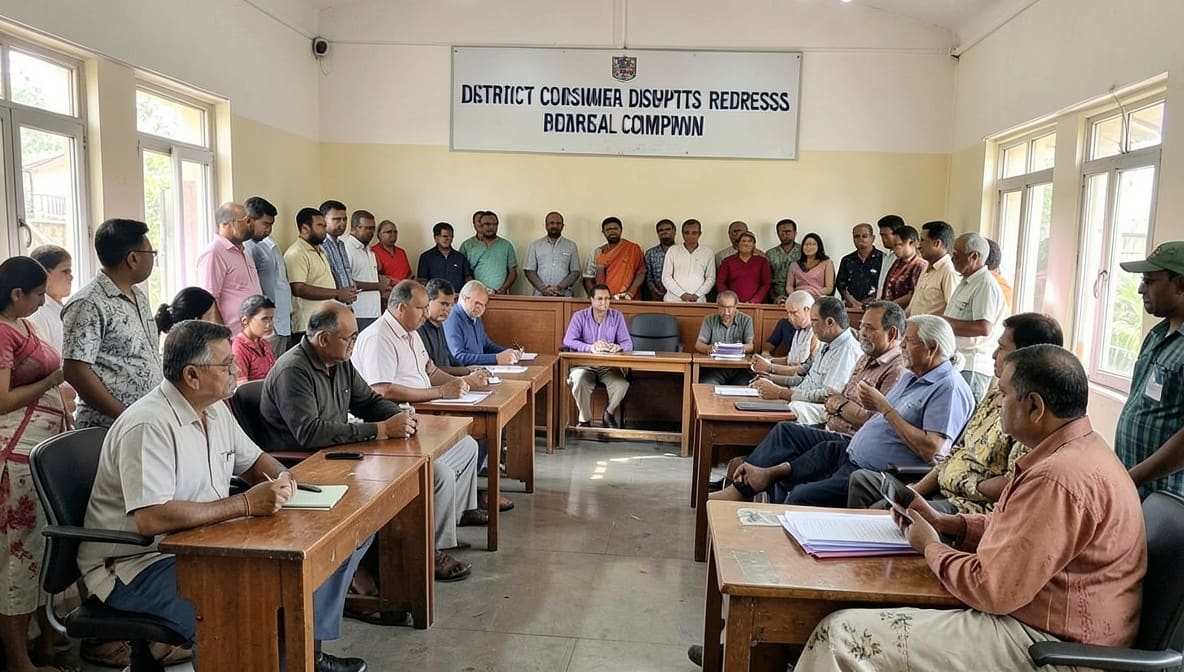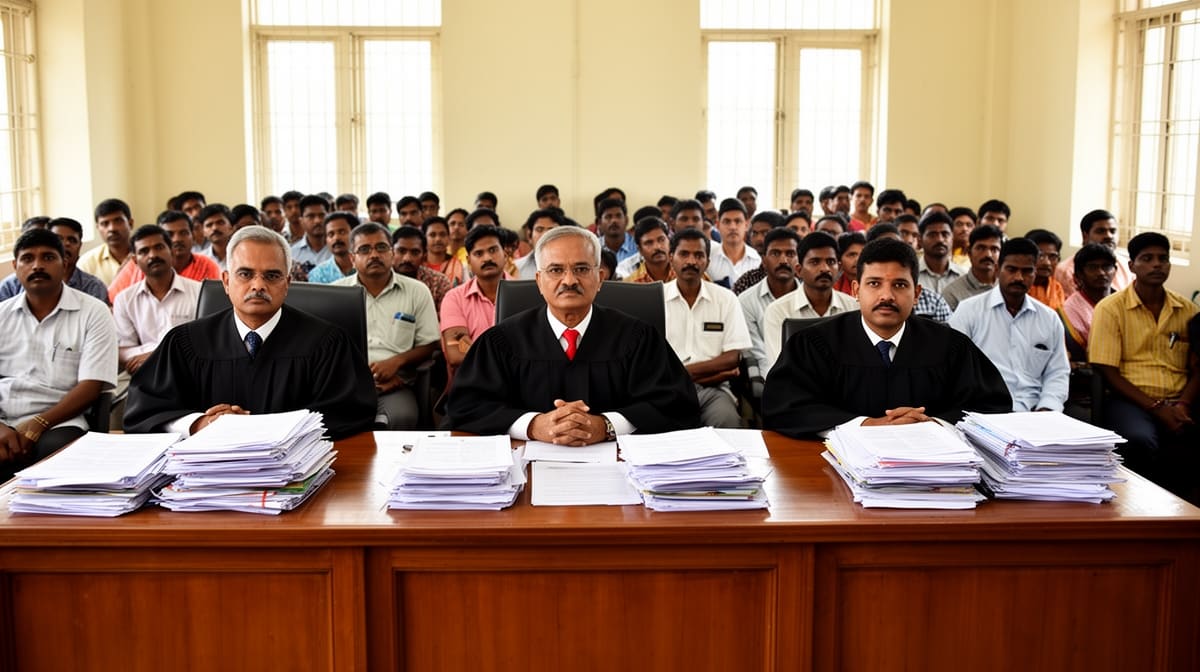
The Madhya Pradesh High Court has affirmed that members of District Consumer Disputes Redressal Commissions may continue in office beyond the expiration of their fixed tenure, pending notification of new appointment rules. This order ensures uninterrupted functioning of consumer forums across the state, preventing a vacuum in adjudicatory capacity.
Background & Facts
The Dispute
The petitioner, Sushma Patel, is a Member of the District Consumer Disputes Redressal Commission, Jabalpur, Madhya Pradesh. Her tenure under the Consumer Protection (Qualification for appointment, method of recruitment, procedure of appointment, term of office, resignation and removal of the Presidents and Members of the State Commission and District Commission) Rules, 2020, was scheduled to expire on 17.04.2026. She seeks continuation in office until new appointments are made under revised rules, following a precedent set by the Delhi High Court.
Key Facts
- The petitioner was appointed as Member, District Consumer Commission, Jabalpur, under the 2020 Rules.
- Her tenure was fixed at three years or until attaining the age of 65 years, whichever is earlier, as per Rule 5 of the 2020 Rules.
- The tenure of her appointment is set to end on 17.04.2026.
- Rule 10(2) of the 2020 Rules, which prescribed the term of office for Members, was struck down by the Supreme Court in Ganeshkumar Rajeshwarrao Selukar and Others v. Mahendra Bhaskar Limaye and Others, 2025 SCC Online SC 1193.
- As of the date of judgment, no new recruitment or appointment rules have been notified by the Central Government.
- The Delhi High Court, in WP(C) No. 7538/2025 dated 28.05.2025, permitted sitting Presidents and Members of State and District Commissions to continue in office until new rules are framed and appointments are made.
Procedural History
- 17.04.2026: Petitioner’s tenure under the 2020 Rules was due to expire.
- 16.04.2026: Writ Petition No. 13541 of 2026 filed before the High Court of Madhya Pradesh at Jabalpur.
- 28.05.2025: Delhi High Court passed order permitting continuation of Members and Presidents pending new rules.
- 16.04.2026: Hearing conducted before Justice Vishal Dhagat.
The Parties' Positions
For the Petitioner
The petitioner’s counsel, Shri Shivendra Pandey, relied on the Supreme Court’s decision in Ganeshkumar Rajeshwarrao Selukar and the Delhi High Court’s order dated 28.05.2025. He argued that discontinuing members immediately after the invalidation of Rule 10(2) would paralyze the functioning of consumer forums, depriving litigants of access to justice. He contended that continuation is a necessary interim measure to preserve institutional integrity.
For the Respondent
The Government Advocate, Shri P.K. Chourasia, opposed the prayer, asserting that the tenure of the petitioner was fixed and contractual in nature. He submitted that once the tenure expired, no legal basis existed for continuation, and any extension would violate the principle of rule of law and statutory compliance.
Relief Sought
The petitioner sought an order permitting her, and by implication all other Members and Presidents of District and State Consumer Commissions, to continue in office beyond the expiry of their tenure until new appointment rules are notified and appointments are made in accordance with law.
The Legal Issue
The central question was whether Members and Presidents of District and State Consumer Commissions may continue in office beyond the expiry of their fixed tenure, in the absence of new appointment rules, following the invalidation of the existing tenure provision by the Supreme Court.
Arguments Presented
For the Petitioner
The petitioner’s counsel relied on the Supreme Court’s judgment in Ganeshkumar Rajeshwarrao Selukar v. Mahendra Bhaskar Limaye, which declared Rule 10(2) of the 2020 Rules ultra vires for violating the principle of separation of powers and for being arbitrary. He argued that the vacuum created by the invalidation of the tenure provision cannot be filled by abrupt termination of incumbents. He cited the Delhi High Court’s order dated 28.05.2025 as binding precedent in identical circumstances. He emphasized that consumer forums are quasi-judicial bodies whose functioning directly affects public access to justice, and their paralysis would cause irreparable harm to litigants.
For the Respondent
The State contended that the tenure of the petitioner was statutorily fixed and non-extendable. It argued that continuation beyond tenure would amount to judicial overreach into executive domain and violate the doctrine of separation of powers. The State maintained that the remedy lay in expeditious framing of new rules, not in judicially extending tenures.
The Court's Analysis
The Court acknowledged the Supreme Court’s decision in Ganeshkumar Rajeshwarrao Selukar as binding and noted that Rule 10(2) had been struck down for being arbitrary and inconsistent with the Consumer Protection Act, 2019. The Court observed that the Central Government had not yet notified replacement rules, creating a functional vacuum in consumer dispute resolution mechanisms.
"The continued functioning of District and State Consumer Commissions is not a matter of administrative convenience but a constitutional imperative under Article 21, as access to justice is a fundamental right."
The Court held that permitting the incumbent Members and Presidents to continue in office was not an extension of tenure but a necessary interim measure to prevent the collapse of a critical public institution. It distinguished this situation from ordinary contractual employment, noting that consumer commissions perform quasi-judicial functions essential to the rule of law. The Court found the Delhi High Court’s reasoning persuasive and applicable to the Madhya Pradesh context.
The Court further emphasized that the State’s argument of statutory rigidity could not override the overriding public interest in maintaining functional adjudicatory bodies. The absence of new rules did not extinguish the obligation of the State to ensure the continuity of justice delivery.
The Verdict
The petition is allowed. The Court directs that all Members and Presidents of District and State Consumer Commissions in Madhya Pradesh, whose tenure has expired or is due to expire, shall continue in office until new appointment rules are notified and appointments are made in accordance with law. The State shall complete the framing of new rules and initiate appointments within six months from the date of this order.
What This Means For Similar Cases
Continuity of Quasi-Judicial Bodies Is Non-Negotiable
- Practitioners may now invoke this judgment to seek continuation of members in any quasi-judicial body where statutory tenure is invalidated but replacement rules are pending.
- This principle applies equally to tribunals under the Insolvency and Bankruptcy Code, Income Tax Appellate Tribunal, and other statutory forums.
Judicial Intervention to Prevent Institutional Collapse Is Valid
- Courts may now intervene to prevent the paralysis of public institutions even in the absence of express statutory provision for continuation.
- The doctrine of necessity overrides strict statutory timelines when public access to justice is at stake.
State Must Act with Urgency
- Governments are now on notice that failure to notify replacement rules within a reasonable time may invite judicial direction.
- The six-month deadline set by the Court establishes a clear benchmark for administrative compliance.
Appointment Process Must Be Transparent
- Any new appointments must comply with the principles laid down in Ganeshkumar Rajeshwarrao Selukar, including independence, merit, and transparency.
- Practitioners should monitor the framing of new rules for compliance with constitutional norms.
No Automatic Extension Without Judicial Order
- This ruling does not create a general right to continuation; it applies only where a valid statutory provision is struck down and no replacement exists.
- Petitioners must demonstrate actual disruption of institutional functioning to invoke this remedy.