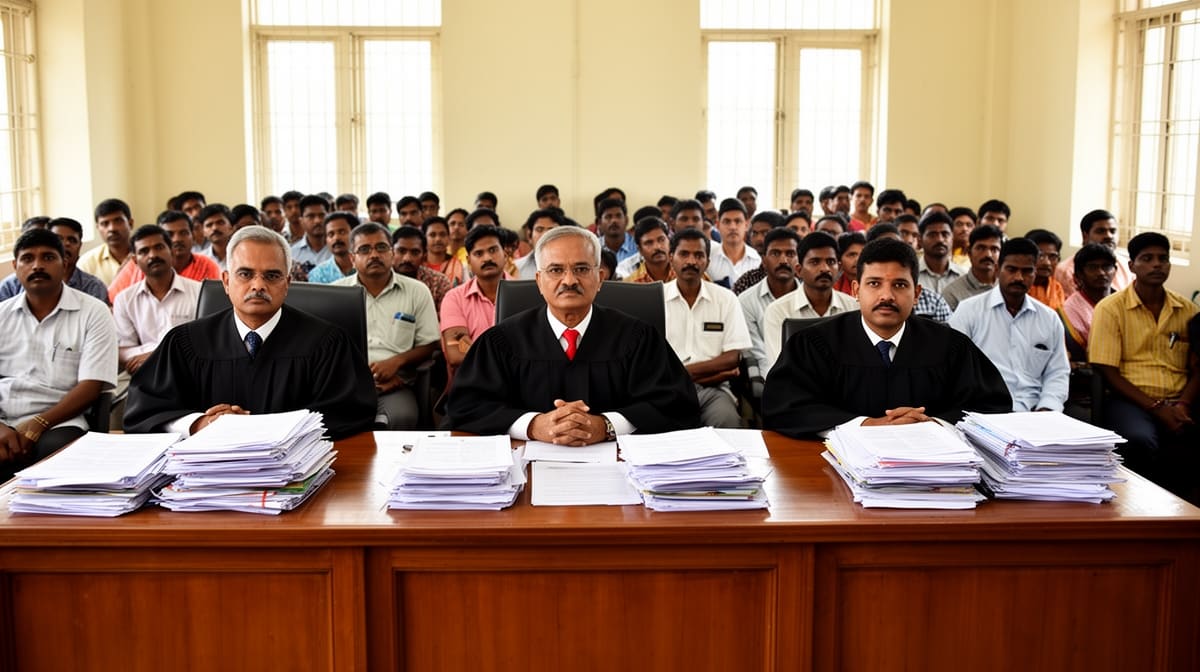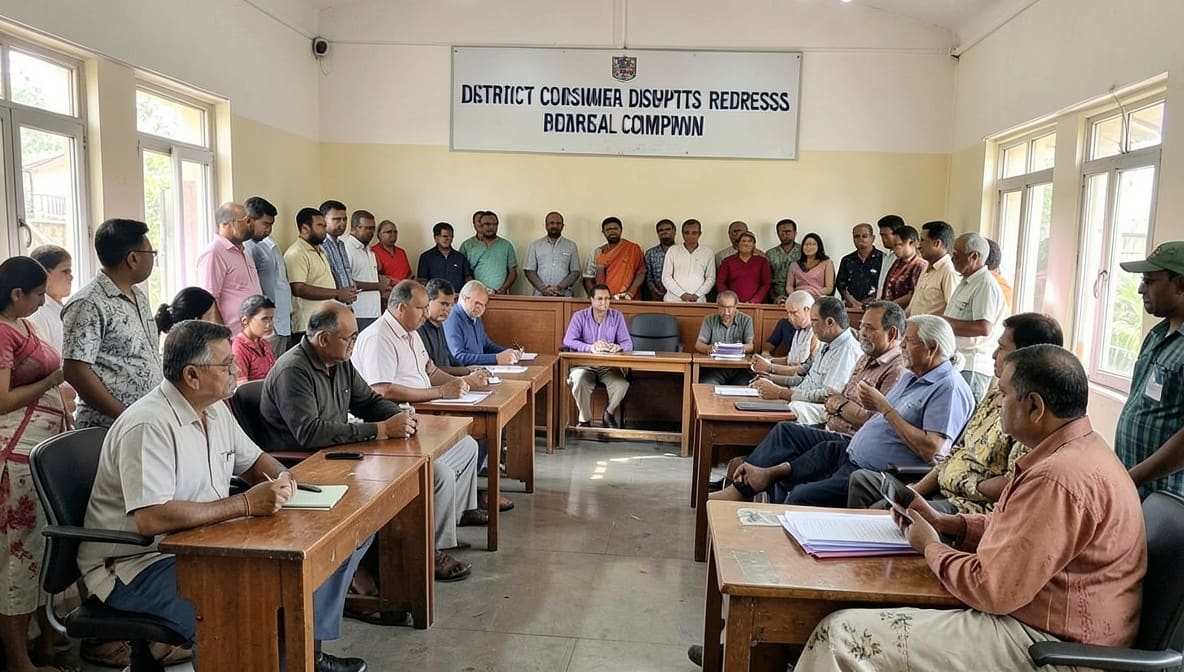
The Madhya Pradesh High Court has affirmed the principle that judicial continuity in consumer forums must not be disrupted by administrative delays in notifying new appointment rules. In a decisive order, the Court permitted sitting members of District Consumer Disputes Redressal Commissions to continue in office beyond their fixed tenure, recognizing the functional necessity of maintaining adjudicatory capacity.
Background & Facts
The Dispute
The petitioner, Anubha Verma, is a Member of the District Consumer Disputes Redressal Commission, Sagar, Madhya Pradesh. Her tenure under the Consumer Protection (Qualification for appointment, method of recruitment, procedure of appointment, term of office, resignation and removal of the Presidents and Members of the State Commission and District Commission) Rules, 2020, was set to expire in April 2026. With no new recruitment rules notified and no appointments made, she sought continuation in office to prevent a vacuum in the functioning of the Commission.
Key Facts
- The petitioner was appointed as Member, District Consumer Commission, Sagar, under the Consumer Protection Rules, 2020.
- Her tenure is governed by Rule 10(2) of the 2020 Rules, which was declared unconstitutional by the Supreme Court in Ganeshkumar Rajeshwarrao Selukar v. Mahendra Bhaskar Limaye (2025 SCC Online SC 1193).
- As of April 2026, no new rules have been framed or notified by the Central Government to replace the invalidated provisions.
- The petitioner has been performing her duties without interruption since appointment.
- No alternative mechanism has been established to fill vacancies or appoint new members.
Procedural History
- 2020: Consumer Protection Rules, 2020, notified, including Rule 10(2) prescribing tenure.
- 2025: Supreme Court in Ganeshkumar Rajeshwarrao Selukar v. Mahendra Bhaskar Limaye struck down Rule 10(2) as violative of constitutional principles.
- 28.05.2025: Delhi High Court, in WP(C) No. 7538/2025, permitted sitting Presidents and Members of Consumer Commissions to continue post-tenure until new rules are notified.
- April 2026: Petitioner’s tenure was due to expire.
- 01.04.2026: Writ Petition No. 10747 of 2026 filed before the Madhya Pradesh High Court, Jabalpur.
The Parties' Positions
For the Petitioner
The petitioner argued that the invalidation of Rule 10(2) created a legal vacuum. She relied on the Delhi High Court’s order dated 28.05.2025, which had granted similar relief to members of consumer commissions in Delhi. She contended that discontinuing her service would impair the functioning of the District Commission, deprive litigants of timely redressal, and violate the principle of necessitas habet suam legem (necessity has its own law).
For the Respondent/State
The State, through the Government Advocate, opposed the petition on the ground that tenure is a statutory condition. Once expired, no legal basis exists for continuation. The State argued that the petitioner’s request amounted to judicial overreach into executive domain and that the Central Government alone has the authority to frame new rules.
Relief Sought
The petitioner sought an order permitting her to continue in office as Member, District Consumer Commission, Sagar, until new appointment rules are notified and fresh appointments are made.
The Legal Issue
The central question was whether members of District Consumer Commissions, whose tenure provisions have been struck down by the Supreme Court, may continue in office pending the notification of new recruitment rules, to ensure uninterrupted delivery of justice.
Arguments Presented
For the Petitioner
The petitioner relied on the Supreme Court’s judgment in Ganeshkumar Rajeshwarrao Selukar v. Mahendra Bhaskar Limaye, which invalidated Rule 10(2) but did not direct immediate removal of incumbents. She cited the Delhi High Court’s order dated 28.05.2025 as binding precedent in identical circumstances. She emphasized that the Consumer Protection Act, 2019, mandates establishment of functional forums at district and state levels, and that administrative delay cannot be permitted to defeat statutory rights of consumers.
For the Respondent/State
The State contended that tenure is a condition of service, and once it expires, the office becomes vacant. No implied power exists to extend service beyond statutory limits. The State argued that continuation would violate the separation of powers and that the petitioner’s remedy, if any, lay in approaching the Central Government for expedited rule-making, not in seeking judicial extension.
The Court's Analysis
The Court acknowledged the constitutional imperative under Article 21 to ensure access to justice and the statutory mandate under the Consumer Protection Act, 2019, to maintain functional consumer forums. It noted that the Supreme Court’s invalidation of Rule 10(2) did not extinguish the office itself, but only the method of tenure determination. The Court observed:
"The striking down of a rule does not imply the automatic termination of incumbents, especially when no alternative mechanism is in place and the functional integrity of the institution is at stake."
The Court distinguished between the invalidity of the rule and the legitimacy of the officeholder’s continued service. It held that allowing the office to remain vacant would cause irreparable harm to litigants, particularly vulnerable consumers who rely on timely adjudication. The Delhi High Court’s order was found to be directly applicable and persuasive. The Court emphasized that judicial continuity is not a privilege but a necessity under the rule of law.
The Court further noted that the State’s concern regarding separation of powers was misplaced, as the relief sought was not to frame rules but to prevent institutional collapse pending executive action. The Court held that courts have inherent power to preserve the status quo where justice would otherwise be defeated.
The Verdict
The petition was allowed. The Court directed that all sitting Presidents and Members of District and State Consumer Commissions in Madhya Pradesh, whose tenure has expired or is due to expire, shall continue in office until new appointment rules are notified and fresh appointments are made. No time limit was imposed on continuation, but the State was urged to complete the rule-making process without further delay.
What This Means For Similar Cases
Continuation Is Not an Exception - It Is a Necessity
- Practitioners may now invoke this judgment to seek continuation of judicial officers in any quasi-judicial body where statutory tenure rules are struck down but replacement rules are pending.
- The principle applies equally to tribunals, commissions, and forums where functional continuity is essential to public access to justice.
Precedent from Other High Courts Is Binding in Spirit
- Orders from other High Courts on identical issues, such as the Delhi High Court’s 28.05.2025 order, are now authoritative guides for courts across India.
- Courts are expected to follow the logic of necessitas habet suam legem when institutional collapse threatens statutory rights.
Administrative Delay Cannot Be a Ground for Denial of Justice
- Governments cannot use delays in rule-making as a shield to dismantle adjudicatory structures.
- Petitioners in similar situations may now file writs under Article 226 seeking continuation, citing this judgment as binding precedent.