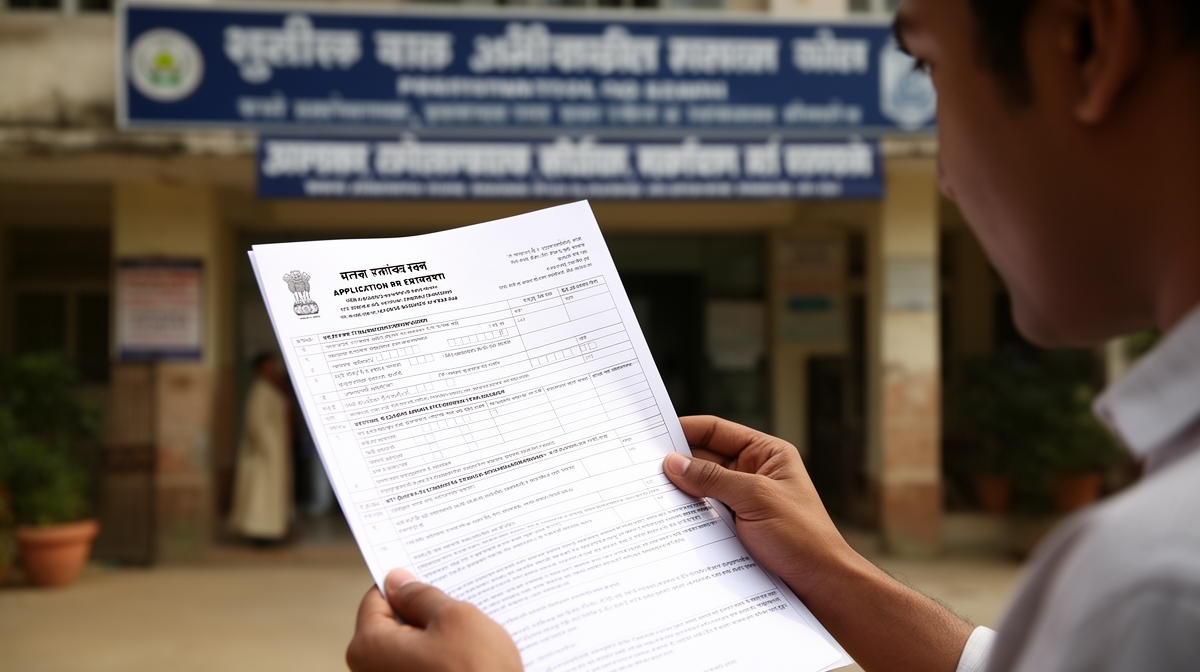

The Central Information Commission has reaffirmed the foundational obligation of Public Information Officers under the Right to Information Act to respond fully and point-wise to information requests. This order underscores that procedural lapses - such as failure to reply or misattribution of responses - cannot undermine the statutory right to information.
Background & Facts
The Dispute
The appellant, Shri Mangla Kant Sinha, filed an RTI application on 08.09.2024 seeking four specific pieces of information from the Steel Authority of India (SAIL), Bokaro. The queries pertained to: (1) budgetary expenditure on advertising across media platforms for the years 2021-22 to 2023-24; (2) the specific media outlets used for advertising under the BSL Bondhan campaign; (3) the preferred medium - print or electronic - for such advertising and the benefits derived; and (4) the rules governing the granting of advertisements to media channels.
Procedural History
The procedural timeline reveals critical failures in compliance:
- 08.09.2024: RTI application submitted to the CPIO.
- 10.10.2024: First Appeal filed due to non-response.
- 27.11.2024: First Appellate Authority (FAA) dismissed the appeal, erroneously relying on a reply dated 04.10.2024 that pertained to a different RTI application.
- 15.12.2024: Second Appeal filed before the Central Information Commission.
- 20.01.2026: Hearing conducted via video-conference; no written reply to the 08.09.2024 RTI application was produced on record.
Relief Sought
The appellant sought a direction to the CPIO to provide a complete, point-wise response to all four queries in the original RTI application, in accordance with the statutory mandate under the RTI Act.
The Legal Issue
The central question was whether a Public Information Officer can discharge their duty under the RTI Act, 2005 by providing a response to a different application, or whether a point-wise reply to each query in the original application is mandatory.
Arguments Presented
For the Appellant
The appellant argued that the CPIO failed to respond within the 30-day statutory period under Section 7(1) of the RTI Act. He emphasized that the FAA’s order referenced a reply unrelated to the 08.09.2024 application, rendering the first appeal decision legally invalid. He cited Central Information Commission v. State of Bihar to assert that non-response or misresponse amounts to a denial of the right to information.
For the Respondent
The CPIO contended that the appellant had filed multiple RTI applications, creating administrative difficulty in segregating records. She claimed that all applications had been addressed in due course and that the FAA’s order was mistakenly cited. However, she admitted that no reply to the specific 08.09.2024 application was on record and undertook to verify and respond.
The Court's Analysis
The Commission conducted a rigorous review of the record and found no evidence that the CPIO had responded to the 08.09.2024 RTI application. The FAA’s order, which the appellant relied upon, was conclusively shown to pertain to a different request. The Commission held that Section 7(1) imposes a non-discretionary duty on the CPIO to provide information within 30 days, and that this duty cannot be discharged by referencing a response to another application.
"The Commission observes that no reply has been placed on record with respect to the RTI Application dated 08.09.2024."
The Commission further noted that Section 7(9) requires responses to be point-wise, and that the appellant’s queries were clear, specific, and not exempt under Section 8. The failure to respond point-wise, even if unintentional, constitutes a violation of the Act’s spirit and statutory obligations. The Commission rejected the argument of administrative burden as a justification for non-compliance, citing Smt. Sushila Aggarwal v. State of NCT of Delhi to affirm that the RTI Act is a social welfare legislation meant to empower citizens.
The Verdict
The appellant succeeded. The Commission held that the CPIO’s failure to respond to the 08.09.2024 RTI application violated Section 7(1) and Section 7(9) of the RTI Act. The CPIO was directed to provide a point-wise reply within four weeks, with redactions as required under Section 10, and to file a compliance report within one week thereafter.
What This Means For Similar Cases
Point-Wise Response Is Mandatory
- Practitioners must insist on point-wise replies in all RTI applications, even if the information is voluminous.
- A generic or partial response does not satisfy statutory obligations under Section 7(9).
- Failure to respond point-wise can be grounds for a second appeal, regardless of whether the authority claims to have responded elsewhere.
Misattribution of Responses Is Not a Defense
- Authorities cannot rely on replies to other RTI applications to discharge their duty.
- The Commission will not accept administrative inconvenience as a valid excuse for non-compliance.
- Practitioners should meticulously cross-check FAA orders to ensure they relate to the correct application before filing a second appeal.
Procedural Compliance Is Non-Negotiable
- RTI applications must be treated as time-bound statutory obligations, not administrative chores.
- CPIOs must maintain clear internal tracking systems to avoid cross-contamination of responses.
- Non-compliance may trigger penalties under Section 20, even if the information is eventually provided.