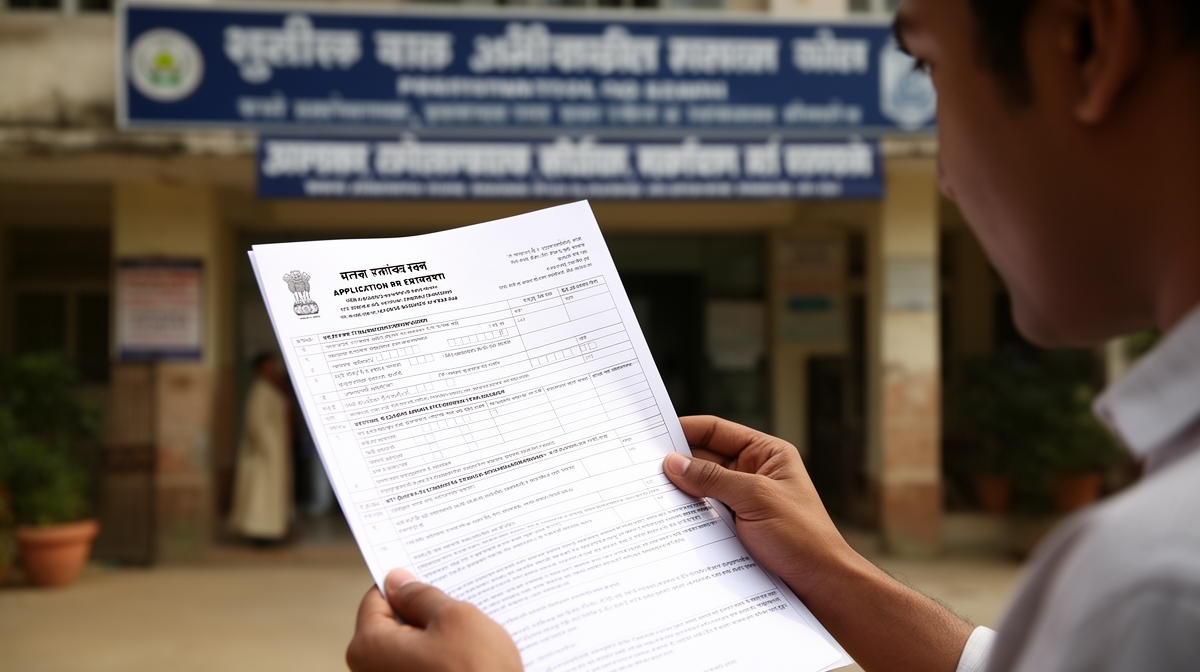

The Central Information Commission has clarified a critical procedural limitation under the Right to Information Act, 2005. In a recent order, the Commission dismissed an appeal filed by an advocate on behalf of his client, holding that RTI applications cannot be used as a tool for legal practice. This decision reinforces the personal information exemption under Section 8(1)(j) while aligning with judicial precedents that restrict third-party disclosures without public interest justification.
Background & Facts
The Dispute
The appellant, an advocate, filed an RTI application dated 16 May 2024 seeking performance management system (PMS) scores of executives at E6 level in the Finance Department of NTPC Ltd. The information pertained to the 2023 review period and was requested for use in a pending case before the Odisha High Court. The appellant argued that the data was necessary for his client’s legal proceedings, framing it as a matter of public interest.
Procedural History
The case progressed through the following stages:
- 16 May 2024: RTI application filed offline
- 3 June 2024: Central Public Information Officer (CPIO) denied the request under Section 8(1)(j) of the RTI Act, citing the personal nature of the information
- 2 July 2024: First appeal filed (order not on record)
- 19 November 2024: Second appeal filed before the Central Information Commission (CIC)
Relief Sought
The appellant sought disclosure of:
- PMS scores and bucket allocations for E6-level executives in NTPC’s Finance Department
- Normalized performance scores and final buckets assigned during the 2023 review period
The Legal Issue
The Commission addressed two interlinked questions:
- Whether an advocate can file an RTI application on behalf of a client for use in litigation
- Whether PMS scores of employees qualify as personal information exempt under Section 8(1)(j) of the RTI Act
Arguments Presented
For the Appellant
The appellant contended that:
- The information was crucial for his client’s case before the Odisha High Court
- Disclosure would serve public interest by ensuring transparency in NTPC’s performance evaluation system
- The RTI Act does not explicitly bar advocates from filing applications on behalf of clients
For the Respondent
The CPIO, represented by NTPC officials, argued:
- The requested data constituted personal information of third parties, exempt under Section 8(1)(j)
- Citing the Madras High Court’s judgment in N. Saravanan v. Chief Commissioner, the respondent emphasized that advocates cannot use the RTI Act as a tool for legal practice
- Performance evaluation reports fall under the Supreme Court’s definition of personal information in CPIO, Supreme Court v. Subhash Chandra Agrawal
The Court's Analysis
The Commission’s analysis centered on two key legal principles:
- Advocates’ Limited Standing Under RTI Act The CIC relied heavily on the Madras High Court’s ruling in N. Saravanan, which held that:
"The laudable objects of the RTI Act cannot be used for personal ends and should not become a tool in the hands of the advocate for seeking all kinds of information in order to promote his practice."
The Commission observed that allowing advocates to file RTI applications on behalf of clients would:
- Undermine the Act’s citizen-centric framework, which is designed for individuals seeking information in their personal capacity
- Open floodgates for misuse, as legal practitioners could exploit the RTI mechanism to gather evidence for litigation
- Conflict with the statutory exemption for personal information, which protects third-party privacy unless public interest outweighs the harm
- Scope of Personal Information Under Section 8(1)(j) The CIC applied the Supreme Court’s test in Subhash Chandra Agrawal to determine whether PMS scores qualify as personal information. The Court noted:
"Professional records, including qualification, performance, evaluation reports, ACRs, disciplinary proceedings, etc. are all personal information."
Key considerations included:
- Performance evaluations are inherently personal, reflecting an employee’s professional conduct and competence
- Disclosure without consent would constitute an unwarranted invasion of privacy, absent a compelling public interest
- The burden of proving public interest lies with the applicant, which the appellant failed to discharge
The Commission distinguished this case from scenarios where public interest justifies disclosure, such as:
- Corruption investigations involving public officials
- Safety violations in government projects
- Systemic failures affecting large sections of the public
The Verdict
The Commission dismissed the appeal, holding that:
- The RTI application was not maintainable as the appellant, an advocate, sought information for his client’s litigation
- The requested PMS scores constituted personal information exempt under Section 8(1)(j) of the RTI Act
- No public interest was established to override the privacy exemption
What This Means For Similar Cases
Advocates Cannot Use RTI For Litigation
Practitioners must note the following implications:
- RTI applications filed by advocates on behalf of clients will be rejected as non-maintainable
- Alternative mechanisms (e.g., court orders under Section 91 CrPC, civil discovery procedures) must be used to obtain evidence for litigation
- Public interest litigation (PIL) remains the sole exception where advocates can seek information for broader societal concerns
Personal Information Exemption Is Strictly Applied
The judgment reinforces the high threshold for disclosing personal data under Section 8(1)(j):
- Performance records, ACRs, and disciplinary proceedings are categorically exempt unless public interest is proven
- Third-party consent is not required for exemption, but public interest must be explicitly argued to override privacy concerns
- Government departments can now confidently deny requests for employee evaluations without detailed justification
Public Interest Must Be Clearly Demonstrated
To succeed in future RTI appeals, applicants must:
- Articulate a specific public interest beyond individual grievances (e.g., systemic corruption, policy failures)
- Provide evidence linking the requested information to a larger public benefit
- Exhaust alternative remedies before invoking the RTI Act for litigation purposes