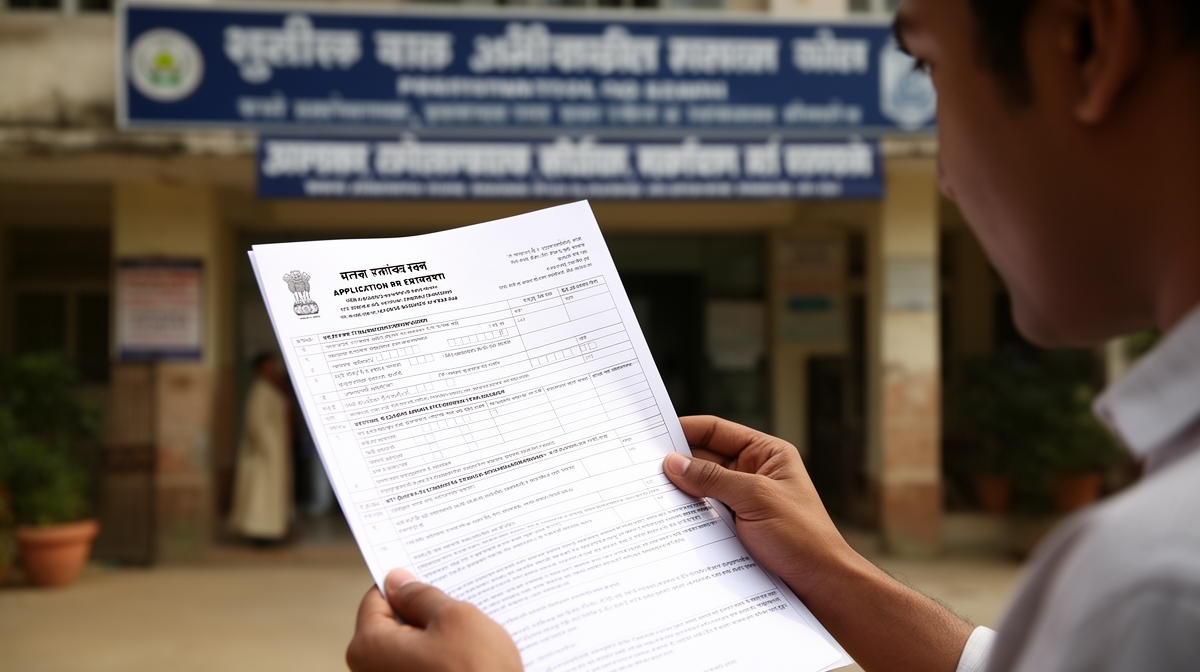

The Central Information Commission has reaffirmed a foundational principle of the Right to Information Act: public authorities are not obligated to generate, collate, or process information beyond what exists in their records. This decision underscores the statutory limits of the RTI regime and prevents its misuse as a tool for adjudicating personal grievances.
Background & Facts
The Dispute
The appellant, Abhishek Singh Raghav, filed an RTI application on 21.05.2024 seeking year-wise details of vacancies filled on compassionate grounds between 2008-09 and 2010-11, including the dates of appointment. He alleged that while six other candidates were appointed during this period, his own case was overlooked despite possessing supporting documents. He sought this information to substantiate a pending court case challenging the non-grant of his compassionate appointment.
Procedural History
- 21.05.2024: RTI application filed with CPIO, Ministry of Mines
- 31.05.2024: CPIO responded with a point-wise reply listing vacancies and years of joining (all in 2019)
- 05.06.2024: First appeal filed, alleging incomplete information
- 10.06.2024: First Appellate Authority upheld the CPIO’s response
- 29.07.2024: Second appeal filed before the Central Information Commission
Relief Sought
The appellant sought a direction to the public authority to provide complete records of compassionate appointments and to explain why his case was excluded, arguing that the information was necessary to contest his grievance in court.
The Legal Issue
The central question was whether Section 6 of the RTI Act, 2005 obligates a public authority to create, collate, or process information not already in its records, and whether the Commission can adjudicate disputes regarding the correctness of appointments under the guise of an RTI request.
Arguments Presented
For the Appellant
The appellant contended that the CPIO’s response was incomplete and evasive, as it failed to disclose the total number of vacancies sanctioned each year and the reasons for delayed appointments. He relied on the principle of transparency under Section 4 of the RTI Act and argued that the authority had access to the records through its internal committee, which had approved six other appointments. He asserted that the authority’s failure to provide full details amounted to denial of information.
For the Respondent
The CPIO submitted that all available records had been disclosed in accordance with Section 7(1) of the RTI Act. It clarified that the appointments were delayed due to administrative bottlenecks and were processed in 2019, which was accurately reflected in the reply. The authority emphasized that it could not fabricate or reconstruct records that did not exist in its files.
The Court's Analysis
The Commission examined the scope of the RTI Act and held that the obligation of a public authority is strictly limited to providing information that is already held or under its control. It relied on the Delhi High Court’s judgment in The Registrar, Supreme Court of India v. Commodore Lokesh K. Batra, which established that public authorities are not required to create information merely because an applicant desires it. The Commission further cited Hansi Rawat v. Punjab National Bank, which held that RTI proceedings cannot be converted into adjudicatory forums for resolving disputes over the correctness of administrative decisions.
"Proceedings under the RTI Act cannot be converted into proceedings for adjudication of disputes as to the correctness of the information furnished."
The Commission also referenced the Supreme Court’s ruling in Union of India v. Namit Sharma, which clarified that the Information Commission’s role is confined to determining access to information, not adjudicating legal rights between parties. The appellant’s grievance regarding non-appointment on compassionate grounds, while legitimate, fell outside the statutory mandate of the RTI Act.
The Commission noted that the CPIO had provided accurate, record-based information. However, in the interest of fairness and to prevent procedural injustice, it directed the CPIO to review the appellant’s supporting documents and submit a written statement with any relevant records, ensuring transparency in the process.
The Verdict
The appeal was dismissed. The Commission held that the CPIO’s response complied with the RTI Act, and that the Act does not compel creation of information or adjudication of personal grievances. However, it directed the CPIO to review the appellant’s documents and submit a revised statement within two weeks.
What This Means For Similar Cases
Information Creation Is Not Required
- Practitioners must advise clients that RTI requests cannot demand data reconstruction, statistical analysis, or compilation from fragmented records
- Public authorities may reject requests that require synthesis of information not already documented
- Applicants must frame requests around existing records, not hypothetical or desired outcomes
RTI Cannot Substitute Judicial Remedies
- Filing an RTI to gather evidence for a pending court case is permissible, but the Commission will not rule on the merits of the underlying dispute
- Applicants seeking appointment, promotion, or service benefits must pursue administrative or judicial remedies, not RTI appeals
- Legal teams should avoid conflating RTI with grievance redressal mechanisms under service law
Procedural Fairness Still Applies
- Even when information is fully disclosed, authorities must act in good faith and review new evidence submitted by applicants
- The Commission’s directive to re-examine documents sets a precedent for procedural fairness without expanding statutory obligations
- Practitioners should encourage clients to submit all supporting documents at the RTI stage to avoid later claims of suppression