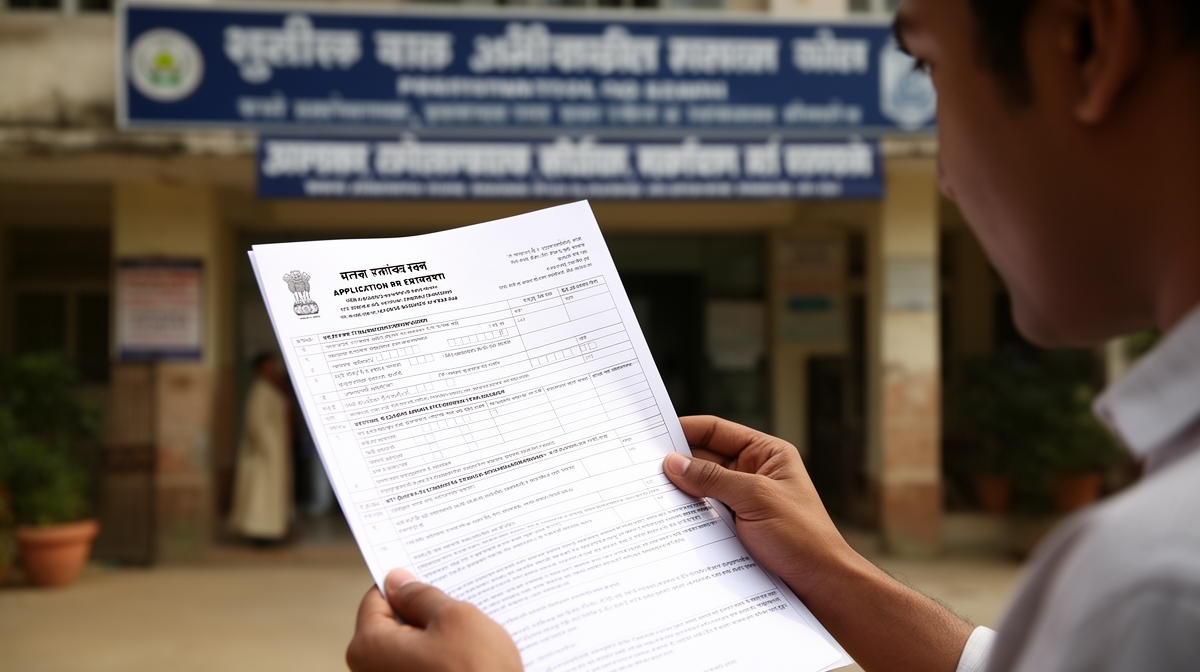
The Central Information Commission has reaffirmed the mandatory obligation of Public Information Officers and First Appellate Authorities under the Right to Information Act, 2005 to respond to applications and appeals within statutory timelines. Failure to do so is not merely procedural lapse but a substantive violation of the right to information.
The Verdict
The appellant won. The Central Information Commission held that the failure of the CPIO and FAA to respond to the RTI application and first appeal, respectively, constitutes a violation of Sections 7 and 19 of the RTI Act, 2005. The Commission directed the CPIO to furnish a substantive reply to the appellant and ordered both the CPIO and FAA to submit written explanations for their non-compliance and absence during the hearing. Compliance must be reported within four weeks.
Background & Facts
The appellant, Sampurn Singh, filed an RTI application on 19 December 2023 seeking detailed information regarding claim processing under a health insurance policy, contractual agreements between National Insurance Company Limited and TPA MDIspia, disciplinary guidelines for employee negligence, contact details of management officials, and information about RTI officers and appellate authorities. No response was received from the Public Information Officer.
On 16 May 2024, the appellant filed a first appeal under Section 19(1) of the RTI Act. The order of the First Appellate Authority is not available on record. The appellant then filed a second appeal before the Central Information Commission on 28 June 2024. The Commission noted that neither the CPIO nor the FAA had responded to the application or appeal, and both remained absent during the hearing conducted on 19 January 2026.
The appellant, appearing via video conference, reiterated that he had sought action taken reports on emails and letters concerning the policy of Mr. D.P. Singh, who had authorized him to file the RTI application. No reply had been received at any stage.
The Legal Issue
Does the failure of a Public Information Officer or First Appellate Authority to respond to an RTI application or first appeal within the statutory period constitute a violation of the RTI Act, 2005, and what remedies are available to the applicant?
Arguments Presented
For the Petitioner
The appellant argued that the silence of the CPIO and FAA amounted to constructive denial of information, violating Section 7(1) which mandates a response within 30 days. He relied on Section 19(3), which requires the FAA to decide appeals within 30 days, extendable only under specific conditions. He contended that non-response is not a neutral act but an active obstruction of the right to information, as affirmed in multiple Commission rulings.
For the Respondent
The respondent did not appear before the Commission and filed no written submissions. No counter-arguments were presented.
The Court's Analysis
The Commission emphasized that the RTI Act is a welfare legislation designed to promote transparency and accountability. Section 7(1) imposes a statutory duty on the CPIO to provide information within 30 days, and failure to do so triggers the right to file a first appeal under Section 19(1). The FAA, under Section 19(3), is equally bound to dispose of appeals within the stipulated time.
"The silence of the CPIO and FAA is not an oversight but a dereliction of statutory duty. The Act does not permit non-response as a valid outcome."
The Commission noted that the absence of the respondents during the hearing further demonstrated disregard for the statutory framework. The lack of any record of the first appeal order raised serious concerns about internal compliance mechanisms within the public authority. The Commission held that the burden of proving compliance lies with the public authority, not the applicant.
The Commission rejected any notion that non-response could be excused due to administrative backlog or internal miscommunication. Such justifications, if valid, must be raised before the FAA and documented. Their absence here rendered them inadmissible.
What This Means For Similar Cases
This decision reinforces that non-response to RTI applications or appeals is not a technical irregularity but a substantive breach of statutory obligation. Practitioners can now cite this order to demand accountability from public authorities that remain silent. Applicants need not wait indefinitely; they may proceed directly to the Commission with proof of non-response, even if the first appeal order is unavailable.
This ruling also clarifies that the Commission has the authority to initiate accountability measures against both CPIOs and FAA officers for non-compliance, including requiring written explanations and compliance reports. Future applicants should retain proof of RTI submission and follow-up attempts, as these will be critical in establishing non-response. Public authorities must now treat RTI compliance as a non-negotiable administrative priority.