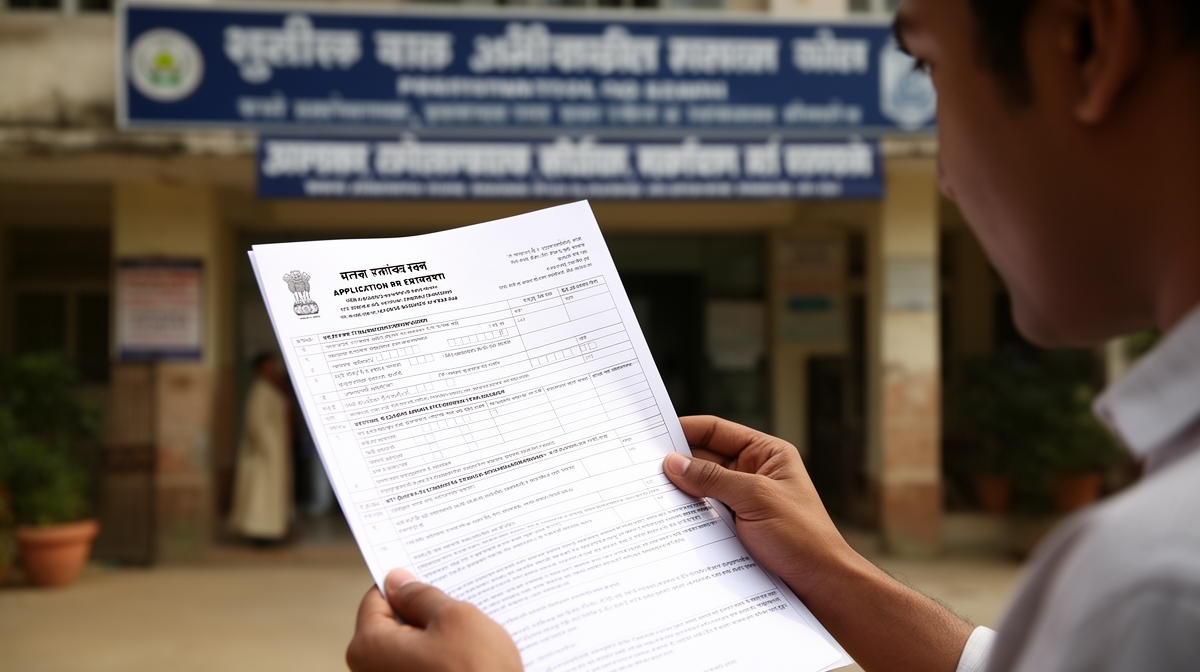

The Central Information Commission has clarified that public authorities cannot rely on blanket exemptions under the RTI Act without substantiating claims of record destruction or demonstrating a clear public interest balance. This decision reinforces the principle that exemptions are exceptions, not defaults, and must be justified with concrete evidence.
The Verdict
The appellant won. The Central Information Commission held that the Life Insurance Corporation could not deny information under Section 8(1)(d) and (j) of the RTI Act merely by invoking generic exemptions without producing evidence of record destruction or demonstrating that disclosure would cause actual harm. The Commission directed the CPIO to revisit its response, provide proof of destruction for old records, and disclose names and periods of Rural Carrier Agents (RCAs), as mere personal data does not automatically trigger exemption.
Background & Facts
The appellant, Mudasir Amin Shah, filed an RTI application on 11 March 2024 seeking three categories of information from the LIC Pulwama branch: (1) rosters of club members from 1 April 2006 to 1 April 2020; (2) copies of N.B. vouchers from 1 January 2018 to 31 March 2019; and (3) details of Rural Carrier Agents (RCAs) engaged by the branch, broken down by Development Officer. The CPIO responded on 8 April 2024, denying all requests under Sections 8(1)(d), 8(1)(e), and 8(1)(j) of the RTI Act, citing commercial confidentiality, fiduciary relationship, and invasion of privacy.
The First Appellate Authority upheld the CPIO’s response on 15 May 2024 without independent analysis. The appellant then filed a second appeal before the Central Information Commission. During the hearing, the respondent claimed that rosters were destroyed in accordance with LIC’s document retention policy, which aligns with SEBI’s Listing Obligations. However, no copy of the policy or proof of destruction was submitted. Regarding RCA details, the respondent asserted that disclosure would harm competitive position and violate privacy, but offered no evidence of actual harm or public interest balance.
The appellant’s advocate challenged the adequacy of the response, arguing that exemptions must be narrowly construed and that the public interest in transparency outweighed speculative claims of harm.
The Legal Issue
Can a public authority deny information under Section 8(1)(d) or (j) of the RTI Act solely on unsubstantiated assertions of commercial confidentiality or privacy, without providing evidence of record destruction or demonstrating a real risk of harm?
Arguments Presented
For the Petitioner
The appellant argued that Section 8 exemptions are not self-executing and require specific, evidence-based justification. The claim of record destruction under LIC’s policy was insufficient without production of the policy document or proof of compliance. The names and tenure of RCAs, being public-facing roles, do not constitute private information under Section 8(1)(j). The appellant cited Section 6(3) of the RTI Act, which mandates that public authorities must assist applicants in framing requests, and Section 19(8)(a), which empowers the Commission to direct disclosure if the denial is unjustified.
For the Respondent
The respondent contended that rosters and RCA details are commercial confidential information protected under Section 8(1)(d), as their disclosure could enable competitors to poach agents. The RCA data was claimed to be held in fiduciary capacity under Section 8(1)(e), and the names and addresses of agents were personal information whose disclosure would cause unwarranted invasion of privacy under Section 8(1)(j). The respondent relied on LIC’s internal document retention policy, which it claimed was compliant with SEBI regulations, to justify non-availability of older rosters.
The Court's Analysis
The Commission rejected the respondent’s reliance on generic exemptions without evidentiary support. It emphasized that Section 8(1)(d) requires a showing that disclosure would harm the competitive position of a third party - not merely a speculative assertion. The Commission noted that the respondent failed to produce the document retention policy cited, or any record of destruction for the rosters sought. Without such proof, the claim of non-availability was legally untenable.
"The mere assertion that records were destroyed does not absolve the public authority of its duty to substantiate such claims. The burden lies on the CPIO to demonstrate compliance with its own policies."
Regarding Section 8(1)(j), the Commission held that personal information is exempt only if disclosure causes unwarranted invasion of privacy. The names and service periods of RCAs, who function as public-facing agents of a state-owned corporation, do not qualify as private information in the absence of evidence showing harm such as harassment or safety risk. The Commission distinguished this from intimate personal data like bank details or medical records.
"The fact that information is held in a fiduciary capacity does not automatically render it exempt. The public interest in accountability of public funds and transparency in agent deployment must be weighed."
The Commission further observed that the CPIO’s response was vague and non-responsive on the N.B. vouchers, failing to specify which vouchers were sought or why they could not be segregated. The lack of specificity in the original request did not absolve the authority of its duty to assist or provide partial disclosure.
What This Means For Similar Cases
This decision sets a clear precedent for public authorities under the RTI Act: exemptions under Sections 8(1)(d), (e), and (j) cannot be invoked on conclusory statements. Practitioners must now ensure that any denial based on record destruction includes certified copies of retention policies and destruction logs. For personal information claims, authorities must demonstrate actual, not hypothetical, harm to privacy - particularly when the information pertains to individuals performing public functions.
For applicants, this ruling strengthens the ability to challenge blanket denials. It reinforces that the burden of proof lies squarely with the public authority. Future RTI requests involving agent lists, vendor details, or internal rosters should be framed to explicitly request partial disclosure or segregation of exempt data, as the Commission has signaled a preference for proportionality. This judgment also underscores the importance of procedural compliance: failure to provide even basic documentation renders an exemption claim legally invalid.