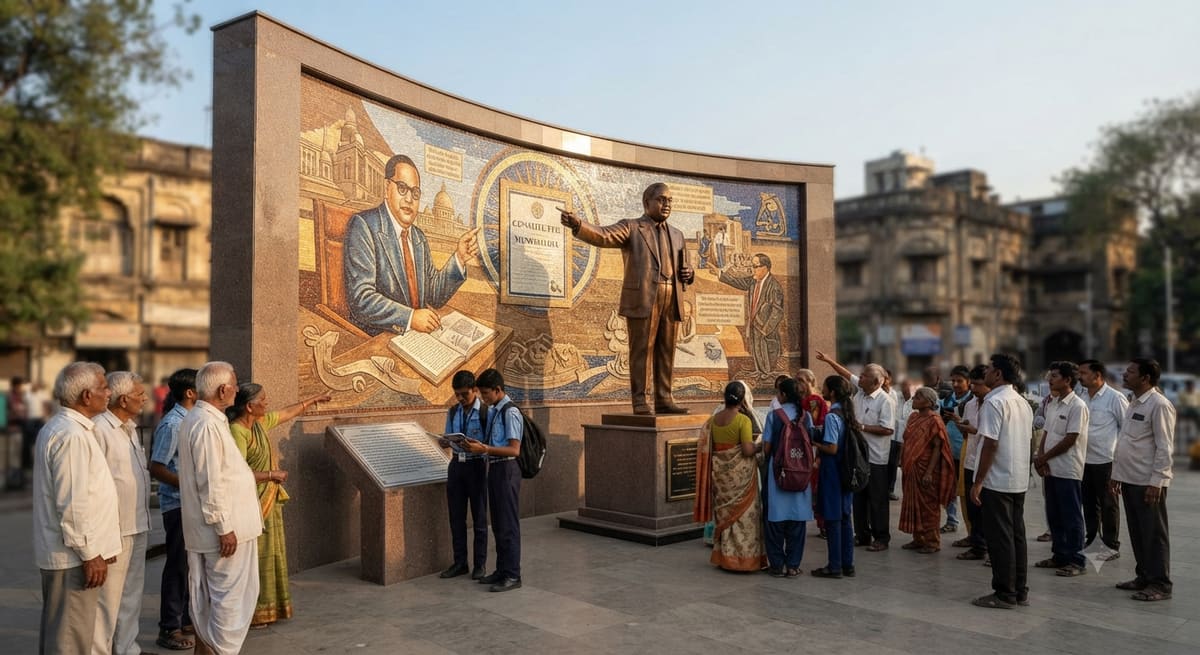
The Bombay High Court's judgment in Dr. Chandrashekhar Gattani v. State of Maharashtra clarifies that land acquisition for constructing a mural of Dr. Babasaheb Ambedkar qualifies as 'public purpose' under the Right to Fair Compensation and Transparency in Land Acquisition, Rehabilitation and Resettlement Act, 2013. The Court also held that procedural compliance survives the lapse of an ordinance, reinforcing the State's authority in acquisition matters.
Background & Facts
The Dispute
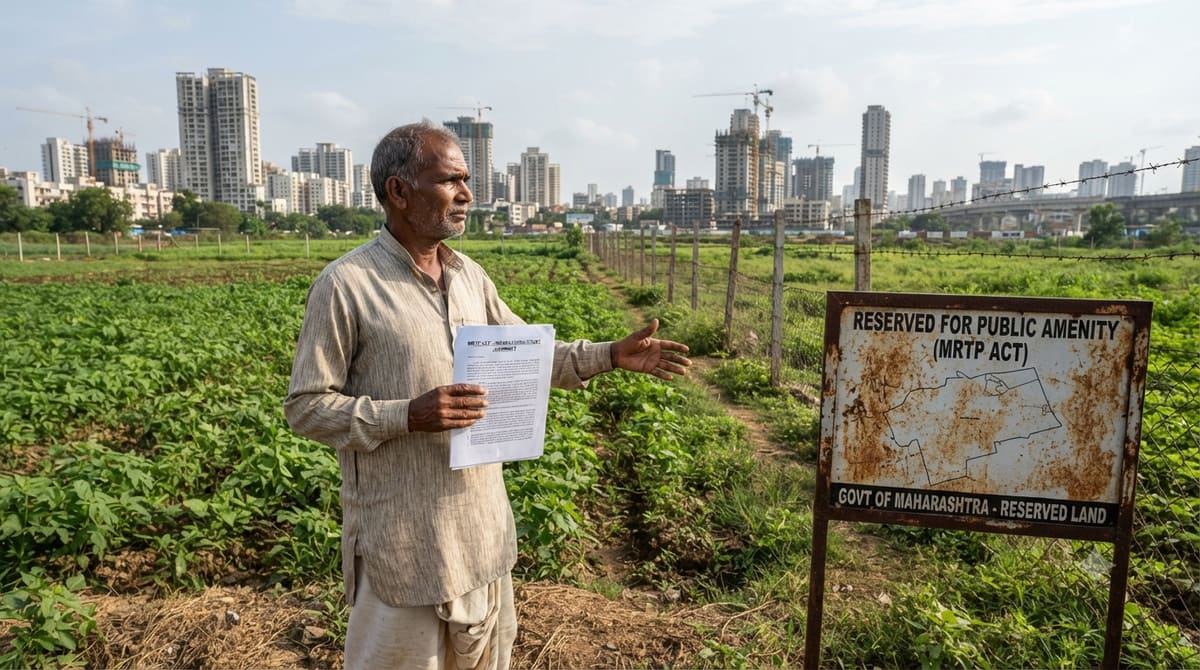
The petitioner, Dr. Chandrashekhar Gattani, challenged the acquisition of his land bearing Nazul Plot No. 41/1, admeasuring 6600 sq. ft. at Irvin Square, Amravati. The acquisition was initiated by the Amravati Municipal Corporation (respondent No. 3) for the purpose of constructing a mural of Dr. Babasaheb Ambedkar and beautifying the surrounding area. The petitioner contended that the acquisition violated Article 14 and Article 300A of the Constitution of India, as well as the provisions of the Right to Fair Compensation and Transparency in Land Acquisition, Rehabilitation and Resettlement Act, 2013 (hereinafter referred to as "the Act of 2013").
Key Facts
The land in question is a 'B tenure' land, leased to the petitioner's father by 'Burma Shell Oil and Storage India Company Limited', later acquired by 'Bharat Petroleum Corporation Limited'.
The petitioner regained possession of the land on 05/01/2012 after prolonged legal proceedings.
A statue of Dr. Babasaheb Ambedkar has existed adjacent to the land since 1970.
The Ministry of Law and Justice promulgated Ordinance No. 4 of 2015 on 31/12/2014, inserting Section 10A into the Act of 2013, exempting certain projects, including social infrastructure, from the application of Chapters II and III of the Act.
The Government of Maharashtra issued a notification on 13/03/2015, exempting projects under Section 10A from Chapters II and III of the Act.
A preliminary notification under Section 11(1) of the Act of 2013 was issued on 11/09/2015, followed by a declaration under Section 19(2) on 31/05/2016.
The petitioner filed objections to the acquisition, which were rejected, leading to the filing of the present writ petition.
Procedural History
15/03/2016: Petitioner filed objections to the preliminary notification.
31/05/2016: Declaration under Section 19(2) of the Act of 2013 published.
24/06/2016: Writ Petition No. 3488 of 2016 filed before the Bombay High Court, Nagpur Bench.
05/05/2026: Judgment reserved.
13/07/2026: Judgment pronounced, dismissing the writ petition.
Relief Sought
The petitioner sought:
Quashing of the acquisition proceedings, including the preliminary notification under Section 11(1) and the declaration under Section 19(2) of the Act of 2013.
A declaration that the acquisition was in violation of Article 14 and Article 300A of the Constitution of India.
An order restraining the respondents from dispossessing the petitioner of the land in question.
The Legal Issue
The Court addressed two primary legal questions:
Whether the acquisition of land for constructing a mural of Dr. Babasaheb Ambedkar qualifies as a 'public purpose' under Section 2(1) of the Act of 2013.
Whether the acquisition proceedings could validly continue after the lapse of the ordinance that inserted Section 10A into the Act of 2013, particularly when the ordinance had lapsed before the issuance of notifications under Sections 11 and 19 of the Act.
Arguments Presented
For the Petitioner
Ordinance Lapse: The notifications under Sections 11 and 19 of the Act of 2013 were issued after the lapse of Ordinance No. 4 of 2015, which inserted Section 10A. Thus, the notifications were issued without legal authority, rendering the acquisition proceedings void.
Relied on Krishna Kumar Singh v. State of Bihar, (2017) 3 SCC 1.
Public Purpose: The purpose of constructing a mural and beautifying the area does not fall within the definition of 'public purpose' under Section 2(1) of the Act of 2013.
Relied on Raghbir Singh Sherawat v. State of Haryana, (2012) 1 SCC 792, and Kolkata Municipal Corporation v. Bimal Kumar Shah, (2024) 10 SCC 533.
Procedural Irregularities: The joint measurement of the land was conducted without notice to the petitioner, and the area specified in the Section 19 notification exceeded that in the Section 11 notification, violating the petitioner's rights.
For the Respondents
Ordinance Validity: The Government of Maharashtra clarified in a letter dated 16/03/2006 that the lapse of the ordinance did not affect acquisition proceedings initiated before 31/08/2015. A cheque for Rs. 99,22,910/- was deposited for the acquisition before the ordinance lapsed.
Public Purpose: The proposed mural of Dr. Babasaheb Ambedkar is not merely for beautification but serves to educate future generations about his contributions to the nation. Thus, it qualifies as 'public purpose'.
Relied on Kanaiyalal Maneklal Chinai v. State of Gujarat, (1969) 3 SCC 456, P.P. Resorts (P) Ltd. v. Union of India, 2006 SCC OnLine Del 1563, and Amar Nath Sehgal v. Union of India, 2005 SCC OnLine Del 209.
Procedural Compliance: A public notice was issued for the joint measurement, but the petitioner failed to attend. The petitioner did not demonstrate any prejudice caused by the measurement.
The Court's Analysis
Public Purpose
The Court examined Section 2(1) of the Act of 2013, which defines 'public purpose' and enumerates specific categories for which land acquisition is permitted. The Court observed that the definition of 'public purpose' under the Land Acquisition Act, 1894 was broad, whereas the Act of 2013 restricted it to strategic, infrastructure, and socially beneficial projects.
The Court relied on Article 51A(f) of the Constitution of India, which imposes a duty on citizens to value and preserve the nation's composite culture. It held that constructing murals or statues of eminent leaders like Dr. Ambedkar serves to propagate their ideas and inspire future generations, thereby advancing public welfare. The Court cited the following precedents:
"In the case of Kanaiyalal Maneklal Chinai v. State of Gujarat, the Hon'ble Supreme Court held that acquisition of land for setting up a memorial to Mahatma Gandhi was for a 'public purpose'."
"The Delhi High Court in P.P. Resorts (P) Ltd. v. Union of India held that the question of what constitutes 'public purpose' is primarily for the Government to decide, and courts should not interfere unless the decision is arbitrary or perverse."
"In Amar Nath Sehgal v. Union of India, the Delhi High Court observed that moral rights in cultural heritage are closely linked to public interest."
The Court concluded that the proposed mural of Dr. Ambedkar would serve as a medium of public communication, preserving history and inspiring collective consciousness. It held that the acquisition satisfied the essential requirement of 'public purpose' under Section 2(1) of the Act of 2013.
Validity of Acquisition Proceedings Post-Ordinance Lapse
The Court addressed the petitioner's contention that the acquisition proceedings were invalid because the ordinance inserting Section 10A had lapsed before the issuance of notifications under Sections 11 and 19 of the Act of 2013. The Court relied on Krishna Kumar Singh v. State of Bihar, where the Supreme Court held that the lapse of an ordinance does not automatically obliterate rights, privileges, obligations, or liabilities accrued during its subsistence.
The Court applied the test of public interest and constitutional necessity and held that the acquisition proceedings survived the lapse of the ordinance because:
The notification dated 13/03/2015 was issued during the subsistence of a valid ordinance.
The acquisition was for a 'public purpose', and the land was a small triangular plot abutting the existing statue of Dr. Ambedkar.
The lapse of the ordinance did not render the acquisition proceedings void, as the Act of 2013 provides specific contingencies for lapsed acquisitions, none of which were present in this case.
The Court further examined the applicability of Chapters II and III of the Act of 2013, which relate to Social Impact Assessment and food security safeguards, respectively. It held that even if Section 10A was not in force, compliance with these chapters would have been a mere formality due to the peculiar facts of the case:
Only the petitioner was affected, with no displacement of families.
The land was the absolute bare minimum required for the project.
No alternate land was available for the purpose.
The acquisition did not involve multi-crop irrigated land, rendering Chapter III inapplicable.
The Court distinguished the judgments relied upon by the petitioner, noting that in Raghbir Singh Sherawat, the Supreme Court emphasized the need for a hearing to consider alternate lands or suitability, which the petitioner failed to raise. Similarly, in Kolkata Municipal Corporation v. Bimal Kumar Shah, the Court had already addressed the sub-rights of property owners, which were satisfied in this case.
The Verdict
The Court dismissed the writ petition and discharged the rule. The parties were directed to bear their own costs. The Court also extended the interim relief of status quo for a further period of four weeks, after which it would stand vacated.
What This Means For Similar Cases
Public Purpose Extends Beyond Traditional Infrastructure
The judgment expands the scope of 'public purpose' under the RFCTLARR Act to include projects that preserve and propagate cultural and historical values.
Practitioners should note that acquisitions for constructing statues, murals, or memorials of eminent leaders may now qualify as 'public purpose' if they serve to educate and inspire future generations.
Ordinance Lapse Does Not Invalidate Procedural Compliance
The Court's reliance on Krishna Kumar Singh establishes that rights and obligations accrued during the subsistence of an ordinance survive its lapse if they serve public interest.
This principle applies to land acquisition proceedings initiated under a valid ordinance, even if subsequent notifications are issued after its lapse.
Social Impact Assessment May Be Waived in Exceptional Cases
The judgment clarifies that compliance with Chapter II of the RFCTLARR Act (Social Impact Assessment) may be waived if the acquisition involves:
A small parcel of land with minimal displacement.
No feasible alternate land for the project.
A clear public purpose, as defined under Section 2(1) of the Act.
However, practitioners should argue for strict compliance in cases involving larger displacements or contested public purpose.