The Rajasthan High Court has reaffirmed that procedural lapses in land acquisition proceedings do not automatically invalidate acquisition where objectors fail to actively participate in hearings under Section 5A of the Land Acquisition Act, 1894. The judgment clarifies the limits of judicial review in such matters and underscores the primacy of public interest in infrastructure projects.
Background & Facts
The Dispute
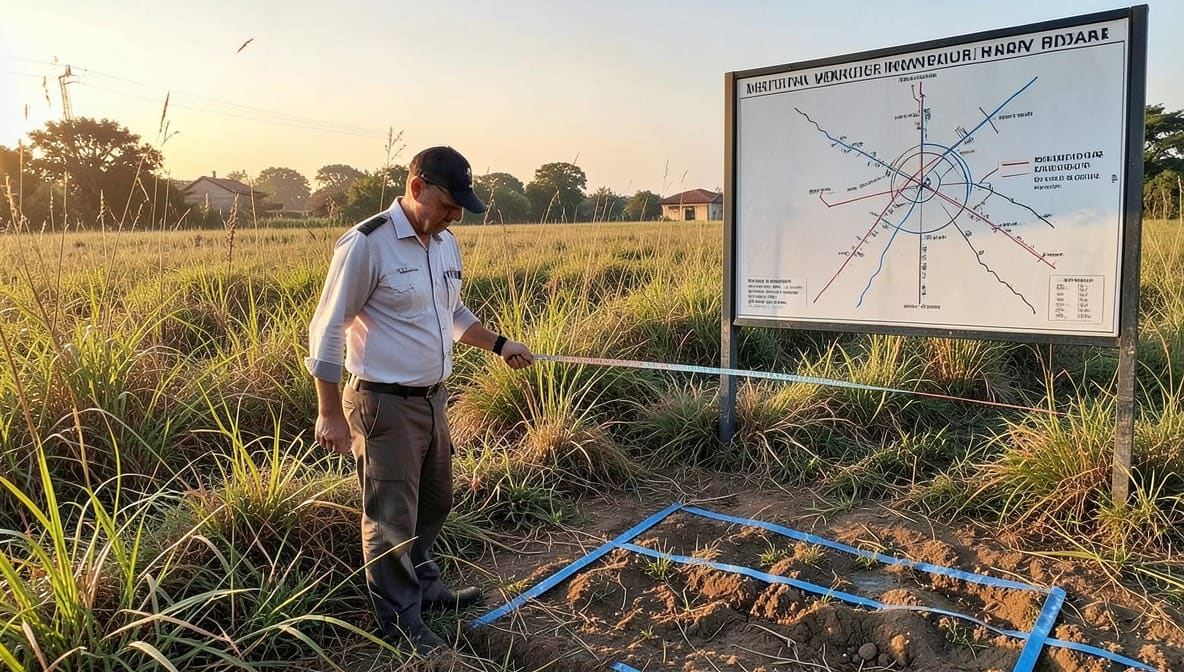
The dispute arose from land acquisition proceedings initiated by the State of Rajasthan for the Jaipur Metro Rail Project. The land in question, located in Village Sheopura, Tehsil Sanganer, District Jaipur, was identified in the Detailed Project Report (DPR) as essential for the construction of a terminal depot to support Phase-II of the Metro network, which extended the rail line from 12.067 km in Phase-I to 23.099 km. The land belonged to multiple respondents, including individuals and private companies, and was notified for acquisition under Section 4 of the Land Acquisition Act, 1894.
Key Facts
- The notification under Section 4 was published on 26.05.2011, covering approximately 27 hectares of land.
- The respondents filed objections under Section 5A on 27.06.2011.
- The Jaipur Metro Rail Corporation (JMRC) submitted a detailed reply to the objections on 09.03.2012, which was furnished to the objectors.
- An opportunity was granted to file a rejoinder, with the hearing date fixed for 09.04.2012.
- The respondents, though represented by counsel, did not appear on 09.04.2012 or at any subsequent hearing.
- The Land Acquisition Officer (LAO) proceeded to examine the objections and JMRC’s reply, and submitted his report under Section 5A on 18.05.2012.
- The State Government issued a declaration under Section 6 on 05.07.2012, followed by a possession notice under Section 9 on 11.07.2012.
- The respondents filed a writ petition on 2012, challenging the acquisition on grounds of procedural non-compliance.
- Interim orders were granted, later vacated by the Division Bench in D.B. S.A.W. 1294/2012.
- The matter was before the Supreme Court in S.L.P. (C) No. 37292/2012, which directed expeditious disposal and maintenance of status quo.
Procedural History
- 26.05.2011: Notification under Section 4 published.
- 27.06.2011: Objections filed by respondents under Section 5A.
- 09.03.2012: JMRC’s reply furnished to objectors.
- 09.04.2012: Date fixed for filing rejoinder; respondents absent.
- 18.05.2012: LAO submitted report recommending acquisition.
- 05.07.2012: Declaration under Section 6 issued.
- 11.07.2012: Notice under Section 9 issued for possession.
- 2012: Writ Petition No. 10544/2012 filed before High Court.
- 09.05.2023: Single Judge quashed notification, declaration, and possession notice.
- 19.02.2026: Arguments concluded in Special Appeal Writ No. 502/2023.
- 30.04.2026: Judgment pronounced by Division Bench.
The Parties' Positions
Appellants (JMRC, State of Rajasthan, JDA): Contended that Section 5A proceedings were duly conducted; respondents voluntarily absented themselves; LAO’s report was comprehensive; Government independently applied its mind; judicial review cannot substitute appellate function.
Respondents (Landowners): Argued that absence on 09.04.2012 did not constitute waiver; LAO failed to apply mind; report was mechanical; Government did not examine record; acquisition was unjustified as Metro Phase-II was allegedly complete.
Relief Sought
The appellants sought setting aside of the Single Judge’s order dated 09.05.2023, restoration of the Section 4 notification, Section 6 declaration, and Section 9 notice, and direction to allow possession. The respondents sought continuation of the stay and de-acquisition of land, citing environmental concerns and project completion.
The Legal Issue
The central question was whether Section 5A of the Land Acquisition Act, 1894 is vitiated when objectors, having been duly notified and afforded opportunity to be heard, fail to appear on the scheduled date, and whether the State Government’s subsequent declaration under Section 6 requires a fresh hearing or independent adjudication of objections.
Arguments Presented
For the Appellant
The appellants relied on Province of Bombay v. Khushaldas S. Advani, Abdul Hussain Tayabali v. State of Gujarat, and Aircraft Employees’ Housing Coop. Society v. Govt. of Karnataka to argue that Section 5A proceedings are administrative, not judicial or quasi-judicial. They emphasized that the LAO’s report is recommendatory, and the Government is not obligated to re-hear objections. The respondents’ failure to appear on 09.04.2012 constituted a waiver of their right to be heard. The LAO’s report, though concise, addressed the core issue of public purpose, and judicial review cannot re-appreciate evidence or substitute the Government’s decision.
For the Respondent
The respondents relied on State of Mysore v. V.K. Kangan, Shyam Nandan Prasad v. State of Bihar, and Kamal Trading v. State of West Bengal to contend that Section 5A proceedings are quasi-judicial and require reasoned decisions. They argued that the LAO’s report merely stated the land was required for public purpose without addressing specific objections. The absence of the respondents on 09.04.2012 was not a waiver, as no formal notice of the report submission date (18.05.2012) was given. They further contended that the Metro project was complete, rendering acquisition unnecessary.
The Court's Analysis
The Division Bench undertook a rigorous analysis of the statutory framework under the Land Acquisition Act, 1894, and the scope of judicial review under Article 226. It held that the proceedings under Section 5A are administrative in nature, and the LAO’s role is purely recommendatory. The Government, as the ultimate decision-maker, is not bound to re-hear objections or provide detailed reasons for accepting the LAO’s report.
"Judicial review, it is trite, is not directed against the decision but is confined to the decision making process. Judicial review cannot extend to the examination of the correctness or reasonableness of a decision as a matter of fact."
The Court emphasized that the respondents were given multiple opportunities to participate: they filed objections, received JMRC’s reply, and were notified of the hearing date. Their failure to appear on 09.04.2012, despite representation, could not be used to invalidate the entire process. The Court cited Aircraft Employees’ Housing Coop. Society to hold that a party cannot be heard to complain of non-hearing when they themselves failed to appear.
The Court further distinguished between the LAO’s duty to consider objections and the Government’s duty to apply its mind. The LAO was not required to address each objection in detail, particularly when no rejoinder was filed. The declaration under Section 6 was validly issued after the Government reviewed the LAO’s report and the DPR, which established the necessity of the land for a public purpose.
The Court also rejected the respondents’ claim that the Metro project was complete and the land no longer required. It noted that Phase-II was still under development and Phase-III had already been announced. The Court held that infrastructure planning must anticipate future needs.
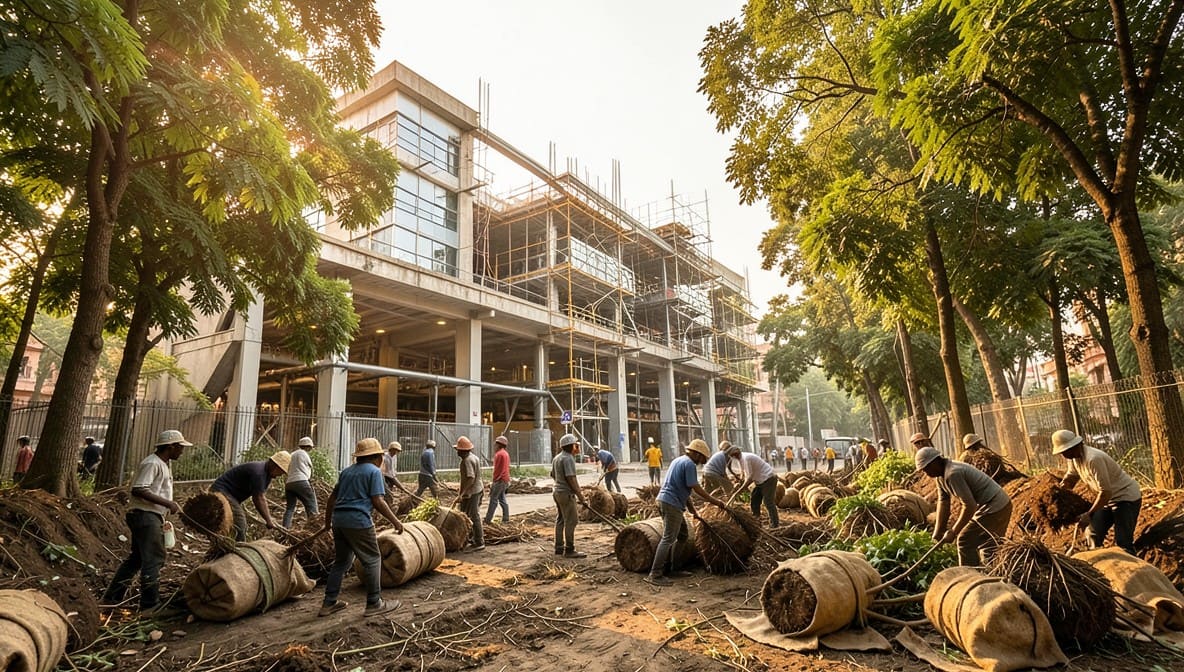
Regarding environmental concerns, the Court acknowledged the presence of trees on the land and directed their transplantation and replanting, recognizing that development and ecology are not mutually exclusive.
The Verdict
The appeals were allowed. The judgment dated 09.05.2023 of the Single Judge was set aside. The notification under Section 4 dated 26.05.2011, the declaration under Section 6 dated 05.07.2012, and the possession notice under Section 9 dated 11.07.2012 were upheld. The Jaipur Metro Rail Corporation was directed to take possession of the land. The Jaipur Development Authority and Forest Department were directed to transplant all existing trees to designated sites, including Jhalana Wildlife Sanctuary and Chandlai Lake. JMRC must undertake additional plantation of twice the number of trees relocated, in forested and wetland areas around Jaipur. A compliance report must be filed before the Court in August 2026.
What This Means For Similar Cases
Procedural Waiver Is Binding
- Practitioners must advise clients that failure to appear at a duly notified hearing under Section 5A constitutes waiver of the right to challenge the acquisition on procedural grounds.
- Absence cannot be excused post-facto unless there is proof of non-receipt of notice or fraud.
Judicial Review Is Limited to Process, Not Merits
- Courts cannot re-evaluate the correctness of the Government’s decision to acquire land.
- Challenges must focus on whether the process was followed, not whether the decision was wise or optimal.
- The LAO’s report need not be exhaustive; a reasoned conclusion on public purpose suffices.
Public Purpose Is Dynamic and Forward-Looking
- Infrastructure projects must be assessed based on long-term urban planning, not current completion status.
- Courts must weigh public interest in transportation, economic growth, and urban development against private claims.
- Environmental mitigation, such as tree transplantation, is now an expected component of lawful acquisition.