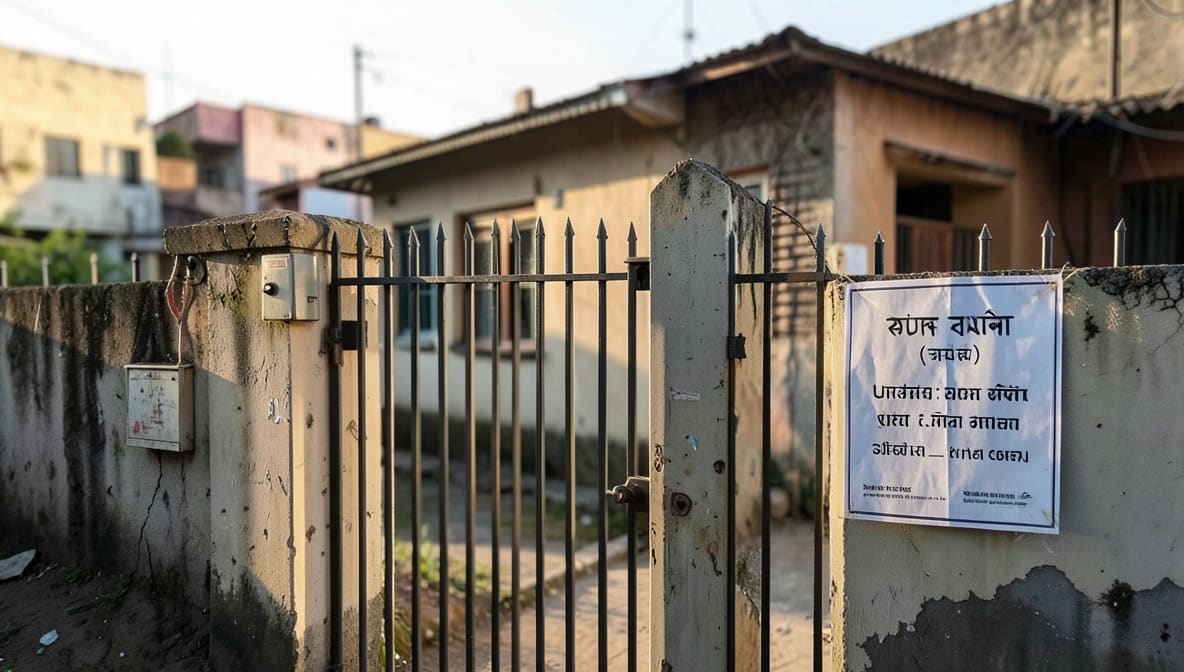
The Andhra Pradesh High Court has reaffirmed that authorities cannot mark or demolish private properties for public projects without adhering to the mandatory procedures under the Right to Fair Compensation and Transparency in Land Acquisition, Rehabilitation and Resettlement Act, 2013 (RFCTLARR Act). The Court disposed of a writ petition with directions to respondents to refrain from interfering with petitioners' properties until due process is followed, underscoring the constitutional protections under Articles 14, 21, and 300A of the Constitution of India.
Background & Facts
The Dispute
Thirty-four petitioners, all residents of Ward No. 2, Sy. No. 370, Pamuru Town and Mandal, Markapur District (erstwhile Prakasam District), challenged the actions of the Panchayat Executive Officer (Respondent No. 3) and other authorities for marking their residential and commercial RCC buildings for demolition. The properties, ranging from 9.33 yards to 222.22 yards in area, were earmarked for widening National Highway 167B (NH-167B). The petitioners alleged that the respondents acted arbitrarily by marking their properties without issuing notices or following the procedural safeguards under Sections 4, 5, 6, 7, 11, 19, 21, 26 to 30, and 31 of the RFCTLARR Act, 2013.
Key Facts
- The properties are situated in Sy. No. 370, Ward No. 2, Pamuru Town, and include both residential and commercial structures
- The proposed demolition was for the widening of NH-167B, a project involving the State of Andhra Pradesh and the Union of India
- The petitioners claimed that no notices were issued under the RFCTLARR Act before marking their properties
- The areas of the properties marked for demolition are as follows:
- Yadala Venkata Ratnam: 47.11 yards
- Shaik Chand Basha: 106.66 yards
- Nannuri Peda Subbaiah: 33.33 yards
- Singaraju Veeramma: 105 yards
- Ginne Murali: 26.66 yards
- Neerukattu Balamma: 33.33 yards
- Varikuti Ramanamma: 58.33 yards
- Varikuti Chiranjeevi: 70 yards
- Singaraju Ramulamma: 60 yards
- Shaik Silar Saheb: 122.22 yards
- Sayyad Pedda Peera: 133.33 yards
- Siddavatam Sarojanamma: 97.77 yards
- Siddavatam Vara Lakshmamma: 46.66 yards
- Kavuluri Khasim Bee: 222.22 yards
- Shaik Nazi Malang: 53.33 yards
- Garikapati Ramanaih: 9.33 yards
- Nannuri Lakshmana: 43.33 yards
- Yagateela Narayana: 26.66 yards
- Nula Malyadri: 31.11 yards
- Ragipati Lakshmi: 56.22 yards
- Boyalla Narayanareddy: 100 yards
- Bandaru Sreenivasulu: 133 yards
- Shaik Pedda Rasool: 100 yards
- Akula Mohan Rao: 22.22 yards
- Chitturi Ramadevi: 22.22 yards
- Vajrala Subbarao: 45.33 yards
- Shaik Allabaksh: 75 yards
- Tavva Malyadri Reddy: 61.33 yards
- Derarapu Chandra Babu: 194.44 yards
- Kethu Venugopal Reddy: 23 yards
- Yalamandala Rahimulla: 60 yards
- Shaik Shamsur: 33.33 yards
- Kancharla Naga Maha Lakshmi: 17.77 yards
- Syba Ramanamma: 87.11 yards
Procedural History
- 11.06.2026: Writ Petition No. 15224/2026 filed under Article 226 of the Constitution of India
- 04.06.2026: First hearing; Assistant Government Pleader for Revenue submitted that no markings were made by revenue authorities. The matter was adjourned for written instructions
- 11.06.2026: Final hearing; counsel for Gram Panchayat (Respondents 3 & 4) submitted that no coercive action would be taken against the petitioners' properties
Relief Sought
The petitioners sought:
- A Writ of Mandamus declaring the respondents' actions as illegal, arbitrary, and unconstitutional
- Directions to the respondents not to demolish or evict the petitioners from their properties without following due process under the RFCTLARR Act
- Interim protection under IA No. 1 of 2026 to restrain coercive action pending disposal of the writ petition
The Legal Issue
The central question was whether authorities can mark or demolish private properties for public projects without issuing notices or following the mandatory procedures under Sections 4 to 31 of the RFCTLARR Act, 2013, and whether such actions violate Articles 14, 21, and 300A of the Constitution of India.
Arguments Presented
For the Petitioners
- Contended that the respondents violated the RFCTLARR Act by marking properties without issuing notices under Sections 4(1), 5, 6, and 11
- Argued that the absence of due process renders the action arbitrary and unconstitutional, violating Articles 14 (equality before law), 21 (right to life and personal liberty), and 300A (right to property)
- Relied on precedents such as State of Maharashtra v. Mahajan Brothers and Dev Sharan v. Union of India to emphasize that land acquisition without compliance with statutory procedures is void
- Highlighted that no social impact assessment (Section 4) or publication of notification (Section 11) was conducted
For the Respondents
- Revenue authorities (Respondents 2, 5-8): Submitted that no markings were made by them, shifting responsibility to the Gram Panchayat
- Gram Panchayat (Respondents 3 & 4): Submitted that no coercive action would be taken against the petitioners' properties, and they would not interfere with possession
- Union of India (Respondent 9): Did not contest the petition but remained a formal party to the proceedings
The Court's Analysis
The Court observed that the RFCTLARR Act, 2013, mandates a rigorous procedure for land acquisition, including:
- Section 4: Preliminary notification and social impact assessment
- Section 5: Public hearing and objections
- Section 6: Declaration of intended acquisition
- Section 11: Publication of notification
- Sections 26-30: Determination and payment of compensation
- Section 31: Rehabilitation and resettlement obligations
The Court emphasized that any deviation from these procedures would render the acquisition process illegal and arbitrary. While the respondents denied taking coercive action, the Court noted that the mere marking of properties without following due process could lead to irreparable harm to the petitioners.
"The action of the respondents in marking the petitioners' properties without issuing any notice or following the procedure contemplated under the Right to Fair Compensation and Transparency in Land Acquisition, Rehabilitation and Resettlement Act, 2013 is not only illegal but also arbitrary and violative of the fundamental rights guaranteed under Articles 14, 21, and 300A of the Constitution of India."
The Court disposed of the writ petition at the admission stage itself, relying on the undertakings given by the respondents that no coercive action would be taken. This approach aligns with the principle that judicial intervention is warranted when statutory procedures are bypassed, as held in Dev Sharan v. Union of India.
The Verdict
The Court disposed of Writ Petition No. 15224/2026 with the following directions:
- Respondents 3, 4, and 6 (Gram Panchayat authorities and Thasildar) are restrained from interfering with the petitioners' properties in Sy. No. 370, Ward No. 2, Pamuru Town, without following due process under the RFCTLARR Act
- The writ petition was disposed of at the admission stage with the consent of both parties
- No order as to costs was passed
- Pending miscellaneous petitions, if any, were closed
What This Means For Similar Cases
Mandatory Compliance with RFCTLARR Act Is Non-Negotiable
- Authorities cannot bypass statutory procedures under the RFCTLARR Act, even for infrastructure projects like national highways
- Sections 4 to 31 must be strictly followed, including social impact assessment, public hearings, and compensation determination
- Marking properties without notices is illegal and arbitrary, and courts are likely to intervene to protect property rights
Constitutional Safeguards Prevail Over Administrative Convenience
- Article 300A (right to property) and Article 21 (right to life, including livelihood) cannot be compromised for administrative expediency
- Article 14 (equality before law) mandates that all landowners must be treated fairly, and arbitrary actions will be struck down
- Practitioners should challenge any land acquisition where due process is not followed, as courts are inclined to protect constitutional rights
Undertakings by Authorities Can Secure Interim Relief
- Courts may dispose of writ petitions at the admission stage if authorities give undertakings to refrain from coercive action
- Such undertakings create binding obligations on the respondents, and non-compliance can lead to contempt proceedings
- Petitioners can leverage this strategy to avoid prolonged litigation while securing protection for their properties