The Madras High Court quashed proceedings under the Tamil Nadu Land Encroachments Act, 1905, holding that Revenue Standing Order 26(15) cannot unilaterally convert private patta land into government property merely because a plan-marked pathway exists, emphasizing that such action violates constitutional property rights under Article 300-A and requires due process of law and compensation for damages.
Background & Facts
The Dispute
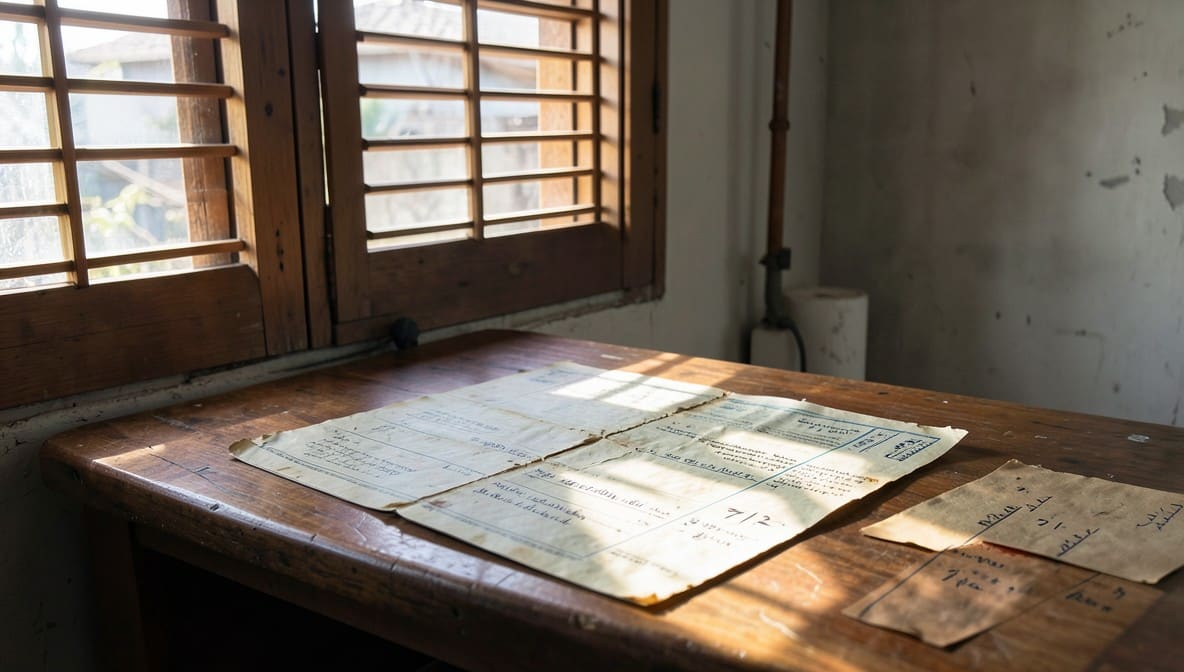
The petitioners, Periyasamy and Sankar (brothers), are absolute owners of agricultural lands in Survey Nos. 16/6, 16/7 and 16/17B of Kumarapalayam Village, Valapadi Taluk, Salem District. Their title traces to ancestral purchases: their grandparents bought 0.51 acres in S.F. No. 16/7 via registered sale deed dated 25.02.1974 (Doc. No. 427/1974), later partitioned via deed dated 03.02.2012 (Doc. No. 469/2012). The petitioners themselves purchased 0.41 acres in S.F. No. 16/6 and 0.48 acres in S.F. No. 16/7 via registered sale deed dated 01.07.1985 (Doc. No. 1641/1985). They have cultivated coconut and arecanut trees on this land for over forty years, with revenue records mutated in their names.
Key Facts
- The grandparents' purchase (0.51 acres in S.F. No. 16/7) occurred on 25.02.1974 under registered sale deed (Doc. No. 427/1974)
- Family partition via registered deed dated 03.02.2012 (Doc. No. 469/2012)
- Petitioners' purchase (0.41 acres in S.F. No. 16/6 + 0.48 acres in S.F. No. 16/7) on 01.07.1985 under registered sale deed (Doc. No. 1641/1985)
- Continuous cultivation of coconut and arecanut trees for over forty years
- Revenue records mutated in petitioners' names establishing title
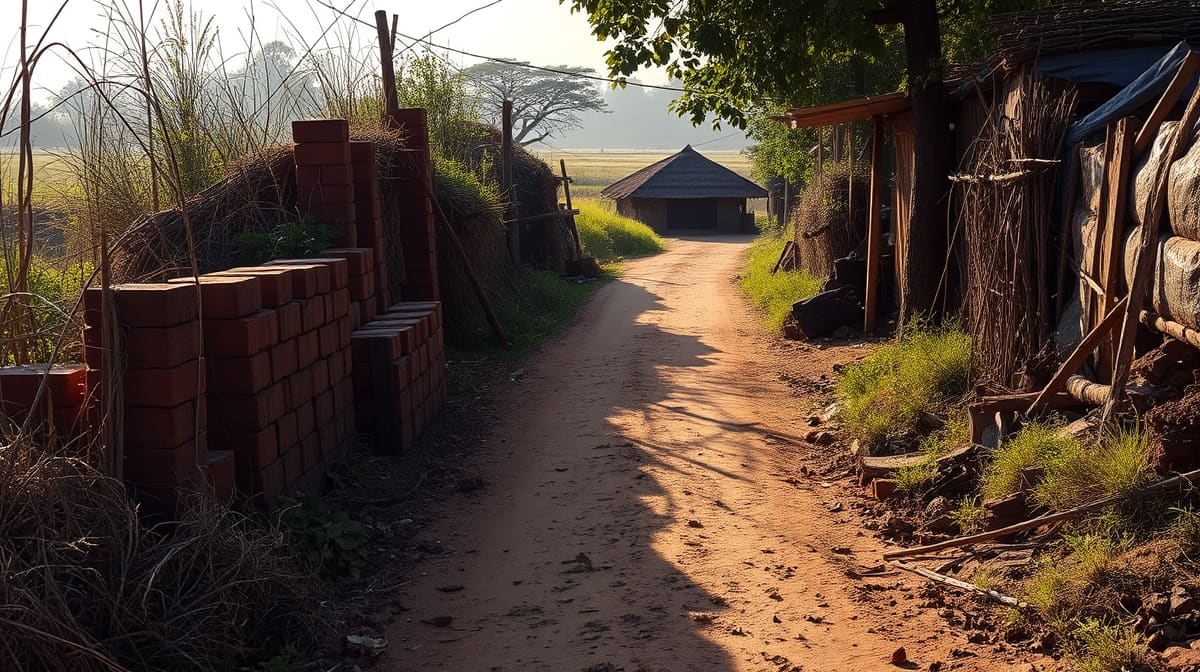
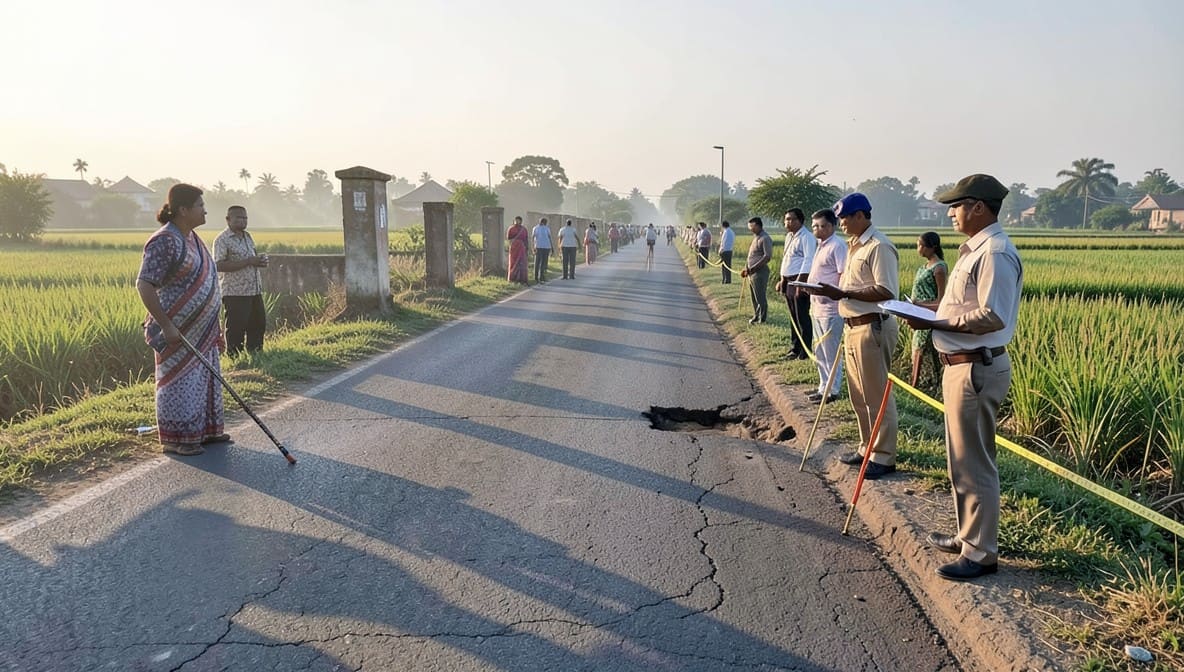
- On eastern side of petitioners' lands, third parties claimed portions required for a 'pathway' to access their agricultural lands and burial ground
- Earlier suit (O.S.No.60 of 2025) filed on 05.08.2025 before District Munsif, Valapadi challenging sub-division of lands
- Revision petition dated 08.10.2025 filed before District Revenue Officer (second respondent) challenging sub-divisions designated as 'Nilaviyal Pathai'
- Court's earlier order dated 28.04.2026 in W.P.No.35898 of 2025 directed enforcement action to be completed within twelve weeks
- Section 7 notice under 1905 Act issued on 27.05.2026 calling for explanation
- Petitioners' detailed objections dated 05.06.2026 submitted, received by authorities on 08.08.2026
- Without considering objections, Section 6 notice issued on 12.06.2026 by fourth respondent (Tahsildar, Valapadi) directing vacate land within fifteen days or face eviction and confiscation of crops/trees
- Writ petition filed on 18.06.2026, first heard on 24.06.2026
- On 24.08.2026, respondents entered petitioners' property and destroyed approximately 100 matured trees (including 50 coconut and 50 arecanut trees) productive for forty years
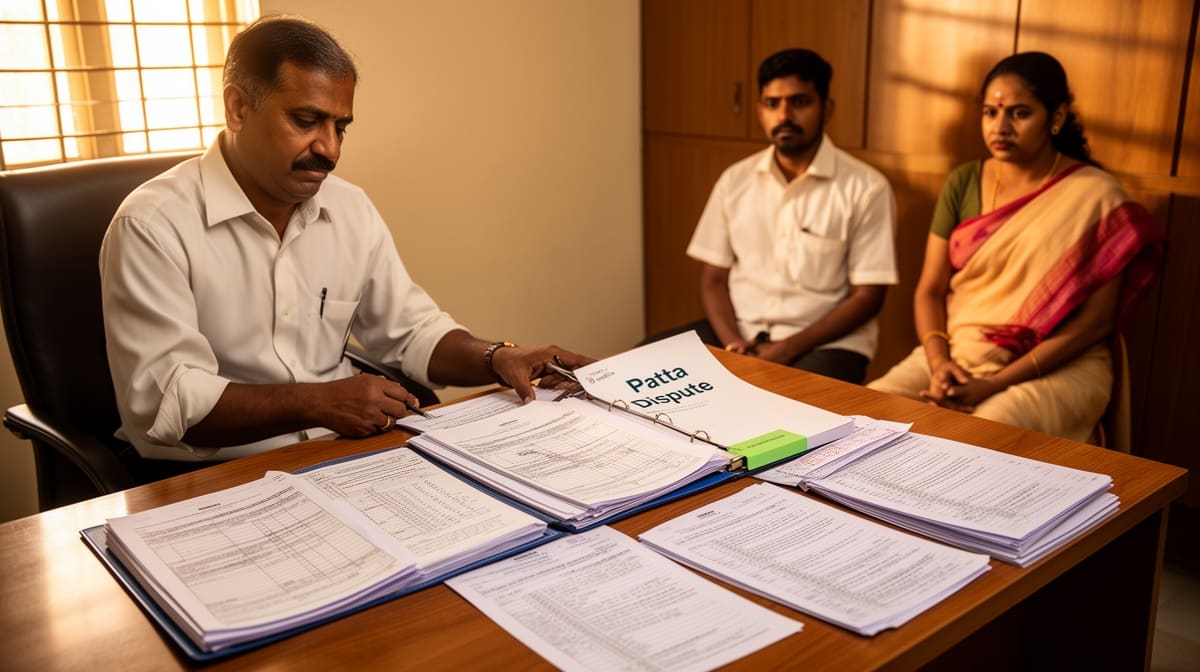
- Hearing on 01.09.2026 where court directed Tahsildar to appear personally on 17.09.2026 to explain documents justifying 28-feet pathway width
Procedural History
- 05.08.2025: Original suit (O.S.No.60 of 2025) filed before District Munsif, Valapadi
- 08.10.2025: Revision petition filed before District Revenue Officer (second respondent)
- 28.04.2026: Order in W.P.No.35898 of 2025 directing enforcement action within twelve weeks
- 27.05.2026: Section 7 notice issued under Tamil Nadu Land Encroachments Act, 1905
- 05.06.2026: Petitioners' objections submitted
- 08.08.2026: Objections received by authorities
- 12.06.2026: Impugned Section 6 notice issued under Section 6 of 1905 Act
- 18.06.2026: Writ petition (W.P.No.23649 of 2026) filed before Madras High Court
- 24.06.2026: First hearing of writ petition
- 24.08.2026: Respondents destroyed ~100 trees on petitioners' land
- 01.09.2026: Hearing where court directed Tahsildar to appear on 17.09.2026 with documents
- 15.10.2026: Judgment pronounced
Relief Sought
Petitioners sought: (1) Quashing of Section 6 notice dated 12.06.2026; (2) Direction to consider objections dated 05.06.2026 on merits; (3) Compensation for illegally felled trees; (4) Costs of litigation.
The Legal Issue
The central question was whether Revenue Standing Order 26(15) of the Tamil Nadu Land Encroachments Act, 1905 possesses statutory authority to declare private patta land as government property solely based on the existence of a plan-marked pathway, thereby bypassing due process of law and constitutional property rights under Article 300-A.
Arguments Presented
For the Petitioners
Counsel argued that RSO 26(15) is merely an administrative instruction lacking statutory force to divest private property, citing Vidya Devi v. State of Himachal Pradesh [(2020) 2 SCC 569] which held that state cannot deprive property without due process and just compensation. They emphasized that revenue entries (like FMB sketch) are not title documents and cannot vest state with ownership without lawful acquisition proceedings. The suit (O.S.No.60 of 2025) filed prior to 1905 Act proceedings maintained that Section 14 of the Act did not bar jurisdiction as it did not challenge actions under the Act. Destruction of trees without notice or hearing violated natural justice and constituted arbitrary state action requiring compensation.
For the Respondents
The Special Government Pleader contended that RSO 26(15) derives force from the Tamil Nadu Board of Revenue Abolition Act, 1980 (Act 36 of 1980) and that plan-marked pathways in patta land are government land per the Standing Order. They argued that the pathway width was 8.6 meters (28 feet) as per FMB sketch and revenue records, and that encroachment removal followed due process under RSO 26(15) and Section 152 of Bharatiya Nagarik Suraksha Sanhita, 2023. The counter-affidavit stated that sub-divisions were made thirty years ago during survey and settlement, leaving no scope for alteration, and that respondents followed procedure in restoring the pathway.
The Court's Analysis
The Court began by examining the nature of Revenue Standing Orders, referencing S. Sridhar v. State of Tamil Nadu [(2020) 5 MLJ 120] to conclude that RSOs are administrative instructions carrying executive force but lacking statutory supremacy over constitutional rights. It scrutinized Section 2 of the Tamil Nadu Land Encroachments Act, 1905, which declaratorily defines 'Government Property' while expressly saving private (patta) lands under Section 2(1)(d) and preserving easementary rights. The Court held that RSO 26(15)'s declaration that 'a plan-marked channel or pathway running in a patta land is a Government land' directly contradicts Section 2(1)(d) and operates as an unlawful acquisition of private property without constitutional sanction.
"Section 2 of the 1905 Act is declaratory in nature and delineates what falls within the ambit of 'Government Property'. It also expressly enumerates the exceptions, i.e., the lands that fall outside its purview. Section 2(1)(d) saves private (patta) lands from being declared as Government property."
The Court found that RSO 26(15) misapplies the concept by ignoring the exception for patta lands and the requirement to preserve easementary rights. It emphasized that mere existence of a pathway entry in revenue records (even if made ex parte during UDR proceedings) cannot confer title on the state, citing Vishwasrao Satwarao Naik v. State of Maharashtra [(2018) 6 SCC 580] that revenue entries are rebuttable presumptions, not title documents. The destruction of 100 trees without considering objections or following due process was deemed a violation of Article 300-A, as the state cannot arrogate property rights without legal sanction.
"The mere existence of an entry, made without notice and in violation of the principles of natural justice, cannot divest a lawful owner of title. The manner in which title is being derived is therefore not in consonance with settled principles of law."
The Court balanced landowner rights with public pathway interests, holding that while the state can maintain pathways for public use, it must do so through lawful means: either by acquiring land via statutory proceedings with compensation, or by preserving existing pathways without expanding them unilaterally. It clarified that RSO 26(15) only authorizes removal of encroachments that block entrance/exit to patta land, not wholesale land acquisition.
The Verdict
The petitioners succeeded. The Court quashed the Section 6 notice dated 12.06.2026 (para 75(a)), directed consideration of the objections dated 05.06.2026 on merits (para 75(b)), awarded Rs.10,000 as costs against the fourth respondent to be paid by the state and recovered from her (para 75(e)), and held petitioners entitled to compensation for illegally felled trees to be determined by a civil court (para 75(c)-(d)). The writ petition was allowed (para 76).
What This Means For Similar Cases
Administrative Instructions Cannot Override Constitutional Rights
Revenue Standing Orders are executive directives binding only on government functionaries, not on citizens or courts to bypass due process. Practitioners must challenge any action under RSOs that affects private property by demonstrating lack of statutory backing and violation of Article 300-A. The judgment reinforces that RSOs cannot create state title in private land without lawful acquisition proceedings and compensation.
Revenue Records Are Not Title Documents
Entries in FMB sketches, patta books or UDR proceedings creating 'pathway' designations are merely fiscal records with rebuttable presumption of correctness. They neither create nor extinguish title. Landowners can rebut such entries by proving prior possession, mutation in their names, or long-standing cultivation - as demonstrated by the petitioners' forty-year cultivation and registered deeds from 1974 and 1985.
Compensation Mandatory for Unilateral State Action
When state authorities destroy crops, trees or structures on private land without notice, hearing or legal sanction, affected owners are entitled to compensation. The judgment explicitly directs petitioners to approach a civil court for compensation determination, establishing that arbitrary state action causing property damage triggers liability irrespective of any purported statutory authority under RSOs.
Pathway Width Must Align with Revenue Records
The state cannot unilaterally expand pathway width beyond what revenue records show. Here, respondents claimed 28-feet width while records showed only 4-metres width in subdivided land. Any expansion requires land acquisition proceedings with compensation, not mere reliance on RSOs. Practitioners should verify actual revenue records before challenging pathway demarcations.