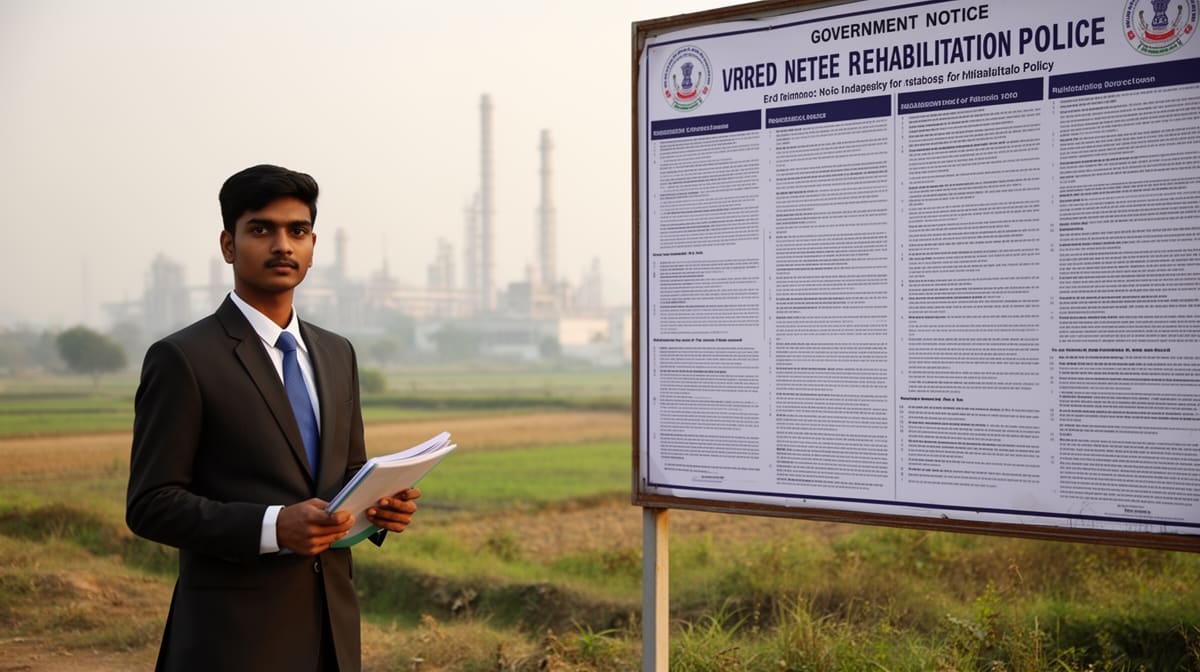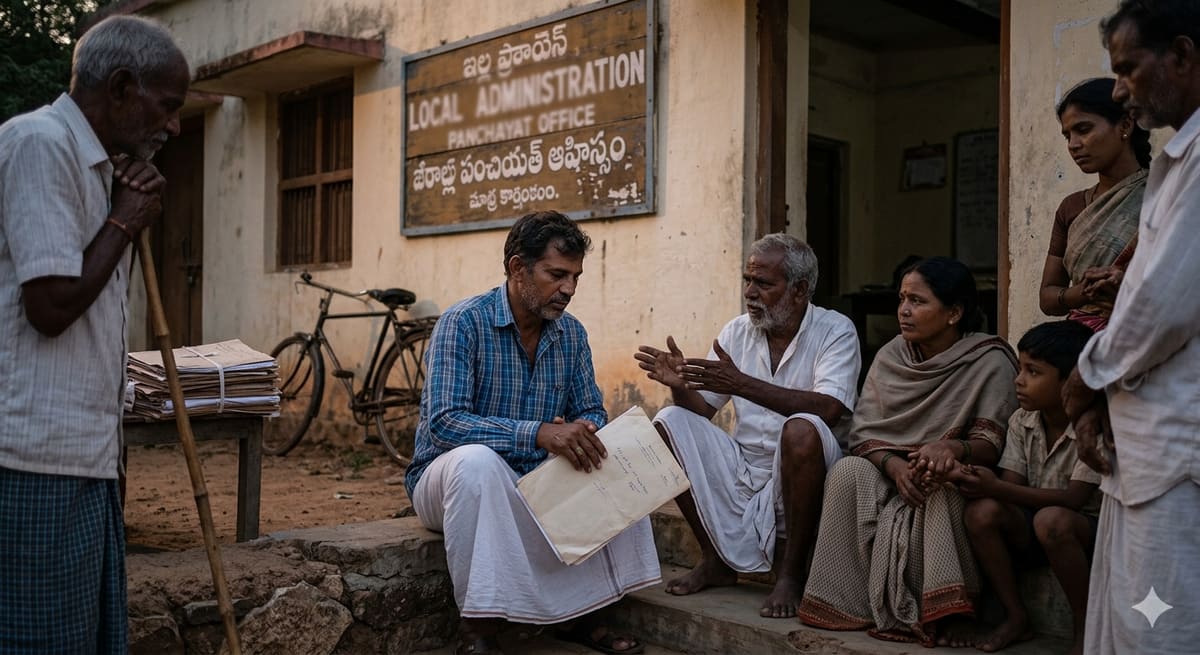
The Chhattisgarh High Court’s dismissal of a review petition reaffirms that the right to employment for land oustees is anchored in the rehabilitation policy applicable at the time of land acquisition, not in subsequent corporate guidelines. This judgment reinforces the principle that accrued rights under statutory policy cannot be extinguished by administrative changes, offering critical clarity for affected families and public sector entities alike.
Background & Facts
The Dispute
The dispute arose from the acquisition of agricultural land in Raigarh district, Chhattisgarh, for coal mining operations by South Eastern Coalfields Limited (SECL), a subsidiary of Coal India Limited. The acquisition proceedings were initiated in 2009 under Section 247 of the Chhattisgarh Land Revenue Code, 1959, culminating in an award dated 05.11.2009. The award explicitly included rehabilitation benefits, including employment, for affected landowners. The petitioner, Ishwarilal Sahu, a landowner whose land was acquired, claimed entitlement to employment under the Chhattisgarh Model Rehabilitation Policy, 2007, which mandated one employment opportunity for each major member of a displaced family.
Key Facts
- The land in question, Khasra No. 603, measured 0.72 acres and was acquired in 2009.
- Mutation of land in the name of the petitioner’s father was recorded in 2008.
- The petitioner’s family had received compensation under the 05.11.2009 award.
- One family member was already employed by SECL in connection with a prior, separate acquisition.
- SECL issued an order dated 06.01.2020 rejecting the petitioner’s employment claim, citing the Coal India Limited Policy, 2008, which limited employment to one per two acres and required three years of prior ownership.
- The petitioner filed Writ Petition No. 6013/2024 before the Chhattisgarh High Court seeking quashing of the 06.01.2020 order and direction for employment.
- The High Court, by order dated 27.01.2026, set aside the 06.01.2020 order, holding that the Chhattisgarh State Policy, 2007, governed the entitlement and that subsequent CIL guidelines could not override it.
Procedural History
- 2008: Mutation of land recorded in favor of petitioner’s father.
- 2009: Acquisition proceedings initiated under Section 247 of the Chhattisgarh Land Revenue Code, 1959.
- 05.11.2009: Land acquisition award issued, incorporating rehabilitation benefits including employment.
- 06.01.2020: SECL issued order rejecting employment claim based on CIL Policy, 2008.
- 2024: Writ Petition No. 6013/2024 filed before Chhattisgarh High Court.
- 27.01.2026: High Court allowed the writ petition, directing SECL to consider employment claim under Chhattisgarh Model Rehabilitation Policy, 2007, within 45 days.
- 28.04.2026: Review Petition No. 110/2026 filed by SECL seeking review of the 27.01.2026 order.
The Parties' Positions
Petitioner (Ishwarilal Sahu): Argued that his right to employment accrued at the time of acquisition under the Chhattisgarh State Policy, 2007, which was in force and binding. He contended that the rejection based on CIL’s internal policy was arbitrary and violative of Articles 14, 15, and 21 of the Constitution.
Respondent (SECL): Contended that the employment claim was barred by multiple grounds: (i) prior employment of a family member; (ii) non-compliance with the three-year ownership condition; (iii) artificial subdivision of land; (iv) binding consent agreement and Lok Adalat award; and (v) the award itself incorporated CIL Policy, 2008.
Relief Sought
The petitioner sought: (i) quashing of the 06.01.2020 order; (ii) direction to SECL to grant employment; and (iii) compensation for delay. The review petitioner (SECL) sought review of the 27.01.2026 order, seeking to set it aside on grounds of alleged errors apparent on the face of the record.
The Legal Issue
Can a public sector entity deny employment to a land oustee under a state rehabilitation policy by relying on a subsequent, more restrictive corporate policy, when the acquisition was governed by the state policy in force at the time of acquisition?
Arguments Presented
For the Appellant/Petitioner (SECL)
SECL argued that the 27.01.2026 order erred by ignoring binding precedents and material facts. It cited Poonam Sethi v. Union of India to contend that the land was artificially subdivided after acquisition proceedings commenced, thereby multiplying claims. It also relied on Assistant General Manager, SBI v. Tanya Energy Enterprises to argue that even if the reasons in the 06.01.2020 order were insufficient, other valid grounds existed on record - such as exhaustion of family quota, non-fulfilment of three-year ownership, and consent agreements. SECL further submitted that the 05.11.2009 award expressly incorporated the CIL Policy, 2008, which limited employment to one per two acres, and that the petitioner’s family had already accepted compensation and employment under this framework, thereby estopping them from challenging it. It also invoked Union of India v. Malejram to argue that the object of rehabilitation is one employment per family, not per khasra.
For the Respondent/State (Ishwarilal Sahu)
The respondent contended that the review petition was not maintainable, as it sought to reargue the merits under the guise of review. He emphasized that the scope of review jurisdiction is extremely narrow and permits correction only of patent errors apparent on the face of the record. He argued that all grounds raised by SECL had been fully considered and rejected in the 27.01.2026 order, and that dissatisfaction with the conclusion does not constitute a ground for review. He relied on Meera Bhanjan, Lily Thomas, and Kerala State Electricity Board to underscore that review cannot be used as a substitute for appeal.
The Court's Analysis
The Court began by reaffirming the limited scope of review jurisdiction under Article 226 of the Constitution. It held that review is not an avenue for reappreciation of evidence, reconsideration of rival interpretations, or substitution of one view for another. The Court observed that the 27.01.2026 order had meticulously examined the nature of the acquisition, distinguishing it from prior proceedings and affirming that the 2009 award was a distinct legal event governed by the Chhattisgarh Model Rehabilitation Policy, 2007.
"The rights of the land losers were required to be examined in accordance with the State Rehabilitation Policy prevailing on the date of acquisition and that subsequent change in policy or internal guidelines could not defeat any accrued entitlement."
The Court noted that SECL’s submissions - regarding subdivision, prior employment, consent agreements, and the award’s incorporation of CIL policy - were all matters of fact and law that had been fully ventilated and decided in the original judgment. The Court emphasized that the mere existence of alternative grounds to sustain the 06.01.2020 order does not justify setting aside a judicial order on review, especially when those grounds were already considered and rejected.
The Court further held that the principle of legitimate expectation, grounded in Article 21, protects the entitlement of land oustees to the benefits promised at the time of acquisition. Any attempt to retroactively impose stricter conditions through corporate policy violates the doctrine of non-arbitrariness under Article 14. The Court dismissed SECL’s reliance on Tanya Energy Enterprises, noting that the case pertained to administrative orders with insufficient reasons, not to the substitution of statutory policy with internal guidelines.
The Verdict
The review petition was dismissed. The Chhattisgarh High Court upheld its order dated 27.01.2026, which set aside SECL’s 06.01.2020 rejection of employment. The petitioner remains entitled to consideration of his employment claim under the Chhattisgarh Model Rehabilitation Policy, 2007, within 45 days of production of the order. No monetary compensation or interest was awarded, as the relief sought was specific performance of the statutory right to employment.
What This Means For Similar Cases
Rehabilitation Rights Are Fixed at Time of Acquisition
- Practitioners must argue that entitlements to employment or compensation for land oustees are locked in at the time of acquisition under the policy in force then.
- Subsequent policy changes by corporate entities like Coal India Limited cannot override state-mandated rehabilitation obligations.
- Any denial based on later guidelines is prima facie arbitrary and violative of Article 14.
Review Jurisdiction Cannot Be Used as a Second Appeal
- Review petitions filed by public sector entities to reargue merits will be summarily dismissed.
- Courts will not entertain reappreciation of evidence or reinterpretation of policy under the guise of review.
- Practitioners should file appeals, not reviews, when challenging factual or legal conclusions.
Documentation and Consent Do Not Override Statutory Policy
- Consent agreements or Lok Adalat awards cannot extinguish statutory rights under rehabilitation policy unless they explicitly waive such rights with full knowledge.
- Acceptance of compensation does not imply waiver of employment rights if the policy explicitly provides for both.
- Courts will scrutinize whether consent was informed and whether the policy was disclosed at the time of signing.