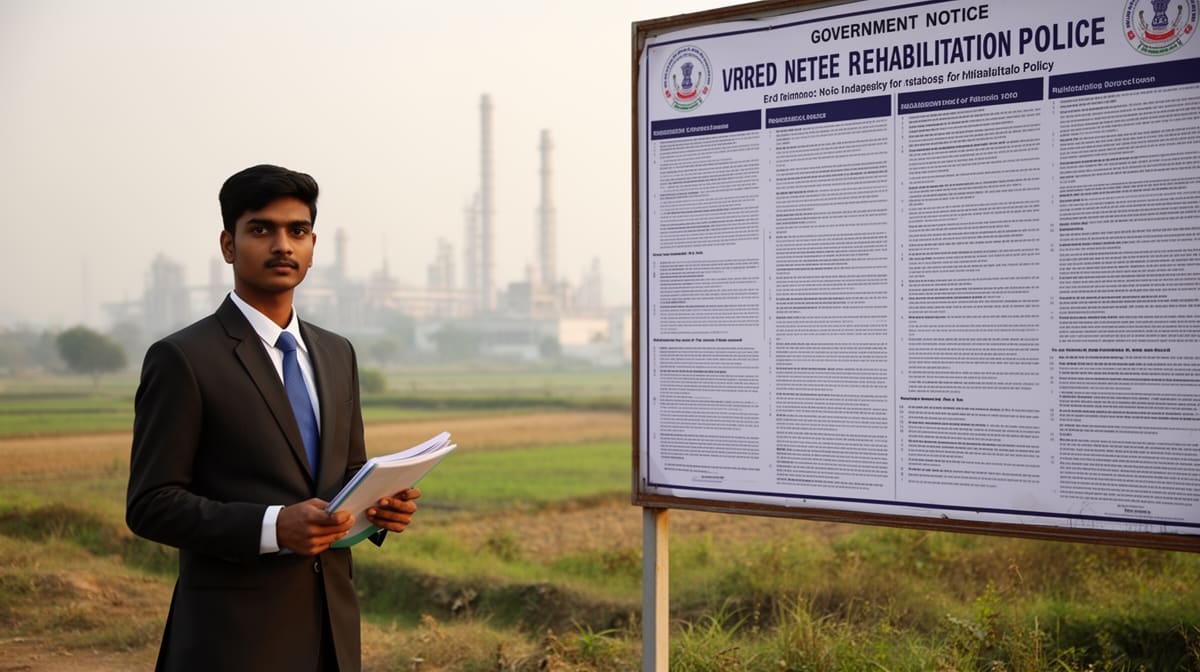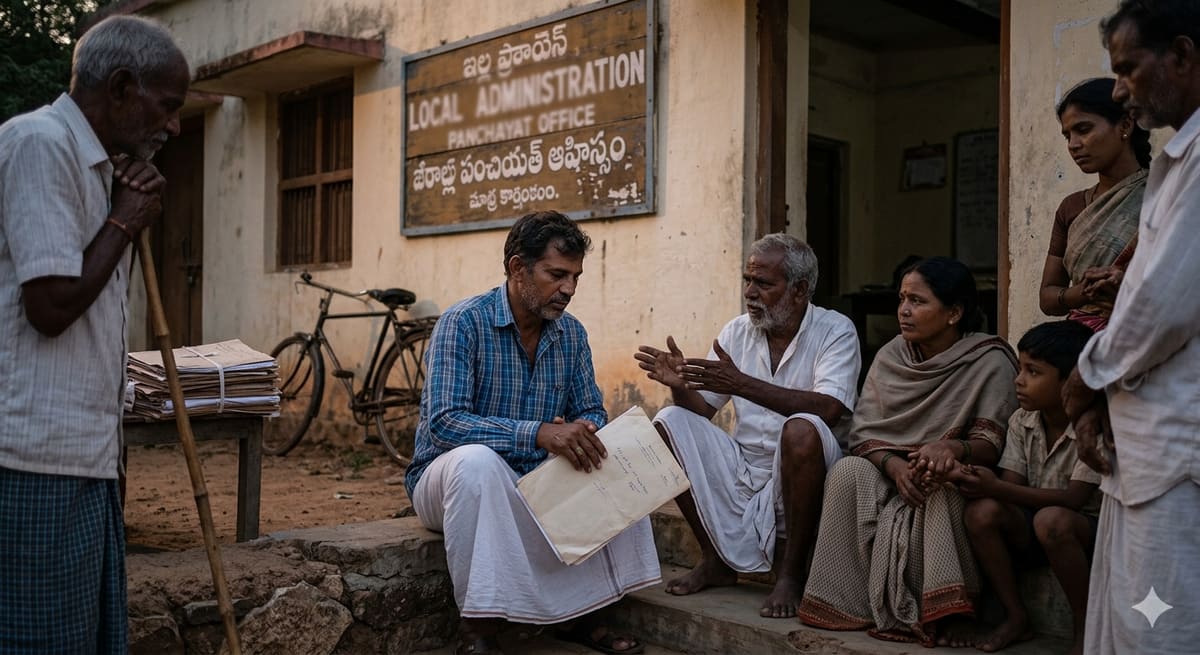
The Andhra Pradesh High Court has affirmed that employment offered to displaced families under a government order constitutes a binding form of compensation for land acquisition, and undue delay in its implementation amounts to arbitrariness and breach of legitimate expectation. This ruling reinforces the state’s obligation to honor quasi-contractual promises made to affected communities.
Background & Facts
The Dispute
The petitioners, dependents of original landowners whose properties were acquired for the Somasila (Telangana) Project, sought enforcement of employment guarantees extended under Government Order in Ms. No. 98, Irrigation (Project Wing) Department, dated 15.04.1986. The order mandated that employment be offered to members of displaced families or their dependents as part of the compensation package for land acquisition. Despite being identified as eligible and included in shortlists, the petitioners’ applications for employment were neither processed nor acted upon for over three decades.
Key Facts
Land acquisition for the Somasila Project occurred in the 1980s and early 1990s
G.O.Ms.No.98 dated 15.04.1986 explicitly promised employment to dependents of displaced landowners
Petitioners’ names were included in official shortlists of eligible candidates
No formal rejection orders were issued; instead, cases were left in indefinite abeyance
No employment was provided to any of the petitioners despite the lapse of nearly 40 years
The petitioners are not claimants of monetary compensation but seek fulfillment of the employment promise made under the G.O.
Procedural History
15.04.1986: G.O.Ms.No.98 issued by the Government of Andhra Pradesh
1980s - 1990s: Land acquisition completed; families displaced; eligibility lists prepared
2010s - 2020s: Repeated representations made by petitioners to various departments; no action taken
2026: Writ Petitions Nos. 16188, 16193, 16196, 16209 and 16214 of 2026 filed before the Andhra Pradesh High Court
23.06.2026: Judgment delivered by Justice Nyapathy Vijay
The Parties' Positions
Petitioners: Argued that the G.O. created a legitimate expectation and a binding administrative promise. The prolonged inaction, despite clear eligibility, violated Articles 14 and 21 of the Constitution. They relied on prior judgments of the same court granting similar relief.
Respondents (State of Andhra Pradesh): Did not dispute the existence of the G.O. or the petitioners’ eligibility. Submitted that their cases would be considered and necessary action initiated as per prevailing rules, without committing to a timeline.
Relief Sought
The petitioners sought a direction to the State to immediately consider their cases for employment under G.O.Ms.No.98/1986 on par with similarly placed persons, and to complete the process without further delay.
The Legal Issue
The central question was whether the State’s prolonged inaction in providing employment under a binding government order, issued as compensation for land acquisition, constitutes arbitrariness and a violation of legitimate expectation under Article 14 of the Constitution.
Arguments Presented
For the Petitioner
Counsel relied on two prior judgments of the Andhra Pradesh High Court - W.P.No.40372 of 2018 and W.P.No.3445 of 2020 - where employment was directed to be offered to dependents of landowners under identical circumstances. It was argued that the G.O. was not a mere policy but a public promise creating enforceable rights. The delay of nearly 40 years, with no explanation or justification, amounted to bad faith and denial of equal protection. The petitioners had foregone other employment opportunities in reliance on this promise.
For the Respondent
The Assistant Government Pleader conceded the existence of the G.O. and the petitioners’ inclusion in eligible lists but offered no substantive defense for the delay. The submission was limited to a vague assurance that cases would be considered “as per rules in force,” without any commitment to a timeline or process.
The Court's Analysis
The Court observed that the State had made a clear, unambiguous promise through G.O.Ms.No.98/1986 to provide employment as part of the compensation package for land acquisition. Such promises, when made to a specific class of affected persons, create a legitimate expectation protected under Article 14. The Court emphasized that employment under such orders is not a welfare grant but a form of restitution for loss of livelihood.
"The delay in providing employment, which was promised as part of the compensation package, cannot be justified merely on the ground of administrative convenience or procedural backlog."
The Court distinguished this from general policy schemes, noting that the G.O. was issued in direct response to a specific public project with identifiable beneficiaries. The fact that the petitioners were shortlisted confirmed their eligibility and extinguished any claim of procedural uncertainty. The State’s failure to act for over four decades, without any formal communication or rejection, amounted to a violation of the principle of non-arbitrariness.
The Court also noted that the petitioners had not sought monetary compensation but the fulfillment of a specific, non-monetary promise. To deny them employment now would render the State’s assurance meaningless and undermine public trust in administrative commitments.
The Verdict
The writ petitions were allowed. The Court directed the respondents to consider the cases of the petitioners for employment under G.O.Ms.No.98/1986 on par with similarly placed persons, as expeditiously as possible. There shall be no order as to costs. All pending miscellaneous petitions are closed.
What This Means For Similar Cases
Employment as Compensation Is Legally Enforceable
Practitioners can now invoke legitimate expectation under Article 14 to enforce employment promises made in land acquisition compensation orders
G.O.s offering employment as compensation are not mere policy statements but create binding administrative obligations
Delay of more than two decades, without justification, will be treated as arbitrary and violative of constitutional rights
Administrative Inaction Cannot Override Public Promises
Merely stating that "cases will be considered" is insufficient; courts will demand concrete timelines and action
Shortlisting of beneficiaries creates a prima facie right to consideration; further procedural hurdles cannot be imposed retroactively
Similar cases under G.O.s for irrigation, hydroelectric, or highway projects across India are now legally actionable
Always cite W.P.No.40372 of 2018 and W.P.No.3445 of 2020 as binding precedents in Andhra Pradesh
File writ petitions within six months of the last known administrative inaction to avoid limitation arguments
Demand written timelines for employment consideration in court orders