The Allahabad High Court has reiterated the obligation of authorities to comply with Government Orders governing rehabilitation and resettlement of land oustees. In a recent judgment, the Court directed the District Magistrate, Sonbhadra, to expeditiously decide the petitioner's claim for inclusion in the rehabilitation list and payment of benefits under the Government Order dated 30.10.2014, reinforcing the precedent set in earlier similar cases.
Background & Facts
The Dispute
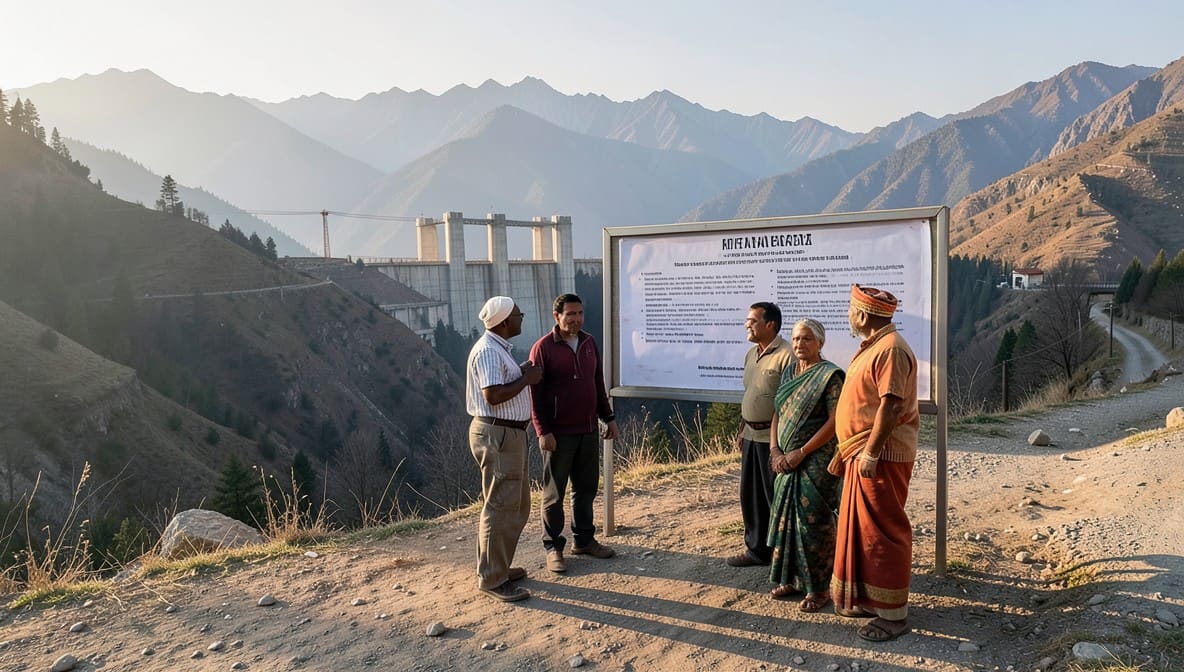
The petitioner, Noorullah, is a land oustee whose property was acquired for the construction of the Kanhar Dam Project in Sonbhadra, Uttar Pradesh. The State Government issued a Government Order dated 30.10.2014 outlining the rehabilitation and resettlement package for displaced persons. Despite repeated representations, the petitioner's name was not included in the list of beneficiaries, nor was he provided the promised package.
Key Facts
- The petitioner's land was acquired for the Kanhar Dam Project, Duddhi, Sonbhadra
- The Government Order dated 30.10.2014 (specifically sub-paragraph (v) of paragraph 4) governs the rehabilitation and resettlement of land oustees
- The petitioner filed representations seeking inclusion in the rehabilitation list, but no action was taken
- The petitioner sought directions for the District Magistrate, Sonbhadra, to comply with the Government Order and provide the rehabilitation package
Procedural History
- 19.05.2025: A coordinate Bench of the Allahabad High Court disposed of Prem Chand Gupta & Ors. v. State of U.P. & Ors. (Writ-C No. 15930 of 2025) with directions to the District Magistrate to decide the claim within three months
- 28.06.2023: In Ram Karan and another v. State of U.P. and 2 others (Writ-C No. 20621 of 2023), the Court directed the District Magistrate to decide the claim in light of the Government Order
- 30.03.2018: In Sona Bachcha and 5 others v. State of U.P. and 2 others (Writ-C No. 11574 of 2018), similar directions were issued
- 30.04.2026: The present writ petition (Writ-C No. 16692 of 2026) was filed seeking identical reliefs
Relief Sought
The petitioner sought the following reliefs:
- A writ of mandamus directing Respondent No. 2 (District Magistrate, Sonbhadra) to include the petitioner's name in the rehabilitation list of Kanhar Dam Project land oustees as per the Government Order dated 30.10.2014
- A writ of mandamus directing Respondent No. 2 to pay the rehabilitation package in accordance with the Government Order within a stipulated period
The Legal Issue
The primary legal question was whether the District Magistrate, Sonbhadra, is obligated to comply with the Government Order dated 30.10.2014 and decide the petitioner's claim for rehabilitation benefits within a stipulated timeframe, even in the absence of explicit enforcement by the petitioner.
Arguments Presented
For the Petitioner
- The petitioner relied on the Government Order dated 30.10.2014, which mandates rehabilitation and resettlement for land oustees of the Kanhar Dam Project
- It was contended that the petitioner's land was acquired for the project, and despite representations, no action was taken to include his name in the rehabilitation list
- The petitioner cited earlier judgments (Prem Chand Gupta & Ors., Ram Karan, and Sona Bachcha) where similar reliefs were granted, arguing that the present case is on identical footing
For the Respondent
- The Additional Chief Standing Counsel did not dispute the factual or legal aspects of the petitioner's claim
- No substantive counter-arguments were presented, implying tacit acceptance of the petitioner's contentions
The Court's Analysis
The Court observed that the petitioner's case was on all fours with the earlier disposed writ petitions, particularly Prem Chand Gupta & Ors. v. State of U.P. & Ors. (Writ-C No. 15930 of 2025). In that case, the Court had directed the District Magistrate to decide the claim of the petitioners expeditiously in light of the Government Order dated 30.10.2014, preferably within three months from the date of production of the order.
The Court noted that the Government Order dated 30.10.2014 provides a clear framework for rehabilitation and resettlement, and the District Magistrate is bound to comply with its provisions. The failure to include the petitioner's name in the rehabilitation list and provide the package was held to be a dereliction of duty on the part of the concerned authority.
"Considering the facts and circumstances, without adverting on merits, the writ petition is disposed of requiring the District Magistrate, Sonbhadra to decide the claim of the petitioners expeditiously in the light of Government Order dated 30.10.2014, preferably within a period of three months from the date of production of a certified copy of this order along with a fresh representation."
The Court refrained from delving into the merits of the case, instead focusing on the procedural compliance required by the District Magistrate. The judgment underscores the principle that Government Orders must be implemented in letter and spirit, and administrative authorities cannot evade their obligations under the guise of discretion.
The Verdict
The Allahabad High Court disposed of the writ petition in terms of its earlier order in Prem Chand Gupta & Ors. v. State of U.P. & Ors. The Court directed the District Magistrate, Sonbhadra, to:
- Decide the petitioner's claim for inclusion in the rehabilitation list and payment of the package expeditiously
- Comply with the Government Order dated 30.10.2014 while deciding the claim
- Pass an order preferably within three months from the date of production of a certified copy of the judgment along with a fresh representation by the petitioner
No costs or specific monetary relief were awarded, but the Court emphasized timely compliance with its directions.
What This Means For Similar Cases
Government Orders Are Not Discretionary
- Administrative authorities are bound to implement Government Orders as issued, without undue delay or discretion
- Failure to comply with such orders can result in judicial intervention through writ petitions, as seen in this case
- Practitioners should cite coordinate Bench judgments where similar reliefs have been granted to strengthen their case
Procedural Compliance Is Mandatory
- The Court's direction to decide the claim within three months sets a clear timeline for administrative action
- Land oustees and similarly situated persons can demand expeditious resolution of their claims under relevant Government Orders
- Fresh representations, coupled with certified copies of judicial orders, can trigger compliance from authorities
Precedent-Based Reliefs
- Where factual and legal circumstances are identical, courts are likely to dispose of writ petitions in similar terms
- Petitioners can rely on earlier judgments of the same court to seek analogous reliefs
- This judgment reinforces the principle that administrative inaction cannot defeat statutory or governmental entitlements