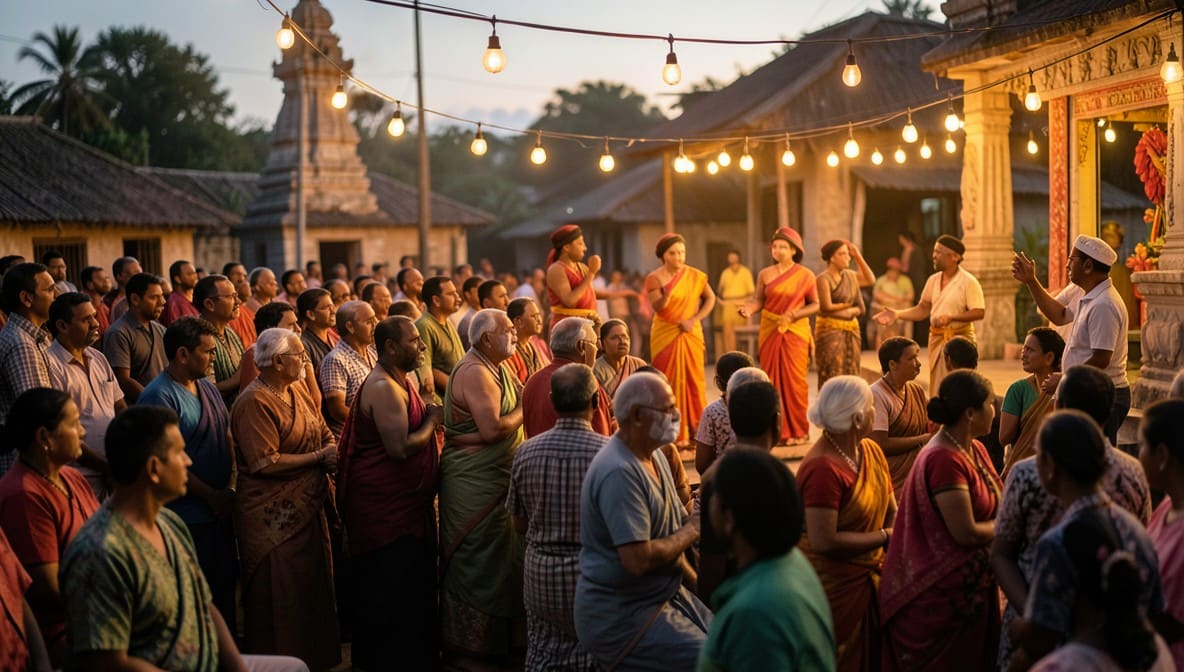
The Madras High Court has reaffirmed that long-standing religious customs, rooted in historical practice, cannot be disrupted by newly asserted claims lacking institutional or traditional legitimacy. In a case involving competing claims over temple rituals, the Court emphasized the necessity of preserving communal harmony and respecting established tradition over unilateral assertions of rights.
Background & Facts
The Dispute
The dispute centers on the Ambalamship (ritual custodianship) of the Sengamada Karuppar Temple in Thiruvidaiyarpatti village, Sivagangai District. For over four centuries, the temple has been managed by the Hindu Adi Dravidar Community, with a longstanding practice of conferring Ambalamship to members of another community. This practice was formally recognized by the Joint Commissioner, HR & CE, and later upheld by the Supreme Court in favor of Ganesan. Despite this, the Commissioner of HR & CE suo motu reopened the matter, prompting litigation that remains stayed by this Court.
Procedural History
- 2024: A Peace Committee meeting was convened to resolve the dispute, resulting in a resolution dated 21.02.2024.
- March 2024: The petitioner challenged the legal validity of the Peace Committee in W.P.(MD) No.7715 of 2024.
- 27.03.2024: The Madras High Court held that no statutory basis exists for such Peace Committees and directed parties to ignore its resolutions.
- February 2026: The petitioner filed the present writ petition seeking enforcement of the now-invalidated Peace Committee resolution.
Relief Sought
The petitioner sought a writ of mandamus compelling the Tahsildar and Police Inspector to enforce the 2024 Peace Committee resolution. The third respondent, Rajendran, sought permission to conduct the Kavadi festival as a public procession from his newly constructed temple on patta land.
The Legal Issue
The central question was whether a non-statutory, non-binding peace committee resolution can be enforced through a writ of mandamus under Article 226 of the Constitution, particularly when it conflicts with established religious custom and public order concerns.
Arguments Presented
For the Petitioner
The petitioner argued that the Peace Committee resolution represented a consensual settlement among community members and should be honored to prevent social discord. Counsel relied on principles of natural justice and the State’s duty to maintain public order under Article 25.
For the Respondent
The State contended that the Peace Committee had no legal standing, as previously held by this Court in W.P.(MD) No.7715 of 2024. The third respondent asserted his right to conduct religious rituals on his private land, but acknowledged the absence of historical precedent for Kavadi processions from his temple.
The Court's Analysis
The Court examined the nature of the Peace Committee and found it to be entirely non-statutory. It reiterated its earlier holding that such forums cannot be enforced by judicial writ. The Court then turned to the substantive issue: the right to conduct Kavadi as a procession.
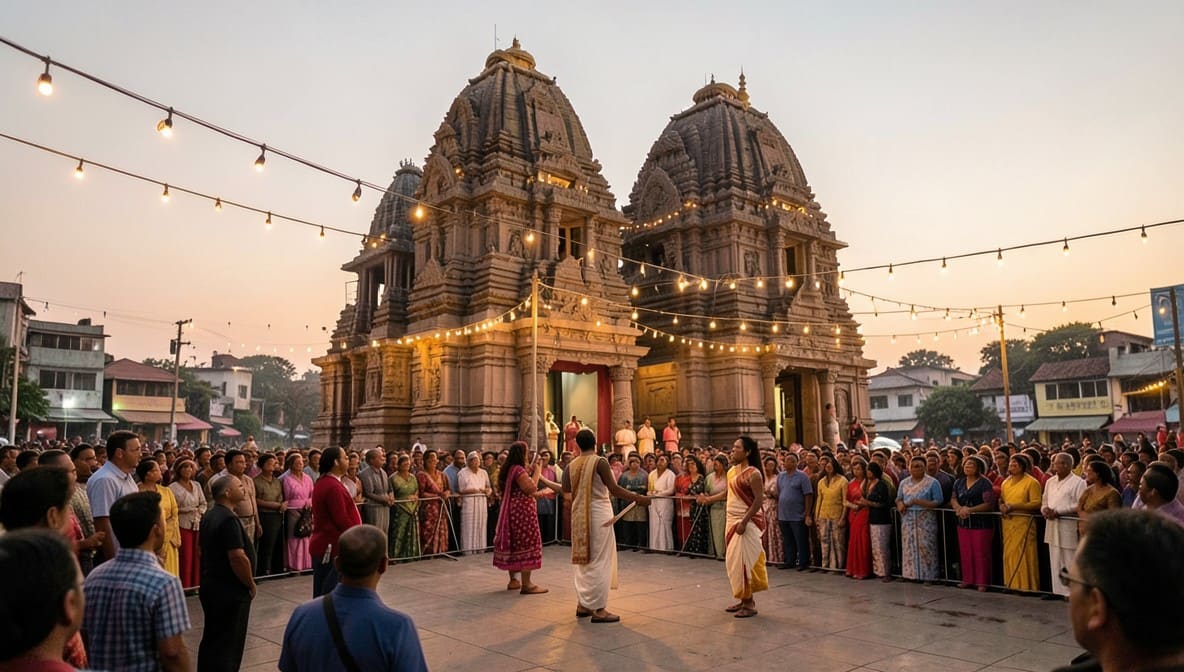
"The temple in question was constructed only in the year 2024. There is no evidence of any prior practice of conducting Kavadi festival from this premises. The tradition of Kavadi procession belongs exclusively to the historic temple managed by the Adi Dravidar Community."
The Court recognized the third respondent’s right to worship and conduct Annathanam, tonsure, and Kathukuthu within his private premises. However, it held that introducing a new procession into a community with deep-rooted traditions risks inciting unrest. The Court weighed Article 25 (freedom of religion) against Article 21 (right to life and public order), concluding that the latter must prevail where tradition and harmony are at stake.
The Court emphasized that religious practices must be evaluated not merely by legal ownership of land, but by historical continuity and community acceptance.
The Verdict
The petitioner’s writ petition was dismissed. The Court held that non-statutory peace committee resolutions cannot be enforced by mandamus, and that Kavadi processions cannot be permitted from a newly constructed temple lacking historical precedent, though private worship within the premises remains lawful.
What This Means For Similar Cases
Religious Custom Overrides New Claims
- Practitioners must establish historical continuity to claim rights over religious rituals, not merely ownership of land or recent community support.
- Courts will prioritize longstanding tradition over newly asserted practices, especially in multi-community religious settings.
Mandamus Cannot Enforce Non-Statutory Bodies
- Writs under Article 226 cannot compel enforcement of informal dispute resolution forums lacking statutory backing.
- Parties must seek remedies through statutory authorities or civil courts, not through judicial orders enforcing non-binding committees.
Public Order Trumps Unverified Ritual Expansion
- When introducing new forms of public religious expression, authorities must assess potential for communal friction.
- Permits for processions must consider community acceptance, not just land ownership.
- Practitioners should advise clients to seek prior consensus or formal recognition from religious trusts before initiating public rituals.