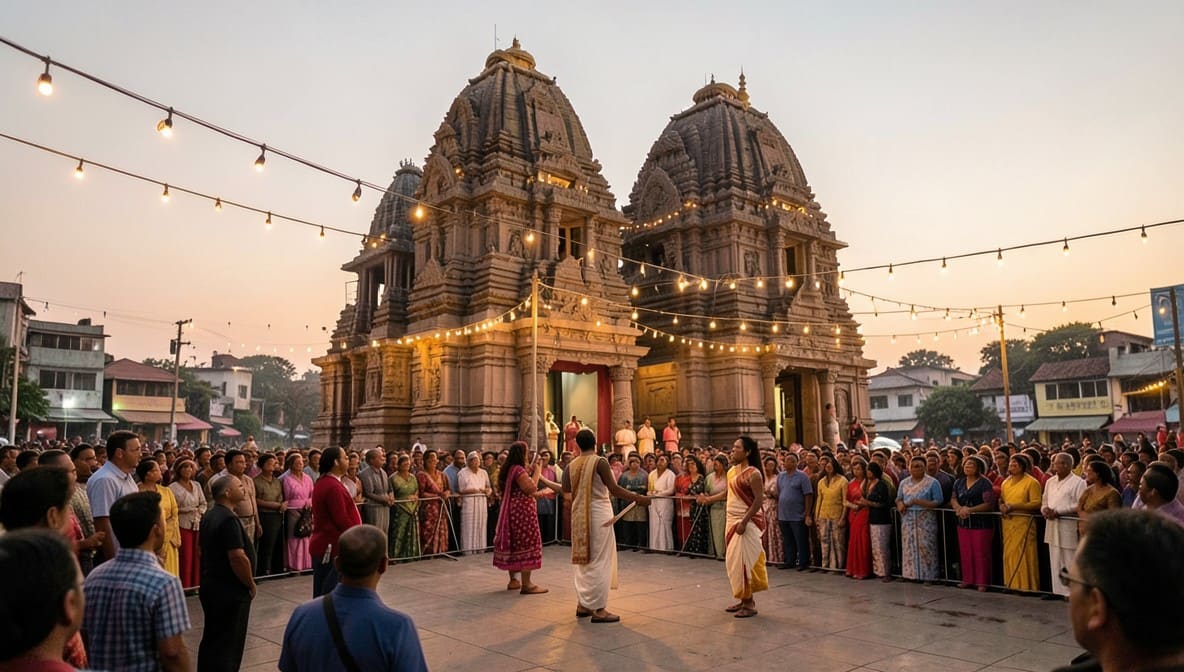
The Madras High Court has affirmed that religious processions may proceed under mutually agreed conditions, even amid community disputes, provided such conditions are rooted in prior settlements and public order safeguards. This judgment reinforces the principle that religious expression must be balanced with communal harmony and procedural compliance.
Background & Facts
The Dispute
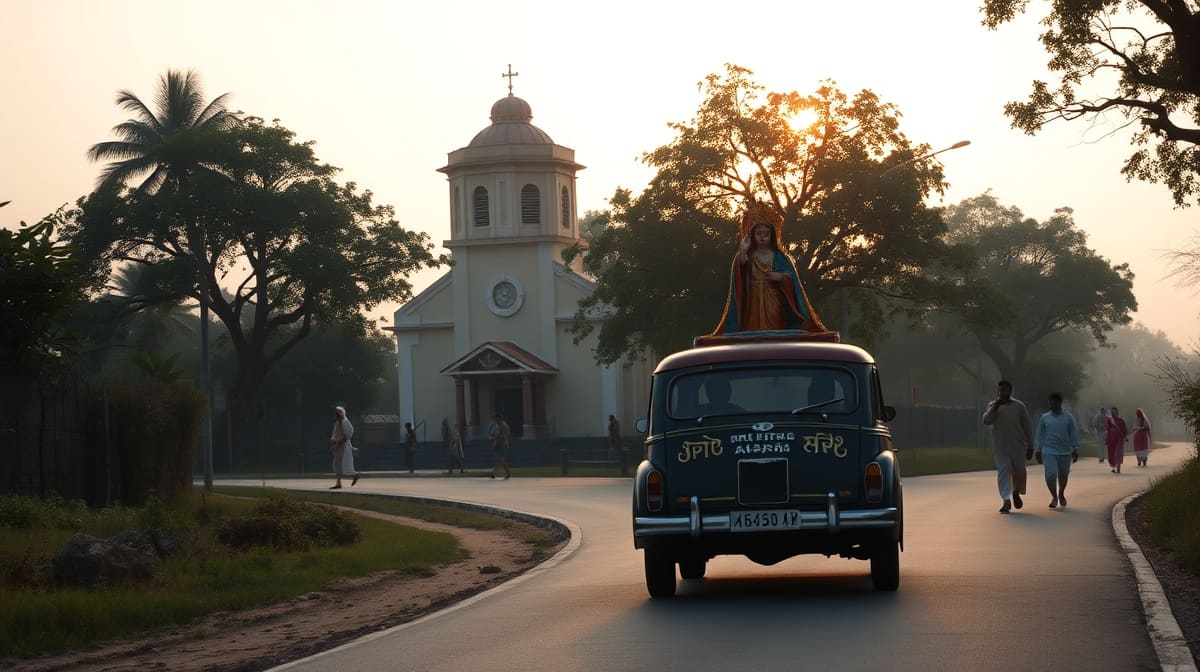
The petitioner, a retired teacher and member of the Catholic community residing in Aranthangi Village, Kattumannar Koil Taluk, Cuddalore District, sought permission to conduct the annual "Thear Bavani Vizha" - a car procession celebrating Easter - on 05.04.2026 from 01:00 AM to 05:00 AM at the Anthoniyar Church. The procession, traditionally led by the Parish Priest, has been the subject of a longstanding dispute between two factions within the local Catholic community. One group objects to the petitioner’s leadership of the event, claiming personal rights over the procession, despite the established role of the Parish Priest.
Key Facts
- The petitioner submitted a representation dated 24.03.2026 seeking permission and police protection for the procession.
- A similar dispute arose in 2025, leading to intervention by the Peace Committee headed by the Tahsildar.
- On 19.04.2025, the Peace Committee reached a settlement: the procession would be conducted solely under the leadership of the Parish Priest, and no individual could claim personal rights to lead it.
- The procession was conducted peacefully in 2025 under this agreement.
- The petitioner applied for permission again in 2026, but the police declined to grant it, citing unresolved community tensions.
- The petitioner had previously filed W.P.No.14208 of 2025, which resulted in a court order dated 17.04.2025 permitting the procession under specific conditions.
Procedural History
- 19.04.2025: Peace Committee meeting held; parties agreed that only the Parish Priest may lead the procession.
- 17.04.2025: Madras High Court issued order in W.P.No.14208 of 2025 permitting the procession under 14 detailed conditions.
- 24.03.2026: Petitioner submitted fresh representation for 2026 procession.
- 05.04.2026: Date of intended procession (pending permission).
- 02.04.2026: Writ Petition filed under Article 226 of the Constitution.
The Parties' Positions
The petitioner argued that the 2025 Peace Committee settlement was binding and that the police’s refusal to grant permission violated his fundamental right to practice religion under Article 25. He emphasized that the procession had been conducted peacefully the previous year under court-approved conditions.
The respondents, represented by the Additional Public Prosecutor, acknowledged the existence of the Peace Committee settlement but contended that the petitioner’s personal involvement in organizing the event, rather than the Parish Priest’s exclusive leadership, had reignited tensions. They stressed the need for caution to prevent public disorder.
Relief Sought
The petitioner sought a writ of mandamus directing the 3rd respondent (Inspector of Police, Solatharam Police Station) to grant permission and provide police protection for the Thear Bavani Vizha on 05.04.2026 from 01:00 AM to 05:00 AM, under the same conditions as the 2025 court order.
The Legal Issue
The central question was whether the police may refuse permission for a religious procession based on community disputes, when a binding settlement has been reached through a Peace Committee and the procession has previously been conducted lawfully under court-mandated conditions.
Arguments Presented
For the Petitioner
The petitioner relied on Shayara Bano v. Union of India and Indian Young Lawyers Association v. State of Kerala to assert that the right to conduct religious processions is protected under Article 25 of the Constitution. He argued that the Peace Committee’s 2025 agreement constituted a legitimate, consensual resolution of the dispute and that the police’s refusal to act violated the principle of promissory estoppel and the doctrine of legitimate expectation. He emphasized that the 2025 procession had been peaceful and that the conditions imposed by the Court in W.P.No.14208 of 2025 were sufficient to ensure public order.
For the Respondent
The Additional Public Prosecutor acknowledged the Peace Committee settlement but argued that the petitioner’s personal involvement in seeking permission, rather than the Parish Priest acting independently, had created ambiguity and risked renewed conflict. He contended that the police had a duty to prevent potential breaches of peace and that granting permission without absolute clarity on leadership could invite unrest. He did not dispute the legality of the procession per se, but questioned the petitioner’s standing to seek permission as an individual rather than as a representative of the Parish.
The Court's Analysis
The Court examined the binding nature of the Peace Committee settlement dated 19.04.2025 and noted that both parties had voluntarily agreed that the Parish Priest alone would lead the procession. The Court held that such an agreement, reached through a recognized quasi-judicial forum, carries weight in maintaining communal harmony and cannot be disregarded by administrative authorities.
"The Peace Committee’s settlement is not a mere suggestion; it is a consensual resolution arrived at in good faith, and its terms must be respected by all parties, including the police."
The Court further relied on its own order dated 17.04.2025 in W.P.No.14208 of 2025, which had already laid down comprehensive conditions to ensure public safety, traffic management, and religious sensitivity. The Court found no new grounds to justify withholding permission, especially since the 2025 procession had passed without incident.
The Court rejected the argument that the petitioner’s personal involvement rendered the application invalid, noting that he was acting as a community member seeking to uphold the agreed protocol, not asserting a personal right to lead the procession. The Court emphasized that the Parish Priest, not the petitioner, remains the sole conductor of the event.
The Court also reaffirmed that the state’s duty to protect religious expression under Article 25 includes facilitating lawful processions, provided conditions are met. The refusal to grant permission based on speculative fears of unrest, without concrete evidence of imminent threat, amounted to an unreasonable restriction.
The Verdict
The writ petition is allowed. The petitioner is granted permission to conduct the Anthoniyar Church Easter Thear Bavani Vizha on 05.04.2026 from 01:00 AM to 05:00 AM at Aranthangi Village, Kattumannar Koil Taluk, Cuddalore District, under the same conditions as laid down in the order dated 17.04.2025 in W.P.No.14208 of 2025. The Parish Priest shall use only one car for the procession, and no individual shall claim any right over the car. The Tahsildar and the Deputy Superintendent of Police shall oversee the procession either in person or through subordinates. There shall be no order as to costs.
What This Means For Similar Cases
Peace Committee Settlements Are Legally Recognized
- Practitioners may cite this judgment to argue that informal but consensual resolutions by Peace Committees carry legal weight in religious and community disputes.
- Administrative authorities cannot override such settlements without independent, documented evidence of public safety risk.
Religious Processions Cannot Be Blocked on Speculative Grounds
- Police cannot deny permission for religious processions based on past tensions alone; there must be a credible, imminent threat.
- Past lawful conduct under court-approved conditions creates a legitimate expectation for future permissions.
Conditions Must Be Specific, Not Discretionary
- Courts will enforce pre-existing, detailed conditions (e.g., noise limits, route adherence, security arrangements) as sufficient safeguards.
- Blanket denials without referencing specific violations of prior conditions are legally unsustainable.
Leadership Must Be Clearly Defined
- In communal religious events, the role of institutional leaders (e.g., Parish Priest, Imam, Pandit) must be clearly recognized over individual claimants.
- Courts will uphold institutional authority over personal assertions of control.